
Alpacas
Alpacas offer farmers a remarkably hardy and gentle livestock option, excelling in longevity and demonstrating superior grazing efficiency on diverse forages. Their inherently docile nature simplifies herd management and makes them compatible with other livestock, while their excellent fiber quality presents a valuable product. Originating from the Andes Mountains, these soft-footed animals require minimal intervention, thriving in pasture-based systems and demonstrating strong herd compatibility. Alpacas are particularly well-suited to rotational grazing practices and can integrate seamlessly with pastured poultry operations, further enhancing land utilization and farm efficiency.
Regenerative Quick Profile
Best Suited For
Climates: Cool temperate oceanic to subarctic
Terrain: Excels on rolling to steep terrain
Scale: Excellent for small homesteads (1-10 animals)
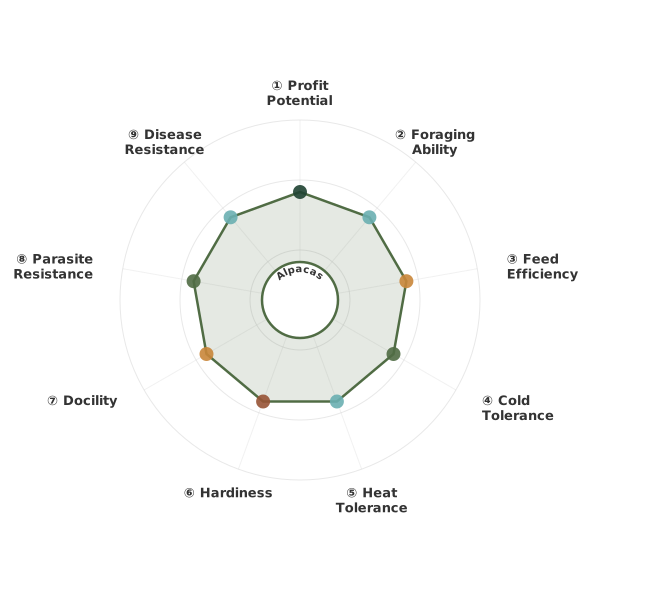
How These Traits Are Calculated
Trait dimensions are ordered clockwise starting from the top of the chart (12 o'clock position):
1. Profit Potential
Measures the economic viability of alpaca fiber and other products.
WHAT: This trait assesses an alpaca breed's capacity to generate income through its fiber quality, quantity, and market demand, as well as the value of other byproducts like manure. Breeds differ significantly in staple length, fineness, luster, and density, all influencing their market price and processing ease.
WHY: For regenerative farmers, profit potential is crucial for the long-term sustainability of their operation. A breed with higher profit potential can reduce reliance on external inputs, increase farm income, and support reinvestment in regenerative practices. Maximizing income from alpacas ensures the farm's economic resilience.
HOW: Exceptional breeds consistently produce high volumes of fine, low-micron fiber (e.g., under 20 microns) with excellent luster and staple length (over 3 inches). Typical breeds offer good quality fiber but may have slightly higher micron counts or lower yields. Limited breeds produce coarser fiber, lower quantities, or have less desirable market appeal, potentially requiring significant processing or niche markets to be profitable.
2. Foraging Ability
Measures how effectively alpacas graze and browse for nutrition.
WHAT: This trait assesses an alpaca's natural inclination and skill in seeking out and consuming diverse plant matter, including grasses, forbs, and even woody browse. Individual alpacas and breeds can vary significantly in their preference for grazing versus browsing and their ability to find nutrient-rich plants in less-than-ideal pasture conditions.
WHY: For regenerative farmers, superior foraging ability means alpacas can utilize a wider range of plant species, contributing to pasture health and biodiversity. It reduces reliance on supplemental feed, lowers input costs, and allows alpacas to thrive on pastures that might be unsuitable for other livestock.
HOW: Exceptional alpacas actively seek out and consume a broad spectrum of plants, demonstrating a keen ability to locate nutritious forage even in sparse conditions. Typical alpacas will graze readily on good pasture but may be less inclined to browse or seek out less palatable species. Limited alpacas may be picky eaters, heavily reliant on high-quality grasses, and less adaptable to varied or challenging forage environments.
3. Feed Efficiency
Measures how effectively alpacas convert feed into body mass and fiber.
WHAT: Feed efficiency in alpacas refers to their ability to gain weight and produce fiber using the least amount of ingested food. This trait can vary between alpaca breeds due to genetic predispositions for digestion and metabolism. Some breeds are naturally more adept at extracting nutrients from forage.
WHY: For regenerative farmers, efficient feed conversion means lower input costs and reduced environmental impact. Alpacas that are more feed-efficient require less supplemental feed, lessening grazing pressure and the need for purchased inputs. This aligns with principles of resource conservation and economic sustainability.
HOW: Exceptional feed efficiency means an alpaca can maintain or gain condition on significantly less pasture or hay (e.g., requiring 20% less feed than average). Typical efficiency means the breed meets average nutritional needs with standard feed amounts. Limited efficiency indicates the breed requires more feed than average to maintain condition or produce fiber.
4. Cold Tolerance
Measures alpaca's ability to withstand cold temperatures and harsh weather.
WHAT: This trait assesses an alpaca's natural ability to maintain body temperature and thrive in cold climates. Breeds originating from high-altitude, colder regions generally exhibit superior cold tolerance due to denser fleece and physiological adaptations.
WHY: For regenerative farmers in cooler climates, selecting for high cold tolerance reduces the need for supplemental heating and shelter, lowering input costs and improving animal welfare. It ensures alpacas can graze and remain productive even during winter months.
HOW: Exceptional breeds can typically withstand temperatures below -10°F (-23°C) with minimal shelter. Typical breeds may require some windbreak and protection from prolonged extreme cold. Limited breeds are best suited for milder climates or require significant shelter and management in winter.
5. Heat Tolerance
Measures alpaca's ability to cope with and perform in warm conditions.
WHAT: This trait assesses an alpaca's physiological and behavioral capacity to withstand and remain productive under elevated temperatures and humidity. Some alpaca breeds, particularly those originating from higher altitudes, may exhibit lower heat tolerance than those adapted to warmer climates.
WHY: For regenerative farmers, good heat tolerance ensures alpacas remain healthy, reduce stress, and maintain fleece quality and reproductive success during hotter seasons. This minimizes the need for costly cooling interventions and supports sustainable herd management.
HOW: Exceptional breeds maintain performance and well-being with minimal signs of heat stress even above 80°F (27°C). Typical breeds may show mild signs of discomfort or reduced activity above 85°F (29°C). Limited breeds struggle significantly above 75°F (24°C), requiring shade and reduced exertion.
6. Hardiness
Measures the alpaca's ability to thrive in challenging environments.
WHAT: Hardiness in alpacas refers to their resilience to environmental stressors such as extreme temperatures, fluctuating feed quality, and exposure to parasites or diseases. Different alpaca breeds, like Suri and Huacaya, exhibit varying degrees of hardiness due to their genetic makeup and adaptation to specific climates.
WHY: For regenerative farmers, hardy alpacas are crucial for minimizing external inputs and labor. They require less supplemental feeding, veterinary care, and shelter, contributing to a more sustainable and profitable operation with a reduced environmental footprint.
HOW: Exceptional hardiness indicates an alpaca breed that can consistently maintain health and productivity with minimal intervention, even in harsh conditions (e.g., tolerating temperatures below -10°F or above 85°F without significant stress). Typical hardiness suggests a breed that requires moderate management and occasional support in challenging weather or health situations. Limited hardiness implies a breed that is highly susceptible to environmental stressors and demands significant protective measures and intensive care.
7. Docility
Measures how calm and easy-to-handle alpacas are in human interaction.
WHAT: Docility assesses an alpaca's natural inclination to remain calm and cooperative when approached, handled, or subjected to routine management practices. Some alpaca breeds are known for being naturally more skittish and reactive, while others exhibit a more settled and trusting disposition.
WHY: For regenerative farmers, docile alpacas reduce stress during shearing, veterinary care, and transport, leading to better animal welfare and labor efficiency. This trait also contributes to a safer working environment and can facilitate easier integration into mixed-species grazing systems.
HOW: Exceptional docility means alpacas rarely spit, kick, or struggle when handled, often remaining still for shearing with minimal restraint. Typical docility involves occasional mild resistance or alertness but generally good cooperation. Limited docility indicates frequent balking, spitting, or significant struggle during handling, requiring more forceful restraint.
8. Parasite Resistance
Measures alpaca's natural ability to ward off internal and external parasites.
WHAT: This trait assesses an alpaca's inherent ability to resist parasitic infections, both internal (like worms) and external (like mites). Breeds naturally vary in their immune response and physiological adaptations that deter parasite colonization.
WHY: High parasite resistance reduces the need for chemical dewormers, which aligns with regenerative principles and lowers input costs. It also leads to healthier animals, better fleece quality, and reduced stress on the ecosystem.
HOW: Exceptional breeds may show very low fecal egg counts (<200 EPG) even under parasite challenge and rarely require treatment. Typical breeds might have moderate egg counts and occasional treatment needs. Limited breeds often have high egg counts and require frequent deworming.
9. Disease Resistance
Measures an alpaca's innate ability to fight off common illnesses.
WHAT: This trait assesses an alpaca's natural ability to resist and recover from common diseases, parasites, and infections. Some alpaca breeds or lineages are genetically predisposed to stronger immune responses, leading to fewer health issues.
WHY: High disease resistance reduces veterinary costs, minimizes animal losses, and supports a more sustainable, less interventionist farming system. Healthy alpacas are more productive and contribute to overall herd vitality, crucial for regenerative practices.
HOW: Exceptional breeds demonstrate very low incidence of common ailments like parasites and fungal infections, often requiring minimal deworming or topical treatments. Typical breeds experience moderate health challenges requiring routine preventative care. Limited breeds are more susceptible, necessitating frequent veterinary intervention and management.
Regenerative Advantages
- Drought Tolerance: Evolved in arid Andean environments, alpacas demonstrate exceptional drought tolerance through efficient water metabolism and sparse forage utilization.
- Gentleness: Possessing a naturally calm disposition and low flight response, alpacas integrate readily into diverse livestock settings.
- Fiber Quality: Alpacas consistently yield fleece under 20 microns with excellent staple length, establishing them as a premier source of fine natural fiber.
- Terrain Steep: Sure-footedness, a trait inherited from their Andean ancestry, allows alpacas to confidently navigate inclines exceeding 30% for effective grazing.
- Terrain Rolling: Agile balance and a stable gait, honed by their Andean heritage, enable alpacas to traverse rolling terrain with exceptional safety.
Value Streams
- Wool/Fiber production
Experience Level
Some livestock experience recommended
3
Understanding Alpacas Characteristics
Physical traits, temperament, and what makes this breed unique
Understanding Alpacas Characteristics
Physical traits, temperament, and what makes this breed unique
Alpacas are domesticated South American camelids, smaller relatives of llamas, renowned for their exceptionally soft, dense fleece and gentle disposition. Originating from the high Andes mountains, they have been selectively bred for millennia, adapting to challenging environments and developing unique biological traits that make them distinct from other livestock. Their physical characteristics, including a lean build, long neck, and expressive eyes, are finely tuned for efficient foraging on sparse vegetation. Alpacas possess a specialized digestive system that allows them to extract maximum nutrients from fibrous plant matter, contributing to their moderate water requirements and efficient feed conversion. Two primary breeds, the Huacaya and the Suri, are distinguished by their fleece types, each offering unique textures and appearances. Their padded feet minimize impact on pastureland, and their social nature means they thrive in herds, communicating through soft hums and body language. These biological and physical attributes form the foundation of their suitability for various land management and agricultural systems.
Physical Characteristics:• Size and Weight: Adult alpacas typically reach a shoulder height of 32-37 inches (81-94 cm) and weigh between 100-175 pounds (45-80 kg).
• Fleece: This is their defining feature, being fine, soft, and naturally hypoallergenic. It lacks lanolin, making it water-resistant, and grows continuously, requiring annual shearing.
• Breeds:
- Huacaya: Characterized by a dense, crimpy fleece that stands perpendicular to the skin, giving a fluffy, rounded appearance.
- Suri: Possess a lustrous, silky fleece that hangs in long, pencil-like locks.
• Feet: Alpacas have soft, padded feet with two toes, which significantly reduces their impact on pasture compared to animals with hooves.
• Digestive System: As efficient ruminants with a three-compartment stomach, they can effectively process cellulose-rich forage, requiring less protein than many other livestock species.
Behavioral and Biological Traits:• Temperament: Known for their gentle, curious, and herd-oriented nature, alpacas are generally not aggressive, making them safe to manage.
• Social Structure: They are highly social animals and require the company of other alpacas to thrive, exhibiting a strong flocking instinct for security and well-being.
• Communication: Alpacas communicate through a range of soft humming sounds, alarm calls, and subtle body language, fostering a peaceful herd environment.
• Foraging Habits: They are selective grazers, preferring short, tender grasses and consuming relatively little, typically 1.5-2% of their body weight daily, cropping vegetation close to the ground.
• Longevity and Reproduction: With proper care, alpacas can live for 15-20 years. Females reach reproductive maturity around 12-18 months, and gestation lasts approximately 11.5 months, usually resulting in a single offspring, known as a cria.
• Hardiness: Their dense fleece provides excellent cold hardiness, but their heat tolerance is fair, necessitating shade and water access in warmer climates.
Alpacas' unique combination of physical adaptations, gentle temperament, and specialized digestive capabilities positions them as a distinct and valuable animal for diverse agricultural landscapes. Their biological efficiency and low-impact nature are key to understanding their role in regenerative systems.
Sources behind this view
 Community
-
Compares alpaca and sheep grazing habits, noting alpacas prefer short grasses and require pasture management, while sheep are more adaptable. Highlights differences in manure handling, shearing costs,
Read more (opens in new window) permies.com -
Llamas and alpacas serve as guard animals (llamas >18mo), pack animals (llamas >4yrs, 70-120lb capacity), and for fiber (alpacas preferred). They communicate via posture and vocalizations, with spitti
Read more (opens in new window) ucanr.edu
4
Management, Care & Feeding
Operational guidance for raising this breed successfully
Management, Care & Feeding
Operational guidance for raising this breed successfully
Integrating alpacas into a regenerative farm system requires careful planning and consideration of their unique physical, biological, and economic requirements. A foundational understanding of their needs, coupled with a strategic approach to infrastructure, herd management, and market development, is crucial for success. The initial investment in foundation stock and fencing is significant, but their low-impact grazing, efficient feed conversion, and valuable fiber can provide long-term returns and contribute positively to land health. Establishing appropriate shelter, managing their diet to optimize fleece production and health, and understanding their reproductive cycle are key to a thriving alpaca enterprise. Furthermore, developing access to niche markets for their fiber is paramount to realizing their economic potential.
Establishing Infrastructure and Herd:• Fencing: Secure fencing is essential to contain alpacas and protect them from predators. Consider perimeter fencing and internal paddocks for rotational grazing.
• Shelter: While naturally hardy, alpacas require protection from extreme weather. Provide a three-sided shelter or barn that offers protection from wind, rain, and intense sun.
• Water Access: Clean, fresh water must be available at all times, especially during warmer months.
• Minimum Herd Size: A minimum herd of 5-10 animals is often recommended for genetic viability and to spread fixed infrastructure costs, ensuring they have adequate social interaction.
• Initial Stock Purchase: Foundation breeding stock can range from $500-$2,000 per animal, with exceptional individuals commanding higher prices. A multi-year perspective is necessary for herd growth and genetic improvement.
Management Practices:• Pasture Management: Implement rotational grazing to allow pastures to recover, promoting healthy grass growth and preventing overgrazing. Alpacas' selective grazing can help manage weed populations.
• Feeding: Supplement pasture with high-quality hay, especially during winter or when pasture is scarce. They require a balanced diet low in protein and high in fiber, with access to mineral supplements tailored to their needs.
• Shearing: Annual shearing is essential for harvesting fiber and preventing heat stress during warmer months. This typically occurs in late spring or early summer.
• Health and Veterinary Care: Regular veterinary check-ups, parasite control, and vaccinations are important. Their padded feet require attention to prevent issues, and their fair heat tolerance necessitates shade and water during hot periods.
• Reproduction Management: Females reach maturity around 12-18 months, with a gestation of approximately 11.5 months. Careful record-keeping of breeding and birthing is vital for herd management.
Economic Implementation and Market Development:• Long-Term Investment Horizon: Expect a 2-3 year establishment period before significant fiber income is realized, with breeding stock sales potentially contributing after 3-5 years. Payback on initial investment typically extends beyond 5-7 years.
• Fiber Processing and Marketing: To maximize fiber value, it must be skirted (cleaned of debris), sorted by grade, and potentially processed into yarn. Direct sales to hand spinners, small textile producers, or through cooperatives are often more profitable than bulk sales.
• Breeding Program Development: Building a reputation for quality breeding stock requires meticulous record-keeping of genetics, conformation, and fleece characteristics, along with effective marketing strategies.
• Agritourism Potential: Farm visits, workshops, or farm-to-yarn initiatives can offer supplemental income, but require dedicated marketing and customer engagement.
Integrating alpacas is a commitment to a long-term, diversified agricultural model. Their success hinges on aligning their biological needs with sound management practices, developing robust infrastructure, and strategically accessing niche markets for their premium fiber and breeding stock.
Sources behind this view
Community
-
Compares alpaca and sheep grazing habits, noting alpacas prefer short grasses and require pasture management, while sheep are more adaptable. Highlights differences in manure handling, shearing costs,
Read more (opens in new window) permies.com -
Compares alpacas and sheep for rotational grazing, noting alpacas are pickier eaters and more costly to shear, while sheep are hardier and offer meat and wool. Stocking rates are highly land-dependent
Read more (opens in new window) permies.com