Regenerative Quick Profile

Best Suited For

Climates: Tropical rainforest, Tropical monsoon, Tropical savanna, Hot semi-arid

Terrain: Best for flat to rolling terrain

Scale: Suitable for small to medium operations (10-50 animals)
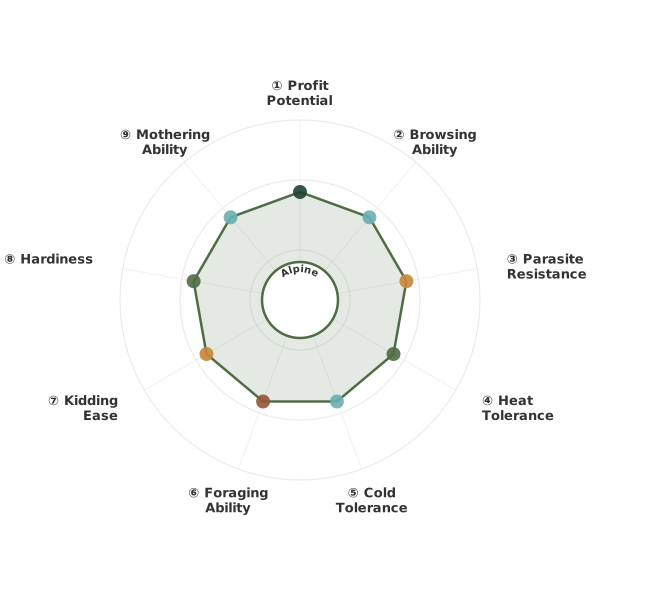
Regenerative Advantages

  • Cold Tolerance:
  • Foraging Ability:
  • Hardiness:
  • Milk Production:
  • Grazing Adaptation:

Value Streams

  • Dairy production
  • Nutrient cycling and soil building
  • Brush clearing and fire risk reduction
  • Invasive species control

Experience Level

Intermediate

Consult local experts for handling requirements

1

Climate Suitability Assessment

Will this breed thrive in your climate?

IDEALLY SUITED

Köppen Zone: Cfa (Humid Subtropical), Cfb (Oceanic (Maritime Temperate)), Csb (Warm-Summer Mediterranean), Cwb (Subtropical Highland), Dfa (Hot-Summer Continental), Dfb (Warm-Summer Continental)
US Zone: 5a, 5b, 6a, 7a

Humid subtropical climate with mild winters and warm summers is excellent for Alpine goats. Good growing season and manageable temperatures.

ADEQUATE

Köppen Zone: BSh (Hot Semi-Arid (Steppe)), BSk (Cold Semi-Arid (Steppe)), BWk (Cold Desert), Csa (Hot-Summer Mediterranean), Cwa (Monsoon-Influenced Humid Subtropical), Dfc (Subarctic)
US Zone: 4a, 8a, 9a

Hot semi-arid conditions are manageable with adequate shade and water. Goats are good browsers, but pasture quality can be a limiting factor.

NOT RECOMMENDED

Köppen Zone: Af (Tropical Rainforest), Am (Tropical Monsoon), Aw (Tropical Savanna), ET (Tundra), BWh (Hot Desert), Dwa (Monsoon-Influenced Hot-Summer Continental)
US Zone: 2a, 3a, 3b, 10a, 11a, 12a

Tropical rainforest climate is unsuitable due to persistent high heat and humidity, leading to significant stress and health challenges for Alpine goats.

Better alternatives for these "not recommended" zones: Boer Goat (better heat tolerance and meat production), Kiko Goat (hardy and adaptable to tropical environments), Boer Goat (good heat tolerance and meat production), Kiko Goat (hardy and adaptable to warmer climates), Yak (exceptionally cold-hardy, adapted to arctic conditions), Musk Ox (highly adapted to arctic environments), Nubian Goat (adapted to arid conditions with good heat tolerance), Spanish Goat (highly adaptable and drought tolerant), Yak (highly adapted to cold and harsh conditions), Siberian Goat (hypothetical breed adapted to extreme cold), Yak (exceptionally cold-hardy, adapted to extreme arctic conditions), Musk Ox (highly adapted to arctic environments with dense undercoats), Yak (superior cold tolerance and hardiness), Saanen (known for good milk production, can tolerate moderate cold with shelter), Nubian (less cold-hardy but adaptable with good management), Kiko Goat (hardy and adaptable, good for brush control in warmer climates), Boer Goat (bred for warmer climates, good meat yield), Kiko Goat (hardy and adaptable to warmer, humid conditions), Boer Goat (adapted to warmer climates and good for meat production)

Note: This breed's performance varies significantly by climate zone. Above are suitability ratings for major climate types where this breed can be raised successfully. If your climate isn't listed, this breed may not be a good fit. Breeds can technically survive in other climates with intensive management, but we don't recommend this for most regenerative operations due to questionable economics and high resource requirements.

2

Is This Breed Right for Your Operation?

Climate fit, terrain suitability, and scale considerations

Terrain & Environment

Can this breed handle my landscape? Performance on different terrain types and farm scales.

Attribute Suitability
Flat Terrain Adequate
Rolling Terrain Adequate
Small Scale Suitability Adequate

Forage & Feeding Adaptations

What can I feed them and how efficiently? Grazing ability, feed conversion, and seasonal adaptation.

Attribute Suitability
Foraging Ability Ideally Suited
Browsing Ability Adequate
Fescue Tolerance Adequate
Dry Season Grazing Adequate

Foraging Ability: Thriving on diverse/marginal vegetation broadly (woody plants, forbs, weeds, rough forage, scrubland) without supplementation. Focus: self-sufficiency on poor-quality or varied vegetation beyond quality grass.

Browsing Ability: Specialized consumption of woody vegetation specifically (shrubs, trees, branches). Actively seeks woody plants, not just opportunistic. A specialized subset of foraging ability.

Fescue Tolerance: Resistance to endophyte-infected tall fescue toxicity (critical for Southern US pastures). Exceptional = minimal impact, Typical = manageable symptoms, Limited = poor performance.

Dry Season Grazing: Ability to utilize dormant or low-quality forage during dry periods. Important for year-round grazing systems.

Scale Considerations

Small-Scale Suitability: Adequate

3

Understanding Alpine Goats Characteristics

Physical traits, temperament, and what makes this breed unique

The Alpine goat, a breed originating from the rugged Swiss Alps, is a distinguished member of the goat family, celebrated for its exceptional hardiness and adaptability to challenging environments. These animals are characterized by a medium to large frame and a robust, well-muscled build, reflecting their mountainous heritage. Their distinctive appearance includes erect ears and a wide array of coat colors and patterns, making them easily identifiable within a herd. Beyond their physical traits, Alpine goats possess biological resilience and strong foraging instincts that make them well-suited for diverse agricultural systems, particularly those on less conventional terrain. Their active and curious nature drives them to explore and browse, a behavior that is key to their utility in land management and diversified farming operations.

Physical Characteristics:Mature weight: Ewes typically range from 120-150 lbs (54-68 kg), while bucks can weigh between 150-200 lbs (68-91 kg).
Coat: Features short to medium-length hair, available in a broad spectrum of colors and patterns, including solid, bi-colored, and tri-colored variations.
Ears: Erect and pointed, a common trait among European goat breeds.
Build: Possess a sturdy, well-muscled physique with a strong bone structure designed for varied landscapes.
Horns: Both males and females typically have horns, which can grow upright or curve backward.

Behavioral and Biological Traits:Foraging Tendencies: Exhibit strong browsing habits, showing a preference for leaves, twigs, and shrubs over grasses. Their browse tolerance is estimated at 25-35%.
Temperament: Generally active, curious, and alert, often demonstrating a more independent disposition compared to other breeds.
Cold Hardiness: Possess excellent physiological adaptations and coat density that allow them to tolerate colder climates effectively.
Heat Tolerance: Show good tolerance for warmer conditions, though they benefit significantly from shade and consistent access to water during periods of extreme heat.
Dry Season Foraging: Are adept at finding sustenance on rough terrain and in drier conditions, making them valuable during less productive forage periods.
Water Requirements: Typically require 3-4 gallons (11-15 liters) of water per day, with individual needs influenced by activity levels and ambient temperatures.

These inherent physical and biological attributes position the Alpine goat as a versatile animal capable of thriving and contributing significantly to various agricultural settings. Their ability to navigate difficult terrain and utilize a wide range of forage makes them a unique and valuable asset for land stewards seeking to enhance productivity and ecological function on their farms.

4

Management, Care & Feeding

Operational guidance for raising this breed successfully

Integrating Alpine goats into a regenerative agricultural system requires a thoughtful approach that leverages their unique physical and biological traits while addressing their economic and management needs. These goats are particularly well-suited for farms with varied topography, where their browsing ability can be used for brush control and pasture improvement. Successful integration hinges on understanding their foraging habits, providing appropriate shelter and water, and establishing reliable market channels. The initial investment in fencing, water infrastructure, and herd acquisition should be carefully planned, considering the longer establishment period for both pasture systems and market development, which typically requires 2-3 years before significant returns are realized.

Herd Management and Infrastructure:Terrain and Fencing Needs: Due to their exploratory nature and tendency to seek higher ground, robust fencing is crucial. Consider installing strong, well-maintained fencing systems capable of containing goats on steep or rolling terrain (rated 4-5 for steepness, 5/5 for rolling). Electric fencing can be an effective supplement in certain areas.
Shelter and Climate Considerations: While Alpine goats possess excellent cold hardiness and good heat tolerance, providing basic shelter from extreme weather is recommended. This includes protection from wind, rain, and intense sun, especially during prolonged periods of high temperatures. Access to clean water is paramount, with daily requirements typically ranging from 3-4 gallons (11-15 liters) per animal.
Water Systems: Ensure reliable access to fresh, clean water. For farms with varied terrain, consider gravity-fed systems or strategically placed water troughs to service different paddocks.
Health and Veterinary Care: Implement a proactive health management plan. This includes regular deworming, vaccinations, and prompt attention to any signs of illness or injury. Familiarize yourself with common goat ailments and consult with a veterinarian experienced with small ruminants.

Foraging and Pasture Integration:Rotational Grazing: Implement rotational grazing strategies to manage forage quality and prevent overgrazing. This is particularly effective for brush control, as goats will preferentially browse on woody species and invasive plants. Their browse tolerance (25-35%) allows them to significantly impact undesirable vegetation.
Mixed-Species Pastures: Integrate Alpine goats into mixed-species grazing systems, potentially with cattle or sheep. Their browsing habits can complement the grazing of other livestock, leading to more efficient utilization of diverse forage resources and improved pasture structure.
Dry Season Management: Their ability to forage on dry vegetation and rough terrain is a significant advantage during drier periods. Ensure adequate carryover forage is available, and monitor body condition closely to determine if supplemental feeding is necessary.
Pasture Establishment and Optimization: Recognize that optimizing pasture for goats, especially on challenging terrain, can take 2-3 years. Focus on encouraging desirable browse species and managing the overall plant community to align with goat preferences.

Economic Implementation and Market Development:Initial Acquisition and Herd Size: Start with a manageable herd size and gradually expand as management expertise and market channels develop. Understand the upfront costs associated with purchasing quality breeding stock.
Market Channel Development: Proactively develop market channels for dairy products, meat, or breeding stock. Direct-to-consumer sales, farmers' markets, and partnerships with specialty processors are often more profitable than commodity markets. This development phase typically requires 2-3 years of consistent production and marketing.
Cost-Benefit Analysis: Conduct a thorough cost-benefit analysis comparing Alpine goat production to alternative land uses or livestock enterprises. Factor in all costs, including feed, veterinary care, fencing, water infrastructure, and labor, against potential revenue streams.
Premium Pricing Potential: While specific premiums vary, dairy products from goats can often fetch approximately 10% more in niche markets. Consistent quality and effective marketing are key to realizing these higher prices.

Successfully integrating Alpine goats involves understanding their specific needs and leveraging their natural abilities to enhance both the ecological function and economic diversity of the farm. A phased approach, focusing on robust infrastructure, proactive management, and diligent market development, will lead to sustainable success.

5

Complete Trait Reference

Comprehensive trait ratings and explanations

Climate & Environmental Adaptation

How does this breed handle environmental challenges? Weather resilience, natural resistance, and adaptation.

Attribute Suitability
Hardiness Ideally Suited
Heat Tolerance Adequate
Cold Tolerance Ideally Suited
Drought Tolerance Not Recommended
Parasite Resistance Adequate

Terrain & Land Suitability

Can this breed handle my landscape? Performance on different terrain types and farm scales.

Attribute Suitability
Flat Terrain Adequate
Rolling Terrain Adequate
Small Scale Suitability Adequate

Forage & Feeding Characteristics

What can I feed them and how efficiently? Grazing ability, feed conversion, and seasonal adaptation.

Attribute Suitability
Foraging Ability Ideally Suited
Browsing Ability Adequate
Fescue Tolerance Adequate
Dry Season Grazing Adequate

Foraging Ability: Thriving on diverse/marginal vegetation broadly (woody plants, forbs, weeds, rough forage, scrubland) without supplementation. Focus: self-sufficiency on poor-quality or varied vegetation beyond quality grass.

Browsing Ability: Specialized consumption of woody vegetation specifically (shrubs, trees, branches). Actively seeks woody plants, not just opportunistic. A specialized subset of foraging ability.

Fescue Tolerance: Resistance to endophyte-infected tall fescue toxicity (critical for Southern US pastures). Exceptional = minimal impact, Typical = manageable symptoms, Limited = poor performance.

Dry Season Grazing: Ability to utilize dormant or low-quality forage during dry periods. Important for year-round grazing systems.

Handling, Temperament & Reproduction

How easy are they to work with? Temperament, handling ease, and reproductive efficiency.

Attribute Suitability
Mothering Ability Adequate
Kidding Ease Adequate

Production Characteristics

What do they produce and how well? Meat, milk, eggs, fiber, and other products.

Attribute Suitability
Milk Production Ideally Suited
Meat Quality Not Recommended
6

Production Capabilities & Market Economics

Business case evaluation and production metrics

Dairy Production Economics

Category Value
Milk/Doe/Year 2000-2600 lbs
Lactation Period (Months) 270-305
Age First Kidding (Months) 12-15
Price Premium +10%
Annual Input Cost 450-850

Price Premium: Premium above conventional goat milk prices. Grass-fed goat dairy typically sells for premium prices through direct sales or specialty markets. Premium only applies when farm qualifies through certification (organic, grass-fed, raw milk license where legal) or direct sales channels. Without certification or qualifying market access, premium falls to $0.