
American Bison (commonly referred to as Buffalo)
American Bison, often called buffalo, simplify management by offering unparalleled hardiness and exceptional foraging ability, thriving on diverse forages with minimal intervention. These North American natives possess remarkable cold tolerance and drought resistance, making them ideal for low-input, range-feeding, and rotational grazing systems. While also demonstrating good heat tolerance and browse tolerance, their true distinction lies in their robust nature, requiring significantly less intensive care than many domestic livestock breeds. Their natural grazing adaptation and inherent parasite resistance further reduce labor and input costs, making them a compelling choice for farmers seeking resilient and self-sufficient livestock.
Regenerative Quick Profile
Best Suited For
Climates: Cool to cold continental and subarctic climates with moderate to low precipitation, and temperate oceanic climates.
Terrain: Excels on flat to rolling terrain
Scale: Best for medium to large operations (50+ animals)
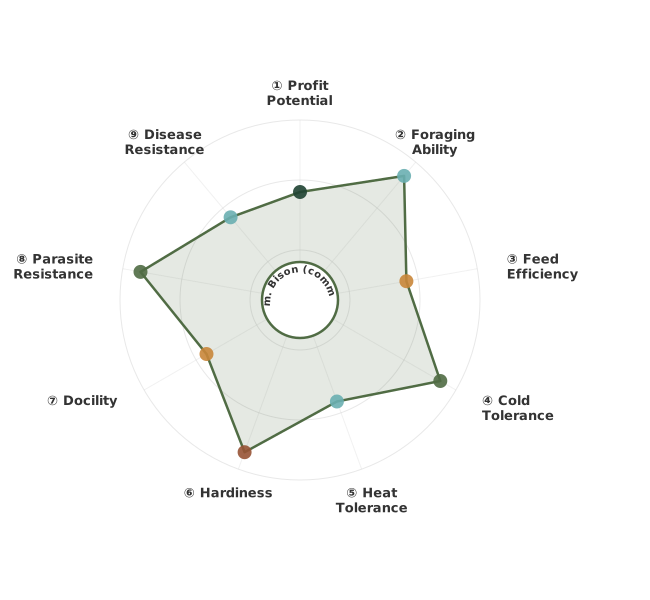
How These Traits Are Calculated
Trait dimensions are ordered clockwise starting from the top of the chart (12 o'clock position):
1. Profit Potential
Measures the economic viability and market demand for bison products.
WHAT: This trait assesses the profitability of a bison breed, considering factors like growth rate, meat yield, hide quality, and market demand for their products. Different breeds may exhibit variations in these economically important characteristics, influencing their overall profit potential.
WHY: Understanding profit potential is crucial for regenerative farmers aiming for economic sustainability. A breed with higher profit potential can contribute more significantly to the farm's income, enabling reinvestment in regenerative practices and long-term land stewardship.
HOW: Exceptional breeds will have rapid growth rates (e.g., reaching market weight within 18-24 months), high lean meat yields (e.g., >55% of carcass weight), and strong market demand for both meat and hides. Typical breeds will have moderate growth and yield, while Limited breeds may be slower growing or have less desirable product characteristics, impacting their market value.
2. Foraging Ability
Measures how well bison find and utilize diverse forage in varied landscapes.
WHAT: This trait assesses a bison herd's capacity to efficiently locate and consume a wide variety of plant species, including grasses, forbs, and browse. Variation exists in how readily different bison breeds will sample and thrive on less palatable or more fibrous forage.
WHY: For regenerative farmers, strong foraging ability means bison can thrive on pastures with less supplemental feed, reducing costs and improving ecosystem health. It allows for more effective grazing management, scarifying soil and dispersing seeds across diverse landscapes.
HOW: Exceptional bison demonstrate a wide diet breadth, readily consuming over 75% of available forage types, even in challenging environments. Typical bison utilize a good range of common forage but may require more selective grazing or supplemental feed. Limited bison are more selective, relying heavily on preferred grasses and needing significant supplementation to maintain condition.
3. Feed Efficiency in Bison
Measures how effectively bison convert feed into body mass and milk.
WHAT: This trait evaluates how much feed a bison requires to gain a pound of weight or produce a unit of milk. Different bison breeds have evolved in varied environments, leading to inherent differences in their metabolic rates and digestive capabilities, thus influencing their feed conversion ratios.
WHY: For regenerative farmers, feed efficiency is crucial for minimizing input costs and reducing land impact. More efficient bison require less supplemental feed, leading to lower grazing pressure and a more sustainable ecosystem. This trait directly impacts profitability and the overall ecological footprint of the herd.
HOW: Exceptional breeds can achieve a 10:1 feed-to-gain ratio or better, meaning they need only 10 pounds of feed for 1 pound of weight gain. Typical breeds fall in the 11:1 to 13:1 range. Limited efficiency breeds may require 14:1 or more, indicating they are less adapted to converting forage into usable resources.
4. Cold Tolerance
Measures bison's ability to withstand cold temperatures and harsh winter conditions.
WHAT: This trait assesses how well bison breeds cope with prolonged periods of cold weather, including snow, ice, and sub-zero temperatures. Variation exists due to their natural adaptations and specific breeding lines.
WHY: For regenerative farmers, good cold tolerance means reduced need for supplemental housing and feed during winter, lowering costs and environmental impact. It allows bison to thrive on pasture year-round, improving soil health.
HOW: Exceptional breeds maintain body condition and forage effectively in temperatures below -20°F (-29°C) with minimal supplemental feed. Typical breeds may require some shelter and increased feed in extreme cold. Limited breeds struggle to maintain health and productivity in harsh winter environments, necessitating significant intervention.
5. Heat Tolerance
Measures bison's ability to thrive in hot, dry conditions.
WHAT: This trait assesses a bison breed's ability to maintain normal body temperature and productivity under heat stress. Some bison breeds are naturally better adapted to warmer climates than others, exhibiting physiological differences in panting, sweating, and seeking shade.
WHY: For regenerative farmers in warmer regions, selecting bison with high heat tolerance is crucial for animal welfare, reduced stress, and sustained growth. It minimizes the need for costly cooling infrastructure and can improve reproductive success during hot spells.
HOW: Exceptional breeds can maintain good grazing and activity levels even when ambient temperatures exceed 85°F (29°C) for extended periods. Typical breeds may show slight reductions in feed intake or activity above 80°F (27°C). Limited breeds will exhibit significant signs of heat stress, such as prolonged panting and reduced movement, above 75°F (24°C).
6. Hardiness
Measures bison's ability to thrive in harsh environments.
WHAT: Hardiness assesses a bison breed's inherent ability to withstand challenging environmental conditions, including extreme temperatures, limited forage, and disease pressure. Some bison breeds are naturally more robust and require less human intervention to survive and reproduce.
WHY: High hardiness is crucial for regenerative systems as it reduces the need for supplemental feed, veterinary care, and shelter, aligning with principles of self-sufficiency and minimal external inputs. This trait directly impacts the economic viability and ecological footprint of a bison operation.
HOW: Exceptional hardiness means bison thrive in sub-zero temperatures with minimal snow cover and can maintain body condition on sparse winter forage. Typical hardiness indicates good survival with some supplemental feeding during extreme weather. Limited hardiness suggests a breed requires significant shelter, consistent high-quality feed, and is more susceptible to common ailments.
7. Docility
Measures bison's calm temperament and ease of handling in various situations.
WHAT: Docility in bison refers to their natural inclination to be calm, less reactive, and easier to manage when approached or handled by humans. This trait can vary significantly between bison lines, with some exhibiting more flighty or defensive behaviors than others.
WHY: For regenerative farmers, docile bison are crucial for efficient grazing management, less stressful animal husbandry, and reduced risk of injury to both animals and people. Easier handling translates to lower labor costs and a more sustainable, less invasive approach to land stewardship.
HOW: Exceptional docility means bison consistently remain calm with minimal agitation when observed or approached, requiring little force for movement. Typical docility involves some initial caution but readily moves with gentle guidance. Limited docility indicates a strong flight response, increased agitation, and potential for defensive behavior, often requiring more specialized handling techniques.
8. Parasite Resistance
Measures bison's natural ability to withstand internal and external parasites.
WHAT: This trait assesses the inherent ability of bison to resist infestation and infection by common internal parasites (like lungworm, stomach worms) and external parasites (like ticks, lice). Breeds exhibit varying levels of resilience due to genetic predispositions and adaptive evolutionary history.
WHY: Higher parasite resistance means less reliance on chemical treatments, reducing costs and environmental impact. This trait is crucial for regenerative systems, promoting herd health, improved feed conversion, and minimizing stress on animals and the ecosystem.
HOW: Exceptional breeds show very low incidence of parasitic illness or external infestation with minimal or no veterinary intervention. Typical breeds may require occasional, targeted treatments. Limited breeds are more susceptible and may need regular prophylactic measures to maintain health and productivity.
9. Disease Resistance
Measures bison's natural ability to withstand and recover from illness.
WHAT: This trait assesses the inherent ability of bison to resist common diseases, infections, and parasites. Variations exist due to genetic selection for hardiness and adaptation to specific environments, influencing susceptibility.
WHY: Robust disease resistance reduces veterinary costs, minimizes animal losses, and lowers the need for antibiotics, aligning with regenerative principles. Healthy bison thrive on pasture, requiring less intensive management and contributing to a more resilient herd.
HOW: Exceptional breeds demonstrate very low incidence of common ailments (e.g., <5% annual mortality from disease) and rapid recovery. Typical breeds show moderate resistance with occasional outbreaks managed through routine care. Limited breeds are more prone to illness, requiring frequent intervention and potentially impacting herd productivity.
Regenerative Advantages
- Cold Tolerance: Millennia of adaptation have equipped Bison with a dense, insulating coat and efficient metabolism for surviving extreme winter conditions.
- Drought Tolerance: Adapted to arid plains, Bison are highly water-efficient and maintain body condition on dry forage during extended dry periods.
- Parasite Resistance: Shaped by natural selection in wild populations, American Bison exhibit robust innate immunity, consistently maintaining low parasite loads.
- Foraging Ability: American Bison genetics are intensely adapted to vast prairie ecosystems, enabling efficient processing of a wide spectrum of grasses, native forbs, and other non-woody marginal vegetation year-round. This innate adaptability allows them to thrive on unimproved rangelands and tolerate periods of lower forage quality with minimal need for supplemental feed. Their robust constitution and efficient nutrient extraction from diverse, often marginal, non-woody vegetation are hallmarks of exceptional foraging ability in this species.
- Hardiness: American Bison's robust physiology and natural adaptations allow them to thrive across diverse North American environments with minimal management.
Know the Debate
- Finishing methods impact meat nutrition and profit.
- Marketing requires careful cost analysis and market alignment.
- Calm handling and adapted fencing are crucial for bison.
- Grass-feeding shows improved nutritional profiles, but varies.
- Bison thrive on forage with less intensive feeding.
Value Streams
- Meat production
Experience Level
Some livestock experience recommended (better for larger operations)
3
Understanding American Bison (commonly referred to as Buffalo) Characteristics
Physical traits, temperament, and what makes this breed unique
Understanding American Bison (commonly referred to as Buffalo) Characteristics
Physical traits, temperament, and what makes this breed unique
American Bison, often colloquially termed buffalo, are the largest land mammals in North America, distinguished by their massive heads, distinctive humps, and thick, shaggy coats that provide incredible insulation. Historically, vast herds roamed the Great Plains, playing a crucial role in the grassland ecosystem through their grazing and nutrient cycling. Their sheer size and formidable nature set them apart from domestic cattle, demanding a different approach to handling and management. Unlike cattle breeds selectively bred for specific traits like rapid growth or milk production, bison have evolved to be exceptionally resilient and self-sufficient in their native environment.
Their evolutionary history has endowed them with traits that are highly advantageous for extensive grazing systems. Bison are incredibly well-adapted to North American climates, possessing remarkable tolerance to extreme cold and significant drought resistance. This hardiness means they can thrive on diets of native grasses and forbs with minimal supplementation, often outperforming cattle in challenging environments. Their foraging behavior differs as well; they tend to graze more closely and selectively than cattle, impacting pasture composition in unique ways.
The primary distinction of bison lies in their innate hardiness and adaptability. They require less intensive management compared to many domestic livestock, seeking shelter naturally and possessing a strong instinct for self-preservation. This robust nature translates to fewer health issues and a lower reliance on human intervention for survival, making them a compelling choice for producers seeking to minimize inputs and work in greater harmony with natural cycles.
Sources behind this view
 Research
-
Foraging Ecology of Bison and Cattle on a Mixed Prairie: Implications for Natural Area Management (opens in new window)
Bison and cattle have different grazing habits on mixed prairie, influencing diet choice and management suitability. Bison digest grasses better and focus on them during rut, while cattle graze more.
-
A Reference Genome Assembly of American Bison,<i>Bison bison bison</i> (opens in new window)
New, highly detailed American bison genome assembly created using advanced DNA sequencing. This tool will improve understanding of bison genetics, history, and herd management, including monitoring ca
4
Know the Debate
American Bison offer a hardy, low-input livestock option for regenerative systems, but outcomes vary depending on management and market context. Fi...
Know the Debate
American Bison offer a hardy, low-input livestock option for regenerative systems, but outcomes vary depending on management and market context. Fi...
American Bison offer a hardy, low-input livestock option for regenerative systems, but outcomes vary depending on management and market context. Finishing strategies significantly impact meat quality and profitability, with grass-fed approaches emphasizing nutritional density and slower growth while supplemented diets may offer faster gains. Marketing requires meticulous cost analysis and alignment with consumer demand for healthy, sustainably raised products. Furthermore, successful bison management hinges on understanding their unique handling needs and robust nature.
How should bison be finished for optimal meat quality and profit?
Pasture-finished for superior nutrition
Finishing bison on diverse forages can yield meat richer in health-promoting compounds like antioxidants and have anti-inflammatory properties. This approach aligns with regenerative principles emphasizing natural diets and potentially commands premium prices in health-conscious markets.
Sources behind this view
Sources behind this view
 Videos & Podcasts
-
Grass-fed bison and beef are healthier, offering lower cholesterol, higher iron, and up to five times more omega-3 fatty acids than grain-fed options. Reduced illness in pasture-raised animals also means fewer antibiotics are needed.
Research
-
Pasture-finishing of bison improves animal metabolic health and potential health-promoting compounds in meat (opens in new window)
This study found: A study comparing bison raised on pasture versus those finished in pens on grain for about five months found significant differences in their meat's nutritional makeup. Bison finished on pasture had meat with better markers of cellular energy production and fat metabolism, and higher levels of beneficial compounds like antioxidants (vitamin E, phenolics) and certain fats. Pen-finished bison had meat with more glucose and triglycerides, and markers of stress. However, both groups had healthy omega-3 to omega-6 fat ratios and good vitamin profiles. While pasture-finishing appears to enhance certain health-promoting aspects of bison meat, the study suggests meat from pen-finished bison is not unhealthy.
-
Benchmarking the United States bison meat industry: stakeholder perceptions, production parameters, and live animal factors affecting meat quality. (opens in new window)
This study found: A study surveyed bison industry stakeholders and collected data from over 2,000 bison to understand what affects meat quality. Most people involved in the industry agree that how animals are treated directly impacts the meat. Key factors identified that affect animal well-being include how facilities are designed, how animals are handled, staff training, and how long animals are transported. Flavor was considered the most important meat quality. The study found that the average travel distance for bison to slaughter was over 800 km, and nearly all bison had some bruising. Specific animal behaviors, like head bumping before stunning, along with factors like animal sex, live weight, and the season, were linked to differences in meat color and bruising. This research provides a baseline for improving bison production practices.
Supplemented diets for efficiency and specific quality
Bison finishing diets require significantly less grain than cattle, with a preference for forage supplemented by pellets. This approach may offer faster growth and different carcass characteristics, potentially balancing input costs with desired outcomes.
Sources behind this view
Sources behind this view
Videos & Podcasts
-
Bison finishing diets require significantly less grain (4.5-5 lbs/day for bulls) compared to cattle, with a preference for forage supplemented by pellet blends, unlike high-grain cattle rations.

-
Describes the typical pathway for beef cattle from producers to feed yards, detailing the finishing period (90-200 days) and average butcher weights (around 1400 lbs) before processing.

Making Sense of the Differences
The optimal finishing strategy for bison meat depends on the desired market and available resources. Pasture-finished bison may offer superior nutritional profiles, aligning with health-conscious markets, but can have slower growth. Supplemented diets may provide faster gains and different carcass traits but require careful balancing of feed inputs. Producers must weigh market demand, land availability, cost of production, and desired nutritional outcomes.
What are the most profitable marketing and pricing strategies for bison meat?
Direct-to-consumer and premium markets
The growing grass-fed market offers opportunities through direct sales and restaurants. Profitability requires adapted genetics, excellent forage management, gentle handling, and building consumer trust, potentially yielding higher margins but demanding more direct management and marketing effort.
Sources behind this view
Sources behind this view
Videos & Podcasts
-
The US grass-fed beef market is growing rapidly, driven by consumer demand for healthier, environmentally friendly products. While imports dominate, domestic opportunities exist across retail, restaurants, and institutions. Key challenges include supply chain bottlenecks, cost control, and developing professional forage finishing.
-
Marketing grass-finished beef and lamb is a learning process; steaks were slightly tough due to forage management. Exploring local markets for lamb, anticipating 'nutrient density' will drive future marketing opportunities.

-
Stony Ridge Farm in North Carolina details profitability of grass-fed beef, emphasizing soil health and regenerative practices. Selling 15 animals yielded $1,350.65 for one cow and covered two years of hay costs, with an estimated $8-10k profit for the year. Finishing takes 24-28 months.
-
Successfully finishing grass-fed beef cattle (e.g., 1290 lb live weight, 63.41% yield) requires detailed management. Marketing through co-ops like Hickory Nut Gap to buyers such as Whole Foods and Ingles is key, linking farm soil health to consumer product.
Standardized channels and careful cost management
Selling USDA-inspected boxed beef can provide standardized returns, but requires meticulous breakeven analysis. Custom exempt sales can be profitable if priced correctly but lead to significant losses if costs are not accurately accounted for.
Sources behind this view
Sources behind this view
Videos & Podcasts
-
Accurately price grass-finished beef by calculating all costs to determine break-even price per pound, then add desired net margin. Ensure every cut, especially hamburger, has a profit margin, as hamburger is half the carcass and crucial for overall profitability.
 From the Web
-
Analyzes profitability of a 50-head grassfed beef operation in western Washington, comparing USDA-inspected boxed beef ($154/head net return) with custom exempt sales (-$358/head net loss). Provides enterprise budgets and breakeven analysis for producers.
-
Compares USDA-inspected boxed beef vs. custom exempt locker beef marketing for grassfed steers in western Washington. USDA-inspected averaged $154/head profit, while custom exempt lost $358/head, highlighting the need for accurate breakeven analysis and pricing.
-
Compares USDA-inspected boxed beef ($154/head net return) vs. custom exempt locker beef (-$358/head net loss) for grassfed steers in western Washington, providing a breakeven analysis method to ensure profitability.
Making Sense of the Differences
Bison meat profitability depends on the chosen marketing strategy. Direct-to-consumer and premium markets offer higher margins but require significant effort in building trust and managing logistics. Standardized channels like USDA-inspected boxed beef provide a more predictable income stream but may yield lower returns. Meticulous cost accounting is critical for all channels, especially custom exempt sales, to avoid losses and ensure overall financial viability.
How does animal handling and transport affect bison meat quality?
Stressful handling negatively impacts quality
Bison industry stakeholders agree that stress from handling, training, and long transport distances (over 800km noted) significantly affects meat quality, leading to issues like poor color and increased bruising.
Sources behind this view
Sources behind this view
Videos & Podcasts
-
Explains how finishing speed, genetics, soil fertility, pasture diversity, and proper processing are crucial for high-quality grass-finished beef. Addresses issues like cold shortening and the importance of nutrient density for premium markets.

Research
-
Benchmarking the United States bison meat industry: stakeholder perceptions, production parameters, and live animal factors affecting meat quality. (opens in new window)
This study found: A study surveyed bison industry stakeholders and collected data from over 2,000 bison to understand what affects meat quality. Most people involved in the industry agree that how animals are treated directly impacts the meat. Key factors identified that affect animal well-being include how facilities are designed, how animals are handled, staff training, and how long animals are transported. Flavor was considered the most important meat quality. The study found that the average travel distance for bison to slaughter was over 800 km, and nearly all bison had some bruising. Specific animal behaviors, like head bumping before stunning, along with factors like animal sex, live weight, and the season, were linked to differences in meat color and bruising. This research provides a baseline for improving bison production practices.
Conventional beef studies offer related insights
Studies on beef cattle finishing systems indicate that variations in management, including environmental factors and processing, influence carcass quality and GHG emissions; no single system is universally superior.
Sources behind this view
Sources behind this view
Research
-
Grass-fed vs. grain-fed beef systems: performance, economic, and environmental trade-offs. (opens in new window)
This study found: A study in California compared four beef production methods: conventional (grain-finished), grass-fed for 20 months, grass-fed for 20 months with a short grain finish, and grass-fed for 25 months. The conventional system produced heavier cattle with better marbling and lower greenhouse gas emissions per pound of meat. However, grass-fed systems used less water (except the longest grass-fed option) and less energy. The longest grass-fed system had the highest greenhouse gas emissions and water use. Costs to break even were highest for the grass-fed options. Researchers concluded that no single system is best for all aspects – animal performance, meat quality, economic viability, and environmental impact involve trade-offs.
Making Sense of the Differences
Both academic research and field experience underscore the importance of calm handling and minimizing stress during transport for meat quality. Prolonged transport (over 800 km) and stressful handling practices in bison have been directly linked to reduced meat quality, including poorer color and increased bruising. While direct comparison studies between bison finishing systems and their impact on meat quality are limited, insights from beef cattle research indicate that variation in management practices, including environmental factors and processing, significantly influences carcass outcomes. Prioritizing gentle handling and minimizing transport stress is therefore critical for producers aiming to achieve high-quality bison meat, especially for premium markets.
5
Management, Care & Feeding
Operational guidance for raising this breed successfully
Management, Care & Feeding
Operational guidance for raising this breed successfully
Managing American Bison requires understanding their distinct instincts and physical capabilities. Unlike cattle, bison are not easily contained by conventional fencing; they are powerful and can be prone to 'bison runs' if spooked. Electric fencing, robust woven wire, and strong, well-maintained corrals are essential. Handling should be calm and deliberate, respecting their natural flight zones and avoiding direct eye contact, which can be perceived as a challenge. Calving is typically seasonal and requires minimal intervention, as bison cows are excellent mothers.
Feeding and grazing management should focus on mimicking natural patterns. Bison are primarily grazers and do best on a diet of native grasses and forbs. Rotational grazing is highly recommended to promote pasture health, manage forage quality, and distribute manure. While they can tolerate poorer forage, providing access to clean water at all times is crucial. Supplementation is generally only necessary during extreme weather conditions or late gestation/early lactation, and should be approached cautiously to avoid disrupting their natural digestive processes.
Health management for bison is largely preventative, leveraging their natural hardiness. Vaccinations might be considered for common diseases, but their robust immune systems mean they are generally less prone to parasites and internal ailments than cattle. Regular observation for any signs of distress or injury is important, especially during handling. Deworming protocols should be based on fecal testing rather than routine administration. Establishing a relationship with a veterinarian experienced with bison is advisable for any specific health concerns.
Sources behind this view
Videos & Podcasts
-
Bison's natural mob grazing behavior benefits regenerative farming with less management. Their diverse forage intake improves health, and economic profit should be viewed across entire rotations, not
-
Sarah Murphy clarifies that bison, like other ruminants, require proper grazing management to avoid overutilization. She highlights historical context (predator-prey, migration) and contrasts it with
-
Bison management for regeneration involves mimicking historic patterns with high stock density (25-30k lbs/acre) and strip grazing, respecting their larger flight zone compared to cattle.
-
Intensified rotational grazing with bison in Manitoba involved using temporary fencing, high stocking densities (90 pairs on 2 acres), and integrating cover crops. Visual cues and adaptive management

 Community
-
Raising bison in upstate NY requires careful handling, robust fencing, and respect for their wild nature. The farm plans to adopt rotational grazing for sustainability and emphasizes maintaining speci
Read more (opens in new window) smallfarms.cornell.edu -
Bison containment requires more than electric fences; it needs Food, Family, Water, and Common Sense, with perimeter fences at 5'3"-6'. Bison milk is distinct from water buffalo milk, and bison consum
Read more (opens in new window) permies.com -
A tour of Flying D Ranch in Big Sky, Montana, revealed challenges in raising grass-fed bison, including herd genetic diversity, predator management (wolves, bears, mountain lions), and finding local p
Read more (opens in new window) sustainableagriculture.net -
Consulting bison specialist Tim Frasier describes American bison as logical, honest, and amenable wild animals, emphasizing that understanding their behavior is key to simplified and effective managem
Read more (opens in new window) permies.com
Research
-
Foraging Ecology of Bison and Cattle on a Mixed Prairie: Implications for Natural Area Management (opens in new window)
Bison and cattle have different grazing habits on mixed prairie, influencing diet choice and management suitability. Bison digest grasses better and focus on them during rut, while cattle graze more.
From the Web
-
Managing bison grazing involves rotational systems, prescribed burns, and careful observation. Bison are variety grazers that aerate soil and recycle nutrients, requiring appropriate stocking rates an
7
Production Capabilities & Market Economics
Business case evaluation and production metrics
Production Capabilities & Market Economics
Business case evaluation and production metrics
Meat Production Economics
| Category | Value |
|---|---|
| Finish Weight | 1000-1200 lbs 454-544 kg |
| Months to Finish | 28-36 |
| Price Premium | +10% to +30% |
| Annual Input Cost | $250-400 |
Price Premium: Premium above conventional beef prices ($0-8/lb range). Grass-finished bison typically sells for $8-16/lb vs. $6-12/lb for grass-finished beef. Bison meat is naturally leaner, higher in protein and omega-3s. Premium only applies when farm qualifies through certification (organic, grass-fed verified, Animal Welfare Approved) or direct marketing establishes provenance. Without certification or direct sales channels, premium falls to commodity levels.
Sources behind this view
Research
-
Pasture-finishing of bison improves animal metabolic health and potential health-promoting compounds in meat (opens in new window)
Pasture-finished bison had meat with improved cellular energy, fat metabolism, and higher antioxidants compared to pen-finished bison. Both had healthy fat ratios, with pen-finished showing higher B v
-
Benchmarking the United States bison meat industry: stakeholder perceptions, production parameters, and live animal factors affecting meat quality. (opens in new window)
Bison industry stakeholders agree animal welfare impacts meat quality. Key factors include handling, training, and transport. Over 800km average travel and high bruising rates were noted. Animal behav