
American Buff Goose
Also known as: american buff
The American Buff goose excels at simplifying flock management with its remarkable hardiness and superb foraging ability, thriving on diverse pastures and converting grass with exceptional efficiency. Originating in the United States, these large, attractive birds are known for their placid temperament and effective guardian instincts, making them a valuable addition to pastured poultry operations. Their inherent cold tolerance and minimal need for supplemental feed reduce labor and input costs, while their dual-purpose quality offers both meat and eggs. For farmers seeking a robust, self-sufficient goose breed that requires minimal intervention and maximizes the use of available forage, the American Buff stands out.
Regenerative Quick Profile
Best Suited For
Climates: Humid subtropical to continental and semi-arid climates
Scale: Excellent for small homesteads (1-10 animals)
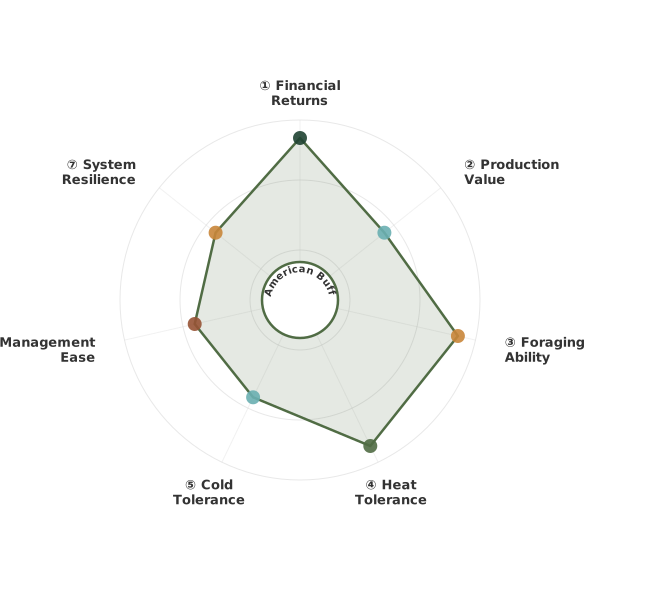
How These Traits Are Calculated
Trait dimensions are ordered clockwise starting from the top of the chart (12 o'clock position):
1. Financial Returns
Annual income per bird from eggs, meat, or specialty products
WHAT: Evaluates profit potential for specialty poultry (turkeys, ducks, geese, guinea fowl) combining meat yield, egg production (where applicable), growth timelines, and market premiums for specialty products.
WHY: Specialty poultry targets premium markets—heritage turkeys at $6-8/lb versus $1.50 commodity, duck eggs at $8-12/dozen versus $3-5 chicken eggs. Understanding enterprise-specific returns helps match birds to market opportunities, with successful operations generating 2-4× returns of conventional poultry.
HOW: Calculated from production data (market weight, timelines, egg yield) combined with efficiency traits and premium market access. Exceptional (≥2.6): strong output + premium markets + efficient growth. Typical (1.8-2.5): moderate production and markets. Limited (<1.8): low output or limited market access.
2. Production Value
Meat yield, egg production, and specialty product quality
WHAT: Measures output quality and quantity combining meat characteristics (size, flavor, texture prized by consumers), egg production (for laying breeds), and specialty products (foie gras, down feathers) that command premiums.
WHY: Production value determines market positioning. Heritage turkeys with superior flavor justify $6-8/lb premiums, duck eggs with rich yolks attract baking customers at $1+ per egg, quality down commands $20-40/lb. High production value enables profitable small-scale operations where commodity birds require large volume to achieve viability.
HOW: Composite assessment of documented production characteristics and market quality. Exceptional (≥2.6): superior product quality + strong output + specialty attributes. Typical (1.8-2.5): good standard production. Limited (<1.8): commodity quality, minimal specialty value.
3. Foraging Ability
Feed cost reduction through natural foraging behavior
WHAT: Measures effectiveness at obtaining nutrition through foraging—consuming insects, seeds, greens, and other natural foods—reducing purchased feed requirements 20-50% in pasture-based systems.
WHY: Aggressive foragers reduce feed costs while providing pest control (insects, ticks, slugs) and weed management services. Turkeys consuming 30-40% of calories from forage save $15-30 per bird over growing season, making the difference between profitable and marginal operations.
HOW: Rated from documented foraging behavior and feed reduction potential. Exceptional (≥2.6): excellent foragers, 40-50% feed reduction, active pest control. Typical (1.8-2.5): moderate foraging, 20-30% reduction. Limited (<1.8): minimal foraging, requires full feeding.
4. Heat Tolerance
Performance in hot weather above 85°F (29°C)
WHAT: Evaluates adaptation to sustained heat above 85°F (29°C), measuring heat stress resistance, growth/production maintenance, and survival during summer peaks. Critical for southern operations and summer meat production.
WHY: Heat stress reduces feed intake 20-40%, slows growth, and increases mortality—particularly problematic for turkeys naturally susceptible to heat. Heat-adapted breeds maintain production schedules where others require expensive cooling or suffer significant losses during summer.
HOW: Rated from database trait 'heat_tolerance' based on documented characteristics. Exceptional (≥2.6): maintains production in 95°F+ (35°C+), low mortality. Typical (1.8-2.5): manageable with shade and water. Limited (<1.8): high heat sensitivity, struggles above 85°F.
5. Cold Tolerance
Performance in cold weather below 20°F (-7°C)
WHAT: Evaluates adaptation to sustained cold below 20°F (-7°C), measuring feather insulation, cold-weather foraging activity, and winter production/growth maintenance. Important for year-round outdoor systems in northern climates.
WHY: Cold-sensitive birds require heated housing ($50-200 monthly winter costs), reduce activity limiting foraging value, and experience higher mortality. Cold-hardy breeds remain active outdoors year-round, maintain winter egg production (ducks/geese), and thrive with basic shelter.
HOW: Rated from database trait 'cold_tolerance' based on breed characteristics. Exceptional (≥2.6): excellent insulation, active in <0°F (-18°C), maintains winter production. Typical (1.8-2.5): moderate hardiness. Limited (<1.8): requires heated shelter, limited winter activity.
6. Management Ease
Handling temperament and care requirements
WHAT: Measures daily management simplicity combining temperament (calm vs flighty/aggressive), health needs, natural breeding ability (versus artificial insemination required), and routine handling cooperation.
WHY: Difficult birds increase labor 2-3× and create safety concerns. Aggressive turkeys or geese require protective equipment during handling, flighty birds complicate catching for processing, breeds requiring AI add complexity. Calm birds with good health enable confident management by beginners.
HOW: Weighted assessment: temperament (50%), health needs (30%), breeding ease (20%). Exceptional (≥2.6): calm and manageable, robust health, natural breeding. Typical (1.8-2.5): manageable with experience. Limited (<1.8): aggressive or nervous, high health needs, or breeding complications.
7. Flock Resilience
Disease resistance and survival under typical stresses
WHAT: Evaluates flock robustness across disease resistance (particularly respiratory issues and common poultry diseases), parasite tolerance, predator awareness, and general hardiness determining survival through typical challenges.
WHY: Resilient breeds maintain productivity through challenges causing 20-50% losses in susceptible birds—surviving disease pressure, evading predators through awareness, resisting parasites. This determines whether flocks thrive with basic care or require intensive interventions and predator-proof housing.
HOW: Composite assessment of documented health and survival characteristics. Exceptional (≥2.6): strong disease resistance + predator-savvy + hardy. Typical (1.8-2.5): standard resilience with routine care. Limited (<1.8): health-sensitive or vulnerable, requires intensive management and protection.
Regenerative Advantages
- Heat Tolerance: Lighter build and efficient cooling mechanisms allow American Buff Geese to maintain production well above 90°F, positioning them as exceptional in warmer conditions.
- Grazing Ability: American Buff geese are exceptional grazers on quality grass-based pasture. They efficiently convert diverse grasses and polycultures into usable nutrition with minimal supplementation, making them ideal for pastured poultry operations. Their strong innate drive to graze allows them to thrive in well-managed rotational or extensive grazing systems, representing a benchmark for waterfowl productivity on high-quality forage.
- Foraging Ability: These geese demonstrate exceptional foraging ability on marginal and diverse vegetation. Their hardiness and natural inclination allow them to effectively utilize roughage, weeds, and even some browse when available. The American Buff's ability to thrive with minimal inputs on varied forage types, including low-quality pastures, highlights their self-sufficient heritage and capacity for natural sustenance gathering.
- Hardiness: With a history of selection for resilience in varied domestic settings, these geese adapt well to extensive systems without constant specialized care.
- Docility: Their naturally calm disposition makes American Buff Geese exceptionally easy to handle and approach, placing them in the top tier for manageability.
Value Streams
- Meat & Egg production
- Insect and pest control
- Scratch tillage and compost distribution
Experience Level
Suitable for first-time livestock owners
4
Management, Care & Feeding
Operational guidance for raising this breed successfully
Management, Care & Feeding
Operational guidance for raising this breed successfully
Integrating American Buff geese into a farm system requires thoughtful planning that leverages their physical attributes, economic potential, and environmental contributions. Their inherent hardiness and foraging prowess mean they can thrive in a variety of pasture-based settings, but success hinges on providing appropriate management, adequate space, and access to resources. Understanding their life cycle, nutritional needs, and how they interact with the broader farm ecosystem is crucial for maximizing their benefits and ensuring a profitable, sustainable operation. A phased approach, starting with a smaller flock, can help farmers gain experience and refine their management strategies before scaling up.
Physical and Environmental Requirements:• Housing and Shelter: While hardy, they require protection from extreme weather, predators, and a secure place to roost at night. This can range from a simple A-frame shelter for temporary grazing to a more permanent coop, especially for nesting and winter protection.
• Space Allocation: Geese need ample space to forage and roam. A general guideline is at least 100 square feet per bird for free-ranging, with more space being beneficial for optimal pasture utilization.
• Water Access: A reliable source of clean water is essential, not just for drinking but also for preening and maintaining feather health. A large tub, trough, or access to a pond or stream is ideal.
• Pasture Management: Integration into rotational grazing systems is highly recommended. Allowing geese to graze down pastures before moving them helps stimulate grass growth, distribute manure evenly, and reduce weed pressure. Ensure forage is suitable for grazing and free of toxic plants.
• Climate Considerations: While cold-tolerant, ensure adequate dry bedding in winter. In hot weather, provide shade and ample water to prevent heat stress. Their drought tolerance means they can utilize drier forage but may require supplemental feed during prolonged dry spells.
Economic Implementation and Market Considerations:• Production Timeline: Plan for a 4-5 month finishing period for meat production. This allows for market planning, processing arrangements, and potential for multiple cycles if demand exists.
• Input Cost Management: Maximize foraging by providing high-quality pasture and cover crops. Supplement with a balanced ration, especially as they approach finishing or during periods of low forage availability, to meet their nutritional needs. Annual input costs can range from $25 to $45 per head, significantly reduced by effective grazing.
• Market Channel Development: Identify and establish relationships with direct-to-consumer markets (farmers markets, CSAs, direct online sales) or specialty butcher shops to capture the 20-50% price premium. Commodity markets are unlikely to yield profitable returns.
• Processing Logistics: Secure reliable processing options. Given their 15-20 lb weight, they are well-suited for direct-to-consumer sales and smaller restaurant orders. Understand local regulations regarding poultry processing.
• Flock Size and Scalability: Begin with a manageable flock size to learn their needs and management. Scaling up should align with market demand and the capacity of available pasture and infrastructure.
Management Practices:• Breeding and Hatching: Geese lay 25-40 eggs per season. If hatching goslings, ensure proper incubation (28-35 days) and brooding conditions, providing warmth and access to feed and water immediately after hatching.
• Dietary Needs: While excellent foragers, they benefit from a balanced commercial waterfowl ration, particularly for growing goslings and laying geese. Ensure grit is available for digestion.
• Health Monitoring: American Buffs are generally hardy, but monitor for common poultry ailments, parasite loads, and signs of injury. Good biosecurity and clean living conditions are primary preventive measures.
• Predator Protection: Implement robust fencing and secure night housing to protect geese from common predators such as foxes, raccoons, and birds of prey.
• Integration with Other Livestock: They can effectively graze alongside cattle or sheep, following behind them in a rotational sequence to clean up pastures and manage weed seeds.
Successful integration of American Buff geese relies on understanding their specific requirements for space, water, and nutrition, alongside a strategic approach to marketing. By capitalizing on their natural foraging abilities and hardiness, farmers can create a profitable and ecologically beneficial enterprise.
Sources behind this view
 Community
-
Geese and chickens have different needs; geese excel on pasture. Soaking feed increases chicken intake and reduces waste. Local university extension services offer valuable data on nutrition and stock
Read more (opens in new window) permies.com -
Geese and chickens have different nutritional needs; geese excel on pasture. Soaking feed until slightly fermented reduces consumption by one-third and improves intake. Chickens control insects and ca
Read more (opens in new window) permies.com