Regenerative Quick Profile

Best Suited For

Climates: Humid subtropical to continental and semi-arid climates

Terrain: Requires carefully managed terrain

Scale: Best for medium to large operations (50+ animals)
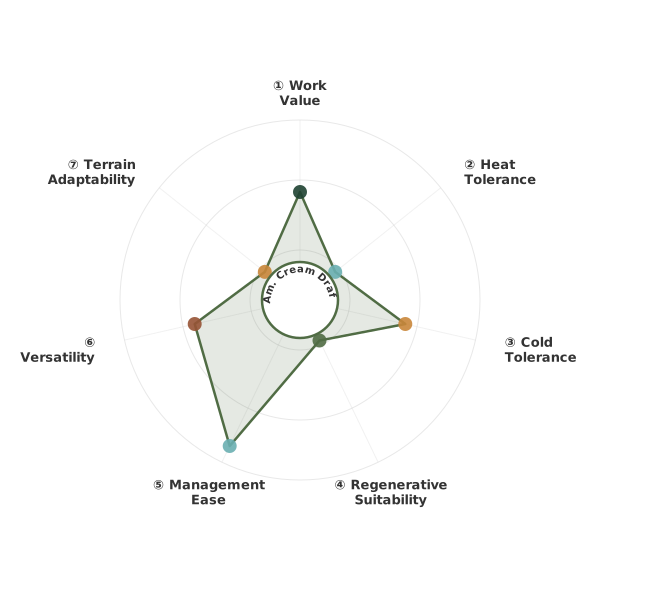
Regenerative Advantages

  • Temperament: Possessing an inherently calm and docile nature, this draft horse is exceptionally easy to handle and train, ideal for novice owners and safety-critical farm operations.
  • Draft Capability: Engineered for heavy draft tasks, this breed possesses the immense musculature, bone density, and calm disposition essential for demanding, sustained farm labor.

Value Streams

  • Nutrient cycling and soil building

Experience Level

Intermediate

Some livestock experience recommended (better for larger operations)

1

Climate Suitability Assessment

Will this breed thrive in your climate?

IDEALLY SUITED

Köppen Zone: Cfa (Humid Subtropical), Cfb (Oceanic (Maritime Temperate)), Csb (Warm-Summer Mediterranean), Cwb (Subtropical Highland), Dfb (Warm-Summer Continental)
US Zone: 7a, 8a
EU Climate Region: Oceanic, Atlantic

Humid subtropical climates with mild winters and hot summers are well-suited. The breed's cold tolerance is more than adequate, and summer heat can be managed with shade and water.

ADEQUATE

Köppen Zone: BSk (Cold Semi-Arid (Steppe)), Csa (Hot-Summer Mediterranean), Cwa (Monsoon-Influenced Humid Subtropical), Dfa (Hot-Summer Continental)
US Zone: 5a, 5b, 6a, 9a
Australian Zone: Zone 3, Zone 4
EU Climate Region: Boreal, Pannonian, Continental

Cold semi-arid climates can be managed with standard winter care, but summer heat and limited rainfall will require attention to shade and water. Drought tolerance is a concern.

NOT RECOMMENDED

Köppen Zone: Af (Tropical Rainforest), Am (Tropical Monsoon), Aw (Tropical Savanna), ET (Tundra), BSh (Hot Semi-Arid (Steppe)), BWh (Hot Desert), BWk (Cold Desert), Dfc (Subarctic), Dwa (Monsoon-Influenced Hot-Summer Continental)
US Zone: 2a, 3a, 3b, 4a, 10a, 11a, 12a
Australian Zone: Zone 5

Tropical rainforest climate is characterized by year-round high temperatures and humidity, leading to severe heat stress for this breed. Requires extensive cooling infrastructure.

Better alternatives for these "not recommended" zones: Australian Stock Horse (Known for its hardiness and adaptability to Australian conditions, including heat.), Brumbies (Wild horses adapted to harsh Australian environments, demonstrating resilience to heat and limited resources.)

Note: This breed's performance varies significantly by climate zone. Above are suitability ratings for major climate types where this breed can be raised successfully. If your climate isn't listed, this breed may not be a good fit. Breeds can technically survive in other climates with intensive management, but we don't recommend this for most regenerative operations due to questionable economics and high resource requirements.

2

Is This Breed Right for Your Operation?

Climate fit, terrain suitability, and scale considerations

Terrain & Environment

Can this breed handle my landscape? Performance on different terrain types and farm scales.

Attribute Suitability Explanation
Flat Terrain Not Recommended Designed for agricultural work in flatter environments, its substantial build and moderate pace are not optimized for sustained high-speed movement across open, level terrain.
Rolling Terrain Not Recommended Selected for draft work on flatter ground, its heavy build and lower center of gravity can lead to instability and potential injury on slopes exceeding 10-15 degrees.
Small Scale Suitability Not Recommended Draft horses require significant acreage (2-5 acres per animal) and specialized handling. Their large size and infrastructure needs are generally too intensive for small farms.

Forage & Feeding Adaptations

What can I feed them and how efficiently? Grazing ability, feed conversion, and seasonal adaptation.

Attribute Suitability Explanation
Browsing Ability Not Recommended The American Cream Draft Horse is primarily adapted for grazing, with a physiological makeup geared towards efficient grass consumption and energy storage. While they may opportunistically nibble on available woody vegetation if grasses are scarce, they do not actively seek out browse as a primary food source. Their digestive system and foraging behaviors are not specialized for the efficient processing of woody browse, and consequently, they would struggle to maintain optimal condition if relied upon heavily for browsing, requiring supplementation. This indicates a limited capacity for dedicated browsing.
Fescue Tolerance Not Recommended Developed in a climate without significant fescue pressure, this breed likely lacks inherent adaptations to thrive on fescue pastures, posing potential toxicity risks.
Dry Season Grazing Not Recommended Designed for rich pastures, its substantial size and energy demands make efficient foraging on sparse dry vegetation challenging, necessitating significant supplemental feeding.

Browsing Ability: Specialized consumption of woody vegetation specifically (shrubs, trees, branches). Actively seeks woody plants, not just opportunistic. A specialized subset of foraging ability.

Fescue Tolerance: Resistance to endophyte-infected tall fescue toxicity (critical for Southern US pastures). Exceptional = minimal impact, Typical = manageable symptoms, Limited = poor performance.

Dry Season Grazing: Ability to utilize dormant or low-quality forage during dry periods. Important for year-round grazing systems.

Scale Considerations

Small-Scale Suitability: Not Recommended

Draft horses require significant acreage (2-5 acres per animal) and specialized handling. Their large size and infrastructure needs are generally too intensive for small farms.

Water Requirements: 10-15 gal/day (38-57 L/day) gallons/day

3

Understanding American Cream Draft Horse Characteristics

Physical traits, temperament, and what makes this breed unique

The American Cream Draft Horse is a distinctive and relatively rare breed of draft horse, recognized for its unique cream color, pink skin, and amber or light blue eyes. Originating in Iowa around 1905 from a foundation mare known as "Old Granny," this breed was developed for its gentle disposition, strength, and versatility in farm work. Physically, they present a substantial yet balanced build, standing between 15.2 and 16.2 hands high and typically weighing 1,600 to 2,000 pounds. Their well-developed musculature is suited for heavy draft tasks, while their conformation allows for efficient movement. This breed's unique coloration is a result of a specific gene that affects pigment, making them visually distinct from other draft breeds.

Physical and Biological Characteristics:Coat Color: Uniform cream, a defining trait of the breed.
Skin Pigmentation: Consistently pink, complementing the cream coat.
Eye Color: Amber or light blue, adding to their unique appearance.
Height: Typically 15.2 to 16.2 hands.
Weight: Ranging from 1,600 to 2,000 pounds, indicating a robust build.
Musculature: Well-developed, ideal for pulling and heavy work.
Conformation: Balanced and refined for a draft type, facilitating efficient locomotion.
Head: Proportionate with a broad forehead and straight to slightly convex profile.
Legs: Strong and correctly set to support significant weight and ensure stability.

Temperament and Work Ethic:
American Cream Draft Horses are celebrated for their exceptionally docile and gentle disposition. This calm temperament makes them amenable to training and handling, even for individuals with less experience with horses. They possess an innate willingness to please and a strong work ethic, which translates into reliable performance across various agricultural tasks. Their steady, unflappable nature minimizes stress during handling and reduces the likelihood of unpredictable reactions, a significant advantage in busy farm environments where safety and predictability are paramount.

Endurance and Hardiness:
These horses demonstrate good endurance, capable of sustaining work over extended periods without undue fatigue. Their inherent hardiness allows them to adapt to a range of environmental conditions, including moderate cold and drought. They are known for their efficient feed utilization, requiring less sustenance relative to their size and workload compared to some other breeds. Their digestive systems are well-suited for processing forages, enabling them to utilize dry matter effectively, particularly during drier seasons, although strategic supplementation can enhance their performance and condition.

Environmental Adaptability:
The breed exhibits a good fit for many agricultural landscapes, particularly those with flat or gently rolling terrain. Their physical build and footing make them highly suitable for open fields and moderate undulations.
Terrain Suitability: Rated 4/5 for flat and rolling terrain, indicating strong adaptability for plowing and general farm work.
Cold Hardiness: Rated Good, allowing them to maintain condition and productivity in cooler climates with appropriate shelter.
Heat Tolerance: Rated Good, enabling work in warmer temperatures, provided adequate hydration and rest are maintained.
Drought Tolerance: Rated Good, showing resilience in drier conditions and effective utilization of available forage.
Dry Season Grazing: Capable of utilizing dry forage, though supplementary nutrition is often beneficial.
Fescue Tolerance: Moderate, requiring careful pasture management when fescue is present.
Browse Tolerance: Minimal (5-10% of diet), indicating they are primarily grazers.

4

Management, Care & Feeding

Operational guidance for raising this breed successfully

Integrating American Cream Draft Horses into a regenerative farming system requires careful planning that considers their physical needs, economic potential, and environmental contributions. Success hinges on understanding their unique characteristics and aligning them with specific farm goals and existing infrastructure. This breed offers a pathway to reduced fossil fuel reliance and enhanced soil health, but their integration is a long-term investment that benefits from a strategic approach to market development, infrastructure, and management.

Physical and Environmental Integration Requirements:
Ensuring the well-being and productivity of American Cream Draft Horses begins with providing appropriate living conditions and work environments that suit their physical attributes and environmental tolerances.
Housing and Shelter: While they possess good cold and heat tolerance, adequate shelter from extreme weather (intense sun, heavy rain, wind, and extreme cold) is crucial. This can include simple run-in sheds or more substantial barn structures.
Fencing and Pastures: Robust fencing is necessary due to their size and strength. Pastures should be well-managed to provide quality forage, considering their primary grazing habit. For areas with fescue, careful pasture rotation and monitoring are recommended due to moderate tolerance.
Water Access: Consistent access to clean, fresh water is paramount, typically requiring 10-15 gallons per day per horse, increasing with workload and temperature.
Terrain Considerations: They are best suited for flat to gently rolling terrain. While capable of handling moderate slopes, their efficiency and safety can be compromised on very steep or uneven ground. Their suitability for specific tasks like plowing or logging should be assessed against the farm's landscape.
Draft Work Setup: Specialized harness, collars, and appropriate hitching equipment are essential for safe and effective draft work. This equipment needs to be correctly fitted to the individual horse to prevent injury and maximize efficiency.

Economic Implementation and Market Development:
The economic viability of American Cream Draft Horses is tied to developing specific revenue streams and requires upfront investment in infrastructure and market access.
Phased Investment: Initial costs include purchasing suitable horses, infrastructure (shelter, fencing, equipment), and potentially training. A phased approach, starting with one or two horses, can mitigate risk.
Market Research and Networking: Identifying niche markets for draft power services or breeding stock is critical. This involves networking with potential clients, attending breed association events, and building a reputation for reliability and quality.
Timeline for Returns: Revenue from draft power services can begin within 1-3 years as markets are established. Breeding stock sales can take 3-5 years to develop a reputable program. Manure benefits are realized immediately through reduced fertilizer costs.
Cost Management: Feed costs can be managed through effective pasture management, though supplementary feeding may be required, especially for working horses. Routine veterinary care, farrier services, and dental work represent ongoing annual expenses of approximately $800-$1,500 per horse, not including specialized equipment or unforeseen health issues.

Management Practices for Regenerative Integration:
Effective management ensures the horses contribute positively to the farm's ecosystem while maintaining their health and productivity.
Training and Handling: Consistent, positive reinforcement training is key to leveraging their docile temperament. Early and ongoing training for draft work is essential.
Nutrient Cycling: Implement a system for collecting, composting, and applying manure to fields. This transforms a waste product into a valuable soil amendment, closing nutrient loops.
Pasture Rotation and Health: Utilize rotational grazing to improve pasture health, prevent overgrazing, and distribute manure evenly. Monitor forage quality, especially during dry periods, and provide appropriate supplementation.
Workload Management: Balance work demands with rest and recovery periods. Ensure horses are fit for the tasks they are assigned and are not overworked, particularly in hot weather.
Continuous Learning: Stay informed about best practices for draft horse management, regenerative agriculture techniques, and market trends related to animal power. Participating in breed associations and farmer networks can provide valuable support and knowledge.

Integrating American Cream Draft Horses is a commitment to a more holistic and sustainable approach to agriculture. By understanding their physical, economic, and environmental dimensions, land stewards can effectively leverage this unique breed to enhance farm resilience and productivity.

5

Complete Trait Reference

Comprehensive trait ratings and explanations

Climate & Environmental Adaptation

How does this breed handle environmental challenges? Weather resilience, natural resistance, and adaptation.

Attribute Suitability Explanation
Hardiness Adequate While generally robust for managed farm settings, its development in Iowa means it lacks the extreme environmental resilience of breeds adapted to harsher climates.
Heat Tolerance Not Recommended Its substantial build and coat, developed for temperate climates and heavy work, predispose it to heat stress, requiring significant cooling measures above 80°F.
Cold Tolerance Adequate Originating from a temperate climate, this breed possesses adequate insulation but requires standard winter housing and feeding to maintain condition, exceeding the needs of breeds adapted to extreme cold.
Drought Tolerance Not Recommended Its temperate origins and focus on farm work and milk production indicate a need for consistent resources, making it less resilient to drought than breeds adapted to arid conditions.

Terrain & Land Suitability

Can this breed handle my landscape? Performance on different terrain types and farm scales.

Attribute Suitability Explanation
Flat Terrain Not Recommended Designed for agricultural work in flatter environments, its substantial build and moderate pace are not optimized for sustained high-speed movement across open, level terrain.
Rolling Terrain Not Recommended Selected for draft work on flatter ground, its heavy build and lower center of gravity can lead to instability and potential injury on slopes exceeding 10-15 degrees.
Small Scale Suitability Not Recommended Draft horses require significant acreage (2-5 acres per animal) and specialized handling. Their large size and infrastructure needs are generally too intensive for small farms.

Forage & Feeding Characteristics

What can I feed them and how efficiently? Grazing ability, feed conversion, and seasonal adaptation.

Attribute Suitability Explanation
Browsing Ability Not Recommended The American Cream Draft Horse is primarily adapted for grazing, with a physiological makeup geared towards efficient grass consumption and energy storage. While they may opportunistically nibble on available woody vegetation if grasses are scarce, they do not actively seek out browse as a primary food source. Their digestive system and foraging behaviors are not specialized for the efficient processing of woody browse, and consequently, they would struggle to maintain optimal condition if relied upon heavily for browsing, requiring supplementation. This indicates a limited capacity for dedicated browsing.
Fescue Tolerance Not Recommended Developed in a climate without significant fescue pressure, this breed likely lacks inherent adaptations to thrive on fescue pastures, posing potential toxicity risks.
Dry Season Grazing Not Recommended Designed for rich pastures, its substantial size and energy demands make efficient foraging on sparse dry vegetation challenging, necessitating significant supplemental feeding.

Browsing Ability: Specialized consumption of woody vegetation specifically (shrubs, trees, branches). Actively seeks woody plants, not just opportunistic. A specialized subset of foraging ability.

Fescue Tolerance: Resistance to endophyte-infected tall fescue toxicity (critical for Southern US pastures). Exceptional = minimal impact, Typical = manageable symptoms, Limited = poor performance.

Dry Season Grazing: Ability to utilize dormant or low-quality forage during dry periods. Important for year-round grazing systems.

Working Capability

Can this breed perform work? Draft power, pack transport, riding, and training ease.

Attribute Suitability Explanation
Draft Capability Ideally Suited Engineered for heavy draft tasks, this breed possesses the immense musculature, bone density, and calm disposition essential for demanding, sustained farm labor.
Riding Suitability Not Recommended Despite a good temperament, its heavy build and primary selection for draft work limit its athleticism and trainability for diverse riding disciplines compared to lighter horses.