
Angora Goats
Also known as: mohair goats, fiber goats, angoras, angora does, mohair producers, angora fiber goats
Angora goats simplify brush management and thrive on diverse forage, making them an excellent choice for farmers seeking efficient land clearing and supplemental income from high-quality fiber. Originating from Turkey, these distinctive goats are renowned for their lustrous mohair, a sought-after textile fiber. Beyond their fiber production, Angoras demonstrate good hardiness and kidding ease, requiring minimal intervention during lambing. Their browsing ability excels in tackling overgrown pastures and woody vegetation, aligning them with top practices like rotational grazing and multi-species grazing for enhanced pasture health and weed control. While also offering good meat quality, their primary economic advantage lies in their exceptional fiber yield and their effectiveness as natural landscapers.
Regenerative Quick Profile
Best Suited For
Climates: Semi-arid to temperate, with some humid subtropical and oceanic influences
Terrain: Best for rolling to steep terrain
Scale: Suitable for small to medium operations (10-50 animals)
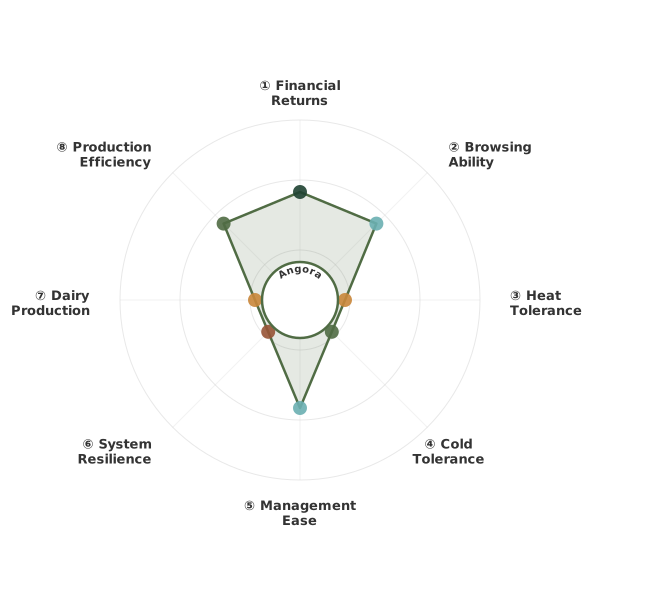
How These Traits Are Calculated
Trait dimensions are ordered clockwise starting from the top of the chart (12 o'clock position):
1. Financial Returns
Annual income per doe from kids, milk, or fiber
WHAT: Evaluates annual profit potential across meat (kid sales), dairy (milk production), fiber (cashmere/mohair), or dual-purpose value. Combines production output with input costs, kidding rates, and market premiums.
WHY: Goat profitability varies by enterprise type—dairy goats producing 1,500-2,500 lbs milk annually generate $400-800 revenue versus meat goats at $150-300 from kid sales. Understanding income potential by enterprise type helps match breeds to market opportunities and farm goals.
HOW: Calculated from enterprise-specific production data (milk yield, kid growth, fiber weight) combined with efficiency traits and costs. Exceptional (≥2.6): high output for enterprise type + low inputs + strong markets. Typical (1.8-2.5): moderate production and costs. Limited (<1.8): low output or premium-dependent without reliable access.
2. Browsing Ability
Effectiveness at consuming brush, weeds, and woody plants
WHAT: Measures goat effectiveness at controlling unwanted vegetation—clearing brush, managing invasive plants, consuming woody browse—while providing land management services that reduce fuel loads and restore degraded pastures.
WHY: Browsers reduce land clearing costs $200-600 per acre compared to mechanical methods while providing income. Effective browsers tackle multiflora rose, kudzu, poison ivy, and small trees where grazers fail, converting liability into profitability.
HOW: Rated from database trait 'browsing_ability' and documented land management effectiveness. Exceptional (≥2.6): aggressive browsers, thrives on brush, excellent weed control. Typical (1.8-2.5): moderate browsing with mixed diet. Limited (<1.8): prefers grass, minimal brush consumption.
3. Heat Tolerance
Milk production and health in hot weather above 85°F (29°C)
WHAT: Evaluates adaptation to sustained heat above 85°F (29°C), measuring production maintenance, heat stress resistance, and cooling behavior. Critical for dairy goats where heat drops milk production 20-40%.
WHY: Heat-sensitive breeds stop milking during summer peaks, creating 2-4 month income gaps in hot climates. Heat-adapted breeds maintain production year-round, provide consistent cash flow, and eliminate need for expensive cooling systems (fans, misters, air conditioning).
HOW: Rated from database trait 'heat_tolerance' based on documented characteristics. Exceptional (≥2.6): tropical origins, maintains production in 95°F+ (35°C+). Typical (1.8-2.5): moderate tolerance with shade and water. Limited (<1.8): production drops significantly above 85°F, requires cooling.
4. Cold Tolerance
Performance in cold weather below 20°F (-7°C)
WHAT: Evaluates adaptation to sustained cold below 20°F (-7°C), measuring coat thickness, metabolic adaptation, and winter performance. Important for northern climates with harsh winters and winter kidding systems.
WHY: Cold stress increases feed requirements 30-50%, complicates kidding (newborns at high risk), and drops milk production in dairy breeds. Cold-hardy breeds maintain production and kid successfully outdoors where others require heated barns.
HOW: Rated from database trait 'cold_tolerance' based on breed characteristics. Exceptional (≥2.6): thick winter coats, northern origins, thrives in <0°F (-18°C). Typical (1.8-2.5): moderate hardiness, basic shelter sufficient. Limited (<1.8): requires heated shelter, struggles with winter kidding.
5. Management Ease
Handling temperament and kidding ease
WHAT: Measures daily management simplicity combining temperament (calm vs flighty), kidding ease (unassisted births), and fence respect. Easy breeds cooperate with routines while difficult breeds create constant challenges.
WHY: Difficult goats increase labor 2-3× through kidding interventions, frequent escapes requiring fence repairs, and handling challenges (especially in dairy operations with twice-daily milking). Calm breeds with easy kidding enable efficient one-person operations.
HOW: Weighted assessment: temperament (40%), kidding ease (35%), fence respect (25%). Exceptional (≥2.6): calm and cooperative, unassisted kidding, respects fencing. Typical (1.8-2.5): manageable with experience. Limited (<1.8): flighty or aggressive, frequent interventions, notorious escapers.
6. Herd Resilience
Health and productivity under stress conditions
WHAT: Evaluates herd robustness across disease resistance, parasite tolerance, drought adaptation, and general hardiness. Measures ability to maintain health and production through typical challenges that affect goats.
WHY: Resilient breeds reduce veterinary costs, survive parasite pressure that kills others (goats being highly susceptible), thrive on sparse forage during drought, and maintain productivity through weather extremes. This determines whether herds thrive independently or require constant medical interventions.
HOW: Composite assessment across multiple resilience factors. Exceptional (≥2.6): exceptional health + parasite resistant + drought tolerant + hardy. Typical (1.8-2.5): standard resilience with routine care. Limited (<1.8): health-sensitive, requires intensive management.
7. Milk Production
Annual milk yield and lactation length for dairy breeds
WHAT: Measures milk output for dairy breeds, evaluating annual yield (1,200-3,000+ lbs), lactation length (8-12 months), milk quality (butterfat, protein), and production consistency. Only relevant for dairy-type breeds.
WHY: Dairy goats provide daily income through milk sales, cheese production, or value-added products. High producers (2,000+ lbs) generating $3-6 daily revenue make dairy operations viable at small scales (10-20 does) where lower producers require larger herds to achieve profitability.
HOW: Rated from database dairy production data and breed standards. Exceptional (≥2.6): 2,400+ lbs annually, 10+ month lactations, high quality milk. Typical (1.8-2.5): 1,500-2,400 lbs, standard lactations. Limited (<1.8): <1,500 lbs or short lactations, primarily meat-type.
8. Production Efficiency
Output relative to feed consumed and care required
WHAT: Measures how effectively goats convert feed into saleable output (milk, meat, fiber), combining feed efficiency, foraging ability, and growth/production rates. Efficient breeds maximize output per dollar of feed input.
WHY: Feed costs represent 50-70% of operating expenses. Breeds converting 4:1 versus 6:1 (feed:output) save $100-200 annually per goat. Excellent foragers reduce purchased feed needs 30-50%, making the difference between profitable and marginal operations.
HOW: Weighted formula: feed efficiency (40%), foraging ability reduces purchased feed (35%), production rate (25%). Exceptional (≥2.6): excellent feed conversion + strong foragers + high output. Typical (1.8-2.5): moderate efficiency. Limited (<1.8): poor feed conversion or low output relative to inputs.
Regenerative Advantages
- Browsing Ability: Angora goats are exceptional browsers, specifically adapted to thrive on woody vegetation. They actively seek out and consume shrubs and trees, efficiently converting browse into high-quality fiber. Their diet can be predominantly woody plants, and they maintain excellent body condition on such forage, showcasing specialized adaptations for this niche far beyond that of typical grazers. Their agility aids in accessing browse.
- Fiber Quality: Angoras are exceptional producers of superfine, lustrous mohair with excellent staple length and few coarse fibers, commanding premium prices.
Know the Debate
- Mohair prices vary significantly; high potential revenue for quality fiber
- Profitability impacts by parasite, weather, and management intensity
- Dual income from fiber and land management potential
- Requires specialized knowledge and dedicated parasite control
Value Streams
- Wool/Fiber production
- Nutrient cycling and soil building
- Brush clearing and fire risk reduction
- Invasive species control
Experience Level
Consult local experts for handling requirements
3
Understanding Angora Goats Characteristics
Physical traits, temperament, and what makes this breed unique
Understanding Angora Goats Characteristics
Physical traits, temperament, and what makes this breed unique
Angora goats are renowned for their luxurious, lustrous fleece, known as mohair. This fiber grows continuously, typically shorn twice a year, and is prized for its softness, durability, and sheen. Physically, Angoras are generally smaller than dairy or meat goat breeds, with a more delicate build, though they are surprisingly hardy. Their ears are typically long and pendulous, and their faces are often covered in the same fine fleece that adorns their bodies. Unlike many other goat breeds, Angoras are primarily selected for fiber production rather than milk or meat, which influences their management and economic value.
The origins of the Angora goat trace back centuries to the Ankara region of Turkey (historically known as Angora). They were selectively bred by the ancient peoples of this region for their exceptional fleece quality. For a long time, Turkey maintained a near monopoly on these animals, with exports strictly controlled. It wasn't until the 19th century that significant numbers were introduced to other parts of the world, including the United States, South Africa, and Australia, where they were further developed and adapted to different environments. This long history of selective breeding for a single trait – mohair production – has solidified their unique identity.
What truly sets Angora goats apart is their specialized fiber production. While other goat breeds might produce some cashmere or coarser hair, Angoras are exclusively bred for mohair. Their fleece has unique properties like crimp and luster that are unmatched by other livestock. This focus on fiber means their management often differs significantly from that of meat or dairy goats, with greater emphasis placed on protecting their valuable fleece from the elements and ensuring optimal fiber growth and quality. Their browsing habits also distinguish them, as they are particularly adept at clearing brush and woody vegetation.
Sources behind this view
 Videos & Podcasts
-
Angora goats are presented as beautiful, productive, and ecologically valuable animals that produce six inches of mohair every six months. They are gentle on soil, dislike mud, and are considered good
 Community
-
Compares Angora goats (cashmere) and specific Angora rabbit breeds (Satin vs. German) for fiber. German Angoras yield more fiber (3/4 lb every 3 months) than Satins. Crosses offer dual-purpose potenti
Read more (opens in new window) permies.com -
Nigora goats are recommended for dual dairy/fiber production with natural shedding. Llamas offer fiber but vary in quality. Angora rabbits and goats require significant grooming; Nigerian Dwarfs can p
Read more (opens in new window) permies.com
 From the Web
-
Discusses mohair production from Angora goats, highlighting its desirable qualities like durability, flame resistance, softness, and elasticity, and offers tips for managing fiber-producing goat opera
4
Know the Debate
Angora goats are a unique livestock choice, particularly for regenerative farmers interested in brush control and specialty fiber production. Their...
Know the Debate
Angora goats are a unique livestock choice, particularly for regenerative farmers interested in brush control and specialty fiber production. Their...
Angora goats are a unique livestock choice, particularly for regenerative farmers interested in brush control and specialty fiber production. Their economic viability and effectiveness are influenced by several key factors. Climate plays a significant role, with Angoras performing best in regions that balance adequate forage with manageable parasite loads and protection from extreme weather. While their browsing ability is a major advantage for land management, intensive parasite control and fleece protection are critical, demanding consistent labor and specialized knowledge. The premium price of mohair offers substantial income potential, but market price volatility and the specialized breeding required for quality fiber mean upfront investment and long-term market connections are crucial for financial success.
Are Angora goats economically viable for fiber production?
Profitable with optimized management & premium markets
Institute resources highlight the premium value of mohair ($9-$11/lb for kid mohair) and recommend selective breeding, annual fleece testing, and strategic feeding to maximize quality and yield. Proper parasite management via rotation and early disease detection is crucial for both animal health and fiber quality, suggesting that with careful attention to these factors, Angoras can be a financially rewarding niche enterprise.
Sources behind this view
Sources behind this view
Videos & Podcasts
-
Angora goat mohair production involves rigorous annual fleece testing and grading (e.g., 26 microns). Kid mohair sells for $9-$11/lb, significantly more than wool (50 cents/lb). Even byproducts like 'dags' have economic value, making angora goats a profitable enterprise.
From the Web
-
Discusses mohair production from Angora goats, highlighting its desirable qualities like durability, flame resistance, softness, and elasticity, and offers tips for managing fiber-producing goat operations.
-
Choosing goat breeds (dairy: Alpine, Nubian, Saanen; meat: Kiko, Spanish, Boer) depends on market for milk, meat, or fiber. Penn State Extension provides resources on managing these enterprises.
-
Meat goat profitability depends on strategic feeding aligned with the kidding cycle, optimized stocking rates, and multispecies grazing. Detailed budgets and financial principles highlight minimizing costs, maximizing reproductive efficiency, and understanding nutritional needs for success.
Challenges exist due to market volatility and specific management needs
Field producer experiences and some research indicate potential challenges with Angora goat profitability, particularly concerning mohair market price fluctuations and high susceptibility to parasites and weather. Without rigorous parasite control and adequate shelter, profitability can be compromised due to health issues and fleece damage. The need for specialized management and breeding for fiber quality means higher upfront investment and ongoing learning.
Sources behind this view
Sources behind this view
Videos & Podcasts
-
Angora goats are presented as beautiful, productive, and ecologically valuable animals that produce six inches of mohair every six months. They are gentle on soil, dislike mud, and are considered good for the soul.
-
Angora goats are highly susceptible to parasites and weather, especially rain after shearing, requiring shelter. They need a high-protein diet (20-26%) for hair growth and frequent foot care (monthly ideal). Predators are also a risk due to their gentle nature.
-
The biggest challenge for goat grazing businesses is the lack of sufficient hearty goats in the US, despite rising prices and demand. Producers need to focus on genetics and diverse revenue streams for profitability.

 Research
-
Growth, carcass and meat quality parameters of purebred and crossbred goat kids in extensive pasture (opens in new window)
This study found: Abstract. Goats are more and more used as shrub-fighters in landscape conservation. Important traits for the extensive production system are vitality and robustness but also acceptable meat production of kids during the grazing period. To investigate possible selection traits for "landscape conservation suitability", 35 kids were investigated for vitality parameters directly after birth whereas all-in 65 kids were investigated for performance traits under extensive grazing conditions. Birth weight as a parameter for vitality and survivability of kids was significantly influenced by sex, genotype and age of doe. Besides rectal temperature 3 hours p.p., other factors regarded as possible vitality parameters were not influenced by birth weight. Birth weight had a significant influence on daily weight gain during the extensive period; kids with higher birth weight showed slightly better weight gain. Birth weight had also a significant effect on some carcass parts, indicating that higher birth weight implies a high probability of a better carcass performance especially in some valuable parts. Still, the effect of the genotype on carcass performance was considerably higher than any other investigated effect. As a result of the present study, there are indications that birth weight can be taken as a parameter for kids' vitality. Also, it is indicated that goats of Cashmere type as fibre animals are not appropriate for landscape management whereas crossbred animals with a meat, dairy and fibre component in their genotype showed to be a vital animal with acceptable efficiency also in harsh conditions and with an average meat and carcass performance.
Making Sense of the Differences
The economic success of Angora goats depends heavily on climate, market access, and management precision. In regions with consistent quality forage and milder climates, meticulous parasite control and dedication to fiber quality can lead to high profits. However, in areas with extreme weather or high parasite pressure, increased costs for housing, veterinary care, and supplemental feed can reduce profitability. Farmers must weigh the premium potential of mohair against the intensive management required, and consider diversification strategies like brush clearing services or combining fiber with meat sales to ensure consistent income.
5
Management, Care & Feeding
Operational guidance for raising this breed successfully
Management, Care & Feeding
Operational guidance for raising this breed successfully
Managing Angora goats effectively requires attention to their specific needs, particularly concerning their fiber. Regular shearing, typically twice a year (spring and fall), is essential for harvesting the mohair and preventing matting or excessive fiber accumulation, which can be detrimental in wet conditions. Protection from the elements, especially rain and extreme cold, is crucial to prevent fleece damage and maintain animal health. Providing adequate shelter or using protective coats during harsh weather can significantly reduce stress and illness. Handling them gently during shearing and other management activities is also important to minimize stress and maintain fleece quality.
Feeding management for Angoras should focus on providing a balanced diet that supports both fiber production and overall health. While they are excellent browsers and can thrive on a diet rich in woody plants, they also require access to good quality forage, minerals, and clean water. Supplemental feeding, especially during winter or periods of low forage availability, may be necessary. A mineral supplement rich in copper, zinc, and selenium is often recommended for optimal fleece growth and health. Overfeeding or imbalanced nutrition can negatively impact mohair quality and yield, so careful monitoring of their condition and adjusting feed accordingly is key.
Health considerations for Angoras include common goat ailments such as internal parasites, foot rot, and diseases like Coccidiosis. Regular deworming protocols, hoof trimming, and vaccinations are standard practices. Due to their fleece, they are more susceptible to fleece rot and external parasites like keds and lice, so monitoring their coat condition and implementing appropriate treatments is vital. Ensuring good pasture management, including rotational grazing, can help reduce parasite loads. Close observation of their behavior, appetite, and physical condition allows for early detection and treatment of any health issues, ensuring the flock remains productive and healthy.
Sources behind this view
Videos & Podcasts
-
Selective breeding of angora goats on the East Coast focuses on mohair quality and, critically, parasite resistance and resilience, as a healthy goat produces hair. An example doe, '410', produced hig
Community
-
Compares Angora goats (cashmere) and specific Angora rabbit breeds (Satin vs. German) for fiber. German Angoras yield more fiber (3/4 lb every 3 months) than Satins. Crosses offer dual-purpose potenti
Read more (opens in new window) permies.com -
Offers practical goat husbandry advice: brush clearing, fencing challenges (clay/rock soils), breeding timing (145-155 day gestation), and the development of the Nigora breed for dairy and fiber.
Read more (opens in new window) permies.com -
Effective meat goat management requires adequate shelter, secure fencing (no-climb, electric), and proper nutrition, including fresh water and high-quality forage. Reproductive management involves str
Read more (opens in new window) ucanr.edu