Regenerative Quick Profile

Best Suited For

Climates: Tropical rainforest, Tropical monsoon, Tropical savanna, Hot semi-arid
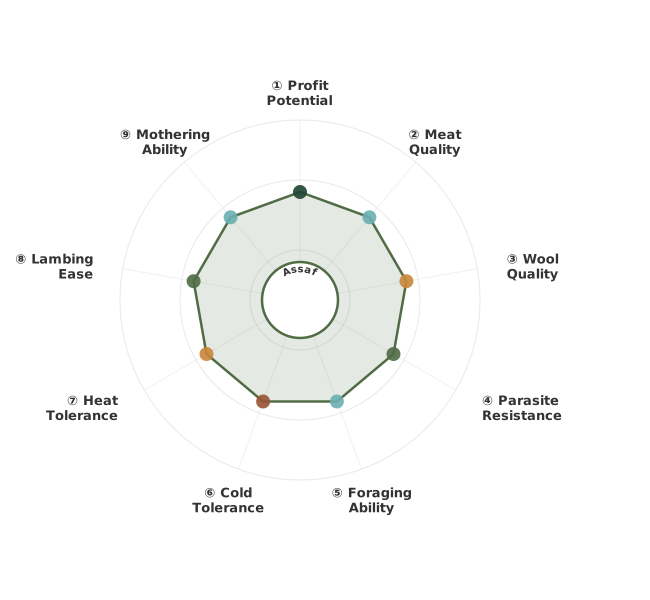
Regenerative Advantages

  • Dairy Butterfat:

Value Streams

  • Dairy production
  • Nutrient cycling and soil building
  • Pasture management

Experience Level

Intermediate

Consult local experts for handling requirements

1

Climate Suitability Assessment

Will this breed thrive in your climate?

IDEALLY SUITED

Köppen Zone: Cfa (Humid Subtropical), Cfb (Oceanic (Maritime Temperate)), Csa (Hot-Summer Mediterranean), Csb (Warm-Summer Mediterranean), Cwa (Monsoon-Influenced Humid Subtropical), Cwb (Subtropical Highland), Dfa (Hot-Summer Continental), Dfb (Warm-Summer Continental)
US Zone: 5a, 5b, 6a, 7a

Humid subtropical climates with mild winters and hot, humid summers are very favorable for Assaf sheep, provided adequate shade and water are available during the summer months.

ADEQUATE

Köppen Zone: BSh (Hot Semi-Arid (Steppe)), BSk (Cold Semi-Arid (Steppe)), BWk (Cold Desert), Dfc (Subarctic), Dwa (Monsoon-Influenced Hot-Summer Continental)
US Zone: 4a, 8a, 9a

Hot semi-arid climates present moderate heat and limited rainfall. Assaf sheep can perform adequately with good pasture management and access to water, but heat stress is a consideration.

NOT RECOMMENDED

Köppen Zone: Af (Tropical Rainforest), Am (Tropical Monsoon), Aw (Tropical Savanna), ET (Tundra), BWh (Hot Desert)
US Zone: 2a, 3a, 3b, 10a, 11a, 12a

Tropical rainforest climates are characterized by year-round heat and humidity, which are detrimental to Assaf sheep. Heat stress, disease, and parasite pressure would be extreme.

Better alternatives for these "not recommended" zones: Dorper Sheep (Adapted to hot and humid conditions.), Local tropical breeds (Possess natural resistance and tolerance.), Dorper Sheep (Heat tolerant and adaptable.), St. Croix Sheep (Known for heat tolerance and disease resistance.), Dorper Sheep (Well-suited to hot and dry conditions.), Barbados Blackbelly Sheep (Excellent heat tolerance and parasite resistance.), Jacob Sheep (Most cold-hardy sheep breed.), Musk Ox (as a comparison for extreme cold) (Illustrates the level of adaptation needed for tundra.), Dorper Sheep (Specifically bred for arid and semi-arid conditions.), Blackhead Persian Sheep (Adapted to harsh, hot environments.), Jacob Sheep (Known for hardiness and adaptability to colder climates.), Katahdin Sheep (Hair sheep breed with good cold tolerance and adaptability.), Jacob Sheep (Good cold tolerance and adaptability to harsh winters.), Dorset Sheep (Known for hardiness and ability to breed out of season, which can be beneficial in shorter growing seasons.), Jacob Sheep (Proven hardiness in cold climates.), Suffolk Sheep (While not as cold-hardy as some, they can perform adequately with good management in this zone.), Dorper Sheep (Specifically adapted to hot, arid, and semi-arid conditions.), Katahdin Sheep (Hair sheep breed with good heat tolerance and adaptability.), Dorper Sheep (Bred for hot climates and arid conditions.), Brahman Cattle (as a comparison for heat tolerance) (While cattle, their adaptation highlights the extreme heat tolerance needed.), Dorper Sheep (Best suited for extreme heat and arid conditions.), Local indigenous breeds (Often possess unique adaptations to tropical environments.)

Note: This breed's performance varies significantly by climate zone. Above are suitability ratings for major climate types where this breed can be raised successfully. If your climate isn't listed, this breed may not be a good fit. Breeds can technically survive in other climates with intensive management, but we don't recommend this for most regenerative operations due to questionable economics and high resource requirements.

2

Is This Breed Right for Your Operation?

Climate fit, terrain suitability, and scale considerations

Terrain & Environment

Can this breed handle my landscape? Performance on different terrain types and farm scales.

Attribute Suitability

Forage & Feeding Adaptations

What can I feed them and how efficiently? Grazing ability, feed conversion, and seasonal adaptation.

Attribute Suitability
Foraging Ability Adequate

Foraging Ability: Thriving on diverse/marginal vegetation broadly (woody plants, forbs, weeds, rough forage, scrubland) without supplementation. Focus: self-sufficiency on poor-quality or varied vegetation beyond quality grass.

Scale Considerations

3

Understanding Assaf Sheep Characteristics

Physical traits, temperament, and what makes this breed unique

The Assaf sheep is a distinct synthetic breed developed in Israel, emerging from a strategic crossbreeding program between the indigenous Awassi fat-tailed sheep and the high-producing Friesian dairy sheep. This intentional genetic fusion aimed to harness the Awassi's renowned hardiness and adaptability to challenging environments with the Friesian's superior milk production capabilities. The result is an animal ideally suited for intensive dairy farming systems, offering a compelling blend of resilience and productivity. Assaf sheep are recognized for their dual-purpose potential, demonstrating robust physical attributes that support efficient resource utilization and resilience, while also possessing significant dairy merit. Their genetic makeup provides a strong foundation for effective management in a variety of agricultural settings relevant to animal husbandry.

Physical Characteristics:Medium to large frame size, with ewes typically weighing between 60-80 kg (130-175 lbs) and rams reaching 90-110 kg (200-240 lbs).
• Distinctive semi-long to long, often pendulous ears.
• Predominantly white fleece marked with black or brown coloration, frequently appearing on the head and legs.
• Possess a moderate fat tail, less pronounced than the pure Awassi breed but still contributing to energy reserves.
• Their overall conformation is dairy-oriented, with ewes exhibiting a well-developed udder structure.

Biological Traits:
Inherits good heat tolerance from its parent breeds, making it well-suited for warmer climates.
• Exhibits good cold hardiness, allowing for survival in regions experiencing significant winter temperatures.
• Demonstrates strong drought tolerance, a trait inherited from the Awassi lineage, enabling effective grazing during dry seasons.
• Possesses a browse tolerance of 10-15%, indicating an ability to utilize a broader spectrum of plant matter in their diet, including woody species.
• Shows good tolerance for fescue, a common pasture grass that can be challenging for some breeds.
• Water requirements are moderate, generally ranging from 1.5-2.5 gallons (6-9.5 liters) per animal per day, depending on environmental conditions and production stage.

Behavioral Traits:
• Assaf sheep are known for their docile temperament, which simplifies handling and management within flock settings.
• They exhibit strong maternal instincts, contributing to higher lamb survival rates.
• As dairy animals, their management typically involves regular milking routines to optimize production.
• Their foraging behavior is active, and they are efficient grazers, adept at utilizing available pasture resources.
These combined traits position the Assaf sheep as a versatile and resilient breed for specialized agricultural systems.

4

Management, Care & Feeding

Operational guidance for raising this breed successfully

Integrating Assaf sheep into a regenerative farming system requires a thoughtful approach that leverages their unique physical and biological traits while aligning with economic goals and environmental stewardship. Their adaptability to diverse conditions and their dual-purpose potential mean they can be a valuable asset when managed strategically. Success hinges on understanding their specific needs and maximizing their strengths within the existing farm ecosystem.

Physical and Environmental Integration:Climate Considerations: Given their good heat and cold hardiness, Assaf sheep can be managed in a wide range of climates. However, their moderate water requirements (1.5-2.5 gallons/day) necessitate reliable water sources, especially during dry periods or high production cycles. Their drought tolerance is a significant asset in arid and semi-arid regions, allowing for extended grazing periods on less verdant pastures.
Terrain Utilization: Assaf sheep adapt well to rolling terrain and can navigate moderate slopes, allowing for effective utilization of varied landscapes. Their ability to graze on fescue and tolerate browsing on woody vegetation (10-15%) means they can be integrated into pasture mixes that include a wider array of plant species, contributing to vegetation management.
Shelter and Handling: While hardy, providing adequate shelter from extreme weather (intense sun, heavy rain, or severe cold) is important, particularly for young lambs. Their docile temperament facilitates handling, but appropriate fencing and handling facilities are still essential for efficient management and to prevent escapes.

Economic Implementation and Market Pathways:Niche Market Development: The primary economic advantage lies in the +20% milk premium, which requires direct engagement with specialty markets. This involves building relationships with artisanal cheesemakers, establishing direct-to-consumer dairy sales, or participating in local food networks. This market development phase can take 2-3 years to establish a consistent customer base and predictable revenue stream.
Pasture Management for Drought Tolerance: To capitalize on their drought tolerance and reduce feed costs, implement rotational grazing systems. This strategy allows pastures to recover, promotes plant diversity, and builds soil health. Establishing robust pasture infrastructure, including water points and fencing for rotational grazing, may take 2-3 years but yields long-term benefits in feed self-sufficiency.
Infrastructure Investment: Beyond pasture, consider necessary infrastructure for milking, milk handling, and potentially basic processing if value-added products are planned. This might include milking parlors, refrigeration, and storage facilities. The initial investment should be weighed against projected revenue from premium milk sales.

Management Practices for Optimal Performance:Breeding and Reproduction: Assaf sheep are known for strong maternal instincts and good lamb survival rates. Strategic breeding can optimize lambing seasons to align with pasture availability and market demand for both milk and meat. Rams are typically larger and heavier than ewes, requiring appropriate management during breeding.
Nutrition and Foraging: While adaptable to a variety of forages, their dairy potential is maximized with a balanced diet. Supplementation may be necessary during late lactation or periods of low pasture quality, but their inherent ability to utilize browse and tolerate fescue reduces reliance on expensive concentrates. Monitoring body condition scores and milk production provides crucial feedback for adjusting feeding strategies.
Health and Husbandry: Regular health checks, parasite management, and vaccination programs are standard for any livestock operation. Their genetic resilience can reduce susceptibility to certain common ailments, but proactive health management ensures optimal productivity and animal welfare. Strong maternal instincts contribute to lower lamb mortality rates, but vigilant observation during lambing is still recommended.

Successfully integrating Assaf sheep involves understanding their genetic strengths and weaknesses, developing appropriate market channels, and implementing management practices that foster their well-being and productivity. By carefully planning for their physical, economic, and biological needs, land stewards can harness the Assaf sheep's potential to enhance both their farm's profitability and its ecological resilience.

5

Complete Trait Reference

Comprehensive trait ratings and explanations

Climate & Environmental Adaptation

How does this breed handle environmental challenges? Weather resilience, natural resistance, and adaptation.

Attribute Suitability
Hardiness Adequate
Heat Tolerance Adequate
Cold Tolerance Adequate
Parasite Resistance Adequate

Terrain & Land Suitability

Can this breed handle my landscape? Performance on different terrain types and farm scales.

Attribute Suitability

Forage & Feeding Characteristics

What can I feed them and how efficiently? Grazing ability, feed conversion, and seasonal adaptation.

Attribute Suitability
Foraging Ability Adequate

Foraging Ability: Thriving on diverse/marginal vegetation broadly (woody plants, forbs, weeds, rough forage, scrubland) without supplementation. Focus: self-sufficiency on poor-quality or varied vegetation beyond quality grass.

Handling, Temperament & Reproduction

How easy are they to work with? Temperament, handling ease, and reproductive efficiency.

Attribute Suitability
Mothering Ability Adequate
6

Production Capabilities & Market Economics

Business case evaluation and production metrics