Regenerative Quick Profile

Best Suited For

Climates: Tropical rainforest, Tropical monsoon, Tropical savanna, Hot semi-arid
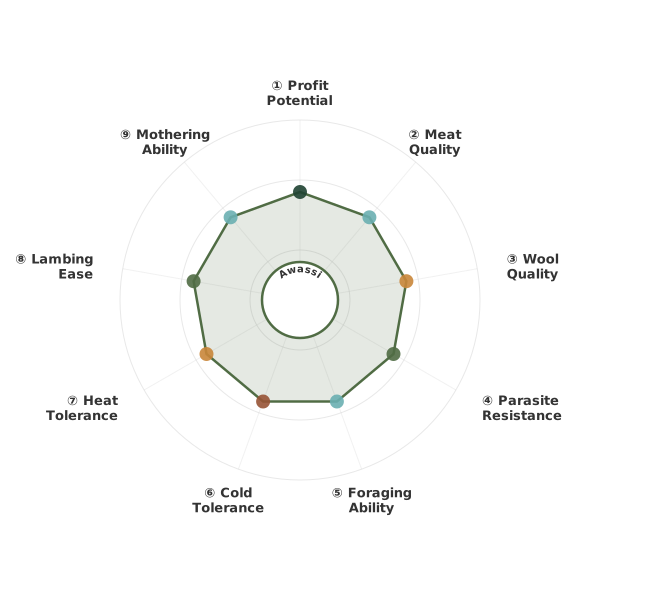
Regenerative Advantages

  • Heat Tolerance:
  • Foraging Ability:
  • Hardiness:
  • Grazing Adaptation:
  • Dual Purpose Quality:

Value Streams

  • Dairy production
  • Nutrient cycling and soil building
  • Pasture management

Experience Level

Intermediate

Consult local experts for handling requirements

1

Climate Suitability Assessment

Will this breed thrive in your climate?

IDEALLY SUITED

Köppen Zone: Aw (Tropical Savanna), BSh (Hot Semi-Arid (Steppe)), BWh (Hot Desert), Csa (Hot-Summer Mediterranean), Csb (Warm-Summer Mediterranean)
US Zone: 6a, 7a, 8a, 9a, 10a

Tropical savanna climates, with their distinct dry seasons and high temperatures, are very similar to the Awassi's native environment. They are well-adapted to these conditions and can thrive with minimal management.

ADEQUATE

Köppen Zone: BSk (Cold Semi-Arid (Steppe)), BWk (Cold Desert), Cfa (Humid Subtropical), Cwa (Monsoon-Influenced Humid Subtropical), Cwb (Subtropical Highland)
US Zone: 5a, 5b, 11a, 12a

Cold semi-arid climates present a mixed bag. Awassi sheep will thrive in the drier, warmer periods but will require substantial winter protection and feed during the cold winters, aligning with USDA 4a-8a suitability.

NOT RECOMMENDED

Köppen Zone: Af (Tropical Rainforest), Am (Tropical Monsoon), ET (Tundra), Cfb (Oceanic (Maritime Temperate)), Dfa (Hot-Summer Continental), Dfb (Warm-Summer Continental), Dfc (Subarctic), Dwa (Monsoon-Influenced Hot-Summer Continental)
US Zone: 2a, 3a, 3b, 4a

Tropical rainforests are characterized by high humidity and consistent rainfall year-round, which is contrary to the Awassi's adaptation to arid and semi-arid environments. Parasite pressure and heat stress would be significant issues.

Better alternatives for these "not recommended" zones: St. Croix Sheep (adapted to tropical heat and humidity), Dorper Sheep (heat tolerant and adaptable), Katahdin Sheep (heat tolerant and good parasite resistance), Icelandic Sheep (adapted to extreme cold and short growing seasons), Shetland Sheep (hardy and small-bodied for harsh environments), Cheviot Sheep (hardy and adaptable to wetter conditions), Suffolk Sheep (adaptable to varied climates), Katahdin Sheep (good cold tolerance and adaptability), Suffolk Sheep (hardy and adaptable), Jacob Sheep (hardy and adaptable to cooler climates), Dorset Sheep (good cold tolerance), Icelandic Sheep (exceptionally cold-hardy), Norwegian Spelsau (adapted to harsh northern climates), Icelandic Sheep (adapted to extreme cold), Norwegian Spelsau (hardy in cold, dry conditions)

Note: This breed's performance varies significantly by climate zone. Above are suitability ratings for major climate types where this breed can be raised successfully. If your climate isn't listed, this breed may not be a good fit. Breeds can technically survive in other climates with intensive management, but we don't recommend this for most regenerative operations due to questionable economics and high resource requirements.

2

Is This Breed Right for Your Operation?

Climate fit, terrain suitability, and scale considerations

Terrain & Environment

Can this breed handle my landscape? Performance on different terrain types and farm scales.

Attribute Suitability

Forage & Feeding Adaptations

What can I feed them and how efficiently? Grazing ability, feed conversion, and seasonal adaptation.

Attribute Suitability
Foraging Ability Ideally Suited

Foraging Ability: Thriving on diverse/marginal vegetation broadly (woody plants, forbs, weeds, rough forage, scrubland) without supplementation. Focus: self-sufficiency on poor-quality or varied vegetation beyond quality grass.

Scale Considerations

3

Understanding Awassi Sheep Characteristics

Physical traits, temperament, and what makes this breed unique

The Awassi sheep is a distinctive dairy breed originating from the arid regions of the Middle East, renowned for its remarkable resilience and specialized physical adaptations to challenging environments. This breed’s most notable characteristic is its large, pendulous fat tail, which serves as a crucial energy reserve, enabling survival and productivity during prolonged periods of drought and feed scarcity. Beyond this unique anatomy, Awassi sheep possess a medium to large frame, short, coarse hair that aids in heat dissipation, and a prominent Roman nose with long, pendulous ears that are believed to assist in thermoregulation. These physical attributes are intrinsically linked to their biological makeup, allowing them to thrive where other breeds might falter. Their inherent heat and drought tolerance are not just survival mechanisms but foundational traits that define their suitability for specific agricultural systems.

Physical Characteristics:Fat-Tailed Morphology: A prominent, pendulous tail composed of stored fat, functioning as an essential energy reserve for surviving lean periods and supporting bodily functions.
Body Size and Build: Medium to large frame, with rams typically weighing 80-120 kg (176-264 lbs) and ewes 40-60 kg (88-132 lbs); characterized by a deep chest and robust legs for traversing varied terrain.
Coat Type: Short, coarse hair rather than dense wool, which significantly aids in heat dissipation in warm climates. Coat colors vary, commonly white, brown, or black, often with distinct markings.
Cranial Features: A distinctive Roman nose and long, pendulous ears that are thought to contribute to their ability to cope with high ambient temperatures.

Biological and Behavioral Traits:Exceptional Heat Tolerance: Possesses a high degree of adaptation to high temperatures, allowing for sustained productivity and comfort in hot, arid, and semi-arid climates without significant physiological stress.
Remarkable Drought Tolerance: Their ability to utilize stored fat reserves in the tail allows them to endure extended periods of water scarcity and limited grazing opportunities, maintaining condition and function.
Efficient Foraging Behavior: Awassi sheep are adept grazers capable of utilizing a diverse range of plant matter. They can effectively incorporate a significant portion of browse, typically 15-25% of their diet, alongside grasses, making them versatile in varied landscapes.
Low Water Requirements: Require a relatively low daily water intake, approximately 1-2 gallons (4-7.5 liters) per day, aligning with their origins in water-limited environments.
Strong Maternal Instincts: Ewes exhibit strong maternal care, which contributes to high lamb survival rates, further supported by their natural milk production capacity for lamb growth.

The Awassi's biological resilience, driven by its specialized fat-tailed anatomy and inherent tolerance to heat and drought, positions it as a robust and adaptable animal for producers in challenging environmental conditions. Their efficient foraging habits further enhance their ability to thrive on marginal lands, making them a valuable asset in diverse agricultural contexts.

4

Management, Care & Feeding

Operational guidance for raising this breed successfully

Integrating Awassi sheep into a farming operation requires a strategic approach that considers their specific physical, biological, and economic requirements, alongside their regenerative potential. Success hinges on establishing appropriate infrastructure, securing market access for their distinctive dairy products, and implementing management practices that leverage their natural hardiness and foraging abilities. This breed is particularly well-suited for farms in warmer, drier climates or those aiming to diversify their income streams with specialty dairy products, while also enhancing landscape health and resilience. A phased approach to integration, starting with a manageable flock size and focusing on building market relationships, is often the most effective strategy.

Infrastructure and Initial Setup:Fencing and Shelter: While heat tolerant, providing basic shade structures and robust fencing is essential. Their medium-large frame and strong legs mean they can navigate varied terrain, but secure containment is paramount.
Water Access: Ensure consistent access to water, though their low daily requirement (1-2 gallons per day) simplifies this compared to other breeds. Water sources should be easily accessible, especially during warmer months.
Milking Facilities: Investment in suitable milking parlors or equipment is necessary for dairy production. This could range from simple bucket milking setups for smaller flocks to more automated systems for larger operations.
Milk Handling and Storage: Refrigeration is critical for maintaining milk quality. Depending on market plans, additional equipment for processing (e.g., cheese-making vats) may be required.

Market Development and Economic Implementation:Niche Market Identification: Actively identify and cultivate relationships with specialty cheese makers, artisan dairies, or consumers interested in premium dairy products. Direct-to-consumer sales can also be a viable channel.
Product Quality Focus: Consistency in milk quality (butterfat and protein content) is key to maintaining premium pricing. Proper nutrition and handling practices are essential.
Long-Term Market Building: Establishing a presence in specialty markets can take 2-3 years. Patience, consistent marketing efforts, and building trust with buyers are crucial for sustained success.
Cost Analysis: Carefully calculate the costs of feed (especially if supplemental grazing is limited), veterinary care, labor, and infrastructure against projected milk revenue, factoring in the potential +15% premium.

Management Practices for Optimal Performance:Grazing and Browsing: Awassi sheep are excellent foragers, capable of utilizing a diverse diet including 15-25% browse. Rotational grazing strategies can maximize their ability to manage brush and improve pasture diversity.
Drought Period Management: Leverage their drought tolerance by ensuring they have access to stored water and can utilize their fat-tail reserves effectively. Minimize supplemental feeding during dry spells to reduce costs and encourage natural foraging.
Heat Management: While naturally heat tolerant, monitor for signs of heat stress during extreme periods and ensure access to shade and water. Their short hair coat aids in heat dissipation.
Health and Veterinary Care: Implement a standard sheep health program, including vaccinations and parasite control, tailored to the local environment and flock health. Their strong maternal instincts contribute to good lamb survival.
Breeding and Reproduction: Awassi ewes are known for their reproductive efficiency. Understanding their estrous cycles and breeding patterns will optimize lambing rates and milk production cycles.

Successfully integrating Awassi sheep involves a commitment to understanding their unique physiology and market demands, coupled with a proactive approach to building both the necessary infrastructure and strong customer relationships. Their adaptability and resilience offer significant advantages for farms seeking to enhance sustainability and diversify income in challenging environments.

5

Complete Trait Reference

Comprehensive trait ratings and explanations

Climate & Environmental Adaptation

How does this breed handle environmental challenges? Weather resilience, natural resistance, and adaptation.

Attribute Suitability
Hardiness Ideally Suited
Heat Tolerance Ideally Suited
Cold Tolerance Adequate
Parasite Resistance Adequate

Terrain & Land Suitability

Can this breed handle my landscape? Performance on different terrain types and farm scales.

Attribute Suitability

Forage & Feeding Characteristics

What can I feed them and how efficiently? Grazing ability, feed conversion, and seasonal adaptation.

Attribute Suitability
Foraging Ability Ideally Suited

Foraging Ability: Thriving on diverse/marginal vegetation broadly (woody plants, forbs, weeds, rough forage, scrubland) without supplementation. Focus: self-sufficiency on poor-quality or varied vegetation beyond quality grass.

Handling, Temperament & Reproduction

How easy are they to work with? Temperament, handling ease, and reproductive efficiency.

Attribute Suitability
Mothering Ability Adequate
6

Production Capabilities & Market Economics

Business case evaluation and production metrics