
Barbados Blackbelly Sheep
The Barbados Blackbelly sheep simplifies management with their exceptional lambing ease, robust mothering instincts, and outstanding foraging ability, thriving on diverse pastures with minimal supplementation. Originating from Barbados, this hardy breed possesses a natural resistance to parasites and delivers good quality meat, making them a valuable choice for farmers seeking efficiency and resilience. Their adaptability and low intervention requirements make them ideal for rotational and multi-species grazing systems, where they can effectively manage vegetation and contribute to a well-rounded livestock operation.
Regenerative Quick Profile
Best Suited For
Climates: Tropical savanna and tropical monsoon climates, characterized by warm temperatures year-round and distinct wet and dry seasons.
Terrain: Adaptable to most terrain types
Scale: Excellent for small homesteads (1-10 animals)
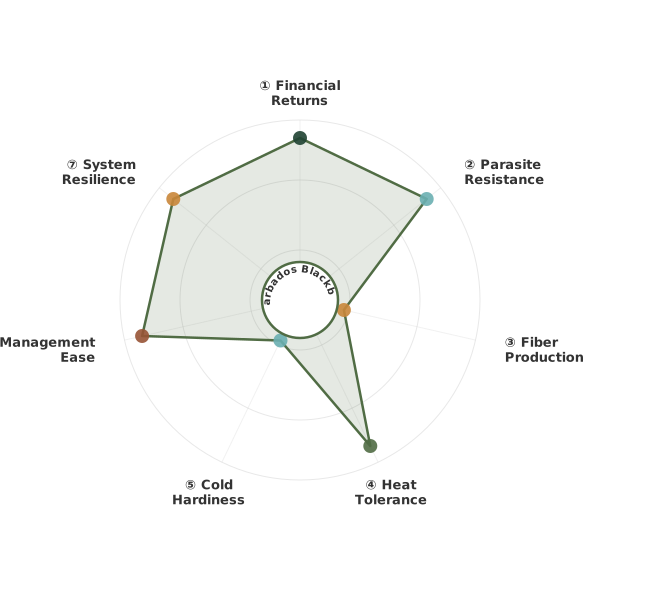
How These Traits Are Calculated
Trait dimensions are ordered clockwise starting from the top of the chart (12 o'clock position):
1. Financial Returns
Annual income per ewe from lamb sales and wool
WHAT: Evaluates annual profit potential combining lamb production (twins, growth rates), wool value, and input costs. Dual-purpose breeds excelling in both meat and wool provide diversified income streams more resilient to market fluctuations.
WHY: Sheep economics depend on lambing percentages and fleece value. Breeds consistently producing twins with good growth plus quality fleece generate $200-400 annual returns per ewe, while single-lamb low-wool breeds struggle to cover costs at small scales.
HOW: Calculated from production data (lambing rate, lamb growth, fleece weight, wool quality) combined with input costs and efficiency traits. Exceptional (≥2.6): high lambing percentage + valuable wool + low costs. Typical (1.8-2.5): moderate production. Limited (<1.8): low output or high costs.
2. Parasite Resistance
Natural resistance to internal parasites (worms)
WHAT: Measures genetic resistance to gastrointestinal parasites (primarily barber pole worm and other internal worms), evaluated through fecal egg counts, documented resistance breeding programs, and performance in parasite-prone regions.
WHY: Internal parasites are the #1 health challenge in sheep, causing 30-50% of flock deaths and requiring frequent deworming that breeds resistance. Breeds with natural parasite resistance reduce deworming 60-80%, lower mortality, and maintain productivity in warm humid climates where parasites thrive year-round.
HOW: Rated from database trait 'parasite_resistance' based on genetic selection and documented performance. Exceptional (≥2.6): tested resistance lines, low fecal egg counts, thrives in parasite-heavy regions. Typical (1.8-2.5): moderate resistance, standard deworming sufficient. Limited (<1.8): highly susceptible, requires intensive parasite management.
3. Wool Production
Annual fleece weight and wool quality value
WHAT: Evaluates wool production combining fleece weight (total pounds annually) and wool quality (fineness, crimp, luster, cleanliness) that determines market value. Measures both quantity and quality of fiber output.
WHY: Wool provides significant income diversification—quality fleeces fetch $50-200 annually versus $10-30 for low-grade wool. In meat-focused operations, wool that covers shearing costs is sufficient, but fiber-focused flocks need high-quality production to be viable.
HOW: Weighted formula: wool quality characteristics (60%), fleece weight (40%). Exceptional (≥2.6): premium quality (fine, lustrous, clean) + heavy fleeces 10-15 lbs. Typical (1.8-2.5): standard wool, moderate weight. Limited (<1.8): coarse or light fleeces with minimal market value.
4. Heat Tolerance
Performance in hot weather above 85°F (29°C)
WHAT: Evaluates adaptation to sustained heat above 85°F (29°C), measuring coat characteristics (hair vs wool, shedding ability), heat stress resistance, and documented performance in hot climates.
WHY: Heat stress reduces feed intake, lowers reproduction rates, and increases mortality, especially in wool breeds where heavy fleeces trap heat. Hair sheep and shedding breeds thrive in southern climates where wool breeds struggle without intensive cooling or frequent shearing.
HOW: Rated from database trait 'heat_tolerance' based on breed type and adaptation. Exceptional (≥2.6): hair breeds or natural shedders, proven in 95°F+ (35°C+), minimal cooling needed. Typical (1.8-2.5): moderate tolerance with shade and water. Limited (<1.8): heavy fleece, struggles above 85°F.
5. Cold Hardiness
Performance in cold weather below 20°F (-7°C)
WHAT: Evaluates adaptation to sustained cold below 20°F (-7°C), measuring wool insulation, body size, metabolic efficiency, and documented winter performance. Particularly important for wool breeds in northern climates.
WHY: Cold stress increases feed requirements for maintenance, complicates winter lambing, and can cause mortality in newborns. Cold-hardy breeds with dense wool coats thrive outdoors year-round, minimizing barn infrastructure and winter feed costs.
HOW: Rated from database trait 'cold_hardiness' based on documented characteristics. Exceptional (≥2.6): dense fleece, northern origins, thrives in <0°F (-18°C) with basic shelter. Typical (1.8-2.5): moderate hardiness. Limited (<1.8): requires heated shelter or struggles with winter lambing.
6. Management Ease
Handling temperament and maternal care quality
WHAT: Measures daily management simplicity combining temperament, lambing ease (unassisted births), and mothering ability (bonding, milk production, lamb survival). Easy breeds require minimal intervention during critical lambing period.
WHY: Difficult sheep increase labor 3-4× through lambing interventions, bottle-feeding rejected lambs, and handling challenges. Breeds with easy lambing and strong mothers enable one-person operations where complicated breeds require round-the-clock monitoring during lambing season.
HOW: Weighted formula: lambing ease (50%), mothering ability (50%). Exceptional (≥2.6): unassisted lambing, excellent mothers, high lamb survival. Typical (1.8-2.5): occasional assistance, good maternal instincts. Limited (<1.8): frequent interventions, weak mothers, high rejection rates.
7. Flock Resilience
Health and survival under stress conditions
WHAT: Evaluates flock robustness across multiple dimensions: drought tolerance (forage scarcity adaptation), fescue toxicity resistance (endophyte tolerance), browsing ability (dietary flexibility), and terrain adaptation (sure-footedness on hills or rough ground).
WHY: Resilient breeds maintain productivity through challenges that devastate others—surviving drought years on sparse forage, thriving on fescue pastures toxic to others, utilizing brushy terrain, navigating steep hillsides. This determines whether flocks require intensive management or thrive with minimal inputs.
HOW: Weighted formula: drought tolerance (40%), fescue tolerance (25%), browsing ability (20%), terrain adaptation (15%). Exceptional (≥2.6): thrives through drought + fescue-tolerant + browsers + sure-footed. Typical (1.8-2.5): moderate resilience. Limited (<1.8): sensitive to stress, requires controlled conditions.
Regenerative Advantages
- Heat Tolerance: As a hair sheep naturally shedding its coat, the Barbados Blackbelly is highly adapted to sustained heat, requiring minimal cooling.
- Drought Tolerance: Evolved to thrive on sparse forage during dry periods, this hardy breed is well-suited for extended dryness with minimal supplementation.
- Parasite Resistance: A natural predisposition for parasite resistance allows these sheep to thrive with minimal intervention, often avoiding the need for dewormings.
- Foraging Ability: Barbados Blackbelly sheep demonstrate exceptional foraging ability by thriving on marginal and diverse vegetation, including rough grasses, forbs, and less palatable plants. Their ancestral adaptation to varied Caribbean ecosystems requires minimal supplementation, allowing them to maintain condition on unimproved lands. This makes them highly efficient in broad-spectrum vegetation utilization, aligning with the rubric's definition of thriving on diverse, low-quality pasture and rough browse.
- Mothering Ability: Renowned for prolificacy and hardiness, these sheep exhibit strong maternal instincts, excellent milk production, and protective behavior.
Value Streams
- Meat production
- Nutrient cycling and soil building
- Pasture management
Experience Level
Consult local experts for handling requirements
3
Understanding Barbados Blackbelly Sheep Characteristics
Physical traits, temperament, and what makes this breed unique
Understanding Barbados Blackbelly Sheep Characteristics
Physical traits, temperament, and what makes this breed unique
The Barbados Blackbelly sheep is a distinctive breed originating from the Caribbean island of Barbados, bred for its unique coloration and adaptability to warm climates. This breed stands out with its characteristic mahogany or reddish-brown body, sharply contrasted by a black belly, legs, and facial markings, often featuring a white muzzle. Unlike many sheep breeds, Barbados Blackbellies are naturally polled, meaning they are born without horns, which significantly enhances their safety and ease of handling for producers. Their medium frame and lean conformation reflect an efficient metabolism, making them well-suited for foraging on varied terrains and under less intensive management systems. This breed's biological makeup is optimized for heat and humidity, positioning them as a viable option for producers in tropical and subtropical regions.
Physical Characteristics:• Coloration: Predominantly mahogany or reddish-brown body with black belly, legs, and face markings.
• Horns: Naturally polled (hornless) in both sexes, reducing injury risks.
• Frame: Medium-sized with a lean build, indicating efficient feed conversion.
• Coat: Possesses a short, hair-like coat that sheds seasonally, eliminating the need for shearing.
• Weight: Ewes typically range from 70-100 lbs (32-45 kg), while rams generally weigh 90-130 lbs (41-59 kg).
Behavioral Traits:• Foraging Ability: Excellent grazers and browsers, adept at utilizing a wide variety of plant species, including significant amounts of browse (10-20% of diet).
• Maternal Instincts: Exhibit strong mothering capabilities, effectively protecting and caring for their lambs.
• Temperament: Generally docile and easy to manage, though rams can display assertiveness during the breeding season.
• Social Behavior: Display typical flocking tendencies, which aids in management and predator defense.
Biological Adaptations:• Heat and Humidity Tolerance: Highly adapted to warm and humid conditions, allowing for consistent productivity during warmer months.
• Cold Hardiness: Possesses poor natural resistance to cold; requires shelter and supplemental feeding during prolonged cold periods or frost.
• Drought Tolerance: Demonstrates good resilience during dry spells, capable of utilizing dry forage effectively.
• Water Requirements: Typical daily water intake is between 1-2 gallons (4-8 liters) per head, making them relatively efficient water users.
These inherent characteristics make the Barbados Blackbelly sheep uniquely suited for specific environmental conditions and management styles, offering a distinct profile within the sheep production landscape. Their low-maintenance coat and hornless nature simplify daily operations, while their foraging versatility allows them to thrive in diverse pasture settings.
Sources behind this view
 Community
-
Compares St. Croix, Barbados Black Belly, and Pelibuey sheep for parasite resistance in hot climates, finding them similar and superior to Dorpers. Management is key, with culling improving flock heal
Read more (opens in new window) permies.com
4
Management, Care & Feeding
Operational guidance for raising this breed successfully
Management, Care & Feeding
Operational guidance for raising this breed successfully
Integrating Barbados Blackbelly sheep into a farm operation requires careful consideration of their specific needs and a strategic approach to management, drawing from their physical, biological, and economic profiles. Success hinges on aligning their climate adaptability, foraging behavior, and reproductive traits with available resources and market opportunities. This involves establishing appropriate infrastructure, implementing effective grazing strategies, and developing market connections to capitalize on their premium potential. Producers must also be mindful of their limitations, particularly regarding cold tolerance, and plan for necessary supplemental inputs during challenging periods.
Establishing the Flock and Infrastructure:• Climate Suitability: Ideal for USDA hardiness zones 8-11, regions with consistent warmth and humidity. In colder climates, robust shelter and winter feeding plans are essential due to their poor cold hardiness.
• Fencing: Secure fencing is necessary to contain the flock and protect them from predators. Their medium size and polled nature generally make them easier to manage within containment systems.
• Shelter: While heat tolerant, they still benefit from shade during extreme heat. Adequate shelter is crucial for protection against cold, wind, and rain, especially for lambs and ewes during lambing.
• Water Access: Ensure consistent access to clean water, with daily requirements of 1-2 gallons per head.
Breeding and Production Management:• Reproductive Cycle: Barbados Blackbellies typically have a shorter gestation period and can breed year-round, leading to multiple lambing opportunities annually. This prolificacy requires good record-keeping and management to optimize lambing intervals and ewe condition.
• Lambing and Weaning: Lambing is often straightforward due to their strong maternal instincts. Lambs reach market weight (80-120 lbs) in 6-8 months. Monitoring ewe nutrition during gestation and lactation is vital for lamb survival and growth.
• Forage Management: Implement rotational grazing to maximize utilization of available pasture and browse. Their ability to consume woody plants and weeds can be a key component of integrated vegetation management plans, reducing reliance on external feed sources.
• Supplementation: While drought tolerant, prolonged dry spells or periods of high demand (e.g., late gestation, lactation) may necessitate supplemental feeding with hay or appropriate grain mixes to maintain condition and productivity. This integration requires careful cost-benefit analysis.
Economic Implementation and Market Access:• Cost Management: Monitor annual input costs, estimated at $100-150 per head, closely. Proactive parasite management, strategic grazing, and efficient supplementation are crucial for controlling feed expenses.
• Market Development: Focus on building relationships with direct consumers, restaurants, or specialty retailers who value grass-fed, lean lamb. Achieving a +10-25% price premium requires consistent quality and marketing efforts over 1-3 years.
• Processing and Logistics: Plan for processing and transportation, especially for direct sales. Small carcass sizes can be advantageous for smaller freezers or specific market demands. Consider refrigeration needs for direct-to-consumer sales.
Successful integration of Barbados Blackbelly sheep relies on understanding their unique strengths, particularly their heat tolerance and foraging versatility, while diligently managing their needs for shelter and supplemental feed in less favorable conditions. By aligning their biological traits with sound economic strategies and ecological principles, producers can effectively incorporate this breed into a productive and resilient farming system.
Sources behind this view
Community
-
Guidance for small-scale rotational grazing with sheep, recommending 2-3 Barbados sheep initially, with plans for excess lambs. Integrates geese for pasture balance and suggests specific fencing strat
Read more (opens in new window) permies.com
6
Production Capabilities & Market Economics
Business case evaluation and production metrics
Production Capabilities & Market Economics
Business case evaluation and production metrics
Meat Production Economics
| Category | Value |
|---|---|
| Finish Weight | 80-120 lbs 36.3-54.4 kg |
| Months to Finish | 6-8 |
| Price Premium | +10% to +25% |
| Annual Input Cost/Head | $100-150 |
Finish Weight: Market weight for grass-finished lamb. Varies by breed - hair sheep (Katahdin, Dorper) often finish lighter (80-110 lbs) than wool breeds (100-140 lbs). Heritage breeds grow slower but produce flavorful meat.
Months to Finish: Time from birth to market weight on pasture. Grass-fed lamb typically finishes at 6-10 months depending on breed, forage quality, and target weight. Year-round lambing possible in some climates.
Price Premium: Premium above conventional lamb prices. Grass-fed, locally-raised lamb sells for $8-15/lb vs. $6-10/lb conventional. Premium requires direct marketing or certification. Commodity channels offer minimal premium.
Annual Input Cost/Head: Feed, minerals, health care, shearing (wool breeds), and pasture maintenance per ewe per year. Excludes infrastructure, land, and labor. Hair sheep eliminate shearing costs.
Sources behind this view
 Videos & Podcasts
-
Details raising lambs for meat: cost ($250-400/breeding lamb), yield (~30 lbs meat/lamb), value ($15/lb grass-fed). Lambs thrive on grass, eat weeds like poison ivy/kudzu, and help control parasites i

-
Market lambs at 55-60 lbs for optimal returns and risk mitigation, as heavier lambs offer similar total profit but increased risk and reduced price per pound.

-
Utilize slower growth rates via grazing to market lambs during fall/winter price peaks, rather than selling at 90-120 days into the high-supply summer market.

-
Green Acres targets finishing grass-fed lambs at 8-10 months, using hair-type sheep (Katahdin, Dorper crosses) for lower labor and potential parasite resistance. Lambing in late spring aligns with pea
Community
-
Raising and finishing lambs on pasture is possible by selecting appropriate breeds (e.g., Dorper, Katahdin), utilizing rotational grazing, ensuring nutritious forage and water, and evaluating carcass
Read more (opens in new window) smallfarms.cornell.edu