Choctaw Hog
Also known as: choctaw, choctaw pig
The Choctaw Hog breed excels at thriving on diverse forage and boasts remarkable hardiness, simplifying management for farmers seeking efficient pasture-raised pork. Originating from the Southeastern United States, these pigs are a lard-type breed, historically adapted to foraging extensively in wooded areas and pastures. Their exceptional grazing and foraging abilities mean they require minimal supplemental feed and are well-suited to rotational and mob grazing systems, as well as silvopasture. Choctaw Hogs demonstrate good mothering instincts and heat tolerance, making them a robust choice for less intensive farming operations. Their natural inclination to browse and root makes them effective land managers, clearing undergrowth and improving pasture health.
Regenerative Quick Profile
Best Suited For
Climates: Humid subtropical to oceanic temperate climates
Scale: Suitable for small to medium operations (10-50 animals)
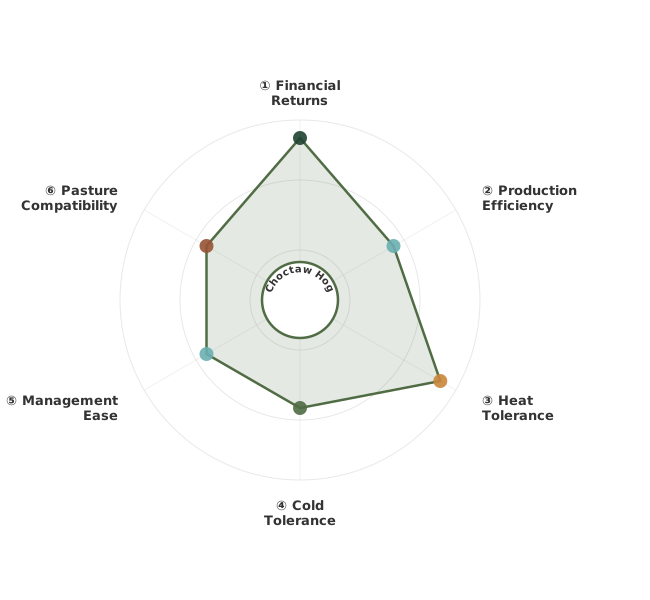
How These Traits Are Calculated
Trait dimensions are ordered clockwise starting from the top of the chart (12 o'clock position):
1. Financial Returns
Monthly income per pig from market weight and timeline
WHAT: Evaluates profit potential combining market weight, time to finish, feed efficiency, and input costs. Heritage breeds reaching 250-300 lbs in 8-12 months with premium pricing generate strong returns despite slower growth than commercial pigs.
WHY: Pig profitability depends on growth rate, feed efficiency, and market access. Fast-finishing breeds (5-6 months) on grain excel in conventional markets, while pasture-raised heritage breeds (8-12 months) target premium markets for higher per-pound returns that offset longer timelines.
HOW: Calculated from production data (finish weight, months to market) combined with feed efficiency and premium potential. Exceptional (≥2.6): efficient growth + strong premium access or commodity profitability. Typical (1.8-2.5): moderate timelines and costs. Limited (<1.8): slow growth or high costs eroding margins.
2. Production Efficiency
Feed conversion and resource utilization
WHAT: Measures how effectively pigs convert feed and resources into market weight, combining feed-to-gain ratios, foraging ability, and growth timeline. Efficient breeds reach target weight on fewer total inputs.
WHY: Feed represents 60-75% of production costs. Breeds converting 3.5:1 (feed:gain) versus 5:1 save $75-150 per pig, making the difference between profitable and marginal operations. Efficient foragers further reduce purchased feed costs.
HOW: Weighted formula: feed conversion ratio (50%), growth rate for inputs consumed (30%), foraging contribution (20%). Exceptional (≥2.6): ≤3.5:1 conversion + good growth. Typical (1.8-2.5): 3.5-4.5:1 conversion. Limited (<1.8): >4.5:1 or very slow growth.
3. Heat Tolerance
Performance in hot weather above 85°F (29°C)
WHAT: Evaluates adaptation to sustained heat above 85°F (29°C), measuring coat characteristics, wallowing behavior, and documented performance in southern climates where summer heat is prolonged.
WHY: Heat stress reduces feed intake and growth 20-40%, increases mortality, and can halt reproduction. Heat-adapted breeds maintain growth where others require expensive cooling systems (misters, shade structures) or accept reduced summer gains.
HOW: Rated from database trait 'heat_tolerance' based on breed characteristics. Exceptional (≥2.6): proven success in 95°F+ (35°C+), efficient cooling behaviors. Typical (1.8-2.5): moderate tolerance with wallows and shade. Limited (<1.8): struggles above 85°F, requires active cooling.
4. Cold Tolerance
Performance in cold weather below 20°F (-7°C)
WHAT: Evaluates adaptation to sustained cold below 20°F (-7°C), measuring hair coat thickness, fat insulation, and documented winter performance. Important for outdoor year-round systems in northern climates.
WHY: Cold-sensitive pigs require heated barns adding $50-150 monthly to winter costs, while cold-hardy breeds thrive outdoors with basic shelter. In climates with 4-6 month winters, hardy breeds save $300-900 annually in heating and infrastructure.
HOW: Rated from database trait 'cold_tolerance' based on documented characteristics. Exceptional (≥2.6): thick winter coat, substantial fat layer, thrives outdoors in <0°F (-18°C). Typical (1.8-2.5): moderate tolerance, windbreak sufficient. Limited (<1.8): requires heated shelter below 30°F (-1°C).
5. Management Ease
Handling temperament and daily care complexity
WHAT: Measures handling simplicity combining temperament docility, fence respect, health needs, and mothering ability. Calm breeds with good mothers and fence respect require minimal daily intervention.
WHY: Difficult pigs double or triple daily labor through frequent escapes, aggressive behavior requiring protective equipment, and high piglet mortality needing interventions. Easy breeds enable one-person management where hard breeds require two people for safety.
HOW: Weighted assessment: temperament (40%), fence respect (30%), mothering ability (20%), health needs (10%). Exceptional (≥2.6): calm and responsive, respects barriers, excellent mothers. Typical (1.8-2.5): manageable with experience. Limited (<1.8): escape-prone, aggressive, or high mortality requiring intensive farrowing management.
6. Grazing Suitability
Effectiveness on pasture-based systems versus confinement
WHAT: Evaluates adaptation to pasture-based production measuring foraging ability, grazing behavior, rooting gentleness, and growth rates on pasture versus grain confinement. Rates how well breeds utilize forage as significant feed component.
WHY: Pasture-adapted breeds reduce feed costs 30-50% through foraging while providing land management services (rooting clears brush, breaks pest cycles). Confinement-bred pigs grow slowly on pasture, negating cost savings, or damage land through aggressive rooting.
HOW: Weighted formula: foraging ability (40%), documented pasture performance (30%), rooting behavior (20%), adaptability (10%). Exceptional (≥2.6): excellent foragers + good growth on pasture + controlled rooting. Typical (1.8-2.5): moderate pasture performance. Limited (<1.8): confinement-bred, minimal foraging, or destructive rooting.
Regenerative Advantages
- Heat Tolerance: Historically adapted to warmer regions, Choctaw Hogs display excellent heat tolerance, maintaining activity and minimal stress in high temperatures.
- Drought Tolerance: Evolved to forage on varied and sparse vegetation, Choctaw Hogs demonstrate resilience in drier conditions, requiring little supplementation.
- Foraging Ability: Choctaw Hogs are undeniably exceptional foragers. Their historical adaptation to wooded areas and diverse Southeastern vegetation means they thrive on browse, roots, acorns, and marginal pasture. Their strong rooting and ability to extract nutrients from varied sources allow them to maintain condition with minimal supplementation, making them ideal for silvopasture and rough terrain.
- Hardiness: As a landrace shaped by feral existence, these hogs possess remarkable resilience, thriving in varied conditions with minimal human intervention.
- Longevity: Adapted to challenging environments, Choctaw Hogs maintain health and productivity well into older age, exceeding typical breed lifespans.
Value Streams
- Meat production
- Nutrient cycling and soil building
- Soil tillage and aeration
- Woodland management
Experience Level
Some livestock experience recommended
4
Management, Care & Feeding
Operational guidance for raising this breed successfully
Management, Care & Feeding
Operational guidance for raising this breed successfully
Managing Choctaw Hogs effectively in a regenerative system centers on providing ample space and encouraging their natural foraging behaviors. Rotational grazing is paramount, moving hogs frequently between pastures to prevent overgrazing, allow vegetation to recover, and distribute manure evenly. This practice not only benefits soil health but also helps control parasite loads. While they can subsist on forages, providing supplemental feed, especially during gestation, lactation, or periods of low forage availability, is beneficial. This supplemental feed can be a mix of grains, protein sources, and even kitchen scraps or food waste, aligning with a circular economy approach on the farm.
Their feeding strategy should capitalize on their natural diet. Acorns, roots, tubers, insects, and green forages form a significant part of their nutritional intake when allowed to roam. Supplementation should aim to balance their diet, ensuring adequate protein, energy, and micronutrients, particularly for breeding stock and growing pigs. Water access must be consistent and clean. Fencing needs to be robust, as Choctaw Hogs are intelligent and resourceful foragers with a strong instinct to root and explore. Electric fencing can be effective, but often needs to be supplemented with more permanent barriers, especially for perimeter fencing, to contain them effectively.
Health management for Choctaw Hogs is generally straightforward due to their inherent hardiness. Regular observation for any signs of distress or illness is key. Their natural resistance means fewer issues with common swine diseases, but vigilance is still required. Monitoring parasite loads through fecal tests and strategic deworming, especially if they are not rotated frequently enough or are sharing pastures with other livestock, is advisable. Ensuring they have access to clean water, adequate nutrition, and dry, comfortable resting areas will significantly contribute to their overall health and well-being, minimizing the need for extensive veterinary intervention.
Sources behind this view
 Videos & Podcasts
-
Cedric Shannon of Weathertop Farm uses rotational grazing with hogs (Tamworth crosses) managed by electric netting. He emphasizes their role in soil improvement and nutrient cycling, noting that other

 Community
-
Practical care for American Guinea Hogs includes specialized farrowing pens, pasture housing, and a mixed diet of grain and food scraps, with emphasis on monitoring girth and encouraging rooting. Chal
Read more (opens in new window) smallfarms.cornell.edu -
Discusses the potential for nutrient deficiencies in pastured pigs, even on lush grass, and suggests that achieving pastured pork may require concentrated calorie inputs, emphasizing the role of 'good
Read more (opens in new window) permies.com
6
Production Capabilities & Market Economics
Business case evaluation and production metrics
Production Capabilities & Market Economics
Business case evaluation and production metrics
Meat Production Economics
| Category | Value |
|---|---|
| Finish Weight | 200-275 lbs 90.7-124.7 kg |
| Months to Finish | 8-12 |
| Lard Production | High, 40%+ lard |
| Price Premium | +20% to +40% |
| Annual Input Cost/Head | $250-400 |
Finish Weight: Market weight for heritage breed pigs on pasture. Heritage breeds grow slower and finish lighter than commercial breeds but produce superior meat quality and more lard.
Months to Finish: Time from weaning to finish weight on pasture with supplemental feed. Heritage breeds take 8-12 months vs. 5-6 months for confinement pigs.
Lard Production: Heritage breeds excel at lard production - a valuable byproduct often sold at premium prices ($8-15/lb rendered). Lard-type breeds (Mulefoot, Guinea Hog, Mangalitsa) can be 40%+ fat.
Price Premium: Premium above conventional pork prices. Heritage pork from pastured systems typically sells for $6-12/lb vs. $3-5/lb conventional. Premium requires direct marketing, farmers markets, or specialty channels. Commodity sales receive $0 premium.
Annual Input Cost/Head: Feed, minerals, health care, and pasture maintenance per pig per year. Excludes infrastructure, land, and labor. Pastured pigs reduce feed costs through foraging (20-30% of diet).
Sources behind this view
Videos & Podcasts
-
Beginners should raise standard meat pig breeds (Duroc, Berkshire, Yorkshire) instead of lard breeds (Mangalitsa, Kune Kune). Meat breeds are cheaper, grow faster (5-7 months vs. 1-2 years), yield mor