
Cornish Cross Chickens
Cornish Cross chickens simplify management for farmers seeking a dual-purpose breed, showcasing excellent docility and good cold hardiness that allows them to thrive on diverse forage. Their inherent disease resistance and strong foraging abilities make them particularly well-suited for pastured poultry operations, requiring minimal intervention while efficiently converting feed. These hardy birds, originating from the United Kingdom, are renowned for their rapid growth and robust nature, making them a reliable choice for both meat and egg production in varied climates. Their adaptability to pasture-based systems reduces reliance on intensive confinement and feed inputs, offering a practical and productive livestock option.
Regenerative Quick Profile
Best Suited For
Climates: Humid subtropical to continental temperate climates
Scale: Suitable for small to medium operations (10-50 animals)
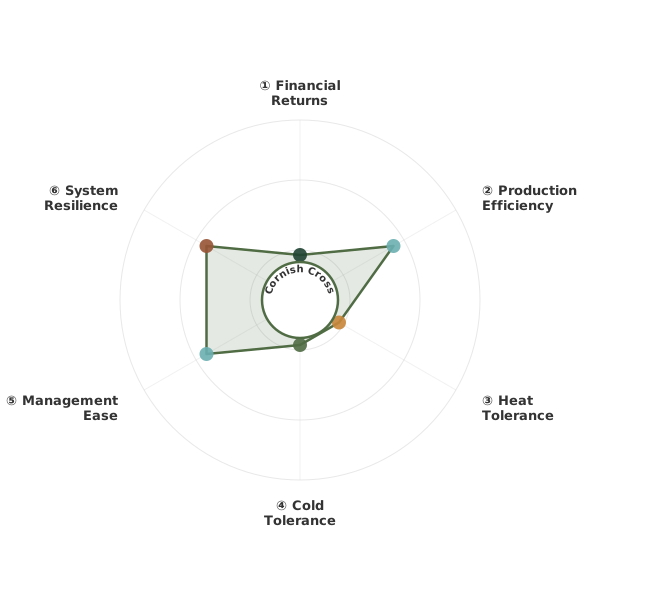
How These Traits Are Calculated
Trait dimensions are ordered clockwise starting from the top of the chart (12 o'clock position):
1. Financial Returns
Monthly income per bird from eggs, meat, or dual-purpose value
WHAT: Evaluates monthly profit potential combining egg production, meat yield, dual-purpose value, and input costs. Breeds with high output, efficient feed conversion, and minimal health costs generate stronger returns per bird.
WHY: Flock profitability depends on daily output relative to feed costs. Breeds laying 250+ eggs annually or reaching 6-8 lbs in 12-16 weeks provide income streams that cover feed plus profit, while lower producers require larger flocks or alternative revenue.
HOW: Calculated from production data (eggs per year or meat timeline) combined with feed efficiency and health characteristics. Exceptional (≥2.6): high output + low inputs + minimal health issues. Typical (1.8-2.5): moderate production or standard costs. Limited (<1.8): low output or high inputs eroding margins.
2. Production Efficiency
Output relative to feed consumed and space required
WHAT: Measures how effectively chickens convert feed and space into saleable products (eggs or meat), combining foraging ability, production levels, and resource needs into an efficiency score.
WHY: Efficient breeds reduce daily feed costs 20-40% while maximizing output, enabling profitability even when feed prices spike. Space-efficient breeds allow higher stocking density without stress, expanding flock size within existing infrastructure.
HOW: Weighted formula: foraging ability reduces feed costs (40%), egg or meat production measures output (30%), feed-to-output ratio (30%). Exceptional (≥2.6): excellent foragers + high production + low feed needs. Typical (1.8-2.5): moderate efficiency. Limited (<1.8): high inputs for output level.
3. Heat Tolerance
Egg production and health in hot weather above 85°F (29°C)
WHAT: Evaluates breed performance during sustained heat above 85°F (29°C), measuring production maintenance, heat stress resistance, and cooling behavior adaptations.
WHY: Heat stress drops egg production 15-40% and increases mortality. Heat-adapted breeds maintain laying through summer peaks where others stop production completely, avoiding 2-3 month income gaps in hot climates.
HOW: Rated from database trait 'heat_tolerance' based on breed characteristics. Exceptional (≥2.6): Mediterranean origins, large combs for cooling, maintains production in 95°F+ (35°C+). Typical (1.8-2.5): moderate tolerance with shade. Limited (<1.8): production drops significantly above 85°F, requires cooling systems.
4. Cold Tolerance
Egg production and health in cold weather below 20°F (-7°C)
WHAT: Evaluates breed performance during sustained cold below 20°F (-7°C), measuring production maintenance, frostbite resistance (especially combs and wattles), and winter hardiness.
WHY: Cold stress halts laying in non-adapted breeds, causes frostbite requiring amputations, and increases feed needs 30-50%. Cold-hardy breeds continue production through winter, maintaining year-round income where others require heated coops or accept seasonal gaps.
HOW: Rated from database trait 'cold_tolerance' based on breed characteristics. Exceptional (≥2.6): small combs, dense feathering, proven winter laying in <0°F (-18°C). Typical (1.8-2.5): moderate hardiness, basic shelter sufficient. Limited (<1.8): large combs prone to frostbite, production stops without heat.
5. Management Ease
Handling temperament and care complexity
WHAT: Measures daily management simplicity combining temperament docility, disease resistance, and behavioral predictability. Easy breeds require minimal interventions while difficult breeds demand constant attention.
WHY: Management complexity determines whether chickens are a pleasant side enterprise or a daily burden. Calm, healthy breeds allow 10-15 minute daily checks, while flighty or sickly birds require 45-60 minutes daily for catching, treating, and monitoring.
HOW: Evaluated from temperament, health needs, and typical care requirements. Exceptional (≥2.6): calm and friendly, excellent health, self-sufficient with basic care. Typical (1.8-2.5): manageable with standard practices. Limited (<1.8): nervous or aggressive, frequent health interventions needed.
6. Flock Resilience
Health and productivity under typical stresses
WHAT: Evaluates flock robustness across disease resistance, parasite tolerance, general hardiness, and stress adaptation. Measures ability to maintain production and survive challenges that devastate more fragile breeds.
WHY: Resilient flocks reduce veterinary costs, survive disease outbreaks that wipe out neighbors' chickens, and maintain production through weather extremes. This determines whether your flock thrives independently or requires constant medical interventions.
HOW: Composite assessment of documented health characteristics, survival rates, and stress tolerance. Exceptional (≥2.6): exceptional disease resistance + thrives through challenges + minimal losses. Typical (1.8-2.5): standard resilience with routine care. Limited (<1.8): health-sensitive, requires intensive management.
Regenerative Advantages
- Noise Level: Bred for rapid growth, they are generally very quiet with minimal vocalizations (<50 dB) and infrequent alarm calls, making them suitable for closer environments.
- Free Range Radius: Bred for rapid growth and confinement, they have a very low wandering instinct and stay exceptionally close to their coop.
Know the Debate
- Welfare concerns: managed growth vs. inherent genetic limits
- Efficiency vs. regenerative goals: rapid growth vs. holistic systems
- Cornish Cross are fast-growing hybrids, not traditional breeds.
- Management is key to mitigating welfare issues.
Value Streams
- Meat production
- Insect and pest control
- Scratch tillage and compost distribution
Experience Level
Suitable for first-time livestock owners
3
Understanding Cornish Cross Chickens Characteristics
Physical traits, temperament, and what makes this breed unique
Understanding Cornish Cross Chickens Characteristics
Physical traits, temperament, and what makes this breed unique
Cornish Cross chickens are not a true breed in the traditional sense, but rather a highly specialized hybrid developed for one purpose: rapid, efficient meat production. They are the result of crossing a Cornish chicken (known for its broad breast and muscularity) with a White Plymouth Rock (valued for its fleshing ability and egg production). This deliberate genetic combination results in a bird that achieves market weight in an astonishingly short period, typically six to nine weeks. Their defining characteristic is their exceptionally fast growth rate and a pronounced tendency to deposit muscle, particularly in the breast area, making them highly sought after by commercial producers. Unlike heritage breeds that mature slowly and possess a more robust constitution for foraging and self-sufficiency, the Cornish Cross is engineered for concentrated growth, often at the expense of mobility and natural foraging instincts. This rapid development means they require specific management to thrive and reach their genetic potential, setting them apart from breeds selected for longevity, egg-laying prowess, or dual-purpose utility.
Sources behind this view
 Videos & Podcasts
-
Provides a detailed 8-week guide for raising Cornish Cross broiler chickens, covering chick ordering, brooder setup, heat management, deep bedding with wood shavings, starter feed, pasture integration
-
Cornish Cross chickens are preferred for marketing due to consumer familiarity, while Heritage dual-purpose birds, though livelier, are slow-growing and require long cooking times, making them less pr

-
Compares meat chicken breeds: Rangers graze more and have more dark meat, but Cornish Cross grow faster (5lb carcass in 8 weeks vs. 4lb in 9-10 weeks), making them more commercially efficient.

-
Processes Cornish Cross chickens (8 weeks, slower growth) and offers roosters/stewing hens. Sorts birds by weight, processing those 5 lbs and over into parts and pieces due to breast size.

 Community
-
Cornish Cross chickens are industrially bred for rapid growth and feed efficiency. For homesteaders, a Dark Cornish rooster crossed with a Blue Jersey Giant hen is recommended for developing a versati
Read more (opens in new window) permies.com -
Discusses Orpington/Red Hen crosses and Cornish Cross for meat chickens, emphasizing feed management and foraging to raise larger birds. Commercial viability depends on breed profitability and custome
Read more (opens in new window) permies.com
4
Know the Debate
Cornish Cross chickens are a specialized hybrid bred for rapid meat production, offering significant economic efficiency for producers who can mana...
Know the Debate
Cornish Cross chickens are a specialized hybrid bred for rapid meat production, offering significant economic efficiency for producers who can mana...
Cornish Cross chickens are a specialized hybrid bred for rapid meat production, offering significant economic efficiency for producers who can manage their specific needs. While their fast growth cycle can be integrated into regenerative systems for rapid nutrient cycling, it also presents welfare challenges and requires careful attention to nutrition and environmental control. Choices regarding breed selection, feeding strategies, and pasture management significantly impact both the bird's well-being and the economic viability, making this a practice where different approaches yield distinct results depending on the farmer's goals and operational context.
Cornish Cross welfare: managed growth vs. inherent limitations?
Managed growth mitigates risks
Optimizing brooding, feeding restriction, predator protection, and controlled environments can manage rapid growth and improve welfare outcomes for Cornish Cross chickens. This approach aims to reduce stress and mortality by supporting the bird's physiological needs.
Sources behind this view
Sources behind this view
Videos & Podcasts
-
Provides a detailed 8-week guide for raising Cornish Cross broiler chickens, covering chick ordering, brooder setup, heat management, deep bedding with wood shavings, starter feed, pasture integration at 3 weeks, daily coop movement, and electric netting management for efficient meat production.
-
Manages Cornish Cross chickens by fixing pasture pin escapes and withholding food 12 hours daily after day five to prevent overly rapid growth and leg issues. Considers using electric netting for added security.
-
Detailed guide on setting up and managing a chick brooder for up to 4,000 Cornish Cross broilers, covering biosecurity, feed/water systems, spacing (0.25-0.75 sq ft/chick), temperature control (starting at 92°F, decreasing daily), ventilation, bedding (pine shavings), and daily chores. Includes information on grow gel, Dosatron, brooder guard use, and preparing chicks for pasture.

 From the Web
-
Pastured poultry breeds like Cornish Cross, Freedom Rangers, and heritage varieties are discussed, alongside management of mortality and predation. Controlling chick brooding, preventing piling, and using protective measures like guardian dogs and electric fencing are crucial for reducing losses.
Inherent genetic limitations pose welfare risks
The genetic predisposition for extreme rapid growth in Cornish Cross causes inherent physiological issues, including leg weakness, heart strain, and heat intolerance, leading to significant mortality even with best practices.
Sources behind this view
Sources behind this view
 Research
-
Growth performance, carcass traits and physical properties of chicken meat as affected by genotype and production system (opens in new window)
This study found: Abstract. The results of this study constitute a part of a project aiming at developing a cross-breed suitable for an extensive rearing system, utilising local biodiversity. Hybrids from mating a commercial broiler's male component (C) with Green-legged Partridgenous (GP) or Sussex (Sx) hens were compared with Cobb broilers. The study included 720 chickens of 3 genetic groups. Up to the third week of age, all birds were fed with balanced mixtures recommended for broiler chickens. From the fourth week, the mixture was weekly reduced by 10 % for the birds kept extensively (E). The deducted part was replaced with wheat bran, and from the seventh week with wheat. E groups had access to runs and received green fodder. Birds were slaughtered in 12th week of life. Carcass yield, giblets and proportion of carcass elements were estimated along with meat traits. The body weight at the 6th, 9th, 12th week of rearing and dissection results indicated a good suitability of Cobb chickens for an extensive rearing system. Hybrids were characterised by a considerably smaller proportion of breast muscle and slightly bigger of thighs and drumsticks, compared with Cobb, which could result from their greater motor activity. Results obtained by C × Sx and C × GP chickens, such as final body weight, proportions of abdominal fat and carcass elements, and appropriate value of meat traits, point at the usefulness of these hybrids as a meat-type chicken under extensive housing conditions. Darker colour of chicken meat, derived from C cocks and Sx or GP hens crossbred, can constitute an indicator for their carcasses' identification on the market.
-
The Benefit of Hedgerow Access on the Health and Growth Rate of Pasture Raised Broiler Chickens (opens in new window)
This study found: Pasture rearing is an increasingly common option for small farms to produce humanely raised poultry products for an expanding market, however profit margins tend to be much lower for pastured poultry producers than for those that opt for conventional indoor rearing. Research into simple methods to optimize the growth and health of pasture-raised poultry can help small farmers maximize meat yields and decrease the morbidity and mortality of their flock, ultimately leading to higher profit margins and improved animal welfare. The objective of this study was to measure how the inclusion of mature, native foliage into pastures can impact the production performance and overall health status of two different popular breeds of commercial broiler chickens; fast-growing Cornish cross and slower growing Red rangers. During the finisher phase (30–78 days old), pastured chickens were separated by breed into either a treatment population with access to a mature bordering hedgerow, or a control population without access to a hedgerow. Weekly weight gain, daily feed intake and basic hematologic values were used to evaluate differences in the production performance and health status between each population. We found that hedge access led to a significant improvement in the rate of gain of the Cornish cross without an associated increase in feed intake, suggesting that the addition of hedges can increase meat yields in fast-growing broilers without increasing feed costs. Red rangers with hedge access demonstrated an improved ability to neutralize bacterial pathogens in whole blood and a lesser degree of hemodilution compared to control populations, suggesting improved immune function and a lower degree of heat stress in these populations. We conclude that the addition of natural environmental enrichment such as mature foliage to grass pastures can lead to improved production performance in fast-growing broilers and improvements in the health and immune function of slower growing broiler chickens.
-
Behaviour in Slower-Growing Broilers and Free-Range Access on Organic Farms in Sweden (opens in new window)
This study found: A study on eight organic chicken farms in Sweden looked at the behavior of slower-growing broiler chickens. Researchers found that while nearly half the chickens indoors were sitting, they were still agile enough to use perches. However, the farms didn't seem to have enough enrichment items like perches and toys. The outdoor ranging areas often lacked vegetation or shelters, leading chickens to stay close to the barn. The study suggests more research is needed to find practical ways for farmers to improve both the indoor and outdoor environments to better the chickens' welfare.
Making Sense of the Differences
The performance of Cornish Cross chickens on pasture is a subject of ongoing debate, reflecting a tension between engineered efficiency and animal welfare. While academic research points to the inherent physiological stresses of rapid growth, highlighting genetic predispositions to leg and heart problems, practical field experience demonstrates that meticulous management can significantly mitigate these issues. Producers successfully raise Cornish Cross by controlling feed intake, providing ample space and shade, and ensuring robust predator protection, thus managing the birds' rapid development to acceptable outcomes. The core of the disagreement lies in whether optimal management can fully overcome genetic limitations or if those limitations fundamentally constrain welfare potential, regardless of the system.
Cornish Cross efficiency: optimal feeding for profit vs. regenerative goals?
High efficiency for rapid economic return
Cornish Cross chickens achieve market weight rapidly (6-9 weeks) with excellent feed conversion, making them economically efficient for producers seeking quick turnaround and high yields possible through specialized feed programs.
Sources behind this view
Sources behind this view
Videos & Podcasts
-
Provides a detailed 8-week guide for raising Cornish Cross broiler chickens, covering chick ordering, brooder setup, heat management, deep bedding with wood shavings, starter feed, pasture integration at 3 weeks, daily coop movement, and electric netting management for efficient meat production.
-
Detailed guide on setting up and managing a chick brooder for up to 4,000 Cornish Cross broilers, covering biosecurity, feed/water systems, spacing (0.25-0.75 sq ft/chick), temperature control (starting at 92°F, decreasing daily), ventilation, bedding (pine shavings), and daily chores. Includes information on grow gel, Dosatron, brooder guard use, and preparing chicks for pasture.
-
Compares Cornish Cross and Freedom Ranger chickens, favoring Cornish for ease of management, faster growth, and customer satisfaction. Discusses marketing terms like 'pastured' and 'organic grain,' highlighting high organic feed costs ($20-30/bag) and potential annual poultry revenue of $20k-$30k on a small acreage.

Research
-
Assessment of the Economic Profitability of Fattening Selected Chicken Genotypes in an Organic Farm (opens in new window)
This study found: A study compared the profitability of raising four different chicken breeds on an organic farm for 81 days. Researchers found that heritage breeds like Rhode Island Red and Sussex were less efficient at converting feed into meat (higher feed conversion ratio) compared to modern slow-growing hybrids like Hubbard JA 957 and fast-growing Ross 308. This inefficiency led to higher feed costs per pound of chicken for the heritage breeds. The study concluded that choosing modern, meat-focused chicken breeds, even if they are slow-growing, can improve the financial returns for organic chicken farmers.
-
Dual-purpose production of eggs and meat — Part 1: cockerels of crosses between layer and meat breeds achieve moderate growth rates while showing unimpaired animal welfare (opens in new window)
This study found: In organic farming, male chicks from high-performance egg-laying breeds are often culled because they don't grow fast enough for meat. This study explored 'dual-purpose' chickens, bred to be good for both eggs and meat, as a more ethical alternative. Researchers compared several crosses of egg-laying breeds with a meat breed (Bresse Gauloise) against purebred Bresse Gauloise and a standard layer breed (Lohmann Sandy). The male birds (cockerels) were raised for 15 weeks in a floor system with outdoor access. The dual-purpose crosses grew moderately well, reaching weights between about 2.3 to 2.4 kg, which was slower than the specialized meat breed but better than the layer breed. Importantly, the birds showed no signs of foot or leg problems, indicating a high level of animal welfare. This suggests that raising dual-purpose cockerels is a viable, ethical option with better growth than male layers, though it requires more resources than specialized broiler production.
Regenerative goals may favor slower-growing breeds
Regenerative systems often prioritize biological integration, diverse foraging, and slower-maturing breeds that align better with ecological principles, though Cornish Cross can be used for specific, short-term nutrient cycling benefits.
Sources behind this view
Sources behind this view
Videos & Podcasts
-
Switched from Cornish Cross to Rainbow Ranger chickens for pasture poultry due to better foraging, flavor, and manageability. Utilizes mobile coops and livestock guardian dogs for efficiency and predator control, with custom feed rations being crucial.

Research
-
PASTURE-BASED POULTRY FARMING: APPROACH FOR ANIMAL WELFARE, NUTRITIONAL QUALITY AND ENVIRONMENTAL SUSTAINABILITY (opens in new window)
This study found: Raising chickens on pasture offers a more sustainable way to produce poultry products compared to indoor confinement. This approach significantly improves the well-being of the birds by allowing them to express natural behaviors and reducing stress, leading to healthier animals. The meat and eggs from pasture-raised chickens are also more nutritious, containing higher levels of beneficial fats, vitamins, and antioxidants. Environmentally, chickens on pasture help build soil fertility, prevent soil erosion, and produce fewer greenhouse gas emissions. While challenges like protecting birds from predators and managing diseases exist, further research can help farmers adopt these beneficial practices.
From the Web
-
Covers feed and water management for pastured poultry, detailing nutritional needs by growth stage (starter, pullet, layer diets), feeder types and placement, and the importance of constant access to cool, clean water. Also briefly mentions predator deterrence and rodent control.
-
Recommends slow-growth poultry breeds for regenerative PUs, specifying stock density (2 sq ft/bird for meat, 1.8 sq ft/hen for layers) and ranging space (42 sq ft/bird for Midwest meat birds). Highlights the need for farmer clusters due to processing infrastructure limitations.
Making Sense of the Differences
The economic efficiency of Cornish Cross chickens is undeniable, with their rapid growth and high feed conversion rates supporting fast-turnaround operations. This makes them attractive for producers seeking to quickly convert inputs into marketable meat while potentially leveraging their manure for soil fertility. However, regenerative agriculture often emphasizes slower, more integrated systems that prioritize foraging diversity, ecosystem health, and potentially leaner, more traditional breeds. The debate lies in whether the efficiency gains of Cornish Cross outweigh the alignment with broader regenerative principles. While some argue for their strategic use in short-term nutrient cycling, others advocate for slower-growing, heritage breeds that better fit a holistic regenerative model from start to finish. This choice ultimately depends on the producer's primary goals: economic speed and efficiency versus ecological integration and breed resilience.
5
Management, Care & Feeding
Operational guidance for raising this breed successfully
Management, Care & Feeding
Operational guidance for raising this breed successfully
Managing Cornish Cross chickens effectively in a regenerative context centers on providing optimal nutrition and protecting them from the stresses of their rapid growth. Their high feed conversion efficiency means they require a high-energy, high-protein starter and grower feed, especially during the initial weeks. While they will consume grass and insects if available, their primary energy source should be a quality feed mix, as foraging alone cannot sustain their accelerated growth rate. They are best managed in mobile shelters or chicken tractors, allowing for daily moves to fresh pasture. This practice ensures they receive fresh forage, clean water, and are relocated before they overgraze or heavily contaminate an area. Due to their heavy breast muscle development and rapid growth, they can be prone to leg issues and sudden death from heart failure, especially in hot weather. Providing ample shade, cool drinking water, and avoiding over-crowding are critical health considerations. They are not suited for free-ranging due to their limited mobility and vulnerability to predators and heat stress.
Sources behind this view
Videos & Podcasts
-
Provides a detailed 8-week guide for raising Cornish Cross broiler chickens, covering chick ordering, brooder setup, heat management, deep bedding with wood shavings, starter feed, pasture integration
-
Cornish Cross chickens are fed fresh grass daily (approx. 40 lbs/day, 20% of diet), contrasting with grain-heavy grocery store birds. Their manure output is substantial.
-
Manages Cornish Cross chickens by fixing pasture pin escapes and withholding food 12 hours daily after day five to prevent overly rapid growth and leg issues. Considers using electric netting for adde
-
Manages Cornish Cross meat chickens ('sea monsters') in a wall-less trailer system, allowing free-ranging for up to 20% of their diet from foraging, preceded by sheep mowing grass, with dog protection

Community
-
Feed fermented grains and ACV, and free-range Cornish Rock Cross chickens to promote slower growth, better exercise, and prevent leg problems. This leads to healthier, more active birds.
Read more (opens in new window) permies.com -
Discusses raising 50 meat chickens on 500 sq ft of pasture, calculating feed needs and land requirements. Suggests 500 sq ft is insufficient for Cornish Cross, recommending larger areas or fewer birds
Read more (opens in new window) permies.com
7
Production Capabilities & Market Economics
Business case evaluation and production metrics
Production Capabilities & Market Economics
Business case evaluation and production metrics
Meat Production Economics
| Category | Value |
|---|---|
| Dressed Weight/Bird | 3-5 lbs 1.4-2.3 kg |
| Months to Finish | 2-2.5 |
| Batches/Year | 3-4 |
| Price Premium | +10% to +25% |
| Input Cost/Bird | $18-25 |
Months to Finish: Time from hatch to processing weight. Commercial meat breeds (Cornish Cross) finish in 8-10 weeks, while heritage breeds take 14-20+ weeks. Slower growth produces better flavor and texture.
Batches/Year: Number of production cycles annually. Pastured meat chickens are typically raised in 2-4 batches per year (8-12 weeks per batch). This allows pasture recovery between batches and spreads production throughout the season.
Price Premium: Premium above conventional chicken prices ($0-6/lb range). Pastured poultry typically commands $4-8/lb vs. $1-3/lb for conventional. Direct sales, organic certification, and heritage breeds command highest premiums. Premium only applies when farm qualifies through certification (organic, Animal Welfare Approved, Certified Humane) or direct marketing establishes pastured practices. Without certification or direct sales channels, premium falls to $0.
Input Cost/Bird: Includes chicks, feed, bedding, processing. Excludes labor, land, and infrastructure. Pastured systems have lower feed costs (due to foraging 10-20% of diet) but higher processing and chick costs than confinement operations.
Sources behind this view
Videos & Podcasts
-
Evaluates pastured poultry: Pros include low startup cost, fast ROI, and ease of management. Cons are high labor, seasonality, need for scale (400-500 birds/batch), high price, and butchering challeng

-
Detailed financial analysis of pastured poultry shows economies of scale are crucial for profitability, targeting $50/hour labor and 2x money factor. Specific costs, pricing ($4.99/lb whole chicken),
![Thumbnail for Earn $10000 an Acre Raising Pastured Poultry [PROFIT not GROSS]](/static/thumbnails/Ej-qyb6GrOA.jpg)
-
Pastured meat chickens offer high profitability (€15-€20/bird) and rapid scaling due to a 7-8 week cycle. On-farm slaughtery, built affordably, processes 5-10k birds on 3-3.5 hectares, improving soil

-
Financial aspects of pastured poultry in California: high costs for organic feed (~$900/ton), processing (~$5/bird), and significant freight add up. Marketing is challenging due to lack of commodity m

Community
-
Raising slow-growing heritage chickens on pasture is explored for feed economy and climate suitability, using forage and supplemental grains/milk. While potentially more sustainable, its economic viab
Read more (opens in new window) permies.com
Research
-
Assessment of the Economic Profitability of Fattening Selected Chicken Genotypes in an Organic Farm (opens in new window)
Organic chicken farming profitability increased by selecting modern, meat-type, slow-growing breeds over heritage breeds, due to better feed efficiency and lower costs per pound of meat.