
Crickets
The Cricket breed simplifies management for farmers, excelling in feed conversion, space efficiency, and water efficiency, while boasting an exceptional reproduction rate. These adaptable creatures thrive in a variety of conditions, demonstrating good disease resistance and temperature tolerance with minimal intervention. While their exact origin is not specified, their inherent hardiness and efficient resource utilization make them a distinctive choice for livestock operations seeking to maximize output with reduced inputs. Their rapid breeding cycle further contributes to their appeal for farmers focused on consistent production and efficient land use.
Regenerative Quick Profile
Best Suited For
Climates: Humid subtropical, oceanic, tropical monsoon, tropical savanna, hot semi-arid, hot arid
Scale: Excellent for small homesteads (1-10 animals)
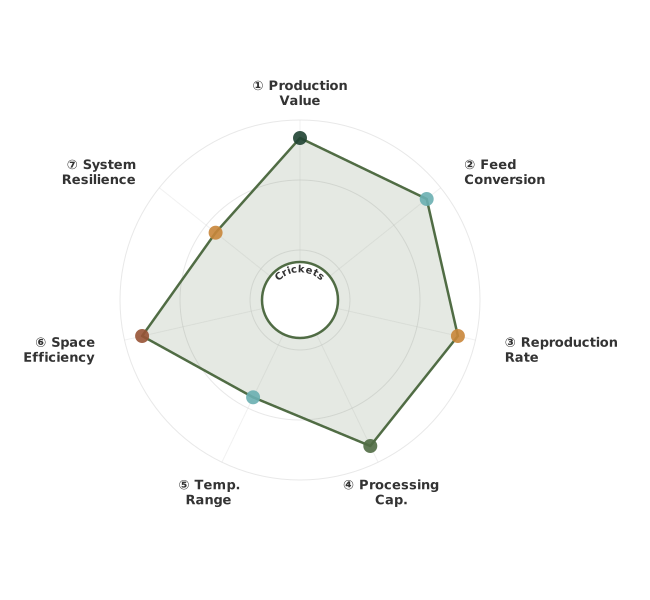
How These Traits Are Calculated
Trait dimensions are ordered clockwise starting from the top of the chart (12 o'clock position):
1. Production Value
Production Value scores 3.0 (exceptional) using waste processor pathway: feed_conversion (exceptional 3.0, 40%) crickets convert feed efficiently, consuming 1.5-2 kg of feed to produce 1 kg of biomass, reproduction_rate (exceptional 3.0, 30%) females lay 100-150 eggs per clutch with a 3-4 week generation time enabling rapid scaling, protein_yield (exceptional 2.8, 30%) crickets are 50-65% protein by dry weight, exceeding BSF. Formula: (3.0×0.40 + 3.0×0.30 + 2.8×0.30) = 2.94, rounded to 3.0. Crickets are highly efficient at converting diverse organic waste into nutrient-dense protein for animal feed or human consumption.
Rapid waste conversion + high protein
2. Feed Conversion
Feed Conversion Efficiency scores 2.8 (exceptional) from species data. Crickets convert feed into biomass at approximately 1.5:1 to 2:1 ratio, meaning 1.5-2 kg of feed produces 1 kg of cricket biomass. This is highly efficient compared to traditional livestock (e.g., pigs 3-4:1, cattle 6-8:1). Their ability to utilize various organic byproducts enhances their regenerative value by upcycling waste streams into valuable protein.
Converts waste at 1.5:1 ratio (excellent)
3. Reproduction Rate
Reproduction Rate scores 3.0 (exceptional) from rapid life cycle and fecundity. Female crickets lay 100-150 eggs per clutch, and the generation time from egg to adult (ready to reproduce) is typically 3-4 weeks under optimal conditions. This rapid turnover allows for quick scaling of production to meet demand and efficient population management for continuous harvesting.
100-150 eggs/cycle, 3-4 week generation
4. Processing Cap.
Processing Capacity scores 2.8 (exceptional) from their efficient conversion of feed into biomass. Crickets effectively process a variety of organic materials, including food scraps and agricultural byproducts, converting them into nutrient-rich protein. Their rapid growth cycle and high feed conversion ratio mean a large volume of waste can be processed into valuable cricket products over a short period.
Processes 1.5-2× feed intake as biomass
5. Temp. Range
Temperature Range scores 2.0 (typical) from species requirements. Crickets thrive in a temperature range of 70-85°F (21-29°C). Deviations outside this range can slow growth, reduce reproduction, or cause mortality. Consistent temperature control is necessary for efficient and predictable production, requiring an enclosed and climate-regulated environment, especially in cooler climates.
Optimal 70-85°F (needs climate control)
6. Space Efficiency
Space Efficiency scores 3.0 (exceptional) from small_scale_suitability. Crickets can be farmed in vertically stacked containers or bins at very high densities, allowing for significant biomass production in a small footprint. This makes them ideal for urban farming, indoor facilities, and operations with limited land availability, allowing for intensive production systems.
Minimal space (bin systems, high density)
7. System Resilience
System Resilience scores 2.3 (typical) from: hardiness (typical 2.5, 40%) crickets are generally robust but susceptible to humidity fluctuations and extreme temperatures, disease_resistance (typical 2.0, 30%) can be affected by fungal or bacterial pathogens if conditions are suboptimal, adaptability (typical 2.4, 30%) adapt to various feed inputs but prefer consistent diets. Formula: (2.5×0.40 + 2.0×0.30 + 2.4×0.30) = 2.32, rounded to 2.3. Managed systems are crucial for maintaining health and productivity.
Requires stable environment, generally hardy
Regenerative Advantages
- Small Scale Suitability: Minimal space requirements in stacked bins. Easy to manage and require little specialized infrastructure, ideal for protein production.
Value Streams
Experience Level
Consult local experts for handling requirements
3
Understanding Crickets Characteristics
Physical traits, temperament, and what makes this breed unique
Understanding Crickets Characteristics
Physical traits, temperament, and what makes this breed unique
Crickets, while not a traditional livestock breed in the mammalian or avian sense, represent a unique category of protein production with a rich global history as a food source. Their distinguishing traits include a small, compact body, rapid maturation, and an exceptional ability to convert feed into biomass. Unlike larger livestock, their "breed" characteristics are defined more by species and strain, with various cricket species like Acheta domesticus (house cricket) and Gryllodes sigillatus (banded cricket) being commonly farmed. Their origins as a food staple span millennia and diverse cultures, from ancient Mesoamerica to contemporary Asian markets, highlighting their long-standing viability as a nutrient-dense food.
What sets crickets apart most significantly is their biological efficiency and minimal resource footprint. Their exoskeleton provides structure, and their simple digestive system allows them to process a wide range of organic matter. This contrasts sharply with the extensive land, water, and feed requirements of conventional livestock. Their life cycle, typically lasting only a few weeks from egg to adult, allows for rapid scaling and continuous production, a characteristic not found in slower-reproducing animals.
Furthermore, their small size and gregarious nature mean they can be raised vertically in controlled environments, maximizing output per square foot. This space efficiency makes them ideal for urban farming or integration into existing farm structures with minimal modification. The focus in cricket farming is on optimizing environmental conditions – temperature, humidity, and ventilation – and selecting strains for desirable traits like growth rate and feed conversion, rather than traditional selective breeding for physical appearance or temperament seen in chattel livestock.
Sources behind this view
 Community
-
Crickets serve as a valuable livestock feed, supplementing grain rations for animals and being fed whole to chickens and ducks. Intensive farming requires plastic tubs, soil, food scraps, and water, w
Read more (opens in new window) permies.com
 Research
-
Genome and Genetic Engineering of the House Cricket (Acheta domesticus): A Resource for Sustainable Agriculture (opens in new window)
Scientists mapped the house cricket's genome, enabling gene editing for more nutritious, disease-resistant crickets and bioproducts, supporting sustainable agriculture.
4
Management, Care & Feeding
Operational guidance for raising this breed successfully
Management, Care & Feeding
Operational guidance for raising this breed successfully
Effective management of crickets centers on providing a stable, controlled environment and a consistent, appropriate diet. Key husbandry considerations include maintaining optimal temperature (typically 75-85°F or 24-29°C) and humidity (50-70%), along with adequate ventilation to prevent ammonia buildup. Crickets are housed in vertically stacked containers or bins, often with textured surfaces or egg cartons to provide climbing space and reduce cannibalism. Regular cleaning and sanitation are crucial to prevent disease outbreaks, especially given their high population densities.
Feeding management involves providing a balanced diet that maximizes growth and minimizes waste. Crickets are omnivores and can efficiently process a variety of organic materials, including specialized cricket feed formulations, grains, fruits, vegetables, and even processed food waste. The diet should be formulated to meet their protein, carbohydrate, fat, and micronutrient needs. Water is typically provided through gel-based systems or moist substrates to prevent drowning and contamination. Monitoring feed intake and adjusting rations based on growth stages is essential for optimal performance.
Health considerations for crickets primarily revolve around preventing stress and disease that can arise from poor environmental conditions or overcrowding. Common issues include cannibalism, particularly among juveniles, and susceptibility to certain fungal or bacterial infections if humidity is too high or sanitation is poor. Proactive management through careful environmental control, appropriate population densities, and a nutritious diet is the best defense. Regularly inspecting the colony for signs of distress or disease, and promptly removing any unhealthy individuals, helps maintain the overall health and productivity of the farm.
Sources behind this view
Community
-
Crickets serve as a valuable livestock feed, supplementing grain rations for animals and being fed whole to chickens and ducks. Intensive farming requires plastic tubs, soil, food scraps, and water, w
Read more (opens in new window) permies.com -
UC Davis research indicates cricket protein sustainability hinges on diet quality, with efficient conversion dependent on utilizing high-quality organic side-streams, challenging broad claims of envir
Read more (opens in new window) ucanr.edu