
Donkey
Donkeys offer farmers a remarkably hardy and heat-tolerant livestock option, thriving on minimal feed and demonstrating exceptional drought tolerance. Easily managed and requiring very little intervention, they excel at converting sparse vegetation into usable energy and possess a naturally gentle disposition, making them ideal for various farm tasks. Originating from the African wild ass, donkeys are known for their stoic nature and adaptability to challenging environments. Their browse efficiency allows them to effectively clear and manage overgrown areas, reducing the need for extensive land clearing.
Regenerative Quick Profile
Best Suited For
Climates: Arid to semi-arid, Mediterranean, and temperate dry climates.
Scale: Excellent for small homesteads (1-10 animals)
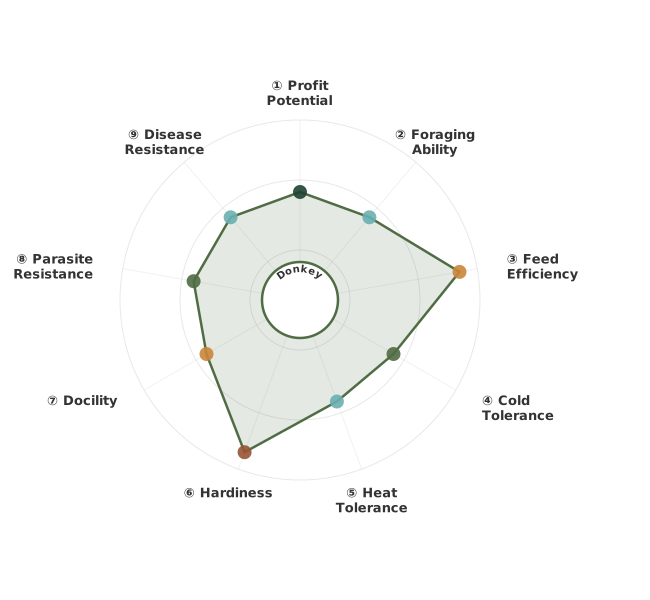
How These Traits Are Calculated
Trait dimensions are ordered clockwise starting from the top of the chart (12 o'clock position):
1. Profit Potential
Measures the donkey breed's capacity to generate income for the farm.
WHAT: This trait evaluates a donkey breed's ability to contribute to farm income through various avenues, such as offspring sales, manure production for soil amendment, or specialized work. Differences between breeds can stem from their fertility rates, growth potential of offspring, and suitability for niche markets.
WHY: For regenerative farmers, profit potential is crucial for farm sustainability and reinvestment in ecological practices. A breed that offers multiple income streams or commands higher prices for its products or services directly supports the farm's long-term viability and regenerative goals.
HOW: Exceptional breeds may consistently produce high-demand offspring with a market value exceeding $500 per foal, or offer significant income from specialized services. Typical breeds might generate moderate income through occasional sales or manure value. Limited breeds may have low fertility, limited market appeal, or require significant investment with low returns.
2. Foraging Ability
Measures a donkey's skill in finding and consuming diverse plant matter.
WHAT: This trait assesses a donkey's natural inclination and effectiveness in seeking out and consuming a wide variety of vegetation, including coarser grasses, weeds, and browse. Breeds may differ in their tenacity and ability to thrive on less palatable or sparser forage.
WHY: High foraging ability allows donkeys to efficiently utilize marginal lands and reduce reliance on supplemental feed, a key principle for regenerative systems. This trait is crucial for managing pastures, controlling invasive species, and minimizing input costs.
HOW: Exceptional donkeys excel at finding nutrition in sparse or challenging environments, often consuming over 80% of their diet from varied forages. Typical donkeys require more consistent grazing but can still manage on varied pasture, while Limited donkeys may need significant supplemental feed and struggle with weed control.
3. Feed Efficiency
Measures how well donkeys convert feed into usable energy and body mass.
WHAT: Feed efficiency in donkeys relates to their ability to thrive on lower-quality forage and require less supplemental feed than other equines. Breeds differ in their metabolic rates and digestive capabilities, impacting how much they can utilize coarse or fibrous diets.
WHY: For regenerative farmers, highly feed-efficient donkeys reduce reliance on external feed inputs, lowering costs and environmental impact. This trait is crucial for managing livestock on pasture systems with variable forage availability, ensuring animal health and productivity.
HOW: Exceptional donkeys can maintain good condition and health on very sparse, high-fiber diets (e.g., <1.5% body weight in dry matter intake of mature grass). Typical donkeys may need moderate supplementation during lean periods. Limited efficiency means they require more nutrient-dense feed and struggle on poor pasture.
4. Cold Tolerance
Measures a donkey's ability to withstand and thrive in cold weather conditions.
WHAT: This trait assesses a donkey's natural physiological and behavioral adaptations to cold environments, including coat thickness, fat reserves, and willingness to seek shelter. Breeds originating from colder climates generally exhibit superior cold tolerance.
WHY: For regenerative farmers in cooler regions, good cold tolerance reduces the need for supplemental heating and housing, lowering operational costs and energy inputs. It ensures donkeys remain healthy and productive during winter months, supporting year-round grazing and manure production.
HOW: Exceptional donkeys can maintain body condition and activity levels with minimal shelter in temperatures below freezing (e.g., -10°C or 14°F). Typical donkeys may require some windbreak or light shelter in prolonged cold. Limited donkeys may struggle to maintain condition and require significant protection and supplemental feed in temperatures above freezing.
5. Heat Tolerance
Measures how well donkeys cope with hot and dry conditions.
WHAT: This trait evaluates a donkey breed's ability to withstand and perform effectively in high temperatures and arid environments. Breeds originating from desert or semi-arid regions typically exhibit superior heat tolerance compared to those from cooler climates.
WHY: For regenerative farmers in hot climates, selecting donkeys with high heat tolerance ensures their well-being and productivity, reducing stress and potential health issues. This trait is crucial for maintaining work capacity and overall herd health in challenging environments.
HOW: Exceptional breeds can maintain normal activity and body temperature with minimal signs of heat stress even at ambient temperatures exceeding 35°C (95°F). Typical breeds may show mild signs of discomfort or reduced activity above 30°C (86°F). Limited breeds will experience significant stress and reduced performance when temperatures regularly exceed 25°C (77°F).
6. Hardiness
Measures a donkey's ability to thrive in challenging environments and resist disease.
WHAT: This trait assesses a donkey's resilience to harsh weather, poor forage, and common ailments. Breeds vary significantly in their natural adaptability, with some having evolved in arid or mountainous regions and others in more temperate climates.
WHY: For regenerative farmers, hardy donkeys require less intensive management, feed, and veterinary care, reducing input costs and environmental impact. Their robust nature ensures they can contribute effectively to the farm ecosystem even with limited resources.
HOW: Exceptional donkeys are highly resistant to parasites and diseases, thrive on minimal roughage, and tolerate extreme temperatures with minimal stress. Typical donkeys may require occasional deworming and supplementary feed during lean periods. Limited donkeys are more susceptible to illness and struggle in less than ideal conditions, needing significant care.
7. Docility
Measures the donkey's temperament and willingness to interact with humans.
WHAT: Docility evaluates a donkey's natural inclination to be calm, gentle, and responsive to human handling. Some donkey breeds naturally exhibit a more stoic and independent nature, while others are bred for closer human companionship and work, showing greater eagerness to please and a softer disposition.
WHY: For regenerative farmers, docile donkeys are easier to manage, train for tasks like packing or pulling, and integrate into mixed-species herds, reducing stress for both animals and handlers. This trait is crucial for ensuring safety and efficient farm operations when working closely with these animals.
HOW: Exceptional docility means donkeys readily accept approach, touch, and basic commands with minimal resistance, often showing curiosity and affection. Typical docility involves donkeys being manageable with consistent, gentle handling but may require patience. Limited docility might manifest as increased skittishness, resistance to touch, or a need for much more experienced handlers.
8. Parasite Resistance
Measures how well donkeys naturally ward off internal and external parasites.
WHAT: This trait assesses a donkey breed's innate ability to resist common internal and external parasites, such as worms, mites, and ticks. Some donkey breeds have evolved in environments with higher parasite loads, leading to stronger natural defenses than others.
WHY: Robust parasite resistance in donkeys reduces the need for chemical dewormers and pesticides, aligning with regenerative principles. Healthier donkeys mean less stress on the ecosystem, lower veterinary costs, and improved overall animal welfare on the farm.
HOW: Exceptional breeds show very low or no need for routine deworming and minimal signs of parasitic infestation, even in challenging conditions. Typical breeds may require occasional, targeted deworming, while limited breeds are more susceptible and may need frequent treatments.
9. Disease Resistance
Assesses a donkey's natural ability to ward off common illnesses and parasites.
WHAT: This trait evaluates a donkey breed's inherent ability to resist common diseases, infections, and parasitic infestations. Some donkey breeds have evolved in harsher environments, leading to naturally stronger immune systems and better resilience.
WHY: High disease resistance means fewer veterinary costs and less downtime for your animals, crucial for maintaining herd health and productivity on a regenerative farm. It reduces reliance on external treatments, aligning with sustainable practices.
HOW: Exceptional breeds typically show very low incidence of common ailments, requiring minimal deworming or vaccination. Typical breeds may need standard preventative care, while limited breeds might be more susceptible to prevalent donkey diseases, requiring frequent monitoring and intervention.
Regenerative Advantages
- Hardiness: Donkeys resist common equine diseases, require minimal veterinary care, tolerate poor forage and limited water, and maintain health in harsh conditions.
- Feed Efficiency: Donkeys thrive on poor-quality forage rejected by horses, requiring 30-50% less feed per unit body weight and maintaining condition on minimal pasture.
- Longevity: Donkeys live 30-40 years (vs 25-30 for horses) with productive working life extending to 25-30 years, providing exceptional lifetime value.
- Endurance: Donkeys travel 30-50 km daily with loads in harsh terrain, working reliably in heat and on limited water where horses fail, with legendary stamina.
- Hoof Quality: Donkeys possess extremely hard, dense hooves adapted for rocky terrain, often working barefoot throughout their lives with minimal hoof problems.
Value Streams
Experience Level
Some livestock experience recommended
3
Understanding Donkey Characteristics
Physical traits, temperament, and what makes this breed unique
Understanding Donkey Characteristics
Physical traits, temperament, and what makes this breed unique
Donkeys, scientifically classified as *Equus asinus*, are distinct equids renowned for their exceptional hardiness and remarkable adaptability, making them a unique utility animal for various agricultural settings. Originating from the arid and semi-arid regions of Northeast Africa, these animals have evolved over millennia to thrive in environments characterized by scarce resources, demonstrating an impressive tolerance for heat and drought. Their physiology is finely tuned for efficiency, allowing them to subsist on coarser forage and require less water than many other livestock. This biological foundation sets them apart and dictates their suitability for specific roles on the farm, particularly in challenging climates or on marginal lands.
Physical Characteristics:• Size and Build: Donkeys are typically smaller than horses, with shoulder heights ranging from 35 to 60 inches and weights from 200 to over 500 pounds. They possess a stockier build with a straighter back and less pronounced withers compared to horses.
• Coat and Coloration: Their short, coarse coat varies in color from gray, brown, and black to chestnut, often featuring a dark dorsal stripe and a transverse stripe across the shoulders, forming a distinct "cross." They have stiff, erect manes.
• Ears: Exceptionally long ears serve a dual purpose: acute hearing and crucial thermoregulation by radiating excess body heat.
• Feet: Donkeys have hard hooves naturally adapted to rough terrain, requiring less frequent shoeing than horses.
Physiological Traits:• Digestive Efficiency: Their digestive system is optimized for extracting nutrients from fibrous plant material through highly efficient hindgut fermentation, enabling them to utilize forages that other equids might struggle with.
• Water Conservation: Donkeys exhibit a lower water requirement per unit of body weight compared to horses and can tolerate dehydration for extended periods.
• Thermoregulation: Beyond their large ears, they possess physiological mechanisms to maintain body temperature in hot conditions, including a reduced metabolic rate and increased water turnover when water is available.
Behavioral Traits:• Foraging Strategy: As efficient browsers and grazers, donkeys can subsist on a wide variety of vegetation, including tough grasses, shrubs, and thorny plants, which they access with their strong teeth and lips.
• Temperament: Generally calm and steady, donkeys are often described as cautious with a strong sense of self-preservation, which can be misinterpreted as stubbornness.
• Social Structure: While capable of forming bonds, they are typically less herd-oriented than horses and can adapt well to independent work or living situations. Their inherent resilience and specialized adaptations make them a valuable, albeit often overlooked, asset in diverse agricultural systems.
Sources behind this view
 Community
-
Donkeys are praised for their strength, hardiness, and lower feed requirements compared to horses, making them efficient for draft work and potentially riding/milking, though cows offer more milk/meat
Read more (opens in new window) permies.com
4
Management, Care & Feeding
Operational guidance for raising this breed successfully
Management, Care & Feeding
Operational guidance for raising this breed successfully
Integrating donkeys into a regenerative agricultural system requires a thoughtful approach that leverages their unique physical and biological traits to achieve economic and environmental goals. Their inherent hardiness and efficiency mean they can be managed with relatively low input requirements, but success hinges on understanding their specific needs and aligning them with farm objectives. This involves careful consideration of their physical environment, economic implementation, and ongoing management practices to maximize their contribution to the farm's overall sustainability and productivity.
Physical and Environmental Requirements:• Climate Suitability: Donkeys are best suited for regions experiencing prolonged dry spells and high ambient temperatures, typically found in arid and semi-arid zones (e.g., USDA zones 7-10). Their drought tolerance (10-25 inches annual rainfall) and heat tolerance make them resilient in areas where other livestock may struggle.
• Forage and Water: While efficient, donkeys still require access to adequate forage, which can include tough grasses, shrubs, and crop residues. Their water requirements are lower than horses, but a consistent supply is still necessary, especially during warmer periods.
• Shelter and Fencing: Basic shelter from extreme weather is recommended, though their coats offer good protection. Secure fencing is crucial, as their curiosity and ability to maneuver can lead to escapes if not adequately contained.
• Terrain Adaptation: Their hard hooves are well-suited to rough terrain, reducing the need for specialized farriery and making them ideal for managing uneven pastures or brushy areas.
Economic Implementation and Integration:• Acquisition and Initial Costs: Purchase prices typically range from $200 to $1,000, depending on age, training, and temperament. Minimal infrastructure is required, often under $500 for secure fencing and basic shelter.
• Ongoing Maintenance Costs: Annual costs for feed, veterinary care, and hoof trimming are generally lower than for horses, estimated at $100-$300 per animal, assuming access to adequate forage.
• Labor and Training: For draft work, appropriate harness and training are necessary, which can take time to establish. For guardian roles, initial training to integrate with livestock can take 1-3 months.
• Offspring Sales: Surplus offspring can represent a minor revenue stream, typically sold as pets or companion animals, with prices ranging from $100 to $500, requiring 1-2 years of breeding and market engagement to establish a consistent opportunity.
Management Practices:• Grazing and Browsing: Donkeys can be managed in rotational grazing systems to control weeds and utilize marginal pastures. Their ability to browse on shrubs and woody vegetation makes them effective for brush management in orchards or overgrown areas.
• Manure Management: Donkey manure is a valuable resource for soil fertility. It can be collected and composted, or integrated into pasture via manure distribution in grazing areas, enhancing soil organic matter and nutrient content.
• Guardian Integration: When used as guardians, it's essential to introduce young donkeys to livestock early or to carefully bond them with the herd. They should be kept with the livestock they are protecting, rather than in separate enclosures.
• Health Monitoring: Regular checks for parasites, dental health, and hoof condition are important. Their hardiness means they are less prone to some common equine ailments, but vigilance is still required.
• Understanding Temperament: Recognizing their cautious nature and strong sense of self-preservation is key to effective handling and training, avoiding force and instead focusing on clear communication and positive reinforcement.
Integrating donkeys effectively means understanding their physiological advantages in challenging environments and their role in reducing reliance on external inputs. By providing appropriate conditions, utilizing their specific skills, and managing them with an understanding of their unique needs, farmers can harness their potential for cost savings, enhanced land management, and a more resilient farm ecosystem.
Sources behind this view
Community
-
Donkeys require social companionship (minimum two), and riding ability should be verified before purchase. Consider potential noise and their role in predator deterrence. Seek specialized advice for c
Read more (opens in new window) permies.com -
Donkey care necessitates dry shelter for hooves in wet climates, finding a specialized farrier, regular deworming (consulting a vet), and access to low-calorie hay and straw.
Read more (opens in new window) permies.com