
Dromedary Camel
The Dromedary camel excels in environments demanding exceptional hardiness and heat tolerance, greatly simplifying management in arid and semi-arid regions. This species thrives on diverse forage, demonstrating remarkable feed and browse efficiency, and requires minimal intervention during drought periods. Originating from the Arabian Peninsula, Dromedaries are uniquely adapted to survival with minimal water, making them an unparalleled choice for farmers seeking drought-tolerant and self-sufficient livestock. Their ability to convert sparse vegetation into valuable resources sets them apart from conventional livestock, offering a distinct advantage for sustainable land use in challenging climates.
Regenerative Quick Profile
Best Suited For
Climates: Hot arid and semi-arid regions, with some tolerance for hot dry Mediterranean climates.
Scale: Best for medium to large operations (50+ animals)
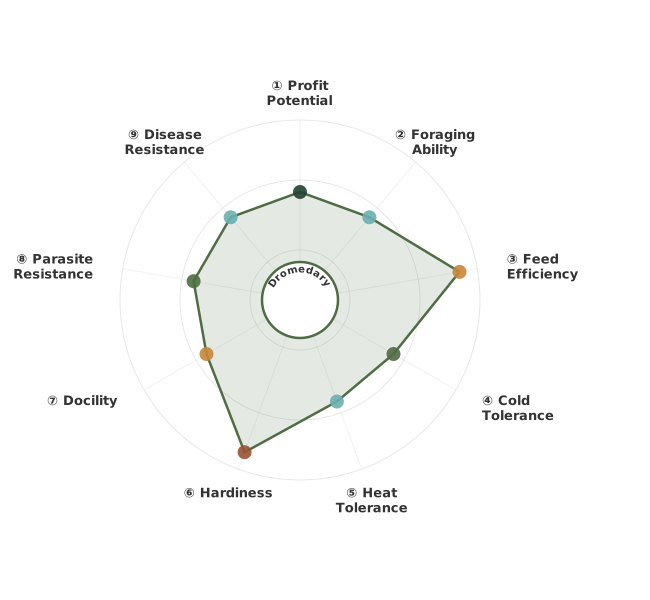
How These Traits Are Calculated
Trait dimensions are ordered clockwise starting from the top of the chart (12 o'clock position):
1. Profit Potential
Measures the economic viability and market demand for dromedary camels.
WHAT: This trait evaluates the inherent economic value and market demand for dromedary camel products, including milk, meat, fiber, and tourism. Breeds that are historically favored for higher-value products or have established export markets will score higher.
WHY: For regenerative farmers, profit potential is crucial for the long-term sustainability of their operation. Understanding which breeds offer the best return on investment ensures the farm can thrive and contribute positively to the local economy.
HOW: Exceptional breeds may have high demand for premium milk (e.g., >$5/liter retail), specialized meat markets, or strong tourism appeal. Typical breeds have moderate demand for common products. Limited breeds may face low market prices or limited access to buyers, perhaps with milk fetching less than $2/liter at wholesale.
2. Foraging Ability
Measures how well dromedaries find and utilize diverse plants in challenging environments.
WHAT: This trait assesses the dromedary camel's capacity to efficiently locate and consume a wide variety of vegetation, including tough, spiny, or saline plants. Breeds differ in their preference for specific plant types and their ability to thrive on sparser diets.
WHY: High foraging ability is crucial for regenerative systems, enabling dromedaries to efficiently utilize marginal lands, reduce reliance on supplemental feed, and contribute to ecosystem health through selective grazing. This trait directly impacts grazing management flexibility and cost-effectiveness.
HOW: Exceptional breeds can thrive on less than 80% of their nutritional needs from supplemental feed, demonstrating adaptability to browse and unusual forage. Typical breeds may require 20-40% supplemental feed, while limited breeds often need over 40% and struggle with less palatable vegetation.
3. Feed Efficiency
Measures how effectively dromedaries convert feed into usable energy and products.
WHAT: This trait assesses how well a dromedary camel converts the feed it consumes into milk, meat, or work. Breeds can vary significantly in their metabolic rate and nutrient absorption, impacting how much feed is needed for optimal production.
WHY: For regenerative farmers, feed efficiency is crucial for reducing input costs and minimizing the environmental footprint of their herd. More efficient animals require less land for forage production and generate less waste, aligning with sustainable practices.
HOW: Exceptional dromedaries can maintain or increase production on 15% less feed than typical animals. Limited dromedaries may require 10% more feed than average to achieve similar outputs. This is often linked to breed-specific digestive capabilities and energy utilization.
4. Cold Tolerance
Measures a dromedary camel's ability to withstand cold temperatures.
WHAT: This trait assesses a dromedary camel's physiological and behavioral adaptations to cold environments. Some dromedary populations, particularly those historically adapted to cooler highlands or deserts with significant diurnal temperature drops, exhibit better cold tolerance than others.
WHY: For regenerative farmers in regions experiencing seasonal cold, good cold tolerance is crucial for animal welfare, reducing stress, and maintaining productivity. It allows for easier management with less need for intensive housing or supplemental heating, aligning with sustainable practices.
HOW: Exceptional breeds can thrive with minimal shelter in temperatures down to 0°C (32°F). Typical breeds may require some shelter or reduced exposure below 5°C (41°F). Limited breeds are significantly stressed and require substantial protection below 10°C (50°F).
5. Heat Tolerance
Measures how well dromedaries cope with extreme desert heat and drought.
WHAT: This trait assesses a dromedary camel's ability to withstand high ambient temperatures and prolonged periods without water. Some breeds are naturally better adapted to arid environments due to genetic predispositions for efficient water use and thermoregulation.
WHY: For regenerative farmers in hot climates, high heat tolerance is crucial for animal welfare, productivity, and reduced reliance on external resources. It ensures camels can thrive with minimal intervention, contributing to a more sustainable and resilient system.
HOW: Exceptional breeds can maintain body temperature and productivity during sustained periods above 40°C (104°F) with limited water access. Typical breeds show moderate resilience but may require shade or more frequent watering in extreme conditions. Limited breeds struggle to cope and may experience heat stress or reduced performance.
6. Hardiness
Measures the dromedary's ability to thrive in harsh desert conditions.
WHAT: This trait assesses the dromedary camel's innate resilience and ability to withstand challenging environmental conditions. It reflects their capacity to cope with extreme temperatures, water scarcity, and limited forage availability, with variations observed across different dromedary populations.
WHY: High hardiness is crucial for regenerative operations aiming for minimal external inputs and maximum self-sufficiency in arid or semi-arid environments. Hardy camels reduce the need for supplemental feed, water, and veterinary interventions, aligning with sustainable and low-impact farming principles.
HOW: Exceptional hardiness indicates camels that can survive prolonged periods without water (e.g., >10 days) and tolerate extreme heat (>45°C) with minimal stress. Typical hardiness suggests good tolerance but may require more frequent water access or shade. Limited hardiness means the breed is more susceptible to dehydration and heat stress, necessitating careful management and resource provision.
7. Docility
Measures the dromedary camel's willingness to cooperate with human handling and management.
WHAT: Docility assesses a dromedary camel's temperament, including its tendency to be calm, easily handled, and less prone to aggression or fear. This trait varies significantly, with some lineages exhibiting a naturally placid nature, while others may be more independent or reactive.
WHY: For regenerative farmers, docile dromedaries are easier and safer to manage, reducing stress on both the animal and the handler. This translates to more efficient labor, reduced risk of injury, and improved animal welfare, all crucial for sustainable operations.
HOW: 'Exceptional' dromedaries are very calm, readily accept haltering, loading, and close proximity with minimal resistance (e.g., less than 5% vocalization or kicking during routine handling). 'Typical' dromedaries are manageable with standard training and patience, showing moderate resistance in some situations. 'Limited' dromedaries are consistently difficult to handle, requiring specialized techniques or posing a significant safety concern (e.g., over 20% of individuals exhibiting strong defensive behaviors).
8. Parasite Resistance
Measures dromedary camels' natural ability to withstand internal and external parasites.
WHAT: This trait assesses a dromedary camel's innate ability to resist parasitic infections and infestations. Resistance can vary significantly between camel breeds due to genetic differences in immune response and physiological adaptations.
WHY: High parasite resistance is crucial for regenerative farming as it reduces the need for chemical treatments, lowers animal stress, and improves overall herd health and productivity. Resistant camels contribute to a more sustainable and resilient farming system.
HOW: Exceptional breeds demonstrate very low fecal egg counts (e.g., <100 EPG for gastrointestinal nematodes) and minimal visible signs of external parasites with infrequent or no treatment. Typical breeds show moderate resistance, requiring occasional intervention. Limited breeds are highly susceptible and frequently need treatment.
9. Disease Resistance
Measures how well dromedary camels fight off common illnesses.
WHAT: This trait assesses the inherent ability of dromedary camel breeds to withstand and recover from common diseases and parasites. Variation exists due to genetic selection for specific environments and historical exposure to different pathogens.
WHY: High disease resistance reduces veterinary costs, minimizes animal losses, and ensures consistent productivity of milk, meat, and fiber. It's crucial for sustainable, low-input systems common in regenerative farming.
HOW: Exceptional breeds demonstrate very low mortality rates (<5%) from endemic diseases and require minimal or no prophylactic treatments. Typical breeds show moderate resistance with occasional outbreaks managed by routine care. Limited breeds are highly susceptible, often requiring intensive veterinary intervention and experiencing significant losses.
Regenerative Advantages
- Drought Tolerance: Dromedary camels survive 10-14 days without water in hot conditions, tolerate 25-40% body weight loss, and thrive with <5 inches annual rainfall in true desert environments.
- Hardiness: Dromedary camels survive 45-50°C heat and minimal water, require minimal veterinary care, and maintain productivity in desert conditions that kill all other livestock.
- Feed Efficiency: Dromedary camels extract maximum nutrition from desert vegetation, requiring 50-70% less feed than cattle per unit body weight and thriving on plants other livestock refuse.
- Pack Capacity: Dromedary camels carry 150-220 kg loads for 40-50 km daily through desert terrain, with exceptional endurance in hot conditions unmatched by other pack animals.
- Browse Efficiency: Dromedary camels are highly efficient browsers, consuming thorny desert plants and salt-tolerant vegetation with specialized digestive systems that extract maximum nutrition from poor-quality forage.
Value Streams
Experience Level
Some livestock experience recommended (better for larger operations)