
Duroc Pigs
Also known as: duroc swine, durocs, red pigs, duroc hogs
The Duroc pig excels at thriving on diverse forage, requires minimal intervention due to its exceptional hardiness, and demonstrates excellent mothering ability, simplifying herd management. Originating in the United States, these pigs are known for their reddish-hued coats and their robust constitution. Their superior grazing and foraging capabilities make them particularly well-suited for rotational grazing and woodland pork production, allowing them to efficiently utilize pasture resources and reducing reliance on supplemental feed. This breed's natural instincts and adaptability offer a distinct advantage for farmers seeking efficient, pasture-based pork systems.
Regenerative Quick Profile
Best Suited For
Climates: Humid subtropical to continental and semi-arid climates
Scale: Suitable for small to medium operations (10-50 animals)
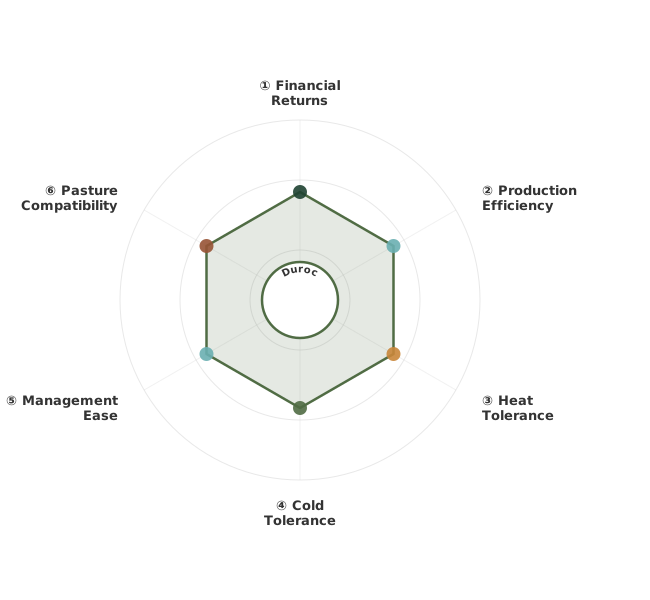
How These Traits Are Calculated
Trait dimensions are ordered clockwise starting from the top of the chart (12 o'clock position):
1. Financial Returns
Monthly income per pig from market weight and timeline
WHAT: Evaluates profit potential combining market weight, time to finish, feed efficiency, and input costs. Heritage breeds reaching 250-300 lbs in 8-12 months with premium pricing generate strong returns despite slower growth than commercial pigs.
WHY: Pig profitability depends on growth rate, feed efficiency, and market access. Fast-finishing breeds (5-6 months) on grain excel in conventional markets, while pasture-raised heritage breeds (8-12 months) target premium markets for higher per-pound returns that offset longer timelines.
HOW: Calculated from production data (finish weight, months to market) combined with feed efficiency and premium potential. Exceptional (≥2.6): efficient growth + strong premium access or commodity profitability. Typical (1.8-2.5): moderate timelines and costs. Limited (<1.8): slow growth or high costs eroding margins.
2. Production Efficiency
Feed conversion and resource utilization
WHAT: Measures how effectively pigs convert feed and resources into market weight, combining feed-to-gain ratios, foraging ability, and growth timeline. Efficient breeds reach target weight on fewer total inputs.
WHY: Feed represents 60-75% of production costs. Breeds converting 3.5:1 (feed:gain) versus 5:1 save $75-150 per pig, making the difference between profitable and marginal operations. Efficient foragers further reduce purchased feed costs.
HOW: Weighted formula: feed conversion ratio (50%), growth rate for inputs consumed (30%), foraging contribution (20%). Exceptional (≥2.6): ≤3.5:1 conversion + good growth. Typical (1.8-2.5): 3.5-4.5:1 conversion. Limited (<1.8): >4.5:1 or very slow growth.
3. Heat Tolerance
Performance in hot weather above 85°F (29°C)
WHAT: Evaluates adaptation to sustained heat above 85°F (29°C), measuring coat characteristics, wallowing behavior, and documented performance in southern climates where summer heat is prolonged.
WHY: Heat stress reduces feed intake and growth 20-40%, increases mortality, and can halt reproduction. Heat-adapted breeds maintain growth where others require expensive cooling systems (misters, shade structures) or accept reduced summer gains.
HOW: Rated from database trait 'heat_tolerance' based on breed characteristics. Exceptional (≥2.6): proven success in 95°F+ (35°C+), efficient cooling behaviors. Typical (1.8-2.5): moderate tolerance with wallows and shade. Limited (<1.8): struggles above 85°F, requires active cooling.
4. Cold Tolerance
Performance in cold weather below 20°F (-7°C)
WHAT: Evaluates adaptation to sustained cold below 20°F (-7°C), measuring hair coat thickness, fat insulation, and documented winter performance. Important for outdoor year-round systems in northern climates.
WHY: Cold-sensitive pigs require heated barns adding $50-150 monthly to winter costs, while cold-hardy breeds thrive outdoors with basic shelter. In climates with 4-6 month winters, hardy breeds save $300-900 annually in heating and infrastructure.
HOW: Rated from database trait 'cold_tolerance' based on documented characteristics. Exceptional (≥2.6): thick winter coat, substantial fat layer, thrives outdoors in <0°F (-18°C). Typical (1.8-2.5): moderate tolerance, windbreak sufficient. Limited (<1.8): requires heated shelter below 30°F (-1°C).
5. Management Ease
Handling temperament and daily care complexity
WHAT: Measures handling simplicity combining temperament docility, fence respect, health needs, and mothering ability. Calm breeds with good mothers and fence respect require minimal daily intervention.
WHY: Difficult pigs double or triple daily labor through frequent escapes, aggressive behavior requiring protective equipment, and high piglet mortality needing interventions. Easy breeds enable one-person management where hard breeds require two people for safety.
HOW: Weighted assessment: temperament (40%), fence respect (30%), mothering ability (20%), health needs (10%). Exceptional (≥2.6): calm and responsive, respects barriers, excellent mothers. Typical (1.8-2.5): manageable with experience. Limited (<1.8): escape-prone, aggressive, or high mortality requiring intensive farrowing management.
6. Grazing Suitability
Effectiveness on pasture-based systems versus confinement
WHAT: Evaluates adaptation to pasture-based production measuring foraging ability, grazing behavior, rooting gentleness, and growth rates on pasture versus grain confinement. Rates how well breeds utilize forage as significant feed component.
WHY: Pasture-adapted breeds reduce feed costs 30-50% through foraging while providing land management services (rooting clears brush, breaks pest cycles). Confinement-bred pigs grow slowly on pasture, negating cost savings, or damage land through aggressive rooting.
HOW: Weighted formula: foraging ability (40%), documented pasture performance (30%), rooting behavior (20%), adaptability (10%). Exceptional (≥2.6): excellent foragers + good growth on pasture + controlled rooting. Typical (1.8-2.5): moderate pasture performance. Limited (<1.8): confinement-bred, minimal foraging, or destructive rooting.
Regenerative Advantages
- Mothering Ability: Durocs are renowned for prolificacy and excellent milk production, ensuring rapid piglet growth and high survival rates, making them exceptional mothers.
- Feed Conversion: Durocs are a cornerstone of pork production, achieving market weight with exceptional lean growth and feed efficiency compared to many breeds.
- Growth Uniformity: Known for rapid and uniform growth, over 90% of littermates commonly fall within 15% of the average market weight, with minimal runts.
Value Streams
- Meat production
- Nutrient cycling and soil building
- Soil tillage and aeration
- Woodland management
Experience Level
Some livestock experience recommended
3
Understanding Duroc Pigs Characteristics
Physical traits, temperament, and what makes this breed unique
Understanding Duroc Pigs Characteristics
Physical traits, temperament, and what makes this breed unique
The Duroc pig is instantly recognizable by its characteristic reddish-brown coat, floppy ears, and muscular, well-rounded physique. Developed in the United States during the early 19th century, the breed emerged from crosses between the Red Duroc of New York and the Jersey Red of New Jersey, aiming to create a superior meat hog. This breed is renowned for its rapid growth rate, excellent carcass quality, and remarkable foraging ability. Durocs are known for their docile temperament, making them easier to handle and manage in various farm settings, which is a significant advantage for producers.
What truly sets the Duroc apart is its combination of meat production efficiency and adaptability. While many breeds focus solely on leanness or rapid growth, Durocs strike a balance, producing a flavorful, well-marbled pork while maintaining a robust frame. Their genetic heritage emphasizes hardiness and a strong constitution, allowing them to thrive in environments that might challenge less robust breeds. This inherent resilience is a key reason for their enduring popularity in both commercial and niche farming operations.
Compared to other breeds, Durocs often exhibit a greater degree of self-sufficiency when allowed to forage. Their natural instinct to root and graze, coupled with their physical robustness, makes them well-suited for less intensive management systems. While breeds like the Yorkshire might be favored for their prolificacy and lean meat, and the Berkshire for its gourmet pork qualities, the Duroc offers a compelling blend of productivity, adaptability, and foraging prowess that appeals to many regenerative farmers.
Sources behind this view
 Videos & Podcasts
-
Rob from D Family Farms details selecting pastured pig genetics, prioritizing performance on cover crops, strong mothering instincts, fertility, and adequate teat numbers over traditional breed standa
-
Gunthorp Farms focuses on Duroc pigs, maintaining a closed herd and selecting boars. They've incorporated Berkshire for marketing and carcass traits, and white breeds to improve litter size, with futu

-
For commercial pork, breed is less critical than function (four legs, tail, heartbeat), with 'blue butts', Berkshire, Hampshire, Duroc, Tamworth, and Old Spots recommended. Avoid Large Blacks and Amer
 Research
-
Organic rearing of non-castrated male pigs: welfare indicators, carcass traits, pork quality and boar taint in Duroc and Pietrain crossbreds. (opens in new window)
Organic rearing of intact male Duroc pigs showed improved welfare and pork quality (less watery, more fat) compared to Pietrain, with manageable boar taint risk.
4
Management, Care & Feeding
Operational guidance for raising this breed successfully
Management, Care & Feeding
Operational guidance for raising this breed successfully
Managing Duroc pigs in a regenerative system primarily involves leveraging their natural behaviors and hardiness. Rotational grazing is key, moving pigs frequently between paddocks to allow pasture regrowth, prevent overgrazing, and distribute manure effectively. Provide access to fresh water at all times and ensure adequate shelter from extreme weather, even though they are quite hardy. Supplement their diet with high-quality, non-GMO grains or rations, especially during periods of high growth or lactation, but allow them to maximize their intake of forages and fallen fruits when available.
Feeding strategies should focus on complementing, rather than replacing, their natural foraging. During the grazing season, their diet can consist largely of pasture, supplemented with grains and protein sources as needed to meet energy and nutrient requirements for growth and reproduction. Consider offering opportunities for rooting in designated areas or during specific phases of pasture management to aid in soil preparation or weed control. Monitor their body condition regularly to ensure they are neither too lean nor excessively fat, adjusting supplemental feeding accordingly.
Health management for Durocs emphasizes preventative care and observation. Their natural hardiness means they require fewer interventions than some breeds, but regular observation for any signs of illness or injury is crucial. Ensure vaccination protocols are appropriate for your region and management system. Maintaining clean water sources and well-managed pastures helps minimize parasite loads and disease transmission. Due to their foraging habits, be mindful of potential ingestion of toxic plants and manage pastures accordingly.
Sources behind this view
Videos & Podcasts
-
Rob from D Family Farms details selecting pastured pig genetics, prioritizing performance on cover crops, strong mothering instincts, fertility, and adequate teat numbers over traditional breed standa
-
Details breeding goals for pastured pigs in Mississippi, focusing on mothering instincts, milk production, and outdoor winter farrowing. Offers breeding stock and weaned piglets via dfamily farms.com.
-
Expert advice on selecting breeding pigs for pasture farrowing, focusing on genetics, foraging ability, meat quality, independent farrowing, strong mothering instincts, sufficient teats (12+), milk pr
 Community
-
Raising pasture-based swine involves choosing between breeding or feeder pigs, selecting heritage breeds, assessing land availability for rotation, providing supplemental feed (14% protein), sturdy sh
Read more (opens in new window) ucanr.edu
Research
-
Organic rearing of non-castrated male pigs: welfare indicators, carcass traits, pork quality and boar taint in Duroc and Pietrain crossbreds. (opens in new window)
Organic rearing of intact male Duroc pigs showed improved welfare and pork quality (less watery, more fat) compared to Pietrain, with manageable boar taint risk.
6
Production Capabilities & Market Economics
Business case evaluation and production metrics
Production Capabilities & Market Economics
Business case evaluation and production metrics
Meat Production Economics
| Category | Value |
|---|---|
| Finish Weight | 250-280 lbs 113.4-127 kg |
| Months to Finish | 8-12 |
| Lard Production | Moderate, 15-25% lard |
| Price Premium | +10% to +25% |
| Annual Input Cost/Head | $250-400 |
Finish Weight: Market weight for heritage breed pigs on pasture. Heritage breeds grow slower and finish lighter than commercial breeds but produce superior meat quality and more lard.
Months to Finish: Time from weaning to finish weight on pasture with supplemental feed. Heritage breeds take 8-12 months vs. 5-6 months for confinement pigs.
Lard Production: Heritage breeds excel at lard production - a valuable byproduct often sold at premium prices ($8-15/lb rendered). Lard-type breeds (Mulefoot, Guinea Hog, Mangalitsa) can be 40%+ fat.
Price Premium: Premium above conventional pork prices. Heritage pork from pastured systems typically sells for $6-12/lb vs. $3-5/lb conventional. Premium requires direct marketing, farmers markets, or specialty channels. Commodity sales receive $0 premium.
Annual Input Cost/Head: Feed, minerals, health care, and pasture maintenance per pig per year. Excludes infrastructure, land, and labor. Pastured pigs reduce feed costs through foraging (20-30% of diet).
Sources behind this view
Videos & Podcasts
-
Beginners should raise standard meat pig breeds (Duroc, Berkshire, Yorkshire) instead of lard breeds (Mangalitsa, Kune Kune). Meat breeds are cheaper, grow faster (5-7 months vs. 1-2 years), yield mor

-
Detailed cost analysis shows raising a 240lb pig costs ~$300, with retail sales potentially yielding ~$850 profit per animal. Farmer's market prices range from $6/lb for spare ribs to $13/lb for bonel