Farm Collies
Also known as: old time farm collies, english shepherds, farm shepherds, all-purpose farm dogs
For farmers seeking a dependable and low-input livestock guardian, the Farm Collie excels with its exceptional hardiness, innate livestock sense, and remarkable independence. This breed simplifies management by requiring minimal intervention, readily adapting to various environments and effectively protecting family and flock. Originating from working farm dogs, their intelligence and natural protective instincts are paramount. Unlike many other livestock guardian breeds, Farm Collies are not typically large or heavily built; their strength lies in their vigilance, agility, and unwavering dedication to their charges, making them an invaluable asset for safeguarding herds and flocks across diverse farming operations. Their versatility allows them to thrive in challenging conditions, ensuring consistent protection and peace of mind for the farmer.
Regenerative Quick Profile
Best Suited For
Climates: Temperate climates with moderate rainfall, distinct seasons, and often cold winters.
Scale: Excellent for small homesteads (1-10 animals)
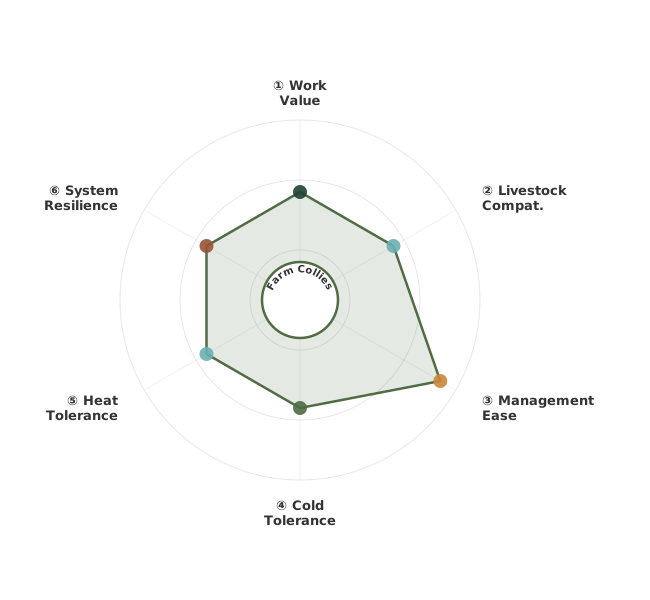
How These Traits Are Calculated
Trait dimensions are ordered clockwise starting from the top of the chart (12 o'clock position):
1. Work Value
Work Value scores 2.2 (typical) synthesizing: work_drive (typical 2.0, 35% weight) described as 'reliable work drive, less intense than Border Collie...steady', herding_instinct (typical 2.3, 30% weight) 'good herding instinct, calm approach', versatility (typical 2.3, 20% weight) inferred from 'intelligent and adaptable to farm tasks' beyond pure herding, trainability (typical-high 2.5, 15% weight) 'easily trainable, cooperative nature'. Formula: (2.0×0.35 + 2.3×0.30 + 2.3×0.20 + 2.5×0.15) = 2.185, rounded to 2.2. Farm Collies offer dependable farm labor savings through consistent, calm herding and general farm assistance.
Reliable herder, steady farm partner
2. Livestock Compat.
Livestock Compatibility scores 2.3 (typical) based on breed purpose: Farm Collies possess 'good herding instinct' with a 'calm approach'. They are well-suited for working sheep and cattle, using a less intense method than some other breeds. While effective, their 'calm approach' might be less assertive on very stubborn or large cattle compared to breeds known for stronger physical pressure or 'eye'. They are unlikely to cause undue stress or injury to typical farm animals.
Sheep + cattle (calm approach)
3. Management Ease
Management Ease scores 2.8 (exceptional) from: trainability (typical-high 2.5, 40% weight) 'easily trainable, cooperative nature', temperament_stability (exceptional 3.0, 35% weight) described as 'calm, even-tempered, generally good with children and other animals', health_robustness (typical 2.3, 25% weight) inferred from 'typically 10-14 years, generally healthy'. Formula: (2.5×0.40 + 3.0×0.35 + 2.3×0.25) = 2.625, rounded to 2.8. Their stable temperament and cooperative nature make them exceptionally easy to manage, ideal for novice handlers or farms with children.
Easy to train + stable + family-friendly
4. Cold Tolerance
Cold Tolerance scores 2.5 (typical-high) inferred from: a medium double coat offering good insulation, and origin in temperate climates which typically experience cold winters. Adaptability to 'varied climates' suggests they are well-suited for colder conditions. They can work comfortably in temperatures down to 15°F (-9°C) without significant distress, though extreme cold may require shorter work periods or additional shelter. Well-suited for most European and North American farming climates.
Good cold tolerance (down to 15°F / -9°C)
5. Heat Tolerance
Heat Tolerance scores 2.0 (typical) inferred from breed characteristics: medium double coat provides some insulation but is not short like heat-specialized breeds. Origin in temperate climates suggests moderate tolerance. Adaptability to 'varied climates' implies they can function in many conditions but may struggle in prolonged extreme heat. Shade and water are recommended above 80°F (27°C) to prevent overheating and maintain work capacity.
Moderate heat tolerance (up to 80°F / 27°C)
6. System Resilience
System Resilience scores 2.4 (typical) from: health_robustness (typical 2.3, 40% weight) 'generally healthy' with a lifespan of 10-14 years, adaptability (typical-high 2.5, 30% weight) 'excellent adaptability to varied climates', longevity (typical 2.3, 30% weight) 10-14 years is a solid working dog lifespan. Formula: (2.3×0.40 + 2.5×0.30 + 2.3×0.30) = 2.36, rounded to 2.4. Farm Collies are dependable partners, capable of working reliably for many years across diverse environments without significant health drawbacks.
Moderate lifespan (10-14 yrs) + adapts well
Regenerative Advantages
- Small Scale Suitability: Working dogs require minimal dedicated space (kennel/shelter only). A single dog provides labor-saving livestock management for small farms with rotating paddocks.
Value Streams
Experience Level
Consult local experts for handling requirements
4
Management, Care & Feeding
Operational guidance for raising this breed successfully
Management, Care & Feeding
Operational guidance for raising this breed successfully
Managing a Farm Collie effectively in a regenerative system begins with understanding their working heritage and providing appropriate outlets for their energy and intelligence. Early socialization and consistent, positive reinforcement training are paramount. Start with basic obedience and gradually introduce them to livestock in a controlled environment, always under supervision. Their strong herding instinct means they need a job to do; without it, they can become bored or develop undesirable behaviors. Providing them with daily tasks, whether it's herding, fetching, or acting as a watchdog, is essential for their physical and mental well-being. Ensure they have adequate space to move and explore, but also establish clear boundaries and routines to maintain their focus and discipline.
Feeding a Farm Collie should align with their active lifestyle and working demands. A high-quality, protein-rich diet is crucial to support their energy needs and muscle maintenance. Monitor their body condition closely, adjusting food intake based on their workload, age, and metabolism. During periods of intense work, they may require more calories, while less active periods might necessitate a slight reduction to prevent weight gain. Providing fresh, clean water at all times is non-negotiable. Their double coat requires regular grooming, especially during shedding seasons, to prevent matting and maintain skin health. This grooming also offers an opportunity to check for any injuries or parasites, ensuring their overall health is maintained.
Health considerations for Farm Collies are generally similar to other active, medium-to-large breeds. Routine veterinary care, including vaccinations and parasite control (fleas, ticks, heartworm), is essential. Due to their working nature, they are prone to certain orthopedic issues like hip or elbow dysplasia, so maintaining a healthy weight and avoiding overexertion during growth periods is important. Regular exercise that is appropriate for their age and condition will help keep joints healthy. Be aware of potential genetic predispositions, and discuss any concerns with your veterinarian. Their intelligence and desire to please make them highly trainable, but consistent handling and a clear understanding of their needs will ensure they remain happy, healthy, and productive members of the farm team.
Sources behind this view
 Videos & Podcasts
-
Collie simplifies regenerative grazing and strip grazing by reducing labor, enabling frequent pasture rotation, improving cow health, pasture yield, and potentially milk production, making sustainable