
Guinea Fowl
Guinea fowl offer farmers a remarkably hardy and self-sufficient avian option, excelling at foraging diverse pastures and requiring minimal intervention once established. Their strong mothering instincts and cold tolerance simplify flock management, making them a robust choice for various climates. Originating from Africa, these distinctive birds are known for their keen eyesight and gregarious nature. They demonstrate good heat tolerance and parasite resistance, further reducing management demands. Guinea fowl are particularly well-suited for silvopasture and multi-species grazing setups, efficiently controlling insects and weeds while finishing well on grass.
Regenerative Quick Profile
Best Suited For
Climates: Tropical savanna to humid subtropical and temperate warm summer climates
Scale: Suitable for small to medium operations (10-50 animals)
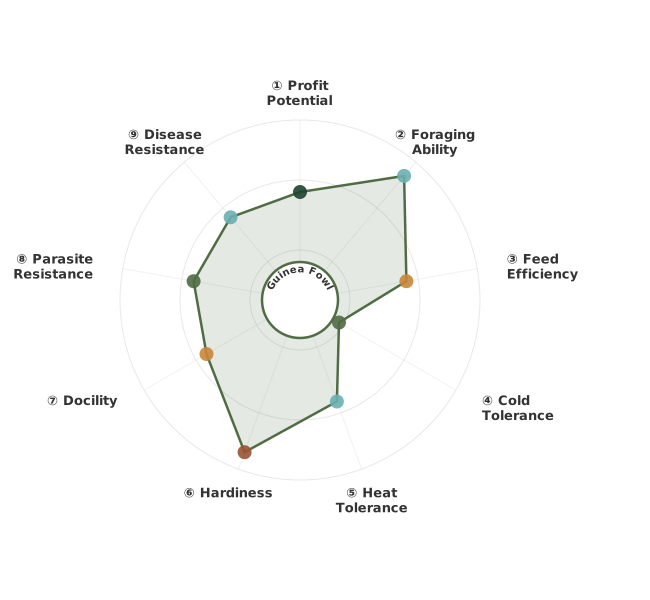
How These Traits Are Calculated
Trait dimensions are ordered clockwise starting from the top of the chart (12 o'clock position):
1. Financial Returns
Annual income per bird from eggs, meat, or specialty products
WHAT: Evaluates profit potential for specialty poultry (turkeys, ducks, geese, guinea fowl) combining meat yield, egg production (where applicable), growth timelines, and market premiums for specialty products.
WHY: Specialty poultry targets premium markets—heritage turkeys at $6-8/lb versus $1.50 commodity, duck eggs at $8-12/dozen versus $3-5 chicken eggs. Understanding enterprise-specific returns helps match birds to market opportunities, with successful operations generating 2-4× returns of conventional poultry.
HOW: Calculated from production data (market weight, timelines, egg yield) combined with efficiency traits and premium market access. Exceptional (≥2.6): strong output + premium markets + efficient growth. Typical (1.8-2.5): moderate production and markets. Limited (<1.8): low output or limited market access.
2. Foraging Ability
Feed cost reduction through natural foraging behavior
WHAT: Measures effectiveness at obtaining nutrition through foraging—consuming insects, seeds, greens, and other natural foods—reducing purchased feed requirements 20-50% in pasture-based systems.
WHY: Aggressive foragers reduce feed costs while providing pest control (insects, ticks, slugs) and weed management services. Turkeys consuming 30-40% of calories from forage save $15-30 per bird over growing season, making the difference between profitable and marginal operations.
HOW: Rated from documented foraging behavior and feed reduction potential. Exceptional (≥2.6): excellent foragers, 40-50% feed reduction, active pest control. Typical (1.8-2.5): moderate foraging, 20-30% reduction. Limited (<1.8): minimal foraging, requires full feeding.
3. Feed Efficiency in Guinea Fowl
Measures how effectively guinea fowl convert feed into growth and egg production.
WHAT: Feed efficiency in guinea fowl refers to how much feed is required to produce a pound of meat or a dozen eggs. Some breeds are naturally leaner and require less supplemental feed, while others may need more to reach market weight or maintain consistent laying. This variation impacts overall feed costs.
WHY: For regenerative farmers, efficient feed conversion is crucial for reducing input costs and minimizing the environmental footprint of their flocks. Guinea fowl that require less feed can thrive on diverse foraging, integrating better into pasture-based systems and reducing reliance on external feed sources.
HOW: Exceptional breeds will convert feed at a rate of less than 3.5 pounds of feed per pound of gain, or maintain high laying rates with minimal supplemental feed. Typical breeds will fall between 3.5-4.5 pounds of feed per pound of gain. Limited breeds may require over 4.5 pounds of feed per pound of gain, or show significant drops in production without ample supplemental rations.
4. Cold Tolerance
Performance in cold weather below 20°F (-7°C)
WHAT: Evaluates adaptation to sustained cold below 20°F (-7°C), measuring feather insulation, cold-weather foraging activity, and winter production/growth maintenance. Important for year-round outdoor systems in northern climates.
WHY: Cold-sensitive birds require heated housing ($50-200 monthly winter costs), reduce activity limiting foraging value, and experience higher mortality. Cold-hardy breeds remain active outdoors year-round, maintain winter egg production (ducks/geese), and thrive with basic shelter.
HOW: Rated from database trait 'cold_tolerance' based on breed characteristics. Exceptional (≥2.6): excellent insulation, active in <0°F (-18°C), maintains winter production. Typical (1.8-2.5): moderate hardiness. Limited (<1.8): requires heated shelter, limited winter activity.
5. Heat Tolerance
Performance in hot weather above 85°F (29°C)
WHAT: Evaluates adaptation to sustained heat above 85°F (29°C), measuring heat stress resistance, growth/production maintenance, and survival during summer peaks. Critical for southern operations and summer meat production.
WHY: Heat stress reduces feed intake 20-40%, slows growth, and increases mortality—particularly problematic for turkeys naturally susceptible to heat. Heat-adapted breeds maintain production schedules where others require expensive cooling or suffer significant losses during summer.
HOW: Rated from database trait 'heat_tolerance' based on documented characteristics. Exceptional (≥2.6): maintains production in 95°F+ (35°C+), low mortality. Typical (1.8-2.5): manageable with shade and water. Limited (<1.8): high heat sensitivity, struggles above 85°F.
6. Hardiness
Measures the guinea fowl's ability to thrive in challenging conditions.
WHAT: Hardiness assesses the guinea fowl's resilience to environmental stressors such as extreme temperatures, parasites, and diseases. Breeds vary significantly in their ability to withstand these challenges, with some being naturally more robust than others.
WHY: For regenerative farmers, hardy guinea fowl require less intensive management, reducing labor and input costs. This trait is crucial for birds foraging on pasture, as it ensures they can cope with variable weather and potential disease exposure without needing constant intervention.
HOW: Exceptional hardiness means the breed thrives with minimal supplemental care, tolerating temperatures below 20°F and above 90°F and showing a very low incidence of common parasites. Typical breeds may require some shelter and occasional parasite treatment. Limited hardiness breeds are highly susceptible to environmental stress and disease, necessitating significant protective measures and veterinary care.
7. Docility
Measures how calm and easy to handle guinea fowl are.
WHAT: This trait assesses the temperament and ease of handling of guinea fowl. Some breeds are naturally more flighty and easily startled, while others are calmer and more accustomed to human presence, making them easier to manage in various farming systems.
WHY: Docile guinea fowl are less prone to stress, which can improve their overall health, reduce escape incidents, and make routine tasks like health checks or moving them less challenging for the farmer. This can also contribute to a more peaceful farm environment.
HOW: Exceptional breeds are rarely startled, approach handlers readily, and may even tolerate gentle physical contact. Typical breeds are somewhat wary but generally manageable with consistent handling. Limited breeds are highly flighty, difficult to approach, and easily panicked, requiring significant effort to manage.
8. Parasite Resistance
Measures guinea fowl's natural ability to withstand internal and external parasites.
WHAT: This trait assesses the inherent ability of guinea fowl breeds to resist infestations from common internal parasites like roundworms and coccidia, as well as external parasites such as mites and lice. Some breeds naturally have stronger immune systems or behaviors that deter parasites, leading to better flock health.
WHY: High parasite resistance in guinea fowl reduces the need for chemical treatments, lowering input costs and supporting a more sustainable, chemical-free farming system. This also leads to healthier birds, improved egg production, and better meat quality, contributing to the overall resilience of a regenerative operation.
HOW: Exceptional breeds demonstrate very low or no need for deworming or external parasite control, maintaining healthy parasite loads even in challenging environments. Typical breeds may require occasional, mild intervention. Limited breeds show a high susceptibility and require regular, often intensive, parasite management strategies.
9. Disease Resistance
Measures how well guinea fowl resist common illnesses and parasites.
WHAT: This trait assesses the inherent ability of guinea fowl breeds to withstand and recover from common diseases and parasitic infections. Some breeds are naturally more robust, requiring less intervention, while others may be more susceptible to outbreaks.
WHY: For regenerative farmers, high disease resistance means fewer costly treatments, reduced mortality, and less reliance on external inputs. This contributes to a more self-sufficient and resilient flock, aligning with ecological farming principles.
HOW: Exceptional breeds typically show high survival rates (over 90%) with minimal or no veterinary care for common ailments. Typical breeds have good resistance but may occasionally require minor treatments. Limited breeds are more prone to illness, with survival rates potentially below 70% without significant management.
Regenerative Advantages
- Foraging Ability: Guinea fowl exhibit exceptional foraging ability, fundamentally driven by their ancestral African heritage requiring adaptation to varied and often sparse vegetation. Their keen eyesight and innate drive lead them to actively seek and consume insects, seeds, weeds, forbs, and small invertebrates. This broad-spectrum utilization means they thrive on diverse, marginal environments including unimproved pastures, scrubland, and silvopasture systems, requiring minimal supplemental feed. Their behavior aligns perfectly with the definition of thriving on diverse vegetation beyond just quality grasses.
- Mothering Ability: Wild-type Guinea Fowl possess strong natural maternal instincts and vigilance, consistently demonstrating the self-sufficiency for exceptional mothering.
- Hardiness: Guinea fowl thrive in extensive systems and forage naturally, demonstrating exceptional resilience in challenging conditions with minimal intervention.
- Grazing Adaptation: Excelling at foraging diverse insects and seeds, Guinea Fowl thrive on pasture with minimal supplemental needs, far exceeding breeds requiring more managed environments.
- Shelter Dependency: Originating from savannas, Guinea Fowl are remarkably hardy and naturally seek cover, thriving outdoors with minimal need for artificial shelter.
Value Streams
- Meat & Egg production
- Insect and pest control
- Scratch tillage and compost distribution
Experience Level
Suitable for first-time livestock owners
3
Understanding Guinea Fowl Characteristics
Physical traits, temperament, and what makes this breed unique
Understanding Guinea Fowl Characteristics
Physical traits, temperament, and what makes this breed unique
Guinea fowl are a unique avian species originating from Africa, recognized for their distinctive appearance and robust nature. These birds are characterized by a prominent bony casque on their heads and fleshy wattles, coupled with a compact, sturdy build. Their plumage most commonly appears in a pearl-grey with white spots or a solid lavender hue, providing effective camouflage in natural environments, though other color variations exist. Unlike many domesticated poultry, guinea fowl possess a powerful innate drive to forage, deriving a substantial portion of their diet from insects, seeds, and available vegetation. This foraging behavior is a key trait that differentiates them and informs their integration into agricultural systems.
They exhibit strong flocking instincts and typically roost communally in elevated positions, such as trees or rafters, a behavior that contributes to their vigilance and predator evasion. Mature hens can demonstrate attentive mothering abilities, capable of raising their young, known as keets, with minimal human interference. While not strong long-distance fliers, they can take to the air for short bursts to escape threats or reach their elevated roosting sites.
Physical Characteristics:• Size and Weight: Adult guinea fowl are relatively small to medium-sized birds, with a dressed weight typically ranging from 0.9 to 1.4 kilograms (2-3 pounds). This smaller carcass size can be advantageous for certain market channels.
• Plumage: The most common and recognizable varieties are Pearl (grey with white spots) and Lavender, offering natural camouflage.
• Distinctive Cranial Features: They possess a characteristic bony casque on the head and prominent wattles on the face.
• Legs and Feet: Guinea fowl have strong legs adapted for walking and scratching, with males typically developing a single spur.
Behavioral Traits:• Foraging Instinct: Guinea fowl are exceptional foragers, actively seeking out insects, ticks, weed seeds, and green vegetation. This natural behavior significantly reduces their reliance on supplemental feed.
• Flocking Behavior: They naturally form tight flocks, exhibiting strong cohesion which enhances collective awareness and vigilance against predators.
• Roosting Preferences: Guinea fowl prefer to roost communally in elevated locations, such as trees or man-made structures, sleeping off the ground.
• Maternal Instincts: Hens can be attentive mothers, capable of raising keets with minimal human intervention when provided with appropriate conditions.
• Flight Capability: While not bred for sustained flight, they can achieve short, rapid bursts of flight to evade danger or reach roosting sites.
Biological Hardiness:• Climate Tolerance: Guinea fowl are remarkably hardy and can tolerate a broad spectrum of weather conditions.
• Cold Tolerance: They exhibit good cold tolerance, remaining active and foraging in cooler temperatures, though they benefit from adequate shelter.
• Heat Tolerance: Their ability to handle heat allows them to remain productive and comfortable in warmer climates, provided water and shade are accessible.
• Water Needs: Daily water intake typically ranges from 0.2 to 0.5 liters (0.5-1 pint) per bird, increasing in warmer weather or during periods of high activity.
• Parasite Resistance: Guinea fowl demonstrate a natural degree of resistance to certain internal and external parasites, potentially reducing the need for chemical treatments. Their integration into a farm system leverages these physical and biological traits for practical benefits.
Sources behind this view
 Videos & Podcasts
-
Discusses free-range meat duck (Grod Hybrid Pekin) and guinea fowl management. Highlights on-site USDA meat processing to reduce animal stress. Explains guinea fowl learning to return to shelter and t

 Community
-
Guinea fowl offer stronger-flavored, tougher meat than chickens and act as effective farm security, though they are harder to catch and manage.
Read more (opens in new window) permies.com -
Guinea fowl are highly observant, territorial, and possess a strong flock mentality, which aids their survival. Their impact on garden vegetables, especially young seedlings, is a consideration for in
Read more (opens in new window) permies.com
 Research
-
Socio-economic and production dynamics of Guinea fowl farming in Northern Ghana: insights into health management, challenges, and climate change impacts (opens in new window)
Guinea fowl farmers in northern Ghana face challenges with disease, high mortality, and climate change impacts. Most farmers are married, crop-growers with limited education. Improved health managemen
4
Management, Care & Feeding
Operational guidance for raising this breed successfully
Management, Care & Feeding
Operational guidance for raising this breed successfully
Integrating guinea fowl into a regenerative farming system requires careful consideration of their unique physical, behavioral, and biological needs, alongside strategic economic and environmental planning. These birds thrive in pasture-based environments where they can effectively utilize their natural foraging instincts. While hardy, they require appropriate shelter from extreme weather and secure confinement at night to protect them from predators, which is a critical management consideration. Establishing a consistent supply chain and market for their meat is paramount for economic success, often involving 1-3 years of relationship building with specialty retailers or direct consumers.
Their integration is most effective within mixed farming systems, particularly in conjunction with larger livestock like cattle or sheep. Guinea fowl can forage alongside these animals, selectively consuming insects and weed seeds without significantly competing for pasture. Their moderate shelter dependency means that simple structures for roosting and protection are sufficient, making them compatible with many existing farm infrastructures. However, their natural predator vulnerability necessitates secure housing, especially during their first few weeks as keets and at night for adults.
Physical and Environmental Integration:• Pasture Access: Provide ample access to well-managed pastures, meadows, or diversified cover crops where they can forage for insects and seeds.
• Shelter Requirements: Offer basic shelter from harsh sun, rain, and wind. This can be as simple as a lean-to or a section of a larger barn.
• Night Confinement: Secure, predator-proof housing is essential for nighttime roosting to prevent losses from nocturnal predators. This can be a dedicated coop or a secure area within a larger barn.
• Water Availability: Ensure constant access to clean, fresh water, especially during warmer months, with daily intake ranging from 0.2 to 0.5 liters per bird.
• Climate Suitability: Guinea fowl are adaptable to USDA zones 5-10, tolerating moderate cold and heat, but still benefiting from shelter during extremes.
Economic Implementation and Marketing:• Market Development: Prioritize building relationships with farmers' markets, local chefs, specialty butchers, and direct consumers who value niche products. This often requires an investment of 1-3 years.
• Production Timeline: Factor in a 3-4 month finishing period for meat birds, establishing a consistent production schedule to meet market demand.
• Pricing Strategy: Leverage the potential for a 15-30% price premium over conventional chicken by clearly communicating the value of guinea fowl meat.
• Initial Investment: Account for the cost of chicks, housing, fencing, feed (especially for young birds), and potential processing costs.
• Scale of Operation: Start with a smaller flock to test market demand and refine management practices before scaling up.
Management and Behavioral Considerations:• Flock Management: Keep guinea fowl in flocks; they are social birds and do not perform as well in isolation.
• Brooding Keets: Young keets require a warm, dry, and draft-free brooder for the first 3-4 weeks, with supplemental heat and starter feed.
• Free-Ranging: Once mature, they can be free-ranged, but training them to return to their secure nighttime housing is crucial. Using a portable coop or "chicken tractor" can aid in rotational foraging and containment.
• Predator Vigilance: Their loud alarm calls can alert to predators, but this does not replace the need for secure confinement.
• Roosting Habits: Encourage roosting in elevated areas within their secure housing to mimic natural behavior and improve sanitation.
Successfully integrating guinea fowl involves leveraging their natural behaviors for pest and weed control, while managing their specific needs for shelter and security. By understanding their economic potential and developing targeted marketing strategies, they can become a profitable and ecologically beneficial component of a diverse regenerative farm system.
Sources behind this view
Videos & Podcasts
-
Discusses free-range meat duck (Grod Hybrid Pekin) and guinea fowl management. Highlights on-site USDA meat processing to reduce animal stress. Explains guinea fowl learning to return to shelter and t
Community
-
Integrate chickens and guinea fowl by providing 8-10 inches of roosting space per bird and at least 4 sq. ft. per bird for night housing. Raising them together from a young age in shared spaces like a
Read more (opens in new window) permies.com -
Provides guidance on guinea fowl coop design (single-level perches, visibility), training to return at night using calls and food rewards, and emphasizes feeding organic food for calmer behavior and p
Read more (opens in new window) permies.com
Research
-
Socio-economic and production dynamics of Guinea fowl farming in Northern Ghana: insights into health management, challenges, and climate change impacts (opens in new window)
Guinea fowl farmers in northern Ghana face challenges with disease, high mortality, and climate change impacts. Most farmers are married, crop-growers with limited education. Improved health managemen