
Guinea Hog
Also known as: guinea hog, american guinea hog
The Guinea Hog pig breed simplifies management through its exceptional hardiness and superior foraging ability, thriving on diverse pasture and requiring minimal intervention. Originating from West Africa, these smaller pigs are renowned for their lard meat type and remarkable adaptability to various grazing environments. Their docility and good mothering instincts further contribute to easier herd management, making them an excellent choice for farmers seeking efficient pork production with a focus on pasture-based systems like silvopasture and rotational grazing. Guinea Hogs excel at utilizing natural resources, reducing feed costs and labor, and are surprisingly heat tolerant, making them a robust option for a wide range of climates.
Regenerative Quick Profile
Best Suited For
Climates: Humid subtropical to oceanic, with tolerance for semi-arid warm climates
Scale: Excellent for small homesteads (1-10 animals)
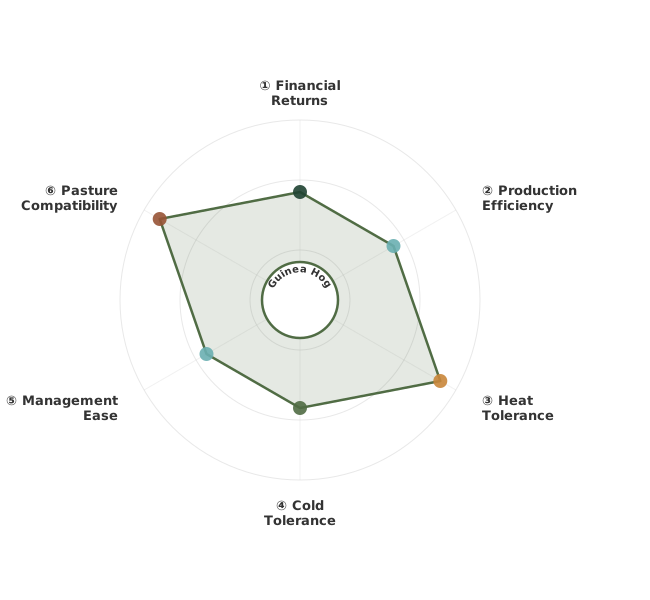
How These Traits Are Calculated
Trait dimensions are ordered clockwise starting from the top of the chart (12 o'clock position):
1. Financial Returns
Monthly income per pig from market weight and timeline
WHAT: Evaluates profit potential combining market weight, time to finish, feed efficiency, and input costs. Heritage breeds reaching 250-300 lbs in 8-12 months with premium pricing generate strong returns despite slower growth than commercial pigs.
WHY: Pig profitability depends on growth rate, feed efficiency, and market access. Fast-finishing breeds (5-6 months) on grain excel in conventional markets, while pasture-raised heritage breeds (8-12 months) target premium markets for higher per-pound returns that offset longer timelines.
HOW: Calculated from production data (finish weight, months to market) combined with feed efficiency and premium potential. Exceptional (≥2.6): efficient growth + strong premium access or commodity profitability. Typical (1.8-2.5): moderate timelines and costs. Limited (<1.8): slow growth or high costs eroding margins.
2. Production Efficiency
Feed conversion and resource utilization
WHAT: Measures how effectively pigs convert feed and resources into market weight, combining feed-to-gain ratios, foraging ability, and growth timeline. Efficient breeds reach target weight on fewer total inputs.
WHY: Feed represents 60-75% of production costs. Breeds converting 3.5:1 (feed:gain) versus 5:1 save $75-150 per pig, making the difference between profitable and marginal operations. Efficient foragers further reduce purchased feed costs.
HOW: Weighted formula: feed conversion ratio (50%), growth rate for inputs consumed (30%), foraging contribution (20%). Exceptional (≥2.6): ≤3.5:1 conversion + good growth. Typical (1.8-2.5): 3.5-4.5:1 conversion. Limited (<1.8): >4.5:1 or very slow growth.
3. Heat Tolerance
Performance in hot weather above 85°F (29°C)
WHAT: Evaluates adaptation to sustained heat above 85°F (29°C), measuring coat characteristics, wallowing behavior, and documented performance in southern climates where summer heat is prolonged.
WHY: Heat stress reduces feed intake and growth 20-40%, increases mortality, and can halt reproduction. Heat-adapted breeds maintain growth where others require expensive cooling systems (misters, shade structures) or accept reduced summer gains.
HOW: Rated from database trait 'heat_tolerance' based on breed characteristics. Exceptional (≥2.6): proven success in 95°F+ (35°C+), efficient cooling behaviors. Typical (1.8-2.5): moderate tolerance with wallows and shade. Limited (<1.8): struggles above 85°F, requires active cooling.
4. Cold Tolerance
Performance in cold weather below 20°F (-7°C)
WHAT: Evaluates adaptation to sustained cold below 20°F (-7°C), measuring hair coat thickness, fat insulation, and documented winter performance. Important for outdoor year-round systems in northern climates.
WHY: Cold-sensitive pigs require heated barns adding $50-150 monthly to winter costs, while cold-hardy breeds thrive outdoors with basic shelter. In climates with 4-6 month winters, hardy breeds save $300-900 annually in heating and infrastructure.
HOW: Rated from database trait 'cold_tolerance' based on documented characteristics. Exceptional (≥2.6): thick winter coat, substantial fat layer, thrives outdoors in <0°F (-18°C). Typical (1.8-2.5): moderate tolerance, windbreak sufficient. Limited (<1.8): requires heated shelter below 30°F (-1°C).
5. Management Ease
Handling temperament and daily care complexity
WHAT: Measures handling simplicity combining temperament docility, fence respect, health needs, and mothering ability. Calm breeds with good mothers and fence respect require minimal daily intervention.
WHY: Difficult pigs double or triple daily labor through frequent escapes, aggressive behavior requiring protective equipment, and high piglet mortality needing interventions. Easy breeds enable one-person management where hard breeds require two people for safety.
HOW: Weighted assessment: temperament (40%), fence respect (30%), mothering ability (20%), health needs (10%). Exceptional (≥2.6): calm and responsive, respects barriers, excellent mothers. Typical (1.8-2.5): manageable with experience. Limited (<1.8): escape-prone, aggressive, or high mortality requiring intensive farrowing management.
6. Grazing Suitability
Effectiveness on pasture-based systems versus confinement
WHAT: Evaluates adaptation to pasture-based production measuring foraging ability, grazing behavior, rooting gentleness, and growth rates on pasture versus grain confinement. Rates how well breeds utilize forage as significant feed component.
WHY: Pasture-adapted breeds reduce feed costs 30-50% through foraging while providing land management services (rooting clears brush, breaks pest cycles). Confinement-bred pigs grow slowly on pasture, negating cost savings, or damage land through aggressive rooting.
HOW: Weighted formula: foraging ability (40%), documented pasture performance (30%), rooting behavior (20%), adaptability (10%). Exceptional (≥2.6): excellent foragers + good growth on pasture + controlled rooting. Typical (1.8-2.5): moderate pasture performance. Limited (<1.8): confinement-bred, minimal foraging, or destructive rooting.
Regenerative Advantages
- Heat Tolerance: Exceptional heat tolerance allows Guinea Hogs to maintain activity and appetite in high temperatures without excessive panting.
- Drought Tolerance: Guinea Hogs are well-suited to dry conditions, efficiently utilizing dormant vegetation and maintaining condition with reduced reliance on supplemental resources.
- Grazing Ability: Guinea Hogs demonstrate exceptional grazing ability, efficiently converting quality grass-based pastures, including diverse polycultures and well-managed rotational systems, into excellent body condition. Their hardiness and natural inclination to graze allow them to thrive with minimal supplemental feed, making them ideal for pasture-finished pork production. They represent a benchmark for pigs in high-quality grazing environments.
- Foraging Ability: True to their West African landrace heritage, Guinea Hogs possess exceptional foraging ability. They actively seek out and thrive on a wide range of diverse and marginal vegetation, including browse, weeds, and roots, requiring very little supplemental input. Their adaptability and efficient nutrient extraction allow them to maintain excellent condition on unimproved rangelands and scrubbier pastures, solidifying their status as top-tier foragers.
- Hardiness: As a heritage breed, Guinea Hogs possess impressive resilience, thriving in extensive systems with minimal health care needs.
Know the Debate
- Heritage Guinea Hogs vs. commercial breeds: growth rate, yield, and market niche.
- Foraging ability reduces feed costs but extends finishing time.
- Breed choice depends on operation scale, marketing goals, and timelines.
Value Streams
- Meat production
- Nutrient cycling and soil building
- Soil tillage and aeration
- Woodland management
Experience Level
Suitable for first-time livestock owners
3
Understanding Guinea Hog Characteristics
Physical traits, temperament, and what makes this breed unique
Understanding Guinea Hog Characteristics
Physical traits, temperament, and what makes this breed unique
The Guinea Hog is a heritage breed of domestic pig, distinguished by its compact size, predominantly black coat, and remarkable foraging abilities. Developed in the United States from pigs brought by early settlers, this breed has evolved into a hardy, self-sufficient animal ideally suited for pasture-based and integrated farming systems. Mature Guinea Hogs typically weigh between 100 and 200 pounds, making them significantly smaller than many conventional commercial breeds. Their conformation is characteristic of a lard-type hog, featuring a deep body and muscular hindquarters, historically valued for producing high-quality pork fat. This breed's docile temperament further enhances its manageability, making it an excellent choice for smaller farms, homesteads, or diversified operations seeking a versatile animal. Their inherent hardiness also allows them to adapt well to various climates, requiring minimal specialized housing beyond basic shelter and access to water.
Physical Characteristics:• Mature Weight: Typically reaching 150-200 lbs at finishing weight.
• Height: Adults generally stand 20-24 inches at the shoulder.
• Coat: Predominantly solid black, though some individuals may display white markings. The coat is short and bristly.
• Conformation: Lard-type build with a deep body, broad back, and well-developed musculature, particularly in the hindquarters. This structure indicates efficient energy conversion and fat deposition.
• Snout: Shorter than many commercial breeds, which aids in their effective rooting and foraging behavior.
Behavioral Traits:• Foraging Prowess: Guinea Hogs possess strong natural foraging instincts, adept at consuming a wide variety of vegetation, including grasses, legumes, roots, and insects. This behavior significantly reduces their reliance on supplemental feed.
• Docile Temperament: They are known for their calm and manageable disposition, which simplifies handling and integration into mixed-animal farm environments.
• Maternal Instincts: Sows exhibit good mothering abilities, providing attentive care to their piglets and contributing to high litter survival rates.
Environmental Adaptations:• Climate Tolerance: Guinea Hogs demonstrate good tolerance to both warm and cold temperatures. Their dark coat can aid in heat dissipation in warmer climates, though access to shade and wallowing areas is beneficial. Their cold hardiness allows them to withstand lower temperatures when provided with adequate shelter.
• Water Needs: They require approximately 2-4 gallons of fresh water per day, with increased consumption during warmer weather or periods of high activity.
The breed's combination of size, foraging ability, and temperament makes them a unique and valuable livestock option for farmers focused on regenerative practices and diversified production. Their ability to efficiently utilize pasture resources and contribute to soil health further enhances their appeal within sustainable agricultural systems.
Sources behind this view
 Videos & Podcasts
-
Pigs are intelligent and thrive with good management. American Guinea Hogs are easy but slow-growing (18 months) with excessive fat, leading to a switch to faster-growing heritage crosses (7-month fin

-
Discusses free-range American Guinea Hogs, highlighting their foraging ability, low rooting behavior, and responsiveness to their owners. These pigs are originally from Africa and are known to seek ou

-
Guinea hogs are kept for their temperament; plans include breeding and processing. They effectively clear underbrush in wooded areas.

-
For commercial pork, breed is less critical than function (four legs, tail, heartbeat), with 'blue butts', Berkshire, Hampshire, Duroc, Tamworth, and Old Spots recommended. Avoid Large Blacks and Amer
 Community
-
American Guinea Hogs are reviewed for their gentle temperament, variable size (boar ~350lbs, sows ~170-250lbs), and cold hardiness. They take ~2 years to butcher, primarily subsist on grazing, and yie
Read more (opens in new window) permies.com -
Heritage pig breeds, like the American Guinea Hog, are recommended for their disease resistance, self-reliance, good foraging ability, temperament, and meat quality.
Read more (opens in new window) permies.com -
American Guinea Hogs are recommended for small farms due to their small size, friendly nature, and good mothering abilities, making them easy to handle and less risky for piglets. They also excel at c
Read more (opens in new window) smallfarms.cornell.edu -
Practical care for American Guinea Hogs includes specialized farrowing pens, pasture housing, and a mixed diet of grain and food scraps, with emphasis on monitoring girth and encouraging rooting. Chal
Read more (opens in new window) smallfarms.cornell.edu
4
Know the Debate
Raising Guinea Hogs offers a path to efficient, pasture-based pork production, particularly for farms prioritizing heritage breeds and regenerative...
Know the Debate
Raising Guinea Hogs offers a path to efficient, pasture-based pork production, particularly for farms prioritizing heritage breeds and regenerative...
Raising Guinea Hogs offers a path to efficient, pasture-based pork production, particularly for farms prioritizing heritage breeds and regenerative practices. While their exceptional foraging abilities reduce feed costs and their docile nature simplifies management, the trade-off primarily lies in a slower growth rate and smaller carcass size compared to conventional breeds. This means longer finishing times (8-12+ months) and a need for direct-to-consumer or niche marketing to capture premium pricing. Farmers must align breed selection with their specific operational scale, risk tolerance, and desired market outcomes, as the economic viability hinges on capitalizing on the unique attributes of heritage pigs.
Guinea Hog: Heritage breed vs. commercial viability?
Commercial breeds: Faster growth, higher yield
Beginners should opt for standard meat breeds like Duroc or Berkshire due to their faster growth cycle (5-7 months to market weight), higher lean meat yields, and lower initial costs. These breeds offer quicker financial returns and greater market flexibility.
Sources behind this view
Sources behind this view
Videos & Podcasts
-
For commercial pork, breed is less critical than function (four legs, tail, heartbeat), with 'blue butts', Berkshire, Hampshire, Duroc, Tamworth, and Old Spots recommended. Avoid Large Blacks and American Guineas due to slow growth.
-
Beginners should raise standard meat pig breeds (Duroc, Berkshire, Yorkshire) instead of lard breeds (Mangalitsa, Kune Kune). Meat breeds are cheaper, grow faster (5-7 months vs. 1-2 years), yield more meat, and offer greater flexibility.

-
Pigs, particularly standard meat breeds, offer rapid growth (300 lbs in 5-6 months), quick turnaround, low startup costs, and trainability, making them highly productive livestock, though grain feeding and avoiding lard breeds are key considerations.
Heritage breeds: Foraging & niche markets
Heritage breeds like Guinea Hogs or crosses excel in pasture-raised systems due to foraging and hardiness, fitting regenerative models. While slower growing (8-12+ months) and typically yielding less lean meat, they command premium prices in niche markets and reduce feed costs.
Sources behind this view
Sources behind this view
Videos & Podcasts
-
Pigs are intelligent and thrive with good management. American Guinea Hogs are easy but slow-growing (18 months) with excessive fat, leading to a switch to faster-growing heritage crosses (7-month finish) to meet consumer demand and processing timelines.
-
Pigs are intelligent and thrive with good management. American Guinea Hogs are easy but slow-growing (18 months) with excessive fat, leading to a switch to faster-growing heritage crosses (7-month finish) to meet consumer demand and processing timelines.
 From the Web
-
Choosing a hog breed for pastured production involves balancing availability, cost, customer preferences (heritage vs. modern), and production traits. Heritage breeds offer marketing advantages but grow slower. Health and breeder quality are paramount.
Making Sense of the Differences
The choice between heritage and commercial pig breeds hinges on the farmer's primary goals and market. For rapid turnaround and high-volume production, conventional breeds offer clear advantages. However, for niche markets valuing pasture-raised quality and regenerative practices, heritage breeds provide unique benefits that justify their longer finishing times and specialized marketing strategies.
5
Management, Care & Feeding
Operational guidance for raising this breed successfully
Management, Care & Feeding
Operational guidance for raising this breed successfully
Integrating Guinea Hogs into a regenerative farm system requires thoughtful planning that leverages their unique physical and behavioral traits while aligning with economic and environmental goals. Their success hinges on providing appropriate pasture management, understanding their dietary needs, and establishing effective marketing channels. Due to their moderate size and excellent foraging, they are well-suited for rotational grazing systems, silvopasture designs, and managing cover crops. Careful consideration of fencing, water access, and shelter is essential for their well-being and containment, especially given their rooting tendencies. Economically, the key is to capitalize on their heritage status and pasture-raised attributes through direct sales, as commodity markets will not fully reflect their value.
Physical and Environmental Integration:• Pasture and Forage Management: Implement rotational grazing to allow pastures to recover and to distribute manure evenly. Guinea Hogs are adept at utilizing a wide range of forages, including grasses, legumes, roots, and fallen mast.
• Silvopasture Systems: Utilize them in wooded areas to manage understory vegetation and consume mast, thereby reducing fire risk and promoting tree health without damaging bark or roots excessively.
• Rotational Containment: Employ electric fencing or sturdy woven wire to manage their movement between grazing areas. Their rooting can be managed by moving them frequently to new paddocks before significant soil disturbance occurs.
• Shelter and Water: Provide access to shade during hot weather and a dry, draft-free shelter for protection against the elements. Consistent access to clean, fresh water (2-4 gallons per day, more in hot weather) is critical.
• Wallowing Areas: While they have some heat tolerance, providing access to mud wallows or sprinklers can significantly improve their comfort and help manage parasites in warmer climates.
Economic Implementation and Marketing:• Direct Marketing Focus: Target farmers' markets, farm stands, CSA programs, and local restaurants where consumers value heritage breeds and pasture-raised products. Building these relationships typically takes 2-3 years.
• Pricing Strategy: Aim for a premium price per pound that reflects the higher input costs (if any) and the superior quality of the meat, as well as the value of the breed's attributes. Factor in processing and packaging costs.
• Finishing Timeline: Be prepared for an 8-12 month finishing period to reach optimal market weight (150-200 lbs). This longer timeline requires careful financial planning for capital tied up in the animals.
• Cost Management: While foraging reduces feed costs, be prepared to supplement with grains or other nutrients, especially during winter or when pasture quality declines. Annual input costs can range from $250-$400 per head, heavily influenced by pasture quality and supplemental feeding.
Management Practices and System Synergy:• Nutrient Distribution: Use their manure as a valuable soil amendment by strategically rotating them across fields and pastures, reducing the need for external fertilizer inputs.
• Waste Conversion: Integrate them into a system where they can consume appropriate kitchen scraps, garden waste, or crop residues, turning these materials into pork and valuable manure.
• Pest Control: Leverage their natural inclination to consume insects and grubs, which can help manage pest populations in pastures and gardens.
• Soil Health Enhancement: Their moderate rooting can break up soil crusts and incorporate organic matter, preparing land for cover crops or improving water infiltration. Monitor their rooting to prevent excessive damage to desirable vegetation.
• Breed Selection: Consider their docility for ease of handling, especially in mixed-livestock operations. Their strong mothering instincts make them reliable breeders.
Successfully integrating Guinea Hogs requires understanding their role as active participants in the farm ecosystem. By managing their grazing, rooting, and waste production, farmers can harness their potential to improve soil health, cycle nutrients, and produce high-quality pork, contributing to a more resilient and sustainable agricultural enterprise.
Sources behind this view
Videos & Podcasts
-
Pigs are intelligent and thrive with good management. American Guinea Hogs are easy but slow-growing (18 months) with excessive fat, leading to a switch to faster-growing heritage crosses (7-month fin
-
Family plans to acquire feeder pigs for forest-based housing, feeding them food scraps and cow manure, and reviews a 'Permaculture Pigs' DVD.

-
Raising pastured pigs on cover crops reduces grain needs by 25-50%, enhancing pork quality. This requires superior genetics for foraging and marbling. The speaker plans to develop breeding stock and s

Community
-
Practical care for American Guinea Hogs includes specialized farrowing pens, pasture housing, and a mixed diet of grain and food scraps, with emphasis on monitoring girth and encouraging rooting. Chal
Read more (opens in new window) smallfarms.cornell.edu -
Shares experiences with Mangalitsa, Hampshire, and American Guinea Hogs using rotational pasturing and mixed feed. Seeks advice on humane piglet castration and permaculture-friendly iron deficiency tr
Read more (opens in new window) permies.com -
Discusses the potential for nutrient deficiencies in pastured pigs, even on lush grass, and suggests that achieving pastured pork may require concentrated calorie inputs, emphasizing the role of 'good
Read more (opens in new window) permies.com
7
Production Capabilities & Market Economics
Business case evaluation and production metrics
Production Capabilities & Market Economics
Business case evaluation and production metrics
Meat Production Economics
| Category | Value |
|---|---|
| Finish Weight | 150-200 lbs 68-90.7 kg |
| Months to Finish | 8-12 |
| Lard Production | High, 40%+ lard |
| Price Premium | +20% to +40% |
| Annual Input Cost/Head | $250-400 |
Finish Weight: Market weight for heritage breed pigs on pasture. Heritage breeds grow slower and finish lighter than commercial breeds but produce superior meat quality and more lard.
Months to Finish: Time from weaning to finish weight on pasture with supplemental feed. Heritage breeds take 8-12 months vs. 5-6 months for confinement pigs.
Lard Production: Heritage breeds excel at lard production - a valuable byproduct often sold at premium prices ($8-15/lb rendered). Lard-type breeds (Mulefoot, Guinea Hog, Mangalitsa) can be 40%+ fat.
Price Premium: Premium above conventional pork prices. Heritage pork from pastured systems typically sells for $6-12/lb vs. $3-5/lb conventional. Premium requires direct marketing, farmers markets, or specialty channels. Commodity sales receive $0 premium.
Annual Input Cost/Head: Feed, minerals, health care, and pasture maintenance per pig per year. Excludes infrastructure, land, and labor. Pastured pigs reduce feed costs through foraging (20-30% of diet).
Sources behind this view
Videos & Podcasts
-
Beginners should raise standard meat pig breeds (Duroc, Berkshire, Yorkshire) instead of lard breeds (Mangalitsa, Kune Kune). Meat breeds are cheaper, grow faster (5-7 months vs. 1-2 years), yield mor
-
Detailed cost analysis shows raising a 240lb pig costs ~$300, with retail sales potentially yielding ~$850 profit per animal. Farmer's market prices range from $6/lb for spare ribs to $13/lb for bonel