
Highland Cattle
Highland cattle simplify management for farmers seeking unparalleled hardiness, exceptional foraging ability, and superior mothering instincts. Originating from the rugged Scottish Highlands, these cattle are renowned for their resilience, thriving in challenging climates and on varied pastures where other breeds struggle. Their remarkable cold tolerance and browsing capabilities mean they require minimal intervention, making them ideal for extensive grazing systems and seasonal dairying operations. Highlands also demonstrate good docility and can finish well on grass, offering a low-input, long-lived livestock option. Their adaptability to difficult terrain further sets them apart, making them a distinctive choice for farmers prioritizing robust, self-sufficient cattle.
Regenerative Quick Profile
Best Suited For
Climates: Cool temperate oceanic to subarctic, with some tolerance for humid continental climates
Terrain: Best for rolling to steep terrain
Scale: Excellent for small homesteads (1-10 animals)
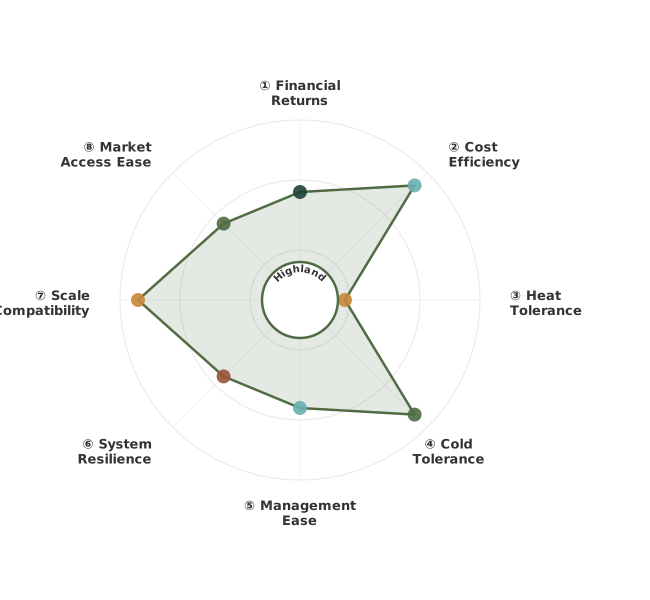
How These Traits Are Calculated
Trait dimensions are ordered clockwise starting from the top of the chart (12 o'clock position):
1. Financial Returns
Monthly income per animal after feed and care costs
WHAT: Evaluates net monthly profit by combining finish weight, time to market, price premiums, and input costs. Breeds with fast growth, efficient feed conversion, and premium market access generate higher returns per animal.
WHY: Farmers need clear income projections to sustain operations. Breeds returning $150+/month enable profitable small-scale operations, while those under $80/month require larger herds or alternative revenue streams to achieve viability.
HOW: Calculated from economics data (finish weight, months to finish, price premiums) combined with trait scores (feed efficiency, mothering ability, drought tolerance). Exceptional (≥2.6): fast growth ≤24 months + high capital efficiency >$180/month + low costs <30% of revenue. Typical (1.8-2.5): moderate returns or longer timelines. Limited (<1.8): slow growth >36 months or high input costs >50%.
2. Cost Efficiency
Feed, water, and input costs relative to output value
WHAT: Measures how well cattle convert inputs (pasture, hay, grain, water) into saleable output. Combines grass-finishing ability, feed efficiency, foraging capability, and water requirements into a composite efficiency score.
WHY: Input costs determine profitability more than market price. Breeds excelling on grass alone with minimal supplementation and low water needs reduce operating costs 40-60%, enabling viability even in drought years or when hay prices spike.
HOW: Weighted formula: grass finishing ability (30%), feed efficiency (30%), foraging ability (30%), water requirements inverted (10%). Exceptional (≥2.6): finishes on grass, exceptional feed conversion, thrives on rough forage. Typical (1.8-2.5): moderate efficiency, some grain needed. Limited (<1.8): grain-dependent, high inputs required.
3. Heat Tolerance
Performance in hot climates above 85°F (29°C)
WHAT: Evaluates breed adaptation to sustained heat above 85°F (29°C), measuring coat characteristics, metabolic adaptations, and documented performance in tropical or semi-arid regions.
WHY: Heat stress reduces feed intake 15-30%, lowers reproduction rates, and increases mortality. Heat-adapted breeds maintain productivity where others require expensive shade structures, cooling systems, or fail completely during summer peaks.
HOW: Rated from database trait 'heat_tolerance' based on breed characteristics. Exceptional (≥2.6): tropical origins, short sleek coats, proven success in regions >95°F (35°C). Typical (1.8-2.5): moderate tolerance, manageable with some shade. Limited (<1.8): temperate-adapted, struggles above 85°F without intensive cooling.
4. Cold Tolerance
Performance in cold climates below 20°F (-7°C)
WHAT: Evaluates breed adaptation to sustained cold below 20°F (-7°C), measuring coat thickness, body mass, metabolic efficiency, and documented performance in northern climates with harsh winters.
WHY: Cold stress increases feed requirements 20-40% for maintenance alone, elevates mortality in young stock, and complicates winter management. Cold-hardy breeds thrive outdoors year-round where others need expensive barns and supplemental heating.
HOW: Rated from database trait 'cold_tolerance' based on breed characteristics. Exceptional (≥2.6): northern origins, thick winter coats, proven success in regions <0°F (-18°C). Typical (1.8-2.5): moderate hardiness, windbreaks sufficient. Limited (<1.8): warm-adapted, requires shelter below 30°F (-1°C).
5. Management Ease
Temperament, handling requirements, and daily care needs
WHAT: Measures how straightforward cattle are to work with daily, combining temperament docility, calving ease, mothering ability, and fence respect into a management complexity score.
WHY: Difficult cattle increase labor 2-4× through longer handling times, more frequent escapes, calving interventions, and safety risks. Easy-handling breeds enable one-person operations and reduce stress for both farmer and animals.
HOW: Weighted formula: docility (40%), calving ease (30%), mothering ability (20%), fence respect (10%). Exceptional (≥2.6): calm docile temperament, unassisted calving, excellent mothers, respects basic fencing. Typical (1.8-2.5): manageable with experience. Limited (<1.8): nervous or aggressive, frequent interventions needed.
6. Drought & Disease Resilience
Survival and productivity under stress conditions
WHAT: Evaluates breed robustness across drought tolerance, parasite resistance, general hardiness, and disease resistance. Measures ability to maintain productivity when conditions deteriorate or health challenges arise.
WHY: Resilient breeds reduce veterinary costs 30-50%, survive drought years that devastate others, and maintain production through typical disease pressures. This determines whether you can sustain a herd through inevitable challenges or face repeated losses.
HOW: Weighted formula: drought tolerance (40%), parasite resistance (30%), general hardiness (20%), disease resistance (10%). Exceptional (≥2.6): thrives through drought, strong natural immunity, minimal interventions needed. Typical (1.8-2.5): moderate resilience, standard care sufficient. Limited (<1.8): requires intensive management to maintain health.
7. Farm Size Adaptability
Suitability across different farm scales and intensities
WHAT: Evaluates whether breeds work across small (1-10 head), medium (11-50 head), or large (50+ head) operations, considering size, handling needs, and infrastructure requirements.
WHY: Size mismatches create inefficiencies. Large commercial breeds overwhelm small pastures and facilities, while breeds requiring individual attention don't scale to large herds. Matching breed to scale prevents costly infrastructure changes or unmanageable daily workloads.
HOW: Matrix scoring based on breed size × small-scale suitability rating. Exceptional (≥2.6): adapts well to all scales or excels across 2+ scales. Typical (1.8-2.5): works best at specific scales. Limited (<1.8): narrow scale requirements, struggles outside optimal range.
8. Market Accessibility
Availability of buyers and premium market opportunities
WHAT: Evaluates market pathways by examining price premium potential, buyer network strength, and market accessibility. Inverted dimension where breeds requiring premiums to be viable score lower than those profitable at commodity prices.
WHY: Premium dependence creates risk. Breeds requiring 30-50% premiums need specialty buyers, direct marketing channels, and consumer education—adding 10-20 hours monthly overhead. Commodity-viable breeds sell through standard auctions with minimal marketing effort.
HOW: Inverted scoring: lower premiums = higher scores. Exceptional (≥2.6): profitable at commodity prices, sells through standard channels. Typical (1.8-2.5): moderate premium needs (10-20%), accessible specialty markets. Limited (<1.8): requires high premiums (30-50%), niche buyers, intensive marketing.
Regenerative Advantages
- Cold Tolerance: A dense double-layered coat provides exceptional insulation and water repellency, enabling survival in extreme cold with minimal shelter.
- Drought Tolerance: Their thick coats, efficient metabolism, and ability to utilize coarse, dry forage make them resilient and well-suited for arid conditions.
- Foraging Ability: Highlands are exceptionally adapted to diverse and marginal forage, a testament to their heritage in the rugged Scottish Highlands. They thrive on roughage, weeds, and forbs, demonstrating broad-spectrum utilization of non-grass forage sources. This breed can maintain condition on unimproved rangeland or scrubland with minimal supplementation, truly embodying elite landrace foraging ability and requiring very little intervention regardless of forage quality.
- Browsing Ability: Highland cattle possess a pronounced aptitude for consuming woody vegetation. Their evolutionary adaptation to environments where browse was crucial has equipped them with clear physical and behavioral specializations to actively seek and efficiently utilize shrubs and trees. They maintain condition effectively on diets with a significant woody element, demonstrating they are specialists in browsing rather than just opportunistic consumers.
- Mothering Ability: Robust maternal instincts, ease of calving, and the ability to raise calves successfully with minimal assistance are hallmarks of their adaptation to harsh environments.
Know the Debate
- Optimal stocking density depends on forage quality and environment.
- Genetics for resilience and fertility are key for regenerative systems.
- Heritage breeds and composites are favored by many practitioners.
- Calving ease and longevity are prioritized over rapid growth for efficiency.
Value Streams
- Meat production
- Nutrient cycling and soil building
- Grassland management through grazing
- Carbon sequestration in grasslands
Experience Level
Some livestock experience recommended
3
Understanding Highland Cattle Characteristics
Physical traits, temperament, and what makes this breed unique
Understanding Highland Cattle Characteristics
Physical traits, temperament, and what makes this breed unique
Highland cattle are a heritage breed of domestic cattle, scientifically classified as *Bos taurus*, that originated in the rugged, windswept Scottish Highlands. Developed over centuries through natural selection in a harsh, mountainous environment, these cattle are characterized by their distinctive, long, shaggy double coat and impressive, upward-curving horns. This unique physical makeup is not merely aesthetic but is integral to their survival and resilience in challenging climates. Their biological adaptability allows them to thrive on a wide variety of forage, even on steep, rough terrain where other breeds would struggle. This hardiness and capacity for efficient nutrient conversion from less palatable plants define their suitability for extensive, low-input farming systems. Understanding the foundational physical and biological traits of Highland cattle is crucial for appreciating their potential role in regenerative agriculture.
Physical Characteristics:• Coat: Possess a dense, oily double coat consisting of long, shaggy outer hair and a fine, woolly undercoat. This provides exceptional insulation, enabling them to withstand sub-zero temperatures and wet conditions with minimal need for supplemental shelter.
• Horns: Both sexes exhibit long, upward-curving horns, which are thought to have historically aided in scraping snow to access winter forage, rather than being primarily for defense.
• Body Structure: Medium-sized with a deep, broad chest and a naturally thickset build, contributing to their efficient metabolism and ability to convert forage into usable body mass.
• Size: Mature cows typically range from 900 to 1,100 lbs, while bulls can weigh between 1,500 and 1,800 lbs.
Biological & Behavioral Traits:• Foraging Adaptability: Highland cattle are highly effective browsers and grazers, adept at digesting a broad spectrum of grasses, forbs, and woody browse. Their ability to navigate and utilize forage on rough, uneven terrain is superior to many other domestic cattle breeds.
• Cold Tolerance: Their physiological adaptations, particularly their insulating coat and efficient metabolism, grant them remarkable tolerance to cold, allowing year-round outdoor living in many northern climates with minimal shelter requirements.
• Mothering Instincts: Cows exhibit strong maternal instincts, demonstrating vigilance and dedication to their calves, which leads to high calf survival rates with minimal human intervention during calving.
• Docility: While possessing a strong nature, Highlands are generally docile and can be managed effectively with calm, consistent handling techniques, making them suitable for farmers and land stewards.
• Climate Suitability: They thrive in USDA Hardiness Zones 3-7, tolerating winter temperatures well below 0°F (-18°C) and exhibiting high tolerance for cold, wet conditions.
These inherent traits position Highland cattle as a breed uniquely suited to environments and management philosophies that prioritize resilience, low input, and natural adaptation. Their biological makeup is a direct response to the demanding conditions of their origin, making them a compelling choice for specific agricultural contexts.
Sources behind this view
 Community
-
Highland cattle are hardy but struggle in hot, humid summers and their horns can impede standard equipment; Dexter cattle are considered a more suitable option for hot climates like Kentucky, especial
Read more (opens in new window) permies.com -
Recommends selecting calm, gentle miniature cattle breeds like Scottish Highlanders or Miniature Galloways for milk production, ideally starting with a heifer calf or an experienced milker. Prioritize
Read more (opens in new window) permies.com
4
Know the Debate
Highland cattle's suitability in regenerative systems hinges on matching their unique hardiness to specific environments and management styles. In ...
Know the Debate
Highland cattle's suitability in regenerative systems hinges on matching their unique hardiness to specific environments and management styles. In ...
Highland cattle's suitability in regenerative systems hinges on matching their unique hardiness to specific environments and management styles. In regions with ample rainfall and productive pastures, stocking densities may align with conventional recommendations, focusing on breeding for efficiency and market demands. However, in more challenging terrains or drier climates, their exceptional foraging adaptability and resilience allow them to thrive on less-than-ideal forages, potentially enabling higher effective stocking rates when managed rotationally. Consequently, the most successful integration involves careful selection of genetics suited to the local conditions and market, moving beyond a one-size-fits-all approach to harvesting the breed's full potential.
Optimal stocking density for Highland cattle?
Efficient use of marginal lands
Highland cattle's adaptability to rough terrain and diverse forages allows them to effectively utilize marginal lands that might be under-maintained by other breeds, reducing input costs. Their resilience can support higher stocking rates in these challenging environments when managed rotationally.
Sources behind this view
Sources behind this view
 Videos & Podcasts
-
Adequate energy intake is crucial for cow breeding success. Avoid underfeeding and select genetics suited to the environment, such as red-hided cattle for hot climates, to ensure good body condition and performance.

-
For direct-to-consumer beef, Galloway and Highland crosses are preferred over Angus for marbling and efficiency. Highland cattle's thick coats and horns aid year-round temperature regulation, reducing input needs.
-
Select cattle genetics adapted to non-selective grazing for improved fertility and beef conversion. Non-selective grazing, when managed correctly with sufficient recovery, enhances pasture composition and soil fertility by promoting leaf growth and preventing selective overgrazing.
Moderate density aligned with forage productivity
For optimal reproductive performance and economic return, stocking densities should align with available forage quality and quantity, similar to other breeds. This approach prioritizes fertility, longevity, and efficient feed conversion within the limitations of the pasture base.
Sources behind this view
Sources behind this view
 Research
-
Review: New considerations to refine breeding objectives of dairy cows for increasing robustness and sustainability of grass-based milk production systems. (opens in new window)
This study found: This review looks at how to breed dairy cows that are better suited for grass-based farming systems, which are popular with consumers for animal welfare reasons. These systems present unique challenges, like relying on daily weather for feed and sometimes requiring cows to walk long distances to graze. To succeed, cows need to be highly fertile, easy to manage in large herds, good walkers, and resilient to changes in feed availability. As we focus more on sustainability and animal well-being, future breeding goals will need to include traits that improve the cow's quality of life and reduce the farm's environmental impact. Research shows that some cow genetics work better in grazing environments than others, meaning breeding goals should be adapted to specific regions and farm conditions to boost both profitability and sustainability.
 From the Web
-
Guide to selecting 'regenerative cows' based on environmental fit, balanced maternal/terminal traits, moderate size, moderate milking, heterosis from crossbreeding, overall efficiency, and calf health. Specific breed examples are provided for each consideration.
-
Regenerative ranching emphasizes grazing management, not specific breeds. Desirable cows fit their environment, are moderate in size (1,000-1,200 lbs), efficient in reproduction and forage use, and rebreed annually. Crossbreeding for heterosis is beneficial. Moderate milking ability and alignment with peak forage production are key.
-
Starting a beef herd involves choosing between cow-calf, backgrounding, or feedlot operations. Producers must also decide on purebred vs. commercial cattle, select breeds like Black Angus or Hereford, and establish a reproductive plan.
Making Sense of the Differences
The debate over Highland cattle stocking density hinges on environmental context and management goals. In challenging, marginal lands, their hardiness and foraging efficiency may allow for effective utilization of available resources, potentially supporting higher effective densities when managed rotationally. Conversely, in more productive pastures, aligning density with forage availability and reproductive efficiency remains key. Academic and institute sources lean towards optimizing based on forage, while field experience highlights adaptation to varied environments and lower inputs. The optimal approach likely involves adapting density to the specific pasture conditions and the cattle's breed-adapted resilience.
Which cattle genetics are best for regenerative systems?
Hardy, adapted heritage/composite breeds
Practitioners often favor heritage breeds like Highlanders, Galloways, or composites that are proven to be hardy, fertile, and efficient foragers in local conditions. Focus is on longevity, ease of care, and low input requirements over rapid growth. These are seen as critical for self-sufficient, low-intervention regenerative systems.
Sources behind this view
Sources behind this view
Videos & Podcasts
-
For direct-to-consumer beef, Galloway and Highland crosses are preferred over Angus for marbling and efficiency. Highland cattle's thick coats and horns aid year-round temperature regulation, reducing input needs.
-
Joe Gibson explains his cattle breed strategy at Edenvale Farm, using Shorthorn crosses with Highlanders for better carcass quality and finishing times, and considering Luing cattle to improve growth rates and meet processing age requirements.

-
Grazing Lands is developing low-input cattle genetics for regenerative systems, prioritizing hardiness, parasite resistance, and docility. They are experimenting with African-influenced breeds and composites to create efficient, self-sufficient herds.

-
Details a multi-year cattle breeding strategy in SE Montana, transitioning from Angus/Hereford AI to bull breeding, then adjusting calving seasons (spring to fall) due to heat stress. Introduced black Galloway bulls for their dense hair coat and bone structure to improve winter hardiness and adapt to the environment.

Genetically selected for resilience and specific traits
Academic research and progressive breeding programs focus on genomic selection for specific traits like heat tolerance, disease resistance, and efficient metabolism to create resilient animals. This approach uses scientific tools to enhance fertility and adaptability for sustainable production.
Sources behind this view
Sources behind this view
Research
-
Genomic responses to climatic challenges in beef cattle: A review. (opens in new window)
This study found: As climate change intensifies, breeding cattle that can withstand extreme weather is becoming crucial for reducing the environmental impact of farming. This review looks at the latest research on how beef cattle's genes help them adapt to harsh conditions, like extreme heat or cold. By understanding which genes are involved in traits like heat tolerance, coat structure, and fertility, breeders can select animals that are naturally more resilient. This approach can speed up adaptation, improve animal welfare, and make cattle farming more sustainable, especially by valuing local breeds that are already adapted to challenging environments.
-
Candidate Genes, Markers, Signatures of Selection, and Quantitative Trait Loci (QTLs) and Their Association with Economic Traits in Livestock: Genomic Insights and Selection. (opens in new window)
This study found: This review summarizes how modern genetics research is improving livestock, like cattle and sheep, by understanding their DNA. Scientists are identifying specific genes and DNA markers linked to important traits such as faster growth, better milk production, disease resistance, and ability to handle heat. By using these genetic insights, breeders can select animals with desirable traits more effectively. For example, specific markers could help increase milk fat content in dairy cows by 15-20%, boosting farm profits. The research also looks at how animals have adapted over time and highlights the importance of preserving breeds that are naturally resilient to local conditions, like heat-tolerant cattle. While genetic advancements offer great potential, challenges remain, including understanding complex gene interactions and ensuring genetic diversity is maintained.
-
Molecular Dissection of the Antibody Response: Opportunities and Needs for Application in Cattle. (opens in new window)
This study found: Understanding how cattle fight off diseases is crucial for both animal health and ensuring a reliable food supply. This review explains that cattle have a unique way of producing antibodies (the body's defense proteins) that differs from humans and mice. While they have fewer 'building blocks' for these antibodies, they can still create a wide variety. A key difference is the presence of special, very long structures within some antibodies. However, current research is limited because scientists lack the necessary tools and reagents to fully study the specific immune cells (B cells) involved in antibody production in cattle. The review points out these gaps and discusses recent progress that could improve our knowledge of how cattle's immune systems work, leading to better ways to protect them from diseases.
From the Web
-
Effective cattle breeding programs are key to commercial production. This cluster details selecting replacement heifers based on desirable genetic characteristics and lists major dairy breeds, with a growth chart provided by Penn State Extension for breed standard comparison.
Moderate, functional traits for pasture efficiency
Institute recommendations for regenerative systems emphasize moderate-sized, fertile cows with strong maternal instincts and efficient forage conversion. The focus is on animals that thrive on pasture without high inputs, aligning with regenerative principles.
Sources behind this view
Sources behind this view
Videos & Podcasts
-
Identifies ideal beef cattle phenotypes for grass-based systems: moderate frame score (3-4), sound structure, good udder, feminine appearance, and deep barrel for efficient forage digestion without supplements.
From the Web
-
Guide to selecting 'regenerative cows' based on environmental fit, balanced maternal/terminal traits, moderate size, moderate milking, heterosis from crossbreeding, overall efficiency, and calf health. Specific breed examples are provided for each consideration.
-
Building a regenerative herd requires selecting animals suited to the environment, practicing moderation in traits and inputs, and comparing individual performance to the herd average to identify efficient, resilient cattle for land improvement and profitability.
-
Regenerative ranching emphasizes grazing management, not specific breeds. Desirable cows fit their environment, are moderate in size (1,000-1,200 lbs), efficient in reproduction and forage use, and rebreed annually. Crossbreeding for heterosis is beneficial. Moderate milking ability and alignment with peak forage production are key.
Making Sense of the Differences
Choosing cattle genetics for regenerative systems involves navigating between the practicality of hardy, locally adapted heritage breeds and the precision of scientifically selected animals. Field experience strongly favors heritage breeds and composites for their resilience, fertility, and low-input requirements, emphasizing traits like longevity and mothering ability. Academic research and progressive institutes offer tools for genetic selection based on genomic data and performance metrics, aiming for resilience and efficiency. A balanced approach often involves identifying breeds or crosses that combine hardiness with desirable traits for specific environments and regenerative goals, ensuring animals are well-suited to pasture-based systems and minimize external dependencies.
7
Production Capabilities & Market Economics
Business case evaluation and production metrics
Production Capabilities & Market Economics
Business case evaluation and production metrics
Meat Production Economics
| Category | Value |
|---|---|
| Finish Weight | 900-1200 lbs 408.2-544.3 kg |
| Months to Finish | 24-36 |
| Price Premium | 0% to 50% |
| Annual Input Cost/Head | $300-600 |
| DTC Retail Price | $11-15 |
| Hanging Weight Yield | 55-59 |
| Packaged Meat per Animal | 250-330 lbs 113-150 kg |
| Processing Cost | $750-1000 |
| Gross DTC Revenue | $3000-4500 |
Finish Weight: Market weight for grass-finished cattle. Varies by breed genetics, frame size, and forage quality. Smaller-framed heritage breeds typically finish at 900-1100 lbs vs. 1200-1400 lbs for larger commercial breeds.
Months to Finish: Time from weaning to finish weight on grass alone (no grain). Grass-finishing takes 24-30 months vs. 14-18 months for grain-finished feedlot cattle. Patient timeline suits regenerative grazing operations.
Price Premium: Premium above conventional beef prices ($0-6/lb range). Grass-finished beef typically sells for $6-12/lb vs. $4-6/lb for conventional. Premium only applies when farm qualifies through certification (organic, grass-fed verified, Animal Welfare Approved) or direct marketing establishes provenance. Without certification or direct sales channels, premium falls to $0.
Annual Input Cost/Head: Minerals, health care, pasture maintenance, and winter hay per animal per year. Excludes infrastructure, land, and labor. Grass-based systems have minimal input costs compared to grain finishing.
DTC Retail Price: Direct-to-consumer retail price range per pound of packaged beef (cuts average). Grass-finished DTC beef typically sells for $8-14/lb across all cuts. Breed reputation, marbling quality, and local market demand drive variation. Prices reflect farm-gate or farmers market sales — wholesale and commodity channels are significantly lower.
Hanging Weight Yield: Percentage of live weight retained as hanging carcass (after hide, head, organs removed). Most cattle dress out at 58-64% of live weight. Leaner grass-finished cattle may hang slightly lower than grain-finished. Breed frame size and condition affect yield.
Packaged Meat per Animal: Take-home meat after cutting and wrapping (typically 60-65% of hanging weight). Bone-in cuts yield more weight than boneless. Final packaged weight depends on cut sheet choices — ground beef maximizes total pounds, premium steaks reduce total weight but increase per-pound value.
Processing Cost: USDA-inspected slaughter, cutting, wrapping, and labeling per animal. Costs vary by region and processor availability — rural areas with more processors tend to be cheaper. Includes kill fee ($75-150), cut-and-wrap ($0.65-1.10/lb hanging), and any specialty processing (jerky, sausage). USDA inspection required for retail sales; custom-exempt processing costs less but meat cannot be resold.
Gross DTC Revenue: Total revenue per animal when selling all cuts direct to consumer. Calculated from packaged weight × average DTC price per pound. Does not deduct processing, marketing, delivery, or production costs. Actual net profit depends heavily on marketing efficiency and processing costs.
Sources behind this view
Videos & Podcasts
-
For profitable grass-finished beef, select appropriate genetics (smaller frame size, e.g., 1200-1300 lb bulls) and focus on animal performance. Larger frame animals often require supplemental feed and
-
Grass-finishing mechanics involve using quality genetics on planted forages in irrigated circles, with daily moves to ensure optimal nutrient intake. Animals are finished to 1200-1250 lbs, aiming for
-
Explains how finishing speed, genetics, soil fertility, pasture diversity, and proper processing are crucial for high-quality grass-finished beef. Addresses issues like cold shortening and the importa

-
Achieve profitable grass-finished beef by focusing on low cost of production through good pasture management, single-mob grazing, and ensuring animals have healthy digestive systems and shed winter co

Community
-
Conventional beef systems yield standardized, higher-quality carcasses compared to grass-fed systems, which have variable harvest ages and lower marbling. While grass-fed beef has more omega-3s, conve
Read more (opens in new window) ucanr.edu -
Grass-finishing is the final fattening stage before slaughter, requiring target weight and minimal stress. While forage quality impacts fat profile and flavor, achieving tender, flavorful beef relies
Read more (opens in new window) permies.com
Research
-
Grass-fed vs. grain-fed beef systems: performance, economic, and environmental trade-offs. (opens in new window)
California study found conventional beef had better carcass quality and lower GHG emissions, while grass-fed systems had varied water/energy use and higher costs. No single system was superior across
-
Growth curve, blood parameters and carcass traits of grass-fed Angus steers. (opens in new window)
Grass-fed Angus steers took 188 days longer to market with 70% slower weight gain than grain-fed, but produced similar tenderness and better yield grades, though grain-fed had higher quality grades.
-
Integrated metabolomic and transcriptome analyses reveal finishing forage affects metabolic pathways related to beef quality and animal welfare. (opens in new window)
Grass-finished beef is more tender, has better fat profiles (more omega-3s), and comes from less stressed animals compared to grain-finished beef, according to gene and body chemistry analysis.
-
Net protein contribution and enteric methane production of pasture and grain-finished beef cattle supply chains. (opens in new window)
Australian study: Grass-fed beef is far more efficient at producing human-usable protein than grain-finished beef, but grass-fed systems have higher methane emissions per unit of protein.