
Hog Island Sheep
Also known as: hog island
Hog Island sheep simplify flock management with their outstanding lambing ease, exceptional mothering instincts, and remarkable foraging ability, thriving on diverse pastures and requiring minimal intervention. Originating from the rugged coasts of Maine, these hardy sheep are also well-suited for colder climates and demonstrate good parasite resistance. Their dual-purpose nature means they offer good meat quality and wool, with respectable fleece weights. Hog Island sheep are particularly adept at rotational and mob grazing practices, making them an excellent choice for farmers seeking an efficient, low-maintenance flock that excels in pasture-based systems and contributes to a robust livestock operation.
Regenerative Quick Profile
Best Suited For
Climates: Humid subtropical to oceanic climates, with moderate temperatures and rainfall year-round.
Terrain: Best for rolling to steep terrain
Scale: Excellent for small homesteads (1-10 animals)
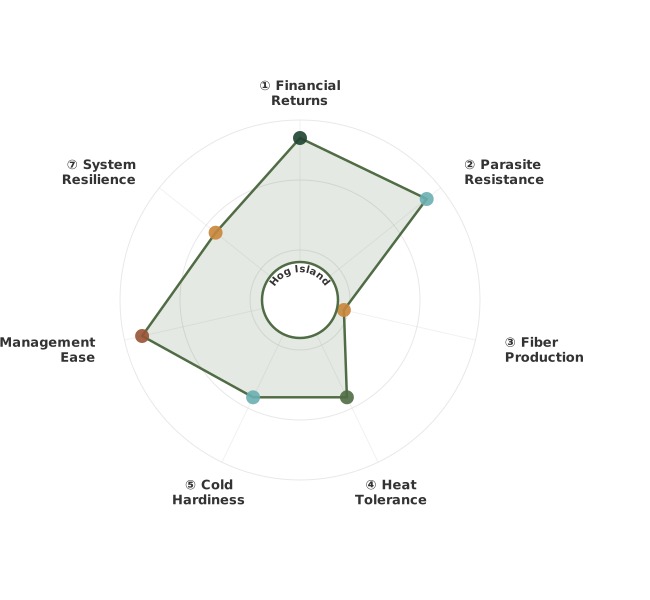
How These Traits Are Calculated
Trait dimensions are ordered clockwise starting from the top of the chart (12 o'clock position):
1. Financial Returns
Annual income per ewe from lamb sales and wool
WHAT: Evaluates annual profit potential combining lamb production (twins, growth rates), wool value, and input costs. Dual-purpose breeds excelling in both meat and wool provide diversified income streams more resilient to market fluctuations.
WHY: Sheep economics depend on lambing percentages and fleece value. Breeds consistently producing twins with good growth plus quality fleece generate $200-400 annual returns per ewe, while single-lamb low-wool breeds struggle to cover costs at small scales.
HOW: Calculated from production data (lambing rate, lamb growth, fleece weight, wool quality) combined with input costs and efficiency traits. Exceptional (≥2.6): high lambing percentage + valuable wool + low costs. Typical (1.8-2.5): moderate production. Limited (<1.8): low output or high costs.
2. Parasite Resistance
Natural resistance to internal parasites (worms)
WHAT: Measures genetic resistance to gastrointestinal parasites (primarily barber pole worm and other internal worms), evaluated through fecal egg counts, documented resistance breeding programs, and performance in parasite-prone regions.
WHY: Internal parasites are the #1 health challenge in sheep, causing 30-50% of flock deaths and requiring frequent deworming that breeds resistance. Breeds with natural parasite resistance reduce deworming 60-80%, lower mortality, and maintain productivity in warm humid climates where parasites thrive year-round.
HOW: Rated from database trait 'parasite_resistance' based on genetic selection and documented performance. Exceptional (≥2.6): tested resistance lines, low fecal egg counts, thrives in parasite-heavy regions. Typical (1.8-2.5): moderate resistance, standard deworming sufficient. Limited (<1.8): highly susceptible, requires intensive parasite management.
3. Wool Production
Annual fleece weight and wool quality value
WHAT: Evaluates wool production combining fleece weight (total pounds annually) and wool quality (fineness, crimp, luster, cleanliness) that determines market value. Measures both quantity and quality of fiber output.
WHY: Wool provides significant income diversification—quality fleeces fetch $50-200 annually versus $10-30 for low-grade wool. In meat-focused operations, wool that covers shearing costs is sufficient, but fiber-focused flocks need high-quality production to be viable.
HOW: Weighted formula: wool quality characteristics (60%), fleece weight (40%). Exceptional (≥2.6): premium quality (fine, lustrous, clean) + heavy fleeces 10-15 lbs. Typical (1.8-2.5): standard wool, moderate weight. Limited (<1.8): coarse or light fleeces with minimal market value.
4. Heat Tolerance
Performance in hot weather above 85°F (29°C)
WHAT: Evaluates adaptation to sustained heat above 85°F (29°C), measuring coat characteristics (hair vs wool, shedding ability), heat stress resistance, and documented performance in hot climates.
WHY: Heat stress reduces feed intake, lowers reproduction rates, and increases mortality, especially in wool breeds where heavy fleeces trap heat. Hair sheep and shedding breeds thrive in southern climates where wool breeds struggle without intensive cooling or frequent shearing.
HOW: Rated from database trait 'heat_tolerance' based on breed type and adaptation. Exceptional (≥2.6): hair breeds or natural shedders, proven in 95°F+ (35°C+), minimal cooling needed. Typical (1.8-2.5): moderate tolerance with shade and water. Limited (<1.8): heavy fleece, struggles above 85°F.
5. Cold Hardiness
Performance in cold weather below 20°F (-7°C)
WHAT: Evaluates adaptation to sustained cold below 20°F (-7°C), measuring wool insulation, body size, metabolic efficiency, and documented winter performance. Particularly important for wool breeds in northern climates.
WHY: Cold stress increases feed requirements for maintenance, complicates winter lambing, and can cause mortality in newborns. Cold-hardy breeds with dense wool coats thrive outdoors year-round, minimizing barn infrastructure and winter feed costs.
HOW: Rated from database trait 'cold_hardiness' based on documented characteristics. Exceptional (≥2.6): dense fleece, northern origins, thrives in <0°F (-18°C) with basic shelter. Typical (1.8-2.5): moderate hardiness. Limited (<1.8): requires heated shelter or struggles with winter lambing.
6. Management Ease
Handling temperament and maternal care quality
WHAT: Measures daily management simplicity combining temperament, lambing ease (unassisted births), and mothering ability (bonding, milk production, lamb survival). Easy breeds require minimal intervention during critical lambing period.
WHY: Difficult sheep increase labor 3-4× through lambing interventions, bottle-feeding rejected lambs, and handling challenges. Breeds with easy lambing and strong mothers enable one-person operations where complicated breeds require round-the-clock monitoring during lambing season.
HOW: Weighted formula: lambing ease (50%), mothering ability (50%). Exceptional (≥2.6): unassisted lambing, excellent mothers, high lamb survival. Typical (1.8-2.5): occasional assistance, good maternal instincts. Limited (<1.8): frequent interventions, weak mothers, high rejection rates.
7. Flock Resilience
Health and survival under stress conditions
WHAT: Evaluates flock robustness across multiple dimensions: drought tolerance (forage scarcity adaptation), fescue toxicity resistance (endophyte tolerance), browsing ability (dietary flexibility), and terrain adaptation (sure-footedness on hills or rough ground).
WHY: Resilient breeds maintain productivity through challenges that devastate others—surviving drought years on sparse forage, thriving on fescue pastures toxic to others, utilizing brushy terrain, navigating steep hillsides. This determines whether flocks require intensive management or thrive with minimal inputs.
HOW: Weighted formula: drought tolerance (40%), fescue tolerance (25%), browsing ability (20%), terrain adaptation (15%). Exceptional (≥2.6): thrives through drought + fescue-tolerant + browsers + sure-footed. Typical (1.8-2.5): moderate resilience. Limited (<1.8): sensitive to stress, requires controlled conditions.
Regenerative Advantages
- Parasite Resistance: This primitive breed's adapted physiology and hair coat often result in natural resistance, frequently requiring no dewormings.
- Foraging Ability: Hog Island sheep demonstrate exceptional foraging ability, thriving on diverse and often sparse vegetation. Their hardiness, honed by centuries of self-sufficiency on challenging island environments, allows them to utilize a broad spectrum of marginal forages, including rough grasses and forbs, with minimal supplementation. This makes them highly effective in unimproved pasture systems.
- Mothering Ability: Remarkably hardy, these sheep possess excellent maternal instincts, demonstrating strong bonding and milk production to raise lambs successfully.
- Lambing Ease: This rare heritage breed's natural foraging and hardiness contribute to excellent lambing ease and strong maternal instincts, suitable for low-input systems.
- Fescue Tolerance: A history of survival on marginal coastal pastures implies high resilience and adaptability to various forages, including fescue, without significant issues.
Know the Debate
- Low-input hardy breed suited for pasture-based systems.
- Excel in rotational grazing, requiring minimal intervention.
- Good parasite resistance; thrive on diverse forage.
- Heritage breed, offering niche market potential.
- Smaller size, slower growth vs. commercial breeds.
Value Streams
- Meat production
- Nutrient cycling and soil building
- Pasture management
Experience Level
Consult local experts for handling requirements
4
Know the Debate
Hog Island sheep are lauded for their hardiness and low-input requirements, making them well-suited for pasture-based regenerative systems. Their s...
Know the Debate
Hog Island sheep are lauded for their hardiness and low-input requirements, making them well-suited for pasture-based regenerative systems. Their s...
Hog Island sheep are lauded for their hardiness and low-input requirements, making them well-suited for pasture-based regenerative systems. Their success, however, hinges on matching their unique traits to the farm's environment and market goals. While they thrive on diverse forage and exhibit excellent parasite resistance, their smaller size and slower growth rates compared to commercial breeds mean potential profitability can vary significantly based on management intensity and market access. Farmers can expect different outcomes depending on their climate, available land resources, and whether they prioritize niche market opportunities or higher volume production.
Is Hog Island Sheep productivity commercially viable?
Ideal for low-input, pasture-based systems
Academic and extension resources highlight Hog Island sheep's hardiness, parasite resistance, and ability to thrive on diverse forage. They are presented as excellent candidates for rotational grazing, requiring minimal intervention and offering good potential for niche markets due to their heritage status.
Sources behind this view
Sources behind this view
 Videos & Podcasts
-
Green Pasture's Farm manages sheep with no grain, wormers, or procedures like tail docking, relying solely on grass. These parasite-resistant sheep average twins and consume tough vegetation, demonstrating a low-input, profitable system.
-
Greg Judy of Green Pasture Farm details his low-maintenance Katahdin and Saint Croix sheep, which thrive on stockpile fescue without grain or hay. He warns against sale barn sheep due to foot rot risk and advises against feeding grain to avoid excessive hoof growth. Sheep are recommended for smaller acreages to improve soil biology.
 From the Web
-
Practical advice on raising sheep, focusing on forage quality, supplemental feeding, breed selection for specific purposes, and managing parasites and predators.
-
Sheep husbandry involves raising sheep for meat, wool, or milk, with pasture and hay as primary feed sources. Key practices include careful animal selection, rotational grazing with fencing, providing shelter for lambing, and managing parasites through pasture rotation and predators with guardian animals or deterrents.
Commercial viability depends on niche markets and slower growth
Field practitioners note that while hardy, Hog Island sheep's smaller size and slower growth rates may limit profitability in commodity markets. Their commercial success is often tied to valuing their heritage status and specific traits for niche markets rather than high-volume production.
Sources behind this view
Sources behind this view
Videos & Podcasts
-
Recommends selecting sheep breeds based on hardiness, meat quality, and environmental tolerance, advising new farmers to match breed management to their own style and look for consistent lambing performance.
-
Select livestock based on climate and landscape. Consider hair sheep for cold resilience over wool sheep. Factors include climate, water, shelter, markets, and personal satisfaction. Choose animals that make you happy.
-
Greg Judy advocates for low-maintenance sheep breeds (Saint Croix, Katahdin, Florida Native crosses) for smaller farms, warning against specialty breeds. He stresses frequent moving (grazing) as key, noting their natural parasite control benefits in multi-species systems.
Making Sense of the Differences
Hog Island sheep offer significant benefits in low-input, pasture-focused regenerative systems, particularly for farmers emphasizing ecological balance and minimal intervention. Their hardiness and parasite resistance reduce costs and reliance on external inputs, aligning well with rotational grazing. However, their smaller size and slower growth compared to commercial breeds mean that achieving profitability often depends on targeting niche markets that value heritage characteristics and leaner meat, rather than competing on volume or rapid weight gain. Farmers aiming for high production should carefully consider their market and management capacity.
5
Management, Care & Feeding
Operational guidance for raising this breed successfully
Management, Care & Feeding
Operational guidance for raising this breed successfully
Managing Hog Island sheep effectively in a regenerative system emphasizes their natural strengths. Their exceptional foraging ability means they excel in rotational grazing systems, where they can be moved frequently to fresh pastures, allowing grazed plants to recover and promoting diverse plant growth. They require minimal supplemental feeding, especially during the growing season, relying primarily on high-quality pasture. During winter or periods of sparse forage, a good quality hay should be provided. Due to their inherent parasite resistance, regular fecal egg counts are often sufficient for monitoring, with targeted deworming only when necessary, rather than routine treatments. Their lambing is typically straightforward, with ewes proving to be good mothers. Regular observation is key, but over-management can be counterproductive. Ensuring access to clean water, mineral supplements, and basic shelter from extreme weather is usually all that's needed to keep this hardy breed thriving.
Sources behind this view
Videos & Podcasts
-
Hog farming on marginal land uses pasture grazing and grass management to improve soil, reduce grain feed, enhance animal welfare, and lower labor, creating a profitable and scalable system.
-
Cedric Shannon of Weathertop Farm uses rotational grazing with hogs (Tamworth crosses) managed by electric netting. He emphasizes their role in soil improvement and nutrient cycling, noting that other

 Community
-
Practical care for American Guinea Hogs includes specialized farrowing pens, pasture housing, and a mixed diet of grain and food scraps, with emphasis on monitoring girth and encouraging rooting. Chal
Read more (opens in new window) smallfarms.cornell.edu -
Details dietary transition for guinea hogs from confinement to pasture and garden scraps, incorporating garlic for worming, and addresses challenges in farrowing and breeding.
Read more (opens in new window) permies.com -
Raising Guinea Hogs on pasture involves providing supplemental feed only to bred sows and in winter. Pastures are planted with diverse forages like Tall Fescue, Alfalfa, and kale, supplemented with Se
Read more (opens in new window) permies.com
7
Production Capabilities & Market Economics
Business case evaluation and production metrics
Production Capabilities & Market Economics
Business case evaluation and production metrics
Meat Production Economics
| Category | Value |
|---|---|
| Finish Weight | 90-120 lbs 40.8-54.4 kg |
| Months to Finish | 8-10 |
| Price Premium | +20% to +35% |
| Annual Input Cost/Head | $100-150 |
Finish Weight: Market weight for grass-finished lamb. Varies by breed - hair sheep (Katahdin, Dorper) often finish lighter (80-110 lbs) than wool breeds (100-140 lbs). Heritage breeds grow slower but produce flavorful meat.
Months to Finish: Time from birth to market weight on pasture. Grass-fed lamb typically finishes at 6-10 months depending on breed, forage quality, and target weight. Year-round lambing possible in some climates.
Price Premium: Premium above conventional lamb prices. Grass-fed, locally-raised lamb sells for $8-15/lb vs. $6-10/lb conventional. Premium requires direct marketing or certification. Commodity channels offer minimal premium.
Annual Input Cost/Head: Feed, minerals, health care, shearing (wool breeds), and pasture maintenance per ewe per year. Excludes infrastructure, land, and labor. Hair sheep eliminate shearing costs.
Sources behind this view
Videos & Podcasts
-
Details raising lambs for meat: cost ($250-400/breeding lamb), yield (~30 lbs meat/lamb), value ($15/lb grass-fed). Lambs thrive on grass, eat weeds like poison ivy/kudzu, and help control parasites i
-
Market lambs at 55-60 lbs for optimal returns and risk mitigation, as heavier lambs offer similar total profit but increased risk and reduced price per pound.

-
Utilize slower growth rates via grazing to market lambs during fall/winter price peaks, rather than selling at 90-120 days into the high-supply summer market.

-
Green Acres targets finishing grass-fed lambs at 8-10 months, using hair-type sheep (Katahdin, Dorper crosses) for lower labor and potential parasite resistance. Lambing in late spring aligns with pea
Community
-
Raising and finishing lambs on pasture is possible by selecting appropriate breeds (e.g., Dorper, Katahdin), utilizing rotational grazing, ensuring nutritious forage and water, and evaluating carcass
Read more (opens in new window) smallfarms.cornell.edu