
Jacob Sheep
The Jacob sheep offers farmers an exceptionally hardy and independent breed, excelling in lambing ease and robust mothering abilities, requiring minimal intervention throughout the season. Originating from the British Isles, these distinctive horned sheep, often black and white spotted, thrive on diverse forage and demonstrate remarkable cold hardiness, making them well-suited for challenging environments. Their excellent foraging prowess and natural parasite resistance simplify pasture management and reduce labor inputs, particularly when integrated into mob or rotational grazing systems. While also providing good meat and wool quality, the Jacob's self-sufficiency and resilience truly set it apart, making it an attractive choice for farmers seeking a low-maintenance, dual-purpose flock.
Regenerative Quick Profile
Best Suited For
Climates: Temperate oceanic to subarctic, with cool summers and mild winters
Terrain: Adaptable to most terrain types
Scale: Suitable for small to medium operations (10-50 animals)
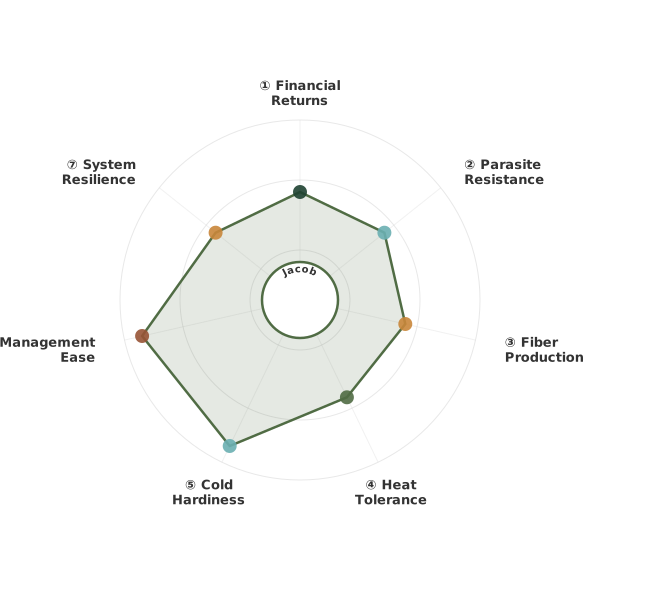
How These Traits Are Calculated
Trait dimensions are ordered clockwise starting from the top of the chart (12 o'clock position):
1. Financial Returns
Annual income per ewe from lamb sales and wool
WHAT: Evaluates annual profit potential combining lamb production (twins, growth rates), wool value, and input costs. Dual-purpose breeds excelling in both meat and wool provide diversified income streams more resilient to market fluctuations.
WHY: Sheep economics depend on lambing percentages and fleece value. Breeds consistently producing twins with good growth plus quality fleece generate $200-400 annual returns per ewe, while single-lamb low-wool breeds struggle to cover costs at small scales.
HOW: Calculated from production data (lambing rate, lamb growth, fleece weight, wool quality) combined with input costs and efficiency traits. Exceptional (≥2.6): high lambing percentage + valuable wool + low costs. Typical (1.8-2.5): moderate production. Limited (<1.8): low output or high costs.
2. Parasite Resistance
Natural resistance to internal parasites (worms)
WHAT: Measures genetic resistance to gastrointestinal parasites (primarily barber pole worm and other internal worms), evaluated through fecal egg counts, documented resistance breeding programs, and performance in parasite-prone regions.
WHY: Internal parasites are the #1 health challenge in sheep, causing 30-50% of flock deaths and requiring frequent deworming that breeds resistance. Breeds with natural parasite resistance reduce deworming 60-80%, lower mortality, and maintain productivity in warm humid climates where parasites thrive year-round.
HOW: Rated from database trait 'parasite_resistance' based on genetic selection and documented performance. Exceptional (≥2.6): tested resistance lines, low fecal egg counts, thrives in parasite-heavy regions. Typical (1.8-2.5): moderate resistance, standard deworming sufficient. Limited (<1.8): highly susceptible, requires intensive parasite management.
3. Wool Production
Annual fleece weight and wool quality value
WHAT: Evaluates wool production combining fleece weight (total pounds annually) and wool quality (fineness, crimp, luster, cleanliness) that determines market value. Measures both quantity and quality of fiber output.
WHY: Wool provides significant income diversification—quality fleeces fetch $50-200 annually versus $10-30 for low-grade wool. In meat-focused operations, wool that covers shearing costs is sufficient, but fiber-focused flocks need high-quality production to be viable.
HOW: Weighted formula: wool quality characteristics (60%), fleece weight (40%). Exceptional (≥2.6): premium quality (fine, lustrous, clean) + heavy fleeces 10-15 lbs. Typical (1.8-2.5): standard wool, moderate weight. Limited (<1.8): coarse or light fleeces with minimal market value.
4. Heat Tolerance
Performance in hot weather above 85°F (29°C)
WHAT: Evaluates adaptation to sustained heat above 85°F (29°C), measuring coat characteristics (hair vs wool, shedding ability), heat stress resistance, and documented performance in hot climates.
WHY: Heat stress reduces feed intake, lowers reproduction rates, and increases mortality, especially in wool breeds where heavy fleeces trap heat. Hair sheep and shedding breeds thrive in southern climates where wool breeds struggle without intensive cooling or frequent shearing.
HOW: Rated from database trait 'heat_tolerance' based on breed type and adaptation. Exceptional (≥2.6): hair breeds or natural shedders, proven in 95°F+ (35°C+), minimal cooling needed. Typical (1.8-2.5): moderate tolerance with shade and water. Limited (<1.8): heavy fleece, struggles above 85°F.
5. Cold Hardiness
Performance in cold weather below 20°F (-7°C)
WHAT: Evaluates adaptation to sustained cold below 20°F (-7°C), measuring wool insulation, body size, metabolic efficiency, and documented winter performance. Particularly important for wool breeds in northern climates.
WHY: Cold stress increases feed requirements for maintenance, complicates winter lambing, and can cause mortality in newborns. Cold-hardy breeds with dense wool coats thrive outdoors year-round, minimizing barn infrastructure and winter feed costs.
HOW: Rated from database trait 'cold_hardiness' based on documented characteristics. Exceptional (≥2.6): dense fleece, northern origins, thrives in <0°F (-18°C) with basic shelter. Typical (1.8-2.5): moderate hardiness. Limited (<1.8): requires heated shelter or struggles with winter lambing.
6. Management Ease
Handling temperament and maternal care quality
WHAT: Measures daily management simplicity combining temperament, lambing ease (unassisted births), and mothering ability (bonding, milk production, lamb survival). Easy breeds require minimal intervention during critical lambing period.
WHY: Difficult sheep increase labor 3-4× through lambing interventions, bottle-feeding rejected lambs, and handling challenges. Breeds with easy lambing and strong mothers enable one-person operations where complicated breeds require round-the-clock monitoring during lambing season.
HOW: Weighted formula: lambing ease (50%), mothering ability (50%). Exceptional (≥2.6): unassisted lambing, excellent mothers, high lamb survival. Typical (1.8-2.5): occasional assistance, good maternal instincts. Limited (<1.8): frequent interventions, weak mothers, high rejection rates.
7. Flock Resilience
Health and survival under stress conditions
WHAT: Evaluates flock robustness across multiple dimensions: drought tolerance (forage scarcity adaptation), fescue toxicity resistance (endophyte tolerance), browsing ability (dietary flexibility), and terrain adaptation (sure-footedness on hills or rough ground).
WHY: Resilient breeds maintain productivity through challenges that devastate others—surviving drought years on sparse forage, thriving on fescue pastures toxic to others, utilizing brushy terrain, navigating steep hillsides. This determines whether flocks require intensive management or thrive with minimal inputs.
HOW: Weighted formula: drought tolerance (40%), fescue tolerance (25%), browsing ability (20%), terrain adaptation (15%). Exceptional (≥2.6): thrives through drought + fescue-tolerant + browsers + sure-footed. Typical (1.8-2.5): moderate resilience. Limited (<1.8): sensitive to stress, requires controlled conditions.
Regenerative Advantages
- Foraging Ability: Jacob sheep demonstrate exceptional foraging ability, consistently thriving on diverse and marginal vegetation. Their heritage as hardy, independent livestock from the British Isles means they are well-adapted to rough forage, forbs, and less palatable plants. This allows them to maintain condition on unimproved pastures with minimal intervention, aligning with the rubric's criteria for broad utilization of varied and less-than-ideal feed sources.
- Mothering Ability: Prized for their distinctive appearance, Jacob ewes also demonstrate excellent mothering skills and milk production, adeptly raising multiple lambs.
- Lambing Ease: Jacob ewes possess strong maternal instincts and typically lamb easily, producing vigorous offspring requiring minimal human intervention.
- Cold Hardiness: A dense, dual-coated fleece and a history in variable British weather make Jacob sheep highly cold-tolerant, often lambing with minimal shelter.
Value Streams
- Meat production
- Nutrient cycling and soil building
- Pasture management
Experience Level
Consult local experts for handling requirements
3
Understanding Jacob Sheep Characteristics
Physical traits, temperament, and what makes this breed unique
Understanding Jacob Sheep Characteristics
Physical traits, temperament, and what makes this breed unique
Jacob sheep are immediately recognizable by their distinctive multi-horned appearance, with rams typically sporting four or more horns, while ewes usually have two. This unique trait, alongside their striking black and white spotted fleece, sets them apart from most commercial breeds. Originating from ancient stock, possibly brought to Britain by the Phoenicians or Norman invaders, the breed has a long history and was historically kept on estates as ornamental livestock. Their genetic makeup favors hardiness and adaptability, having been selectively bred for centuries in less intensive systems. This heritage means they possess a natural resilience and a slower, more deliberate growth rate compared to modern, rapidly maturing breeds. Their smaller frame and agile nature also contribute to their unique character and suitability for specific grazing environments.
The breed's fleece is highly prized for its softness, crimp, and the natural range of colors, from pure white to deep black, often with a mix of grey and brown. This makes them exceptionally valuable for hand spinners and fiber artists seeking natural, undyed yarns. The wool is a medium grade, with a high luster and low lanolin content, making it comfortable to handle and process. Unlike some breeds bred solely for meat or extreme wool production, the Jacob strikes a balance, offering a dual-purpose utility that appeals to niche markets and farmers focused on diverse income streams. Their generally docile temperament also makes them easier to handle, especially for smaller operations or those new to sheep farming.
What truly distinguishes Jacob sheep is their combination of aesthetic appeal, genetic diversity, and robust health. Their heritage status means they are less prone to common genetic defects found in more intensely selected breeds. The multi-horned characteristic, while visually striking, also reflects a robust skull structure and a natural defense mechanism against predators. Their foraging instincts are strong, and they are known to efficiently utilize a wide variety of forage, including coarser grasses and weeds that other breeds might ignore. This makes them an excellent choice for farmers looking to improve pasture health and biodiversity through targeted grazing.
Sources behind this view
 Community
-
Jacob sheep provided lamb's wool, meat, and garden cleanup services. They were shorn for wool in winter and butchered young, offering a multi-purpose benefit. The author plans to continue raising them
Read more (opens in new window) permies.com
4
Management, Care & Feeding
Operational guidance for raising this breed successfully
Management, Care & Feeding
Operational guidance for raising this breed successfully
Managing Jacob sheep effectively in a regenerative system emphasizes their natural strengths and minimizes the need for intensive intervention. Their hardiness means they require less specialized housing; a well-drained shelter providing protection from wind and rain is usually sufficient. Rotational grazing is key, allowing pastures to recover and promoting diverse forage growth, which Jacobs utilize well. Given their foraging ability, careful pasture management is crucial to prevent overgrazing and maintain sward health. Regular observation is important, as their resilience can sometimes mask early signs of illness, so proactive health checks are essential.
Feeding for Jacob sheep should focus on high-quality forages, supplemented as needed based on the stage of production (gestation, lactation, growth) and forage availability. They are efficient converters of pasture, but ensuring adequate nutrition, especially during winter or periods of poor forage, is vital. Mineral supplements, particularly selenium and copper, may be necessary depending on local soil conditions, and should be provided in appropriate forms. Water access must be consistent and clean. Lambing is typically straightforward due to their natural mothering instincts, but monitoring ewes and lambs closely during this critical period ensures a successful start.
Health management for Jacobs prioritizes prevention and natural resilience. Regular hoof trimming, parasite monitoring (especially fecal egg counts rather than routine deworming), and ensuring good body condition are standard practices. Their tolerance to various conditions means they often require fewer vaccinations or treatments than more susceptible breeds, but consulting with a veterinarian familiar with heritage livestock is recommended. Genetic diversity within the flock should be maintained to preserve breed characteristics and avoid inbreeding issues. Their relatively calm demeanor makes handling for health checks or shearing a less stressful experience for both sheep and shepherd.
Sources behind this view
Community
-
Jacob sheep provided lamb's wool, meat, and garden cleanup services. They were shorn for wool in winter and butchered young, offering a multi-purpose benefit. The author plans to continue raising them
Read more (opens in new window) permies.com
6
Production Capabilities & Market Economics
Business case evaluation and production metrics
Production Capabilities & Market Economics
Business case evaluation and production metrics
Meat Production Economics
| Category | Value |
|---|---|
| Finish Weight | 100-130 lbs 45-59 kg |
| Months to Finish | 14-18 |
| Price Premium | +20% to +40% |
| Annual Input Cost/Head | 300-500 |
Finish Weight: Market weight for grass-finished lamb. Varies by breed - hair sheep (Katahdin, Dorper) often finish lighter (80-110 lbs) than wool breeds (100-140 lbs). Heritage breeds grow slower but produce flavorful meat.
Months to Finish: Time from birth to market weight on pasture. Grass-fed lamb typically finishes at 6-10 months depending on breed, forage quality, and target weight. Year-round lambing possible in some climates.
Price Premium: Premium above conventional lamb prices. Grass-fed, locally-raised lamb sells for $8-15/lb vs. $6-10/lb conventional. Premium requires direct marketing or certification. Commodity channels offer minimal premium.
Annual Input Cost/Head: Feed, minerals, health care, shearing (wool breeds), and pasture maintenance per ewe per year. Excludes infrastructure, land, and labor. Hair sheep eliminate shearing costs.
Wool Production Economics
| Category | Value |
|---|---|
| Wool/Ewe/Year | 3-6 lbs 1.4-2.7 kg |
| Wool Quality | Medium, staple length 3-7 inches, micron count 25-35 |
| Shearing Frequency | Annual |
| Price Premium/lb | +30% to +60% |
| Annual Input Cost | 150-250 |
Wool/Ewe/Year: Annual fleece weight per breeding ewe. Varies significantly by breed - fine wool breeds (Merino) produce 8-12 lbs, medium wool breeds (Columbia) produce 10-16 lbs, and long wool breeds (Lincoln) can produce 12-20+ lbs. Pasture-raised sheep typically produce slightly less than housed sheep.
Wool Quality: Industry grading system based on fiber diameter (microns) and staple length. Fine wool (<25 microns) is premium for next-to-skin garments. Medium wool (25-32 microns) is versatile for outerwear. Coarse wool (>32 microns) is used for rugs and upholstery.
Shearing Frequency: Most breeds are shorn once annually in spring. Some fine wool breeds and those in warm climates may be shorn twice yearly. Proper timing prevents heat stress and maximizes fiber quality.
Price Premium/lb: Premium above commodity wool prices ($0-12/lb range). Commodity wool averages $1-3/lb. Registered breeds, natural colors, and organic certification command $5-15/lb raw. Direct-to-consumer sales of processed fiber (roving, yarn) can reach $20-40/lb. Premium only applies when farm qualifies through certification (organic, breed registry) or direct fiber sales establish quality/provenance. Selling through commodity wool pools yields $0 premium.
Annual Input Cost: Includes feed, minerals, health care, shearing costs. Pasture-based systems have lower feed costs. Shearing typically costs $5-10/head. Excludes infrastructure, land, and labor.
Sources behind this view
 Research
-
Performance of sheep systems grazing perennial pastures. 1. Pasture persistence and enterprise productivity (opens in new window)
Four-year study in NSW found adjusting lambing time and increasing lucerne content in pastures significantly boosted wool and lamb production in Merino sheep systems without harming pasture health.