Lacaune Sheep
The Lacaune sheep breed simplifies management with its exceptional mothering abilities and robust hardiness, requiring minimal intervention to thrive. Originating from the Lacaune region of France, these sheep are renowned for their dairy production, yielding high-quality milk rich in fat and protein, ideal for cheese production. Their adaptability to varied forage allows them to efficiently convert less-than-ideal pastures into valuable milk, making them a distinctive choice for dairy-focused operations. Unlike many dairy breeds, Lacaunes possess a calm temperament and are known for their excellent flocking instinct, further reducing labor needs and simplifying herd management. Their strong constitution and prolificacy contribute to a strong return on investment for farmers seeking a specialized yet resilient dairy sheep.
Regenerative Quick Profile
Best Suited For
Climates: Tropical rainforest, Tropical monsoon, Tropical savanna, Hot semi-arid
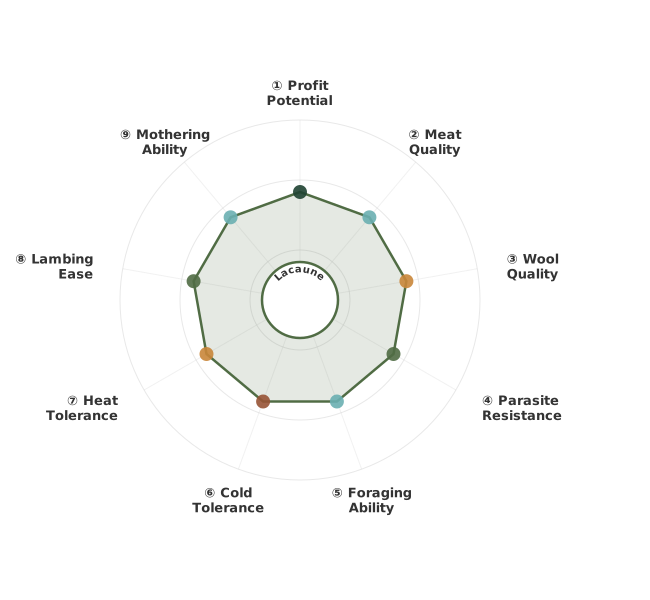
Regenerative Trait Ratings
How These Traits Are Calculated
Trait dimensions are ordered clockwise starting from the top of the chart (12 o'clock position):
1. Financial Returns
Annual income per ewe from lamb sales and wool
WHAT: Evaluates annual profit potential combining lamb production (twins, growth rates), wool value, and input costs. Dual-purpose breeds excelling in both meat and wool provide diversified income streams more resilient to market fluctuations.
WHY: Sheep economics depend on lambing percentages and fleece value. Breeds consistently producing twins with good growth plus quality fleece generate $200-400 annual returns per ewe, while single-lamb low-wool breeds struggle to cover costs at small scales.
HOW: Calculated from production data (lambing rate, lamb growth, fleece weight, wool quality) combined with input costs and efficiency traits. Exceptional (≥2.6): high lambing percentage + valuable wool + low costs. Typical (1.8-2.5): moderate production. Limited (<1.8): low output or high costs.
2. Meat Quality
No detailed explanation available.
3. Wool Quality
No detailed explanation available.
4. Parasite Resistance
Natural resistance to internal parasites (worms)
WHAT: Measures genetic resistance to gastrointestinal parasites (primarily barber pole worm and other internal worms), evaluated through fecal egg counts, documented resistance breeding programs, and performance in parasite-prone regions.
WHY: Internal parasites are the #1 health challenge in sheep, causing 30-50% of flock deaths and requiring frequent deworming that breeds resistance. Breeds with natural parasite resistance reduce deworming 60-80%, lower mortality, and maintain productivity in warm humid climates where parasites thrive year-round.
HOW: Rated from database trait 'parasite_resistance' based on genetic selection and documented performance. Exceptional (≥2.6): tested resistance lines, low fecal egg counts, thrives in parasite-heavy regions. Typical (1.8-2.5): moderate resistance, standard deworming sufficient. Limited (<1.8): highly susceptible, requires intensive parasite management.
5. Foraging Ability
No detailed explanation available.
6. Cold Tolerance
No detailed explanation available.
7. Heat Tolerance
Performance in hot weather above 85°F (29°C)
WHAT: Evaluates adaptation to sustained heat above 85°F (29°C), measuring coat characteristics (hair vs wool, shedding ability), heat stress resistance, and documented performance in hot climates.
WHY: Heat stress reduces feed intake, lowers reproduction rates, and increases mortality, especially in wool breeds where heavy fleeces trap heat. Hair sheep and shedding breeds thrive in southern climates where wool breeds struggle without intensive cooling or frequent shearing.
HOW: Rated from database trait 'heat_tolerance' based on breed type and adaptation. Exceptional (≥2.6): hair breeds or natural shedders, proven in 95°F+ (35°C+), minimal cooling needed. Typical (1.8-2.5): moderate tolerance with shade and water. Limited (<1.8): heavy fleece, struggles above 85°F.
8. Lambing Ease
No detailed explanation available.
9. Mothering Ability
No detailed explanation available.
Regenerative Advantages
- Dairy Butterfat:
Value Streams
- Dairy production
- Nutrient cycling and soil building
- Pasture management
Experience Level
Consult local experts for handling requirements
1
Climate Suitability Assessment
Will this breed thrive in your climate?
Climate Suitability Assessment
Will this breed thrive in your climate?
Köppen Zone: Cfa (Humid Subtropical), Cfb (Oceanic (Maritime Temperate)), Csa (Hot-Summer Mediterranean), Csb (Warm-Summer Mediterranean), Cwb (Subtropical Highland), Dfb (Warm-Summer Continental)
US Zone: 6a, 7a, 8a
Humid subtropical climates with hot, humid summers and mild winters are very suitable for Lacaune sheep. Extended grazing seasons and manageable winters promote good productivity.
Köppen Zone: BSk (Cold Semi-Arid (Steppe)), Cwa (Monsoon-Influenced Humid Subtropical), Dfa (Hot-Summer Continental)
US Zone: 5a, 5b, 9a
Cold semi-arid climates offer a balance of cold winters and warm summers, with limited rainfall. Lacaune sheep can perform adequately with good pasture management and supplemental feed during winter.
Köppen Zone: Af (Tropical Rainforest), Am (Tropical Monsoon), Aw (Tropical Savanna), ET (Tundra), BSh (Hot Semi-Arid (Steppe)), BWh (Hot Desert), BWk (Cold Desert), Dfc (Subarctic), Dwa (Monsoon-Influenced Hot-Summer Continental)
US Zone: 2a, 3a, 3b, 4a, 10a, 11a, 12a
Tropical rainforest climates are characterized by constant heat and humidity, which are detrimental to Lacaune sheep. High parasite load and heat stress make this zone unsuitable.
Note: This breed's performance varies significantly by climate zone. Above are suitability ratings for major climate types where this breed can be raised successfully. If your climate isn't listed, this breed may not be a good fit. Breeds can technically survive in other climates with intensive management, but we don't recommend this for most regenerative operations due to questionable economics and high resource requirements.
2
Is This Breed Right for Your Operation?
Climate fit, terrain suitability, and scale considerations
Is This Breed Right for Your Operation?
Climate fit, terrain suitability, and scale considerations
Terrain & Environment
Can this breed handle my landscape? Performance on different terrain types and farm scales.
| Attribute | Suitability |
|---|
Forage & Feeding Adaptations
What can I feed them and how efficiently? Grazing ability, feed conversion, and seasonal adaptation.
| Attribute | Suitability |
|---|---|
| Foraging Ability | Adequate |
Foraging Ability: Thriving on diverse/marginal vegetation broadly (woody plants, forbs, weeds, rough forage, scrubland) without supplementation. Focus: self-sufficiency on poor-quality or varied vegetation beyond quality grass.
Scale Considerations
3
Understanding Lacaune Sheep Characteristics
Physical traits, temperament, and what makes this breed unique
Understanding Lacaune Sheep Characteristics
Physical traits, temperament, and what makes this breed unique
The Lacaune sheep is a specialized French dairy breed, originating from the Roquefort region of southern France, renowned for its exceptional milk production tailored for artisanal cheese making. This breed is characterized by a robust build, a calm temperament conducive to handling, and a biological makeup optimized for high milk yield and favorable composition. Their resilience is a key feature, allowing them to adapt to varied grazing conditions, including the dry summers characteristic of their Mediterranean homeland, and a notable tolerance for fescue pastures. Unlike breeds primarily selected for wool or meat, the Lacaune's genetic predisposition is geared towards dairy, making them a distinct choice for producers focused on milk quality.
Physical Characteristics:• Medium-sized breed: Ewes typically weigh 50-70 kg (110-155 lbs), and rams 70-90 kg (155-200 lbs).
• Wool coat: Fine to medium texture, typically white to cream in color, requiring standard shearing.
• Udder structure: Long, well-formed udder with large, pliable teats ideal for mechanical milking.
• Leg structure: Clean, wool-free legs, usually white or light-colored, promoting hygiene.
• Head shape: Distinctive head with a slightly Roman nose and alert, dark eyes.
Biological Traits:• Milk Production Potential: Excellent capacity for high milk yields and favorable butterfat and protein percentages, critical for cheese production.
• Forage Adaptability: Thrives on a variety of forage types, demonstrating a significant tolerance for fescue pastures.
• Climate Resilience: Possesses good cold hardiness, enabling extended grazing seasons, and good heat tolerance for warmer climates.
• Drought Tolerance: Exhibits moderate drought tolerance, making it suitable for regions with dry summer periods.
• Browse Consumption: Efficient grazers with a capacity to utilize 10-15% browse in their diet, incorporating woody plants.
Behavioral Traits:• Temperament: Generally docile and good-natured, facilitating routine farm tasks and milking.
• Flock Instincts: Strong flocking behavior aids in containment and herd management.
• Maternal Instincts: Demonstrates good maternal instincts, beneficial for lamb rearing.
• Stress Reduction: Calm demeanor minimizes stress during handling and milking procedures.
The Lacaune sheep's biological and physical attributes are finely tuned for dairy production, particularly for cheese, offering a specific advantage for producers aiming for high-quality milk output. Their adaptability extends their potential use beyond their native climate, making them a versatile option for various agricultural settings.
4
Management, Care & Feeding
Operational guidance for raising this breed successfully
Management, Care & Feeding
Operational guidance for raising this breed successfully
Integrating Lacaune sheep into a regenerative farming operation requires a strategic approach that considers their specific physical, biological, and economic needs, alongside their environmental contributions. The breed's adaptability to varied grazing conditions and moderate drought tolerance makes them well-suited for regions with distinct dry seasons, while their good cold and heat tolerance broaden their geographic applicability. Successful integration hinges on understanding their management requirements and aligning them with the farm's overall system goals, from pasture health to market access.
Physical and Environmental Integration:• Pasture Management: Design grazing rotations that incorporate Lacaune sheep's preference for varied forage and their ability to utilize browse. Their tolerance for fescue means pastures dominated by this grass can be effectively managed.
• Terrain Suitability: Lacaune sheep are highly adaptable to rolling terrain (rated 5/5) and moderately suited for steep terrain (rated 3/5), facilitating their use across diverse landscapes.
• Climate Considerations: While tolerant of cold and heat, provide appropriate shelter during extreme weather events. Their moderate drought tolerance means access to water and supplemental forage may be necessary during extended dry periods.
• Flock Dynamics: Manage their strong flocking instincts for efficient movement and containment, utilizing their docile temperament for ease of handling.
Economic Implementation and Infrastructure:• Market Access: Prioritize establishing relationships with artisanal cheesemakers or developing direct-to-consumer channels to capture the premium milk price. This process can take 2-3 years for customer acquisition and brand building.
• Dairy Infrastructure Investment: Budget for and install necessary milking parlors, milk cooling and storage equipment, and potentially pasteurization capabilities. Payback periods will vary based on the scale of operation and market prices.
• Cost Management: Implement efficient grazing strategies to minimize reliance on costly supplemental feeds, particularly outside of the dry season. Monitor feed conversion rates to optimize profitability.
• Revenue Stream Planning: Focus on fluid milk sales as the primary revenue stream. Understand that lactation curves and yields will influence total output and require careful planning around breeding and lambing cycles if applicable.
Management Practices and System Synergy:• Nutrient Cycling: Utilize their manure to enhance soil fertility, reducing or eliminating the need for synthetic fertilizers. Integrate manure management into pasture fertilization plans.
• Brush Management: Leverage their browse tolerance (10-15%) to manage woody vegetation and reduce fuel loads, contributing to fire prevention and landscape health.
• Health and Well-being: Maintain a proactive approach to animal health, ensuring regular veterinary checks and appropriate parasite control, especially in mixed-species grazing systems.
• Breeding and Reproduction: If reproduction is part of the operation, manage their good maternal instincts to ensure successful lamb rearing, contributing to flock expansion and potential sales of breeding stock.
Successfully integrating Lacaune sheep requires a long-term perspective, acknowledging the time and capital needed to establish premium markets and appropriate infrastructure. By aligning their biological strengths with robust pasture management and market development, farmers can leverage this breed to enhance both the ecological health and economic resilience of their operations.
5
Complete Trait Reference
Comprehensive trait ratings and explanations
Complete Trait Reference
Comprehensive trait ratings and explanations
Climate & Environmental Adaptation
How does this breed handle environmental challenges? Weather resilience, natural resistance, and adaptation.
| Attribute | Suitability |
|---|---|
| Hardiness | Adequate |
| Heat Tolerance | Adequate |
| Cold Tolerance | Adequate |
| Parasite Resistance | Adequate |
Terrain & Land Suitability
Can this breed handle my landscape? Performance on different terrain types and farm scales.
| Attribute | Suitability |
|---|
Forage & Feeding Characteristics
What can I feed them and how efficiently? Grazing ability, feed conversion, and seasonal adaptation.
| Attribute | Suitability |
|---|---|
| Foraging Ability | Adequate |
Foraging Ability: Thriving on diverse/marginal vegetation broadly (woody plants, forbs, weeds, rough forage, scrubland) without supplementation. Focus: self-sufficiency on poor-quality or varied vegetation beyond quality grass.
Handling, Temperament & Reproduction
How easy are they to work with? Temperament, handling ease, and reproductive efficiency.
| Attribute | Suitability |
|---|---|
| Mothering Ability | Adequate |
6
Production Capabilities & Market Economics
Business case evaluation and production metrics
Production Capabilities & Market Economics
Business case evaluation and production metrics