
Llamas
Llamas offer farmers a remarkably hardy and intelligent livestock option, excelling in their sure-footedness and natural guardian instincts, which significantly simplifies flock management. These adaptable South American camelids are renowned for their longevity and require minimal intervention, thriving on diverse forage and making them ideal for rotational grazing and brush management. Their innate sure-footedness allows them to navigate challenging terrain, and their calm yet protective demeanor makes them excellent companions for other livestock, effectively deterring predators. Llamas are particularly adept at multi-species grazing, contributing to a more robust and self-sustaining pasture ecosystem.
Regenerative Quick Profile
Best Suited For
Climates: Arid to semi-arid highlands, cool temperate oceanic, and subtropical highland climates
Terrain: Excels on rolling to steep terrain
Scale: Excellent for small homesteads (1-10 animals)
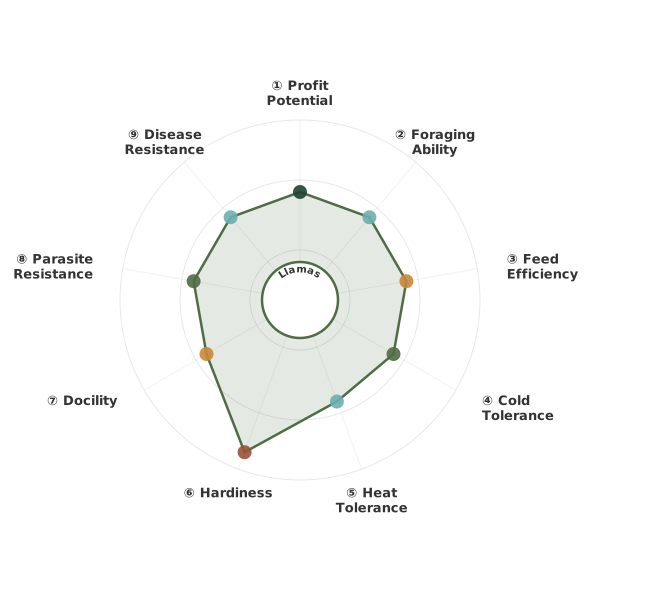
How These Traits Are Calculated
Trait dimensions are ordered clockwise starting from the top of the chart (12 o'clock position):
1. Profit Potential
Measures the llama's ability to generate income for the farm.
WHAT: Profit Potential assesses a llama breed's capacity to generate revenue through various avenues, such as fiber production, meat, breeding stock sales, and agritourism. This varies based on inherent breed characteristics influencing wool quality, growth rates, fertility, and temperament.
WHY: For regenerative farmers, maximizing profit directly supports the sustainability and expansion of their farming practices. A breed with high profit potential allows for reinvestment in soil health, diverse ecosystems, and improved animal welfare, making the operation more resilient.
HOW: Exceptional breeds consistently yield high-quality fiber (e.g., exceeding 2.5 kg per year with low micron count), achieve market-ready weights efficiently (e.g., 50-60 kg by 12 months), and have strong demand for breeding stock. Typical breeds offer moderate yields and demand, while Limited breeds may have lower fiber volume, slower growth, or niche markets.
2. Foraging Ability
Measures how well llamas find and utilize diverse forage in varied environments.
WHAT: This trait assesses a llama's natural inclination and skill in seeking out and consuming a wide variety of plant matter, including grasses, forbs, and shrubs. Breeds may differ in their preference for certain types of forage or their efficiency in extracting nutrients from coarser vegetation.
WHY: High foraging ability means llamas can thrive on less intensively managed pastures, reducing the need for supplemental feed and improving land utilization. This is crucial for regenerative systems aiming to build soil health and reduce external inputs.
HOW: Exceptional llamas actively browse and graze diverse plants, demonstrating efficient digestion of roughage, often needing less than 50% supplemental feed on good pasture. Typical llamas graze well but may require moderate supplementation (50-75% supplemental feed) in less ideal conditions. Limited foragers may struggle with coarser plants and rely heavily on supplemental feed (over 75%).
3. Feed Efficiency
Measures how effectively llamas convert feed into usable energy and mass.
WHAT: Feed efficiency in llamas refers to their ability to gain weight or maintain body condition on a given amount of forage and supplemental feed. Some llama breeds are naturally leaner and require more feed, while others are more robust and efficient converters.
WHY: For regenerative farmers, highly feed-efficient llamas mean reduced reliance on external feed inputs, lower costs, and less pressure on pasture resources. This aligns with principles of sustainability and resource conservation in animal production.
HOW: Exceptional llamas can maintain body condition on less than 2% of their body weight in dry matter per day. Typical llamas might need 2-2.5% of body weight, while limited efficiency llamas may require over 2.5% of their body weight in feed.
4. Cold Tolerance
Measures a llama's ability to thrive in cold, damp, and windy conditions.
WHAT: This trait assesses a llama's natural ability to withstand and perform well in cold weather, including exposure to wind and moisture. Some llama breeds have denser fiber and thicker skin, making them inherently more resistant to cold than others.
WHY: For regenerative farmers in cooler climates, high cold tolerance means llamas require less supplemental housing and heating, reducing infrastructure costs and energy consumption. It ensures their well-being and productivity, especially during winter months, contributing to a more sustainable operation.
HOW: Exceptional llamas possess dense, oily fleece that effectively repels water and provides superior insulation, allowing them to maintain body temperature in sub-zero (Fahrenheit) temperatures with minimal wind chill effect. Typical llamas have adequate fleece for moderate cold but may need some shelter in extreme conditions. Limited llamas may struggle in temperatures below freezing, especially with wind and moisture, requiring significant protection.
5. Heat Tolerance
Measures a llama's ability to withstand and perform in hot, humid conditions.
WHAT: This trait assesses a llama's physiological and behavioral adaptations to heat. Some llama breeds have denser fiber or less efficient cooling mechanisms, making them more susceptible to heat stress than others.
WHY: For regenerative farmers in warmer climates, selecting for heat tolerance is crucial for animal welfare and productivity. Well-adapted llamas are less prone to heat-related illnesses, maintain better growth rates, and can graze effectively during hotter periods.
HOW: Exceptional llamas thrive in temperatures above 85°F (29°C) with minimal signs of distress. Typical llamas may show mild signs of heat stress above 80°F (27°C) and require more shade and water. Limited llamas struggle above 75°F (24°C) and are at high risk for heat exhaustion.
6. Hardiness
Evaluates a llama's ability to thrive in challenging environments.
WHAT: Hardiness measures a llama's resilience to environmental stressors like extreme temperatures, limited nutrition, and disease. Some llama breeds are naturally more robust and adaptable to harsh conditions due to their ancestral origins and genetic makeup.
WHY: For regenerative farmers, hardy llamas require less supplemental feed, veterinary care, and shelter, reducing input costs and labor. This trait is crucial for llamas grazing on diverse, unimproved pastures or in regions with unpredictable weather patterns.
HOW: Exceptional hardiness means llamas can maintain body condition and reproductive success with minimal intervention; they readily forage and resist common parasites. Typical hardiness indicates they perform well in moderate conditions but may need some support during extreme weather or disease outbreaks. Limited hardiness suggests a greater need for specialized care, controlled environments, and consistent supplemental nutrition.
7. Docility
Measures the llama's calmness and ease of handling.
WHAT: Docility assesses a llama's temperament, specifically its willingness to be approached, handled, and managed. Some llama breeds are naturally more aloof or reactive, while others are bred for a more gentle and cooperative disposition.
WHY: Docility is crucial for regenerative farmers as it directly impacts labor efficiency and animal welfare. Gentle llamas are easier to train for pack work, herd guarding, and routine health checks, reducing stress on both the animal and the handler.
HOW: Exceptional docility means llamas are calm when approached, readily accept halter and grooming, and show minimal flight response (e.g., less than 2 seconds to settle after a mild startle). Typical docility involves moderate caution but acceptance of handling. Limited docility indicates pronounced skittishness, resistance to touch, or frequent kicking/spitting when stressed.
8. Parasite Resistance
Measures how well llamas resist internal and external parasites.
WHAT: This trait assesses a llama breed's innate ability to withstand and recover from parasitic infections, both internal (like worms) and external (like mites). Some llama breeds naturally possess stronger immune responses or physiological adaptations that make them less susceptible to parasite burdens.
WHY: High parasite resistance reduces the need for chemical dewormers, which aligns with regenerative principles by minimizing chemical inputs and protecting beneficial soil organisms. It also leads to healthier, more productive animals with better weight gain and fleece quality, ultimately improving farm sustainability and profitability.
HOW: Exceptional breeds often require deworming less than once a year, demonstrating robust natural defenses. Typical breeds might need deworming 1-2 times annually. Limited breeds may require frequent deworming (3+ times yearly) and are more prone to severe illness from parasites.
9. Disease Resistance
Measures a llama's natural ability to fight off common illnesses.
WHAT: This trait assesses a llama breed's inherent ability to withstand and recover from common parasitic and infectious diseases. Some llama breeds have been selectively bred for generations in challenging environments, leading to naturally stronger immune systems.
WHY: High disease resistance reduces the need for veterinary interventions and medications, lowering costs and supporting a more sustainable, chemical-free farming system. It ensures healthier animals that are more productive and less prone to losses, crucial for regenerative operations.
HOW: Exceptional breeds demonstrate very low incidence of standard parasites (e.g., <5% requiring medication annually) and rare outbreaks of common llama diseases. Typical breeds show moderate resistance, requiring occasional treatment. Limited breeds are more susceptible and may experience frequent health issues or require significant intervention.
Regenerative Advantages
- Drought Tolerance: Adapted to the arid Andes, llamas have an efficient water metabolism and thrive on sparse vegetation, demonstrating superior resilience to drought compared to animals from wetter climates.
- Hardiness: Hailing from the Andes, llamas possess natural resilience to extreme altitudes, temperature swings, and limited forage, making them ideal for low-input systems with minimal veterinary needs.
- Longevity: Llamas typically live 15-20 years and remain productive into their teens, significantly exceeding the lifespan and sustained productivity of many livestock species.
- Intelligence: Their remarkable trainability and problem-solving skills allow llamas to quickly adapt to new handling and navigate challenging environments with minimal repeated instruction.
- Pack Ability: Selectively bred for millennia in the Andes, llamas exhibit exceptional endurance, sure-footedness, and a calm disposition, making them perfectly suited for carrying significant loads over difficult terrain.
Value Streams
Experience Level
Consult local experts for handling requirements
3
Understanding Llamas Characteristics
Physical traits, temperament, and what makes this breed unique
Understanding Llamas Characteristics
Physical traits, temperament, and what makes this breed unique
Llamas (Lama glama) are South American camelids, domesticated thousands of years ago in the Andean highlands from the wild guanaco. They are the largest of the four South American camelids and are distinguished by their long necks, slender legs, and banana-shaped ears. Unlike their smaller cousins, alpacas, which were bred primarily for fiber, llamas were historically used as pack animals and for meat and wool.
Their intelligence, gentle nature, and calm demeanor make them relatively easy to handle and train. Llamas possess a natural curiosity and are known for their ability to learn commands. They are social animals, typically living in herds, and communicate through a variety of soft humming sounds, alarm calls, and other vocalizations. Their thick, woolly fleece, while not as fine as alpaca fiber, provides excellent insulation and comes in a wide range of natural colors and patterns.
What truly sets llamas apart is their remarkable adaptability and low environmental impact. Their padded feet are gentle on pastures, preventing the soil compaction often associated with heavier livestock like cattle or horses. This characteristic makes them particularly well-suited for fragile or sensitive grazing areas. Furthermore, their efficient digestive system allows them to thrive on a diet of grasses and forages, minimizing the need for supplemental feed and aligning with pasture-centric farming systems.
Sources behind this view
 Community
-
Llamas and alpacas serve as guard animals (llamas >18mo), pack animals (llamas >4yrs, 70-120lb capacity), and for fiber (alpacas preferred). They communicate via posture and vocalizations, with spitti
Read more (opens in new window) ucanr.edu
4
Management, Care & Feeding
Operational guidance for raising this breed successfully
Management, Care & Feeding
Operational guidance for raising this breed successfully
Managing llamas effectively in a regenerative system centers on providing a balanced diet, appropriate shelter, and regular health monitoring. Their primary diet should consist of good quality pasture; they are efficient foragers and can utilize a wide variety of grasses and forbs. During periods of low forage availability or for pregnant/lactating females, supplemental hay and a balanced mineral supplement are recommended. Avoid overfeeding grain, as it can lead to health issues like polioencephalomalacia. Ensure access to clean, fresh water at all times.
Llamas require minimal shelter, typically needing only protection from extreme wind, rain, or sun. A three-sided run-in shed or a natural windbreak is often sufficient. Regular observation is key to preventing health problems. Watch for signs of parasites, lameness, or changes in behavior. Due to their South American origin, they are generally hardy, but routine veterinary care, including vaccinations and fecal testing, is advisable. Their toenails may need trimming periodically, and their fleece should be skirted and can be used or sold.
Social structure is important for llamas; they thrive in small groups. Introducing new llamas should be done carefully to avoid aggression. Training is also a beneficial aspect of llama husbandry; they can be trained to lead, pack, and even perform simple tasks, making them more manageable and versatile. Regular handling and positive reinforcement build trust and make routine care, such as health checks or grooming, much easier for both the animal and the handler. Their intelligence means they respond well to consistent and patient training methods.
Sources behind this view
Community
-
Comprehensive guide for llama and alpaca care in California, covering annual health needs (vaccinations, worming, shearing), housing (shelter, herd living), fencing (4-6ft, no barbed wire), and nutrit
Read more (opens in new window) ucanr.edu -
Llamas and alpacas serve as guard animals (llamas >18mo), pack animals (llamas >4yrs, 70-120lb capacity), and for fiber (alpacas preferred). They communicate via posture and vocalizations, with spitti
Read more (opens in new window) ucanr.edu
 From the Web
-
Essential llama and alpaca care includes secure housing, herd management, and addressing health issues like heat stress and meningeal worm. Proper handling, shearing, and safe transport are also criti