Nigerian Dwarf Goats
Nigerian Dwarf goats originated in West Africa, specifically from the arid regions of Nigeria. Developed as a dairy breed, they are known for their exceptionally high milk production relative to their small stature, often producing rich, creamy milk with a high butterfat content. For regenerative agriculture, their key attributes lie in their efficient foraging. They are excellent browsers, adept at clearing brush and weeds, which can be integrated into pest management strategies and pasture renovation. Their compact size allows them to access dense vegetation and navigate varied terrain without causing significant soil compaction. Nigerian Dwarfs are also known for their hardiness and good mothering instincts, contributing to a self-sustaining herd. They exhibit good adaptability to a range of climates, from temperate to warmer regions, making them a versatile choice for diverse farming operations seeking to improve land health and diversify production.
Regenerative Quick Profile
Best Suited For
Climates: Tropical rainforest, Tropical monsoon, Tropical savanna, Hot semi-arid
Terrain: Best for flat to rolling terrain
Scale: Suitable for small to medium operations (10-50 animals)
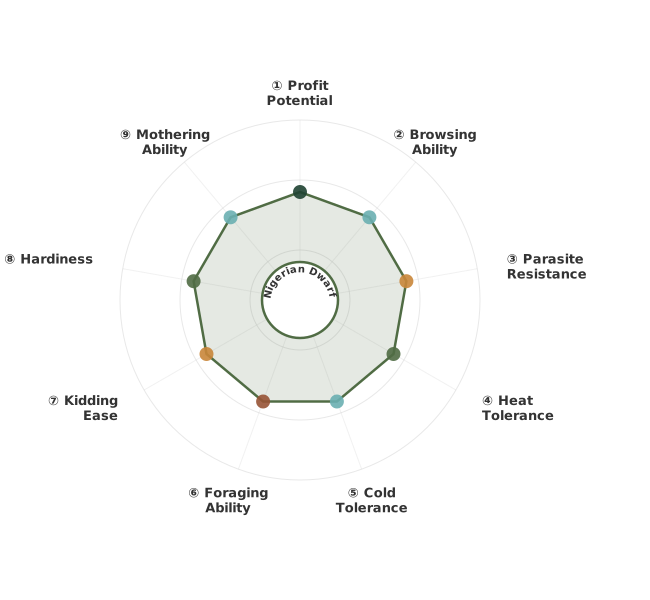
Regenerative Trait Ratings
How These Traits Are Calculated
Trait dimensions are ordered clockwise starting from the top of the chart (12 o'clock position):
1. Financial Returns
Annual income per doe from kids, milk, or fiber
WHAT: Evaluates annual profit potential across meat (kid sales), dairy (milk production), fiber (cashmere/mohair), or dual-purpose value. Combines production output with input costs, kidding rates, and market premiums.
WHY: Goat profitability varies by enterprise type—dairy goats producing 1,500-2,500 lbs milk annually generate $400-800 revenue versus meat goats at $150-300 from kid sales. Understanding income potential by enterprise type helps match breeds to market opportunities and farm goals.
HOW: Calculated from enterprise-specific production data (milk yield, kid growth, fiber weight) combined with efficiency traits and costs. Exceptional (≥2.6): high output for enterprise type + low inputs + strong markets. Typical (1.8-2.5): moderate production and costs. Limited (<1.8): low output or premium-dependent without reliable access.
2. Browsing Ability
Effectiveness at consuming brush, weeds, and woody plants
WHAT: Measures goat effectiveness at controlling unwanted vegetation—clearing brush, managing invasive plants, consuming woody browse—while providing land management services that reduce fuel loads and restore degraded pastures.
WHY: Browsers reduce land clearing costs $200-600 per acre compared to mechanical methods while providing income. Effective browsers tackle multiflora rose, kudzu, poison ivy, and small trees where grazers fail, converting liability into profitability.
HOW: Rated from database trait 'browsing_ability' and documented land management effectiveness. Exceptional (≥2.6): aggressive browsers, thrives on brush, excellent weed control. Typical (1.8-2.5): moderate browsing with mixed diet. Limited (<1.8): prefers grass, minimal brush consumption.
3. Parasite Resistance
No detailed explanation available.
4. Heat Tolerance
Milk production and health in hot weather above 85°F (29°C)
WHAT: Evaluates adaptation to sustained heat above 85°F (29°C), measuring production maintenance, heat stress resistance, and cooling behavior. Critical for dairy goats where heat drops milk production 20-40%.
WHY: Heat-sensitive breeds stop milking during summer peaks, creating 2-4 month income gaps in hot climates. Heat-adapted breeds maintain production year-round, provide consistent cash flow, and eliminate need for expensive cooling systems (fans, misters, air conditioning).
HOW: Rated from database trait 'heat_tolerance' based on documented characteristics. Exceptional (≥2.6): tropical origins, maintains production in 95°F+ (35°C+). Typical (1.8-2.5): moderate tolerance with shade and water. Limited (<1.8): production drops significantly above 85°F, requires cooling.
5. Cold Tolerance
Performance in cold weather below 20°F (-7°C)
WHAT: Evaluates adaptation to sustained cold below 20°F (-7°C), measuring coat thickness, metabolic adaptation, and winter performance. Important for northern climates with harsh winters and winter kidding systems.
WHY: Cold stress increases feed requirements 30-50%, complicates kidding (newborns at high risk), and drops milk production in dairy breeds. Cold-hardy breeds maintain production and kid successfully outdoors where others require heated barns.
HOW: Rated from database trait 'cold_tolerance' based on breed characteristics. Exceptional (≥2.6): thick winter coats, northern origins, thrives in <0°F (-18°C). Typical (1.8-2.5): moderate hardiness, basic shelter sufficient. Limited (<1.8): requires heated shelter, struggles with winter kidding.
6. Foraging Ability
No detailed explanation available.
7. Kidding Ease
No detailed explanation available.
8. Hardiness
No detailed explanation available.
9. Mothering Ability
No detailed explanation available.
Regenerative Advantages
- Heat Tolerance:
- Mothering Ability:
- Hardiness:
- Milk Production:
Value Streams
- Dairy production
- Nutrient cycling and soil building
- Brush clearing and fire risk reduction
- Invasive species control
Experience Level
Consult local experts for handling requirements
1
Climate Suitability Assessment
Will this breed thrive in your climate?
Climate Suitability Assessment
Will this breed thrive in your climate?
Köppen Zone: Af (Tropical Rainforest), Am (Tropical Monsoon), Aw (Tropical Savanna), Cfa (Humid Subtropical), Cwa (Monsoon-Influenced Humid Subtropical)
US Zone: 7a, 8a, 9a, 10a, 11a, 12a
Tropical rainforest climates provide year-round warmth and humidity, ideal for Nigerian Dwarf Goats. Their primary management needs are shade and parasite control.
Köppen Zone: BSh (Hot Semi-Arid (Steppe)), BWh (Hot Desert), Cfb (Oceanic (Maritime Temperate)), Csa (Hot-Summer Mediterranean), Csb (Warm-Summer Mediterranean), Cwb (Subtropical Highland)
US Zone: 6a
Hot semi-arid climates are manageable with careful water management and supplemental feeding during dry spells. Nigerian Dwarf Goats can thrive with good pasture rotation and shade.
Köppen Zone: ET (Tundra), BSk (Cold Semi-Arid (Steppe)), BWk (Cold Desert), Dfa (Hot-Summer Continental), Dfb (Warm-Summer Continental), Dfc (Subarctic), Dwa (Monsoon-Influenced Hot-Summer Continental)
US Zone: 2a, 3a, 3b, 4a, 5a, 5b
Tundra climates are characterized by very short, cool summers and extremely cold winters. Nigerian Dwarf Goats cannot survive these conditions due to the prolonged freezing temperatures and lack of suitable forage.
Note: This breed's performance varies significantly by climate zone. Above are suitability ratings for major climate types where this breed can be raised successfully. If your climate isn't listed, this breed may not be a good fit. Breeds can technically survive in other climates with intensive management, but we don't recommend this for most regenerative operations due to questionable economics and high resource requirements.
2
Is This Breed Right for Your Operation?
Climate fit, terrain suitability, and scale considerations
Is This Breed Right for Your Operation?
Climate fit, terrain suitability, and scale considerations
Terrain & Environment
Can this breed handle my landscape? Performance on different terrain types and farm scales.
| Attribute | Suitability |
|---|---|
| Flat Terrain | Adequate |
| Rolling Terrain | Adequate |
| Small Scale Suitability | Adequate |
Forage & Feeding Adaptations
What can I feed them and how efficiently? Grazing ability, feed conversion, and seasonal adaptation.
| Attribute | Suitability |
|---|---|
| Foraging Ability | Adequate |
| Browsing Ability | Adequate |
| Fescue Tolerance | Adequate |
| Dry Season Grazing | Adequate |
Foraging Ability: Thriving on diverse/marginal vegetation broadly (woody plants, forbs, weeds, rough forage, scrubland) without supplementation. Focus: self-sufficiency on poor-quality or varied vegetation beyond quality grass.
Browsing Ability: Specialized consumption of woody vegetation specifically (shrubs, trees, branches). Actively seeks woody plants, not just opportunistic. A specialized subset of foraging ability.
Fescue Tolerance: Resistance to endophyte-infected tall fescue toxicity (critical for Southern US pastures). Exceptional = minimal impact, Typical = manageable symptoms, Limited = poor performance.
Dry Season Grazing: Ability to utilize dormant or low-quality forage during dry periods. Important for year-round grazing systems.
Scale Considerations
Small-Scale Suitability: Adequate
3
Understanding Nigerian Dwarf Goats Characteristics
Physical traits, temperament, and what makes this breed unique
Understanding Nigerian Dwarf Goats Characteristics
Physical traits, temperament, and what makes this breed unique
Nigerian Dwarf goats are a distinct miniature dairy breed, originating from West Africa and recognized for their small stature, friendly disposition, and prolific breeding capabilities. Unlike larger breeds bred for meat or bulk milk production, these goats are characterized by their compact size, typically standing 17-22.5 inches at the shoulder and weighing 50-75 pounds for does, with bucks being slightly larger. This diminutive size is a defining physical trait that influences their management, nutritional needs, and suitability for various farm systems. Their genetic heritage contributes to a robust constitution, allowing them to adapt to a range of climates and tolerate challenging environmental conditions, including heat and drought.
The breed's appearance is further distinguished by a variety of coat colors and patterns, ranging from solid hues to complex bicolors and roans, making each animal visually unique. A hallmark of the Nigerian Dwarf is their pendulous ears, which are set low on the head, a feature that sets them apart from many other goat breeds. Beyond their physical attributes, their behavioral traits are noteworthy; they are known for being docile, curious, and playful, which makes them approachable and manageable for handlers of all experience levels. As herd animals, they thrive in social settings, benefiting from the company of other goats or compatible livestock, and their intelligence allows them to form bonds with their caretakers and learn routines.
Their biological characteristics underscore their efficiency and productivity in a small package. Nigerian Dwarfs have a relatively short gestation period, averaging around 150 days, and are known for reaching sexual maturity early, often by seven months of age. This leads to frequent kidding, with does commonly giving birth to litters of one to four offspring, making them prolific breeders. Their small body size translates directly into reduced feed and water requirements per animal, typically needing only 1 to 2 gallons of water daily, which is a significant factor for smaller operations or those managing multiple animals. They demonstrate a moderate capacity for browsing on woody plants, consuming about 20-30% of their diet from such sources, and also graze effectively on grasses and forbs, showcasing adaptability in their foraging habits. This breed's tolerance for heat and drought, coupled with their ability to navigate varied, though not excessively steep, terrain, makes them adaptable to a wide array of agricultural settings.
Physical Characteristics:• Mature height at shoulder: 17-22.5 inches (does), 19-23.5 inches (bucks)
• Mature weight: 50-75 pounds (does), 60-85 pounds (bucks)
• Coat: Wide variety of colors and patterns, including solids, bicolors, and roans
• Ears: Pendulous, set low on the head
• Build: Compact and well-proportioned
Behavioral Traits:• Disposition: Generally docile, friendly, curious, and playful
• Social Needs: Herd animals that thrive in social groups
• Intelligence: Capable of learning routines and recognizing individuals
Biological Traits:• Gestation Period: Approximately 150 days
• Breeding: Prolific breeders, does often reach sexual maturity by 7 months
• Litter Size: Typically 1-4 offspring per kidding
• Water Intake: 1-2 gallons per day per animal
• Heat and Drought Tolerance: Good
• Browse Tolerance: Moderate (20-30% of diet)
• Terrain Navigation: Suited for flatter to gently rolling landscapes
Their small size and efficient metabolism make them a unique animal for specific agricultural niches, particularly where space and resource management are key considerations.
4
Management, Care & Feeding
Operational guidance for raising this breed successfully
Management, Care & Feeding
Operational guidance for raising this breed successfully
Integrating Nigerian Dwarf goats into a regenerative farming operation requires careful planning that considers their specific physical, biological, and economic characteristics. Their small size and adaptable nature make them suitable for a variety of systems, from small homesteads to diversified farms, but success hinges on providing appropriate housing, nutrition, and market access. Understanding their behavioral patterns is key to ensuring their well-being and maximizing their contributions to the farm's ecological and economic goals. Successful integration involves creating a secure environment, managing their dietary needs, and establishing clear pathways for their products, particularly their milk.
Physical Requirements and Shelter:
Nigerian Dwarf goats require secure fencing to contain them, as they are agile and curious. Standard woven wire fencing is generally sufficient, with mesh sizes that prevent young kids from escaping. Their housing needs are relatively modest due to their size; a simple three-sided shelter or a small barn offering protection from wind, rain, and extreme sun is adequate. This shelter should be well-ventilated and dry to prevent respiratory issues. They are adaptable to various climates, showing good tolerance to heat and cold, but access to shade in summer and dry bedding in winter is essential for their comfort and health. Their manure is a valuable resource, so designing the housing to facilitate easy collection and composting is beneficial for nutrient cycling.
Nutritional Management:
While Nigerian Dwarfs are efficient converters of forage, their diet needs to be balanced to support their production, especially for milk. A good quality pasture or hay should form the base of their diet, supplemented with a grain ration if needed, particularly for lactating does or during periods of low forage quality. They are known to consume about 20-30% of their diet from browse, making them excellent for clearing brushy areas. Access to clean, fresh water is crucial and should be provided consistently, typically ranging from 1 to 2 gallons per day per animal. Mineral supplements, especially selenium and copper, are important for their health and should be provided in a form suitable for goats.
• Forage Base: High-quality pasture or grass hay is essential.
• Browse Utilization: They effectively consume woody plants, aiding in brush management.
• Supplementation: Grain may be needed for lactating does or during poor forage conditions.
• Water Access: Constant supply of clean, fresh water is critical.
• Mineral Supplementation: Provide goat-specific mineral mixes, paying attention to selenium and copper.
Breeding and Management Practices:
Nigerian Dwarf does reach sexual maturity early, typically around 7 months, and have a gestation period of about 150 days. They are prolific breeders, often having multiple offspring per kidding. Responsible breeding practices involve managing genetic diversity and avoiding overbreeding of does. Kids require specialized care, including proper colostrum intake and protection from predators. Hoof trimming every 4-6 weeks is necessary to prevent overgrowth and lameness. Regular observation for signs of illness, parasites, or injury is crucial for maintaining herd health. Their herd instinct means they should be kept in social groups, ideally with other goats, to reduce stress.
• Early Maturity: Does can be bred as early as 7 months old.
• Prolific Kidding: Expect multiple offspring per birth.
• Kid Care: Ensure adequate colostrum and protection for newborns.
• Hoof Trimming: Regular trimming (every 4-6 weeks) is vital for mobility.
• Parasite Control: Implement a proactive deworming and parasite management strategy.
• Social Grouping: Keep goats in social groups to minimize stress.
Economic Integration and Market Development:
The economic viability of Nigerian Dwarf goats is closely tied to establishing premium markets for their milk and products. Direct-to-consumer sales, farmers' markets, and partnerships with local chefs or specialty food producers are crucial for capturing a price premium. Developing these channels requires consistent product quality, reliable delivery, and effective marketing. The initial cost of acquisition for breeding stock is relatively low ($100-$500 per animal), allowing for smaller-scale entry, but the investment in marketing, infrastructure (like milk processing or cold storage), and feed can add 10-20% to operational costs. Without these dedicated market channels, relying on commodity markets is unlikely to be profitable.
• Market Focus: Prioritize specialty dairy markets for higher returns.
• Sales Channels: Utilize direct sales, farmers' markets, and partnerships.
• Quality Consistency: Maintain high standards for milk and other products.
• Marketing Investment: Allocate resources for brand building and customer outreach.
• Infrastructure Needs: Consider costs for milk handling, storage, and processing equipment.
• Timeline for Profitability: Expect 1-3 years to establish premium markets and achieve consistent profitability.
By thoughtfully addressing these aspects—from providing suitable shelter and balanced nutrition to managing breeding and actively developing market channels—farmers can successfully integrate Nigerian Dwarf goats into their operations, reaping both their regenerative benefits and their niche economic potential.
5
Complete Trait Reference
Comprehensive trait ratings and explanations
Complete Trait Reference
Comprehensive trait ratings and explanations
Climate & Environmental Adaptation
How does this breed handle environmental challenges? Weather resilience, natural resistance, and adaptation.
| Attribute | Suitability |
|---|---|
| Hardiness | Ideally Suited |
| Heat Tolerance | Ideally Suited |
| Cold Tolerance | Adequate |
| Drought Tolerance | Adequate |
| Parasite Resistance | Adequate |
Terrain & Land Suitability
Can this breed handle my landscape? Performance on different terrain types and farm scales.
| Attribute | Suitability |
|---|---|
| Flat Terrain | Adequate |
| Rolling Terrain | Adequate |
| Small Scale Suitability | Adequate |
Forage & Feeding Characteristics
What can I feed them and how efficiently? Grazing ability, feed conversion, and seasonal adaptation.
| Attribute | Suitability |
|---|---|
| Foraging Ability | Adequate |
| Browsing Ability | Adequate |
| Fescue Tolerance | Adequate |
| Dry Season Grazing | Adequate |
Foraging Ability: Thriving on diverse/marginal vegetation broadly (woody plants, forbs, weeds, rough forage, scrubland) without supplementation. Focus: self-sufficiency on poor-quality or varied vegetation beyond quality grass.
Browsing Ability: Specialized consumption of woody vegetation specifically (shrubs, trees, branches). Actively seeks woody plants, not just opportunistic. A specialized subset of foraging ability.
Fescue Tolerance: Resistance to endophyte-infected tall fescue toxicity (critical for Southern US pastures). Exceptional = minimal impact, Typical = manageable symptoms, Limited = poor performance.
Dry Season Grazing: Ability to utilize dormant or low-quality forage during dry periods. Important for year-round grazing systems.
Handling, Temperament & Reproduction
How easy are they to work with? Temperament, handling ease, and reproductive efficiency.
| Attribute | Suitability |
|---|---|
| Mothering Ability | Ideally Suited |
| Kidding Ease | Adequate |
Production Characteristics
What do they produce and how well? Meat, milk, eggs, fiber, and other products.
| Attribute | Suitability |
|---|---|
| Milk Production | Ideally Suited |
| Meat Quality | Not Recommended |
6
Production Capabilities & Market Economics
Business case evaluation and production metrics
Production Capabilities & Market Economics
Business case evaluation and production metrics
Dairy Production Economics
| Category | Value |
|---|---|
| Milk/Doe/Year | 600-1000 lbs |
| Lactation Period (Months) | 240-305 |
| Age First Kidding (Months) | 12-14 |
| Price Premium | +25% |
| Annual Input Cost | 300-600 |
Price Premium: Premium above conventional goat milk prices. Grass-fed goat dairy typically sells for premium prices through direct sales or specialty markets. Premium only applies when farm qualifies through certification (organic, grass-fed, raw milk license where legal) or direct sales channels. Without certification or qualifying market access, premium falls to $0.