
Ossabaw Island Hog
Also known as: ossabaw, ossabaw island
The Ossabaw Island Hog breed simplifies management for farmers by showcasing remarkable hardiness and superior foraging ability, thriving on diverse pasture and requiring minimal intervention. Originating from isolated feral populations on Ossabaw Island, Georgia, these pigs are a lard-type breed known for their robust build and natural instinct to root and graze. Their exceptional adaptability to pasture makes them ideal for silvopasture and rotational grazing systems, while their efficient grazing ability allows for successful grass finishing. Furthermore, Ossabaw Hogs exhibit good mothering instincts and heat tolerance, making them a resilient choice for farmers seeking a low-input, independent swine breed that excels in natural environments.
Regenerative Quick Profile
Best Suited For
Climates: Humid subtropical
Scale: Best for medium to large operations (50+ animals)
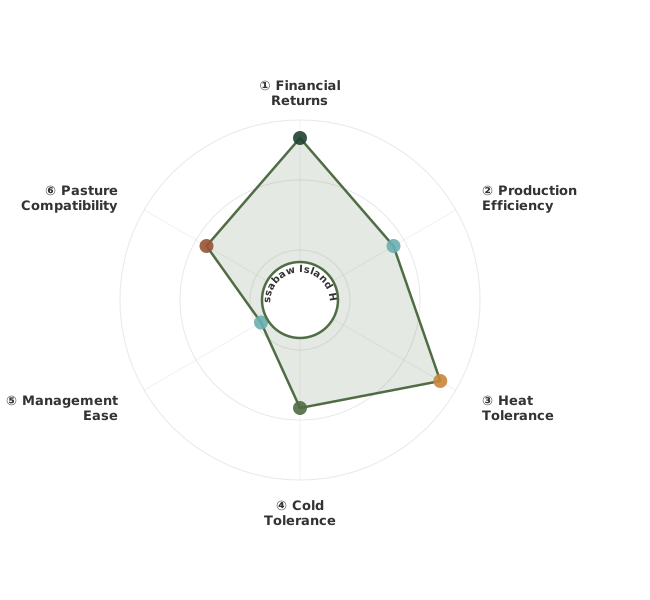
How These Traits Are Calculated
Trait dimensions are ordered clockwise starting from the top of the chart (12 o'clock position):
1. Financial Returns
Monthly income per pig from market weight and timeline
WHAT: Evaluates profit potential combining market weight, time to finish, feed efficiency, and input costs. Heritage breeds reaching 250-300 lbs in 8-12 months with premium pricing generate strong returns despite slower growth than commercial pigs.
WHY: Pig profitability depends on growth rate, feed efficiency, and market access. Fast-finishing breeds (5-6 months) on grain excel in conventional markets, while pasture-raised heritage breeds (8-12 months) target premium markets for higher per-pound returns that offset longer timelines.
HOW: Calculated from production data (finish weight, months to market) combined with feed efficiency and premium potential. Exceptional (≥2.6): efficient growth + strong premium access or commodity profitability. Typical (1.8-2.5): moderate timelines and costs. Limited (<1.8): slow growth or high costs eroding margins.
2. Production Efficiency
Feed conversion and resource utilization
WHAT: Measures how effectively pigs convert feed and resources into market weight, combining feed-to-gain ratios, foraging ability, and growth timeline. Efficient breeds reach target weight on fewer total inputs.
WHY: Feed represents 60-75% of production costs. Breeds converting 3.5:1 (feed:gain) versus 5:1 save $75-150 per pig, making the difference between profitable and marginal operations. Efficient foragers further reduce purchased feed costs.
HOW: Weighted formula: feed conversion ratio (50%), growth rate for inputs consumed (30%), foraging contribution (20%). Exceptional (≥2.6): ≤3.5:1 conversion + good growth. Typical (1.8-2.5): 3.5-4.5:1 conversion. Limited (<1.8): >4.5:1 or very slow growth.
3. Heat Tolerance
Performance in hot weather above 85°F (29°C)
WHAT: Evaluates adaptation to sustained heat above 85°F (29°C), measuring coat characteristics, wallowing behavior, and documented performance in southern climates where summer heat is prolonged.
WHY: Heat stress reduces feed intake and growth 20-40%, increases mortality, and can halt reproduction. Heat-adapted breeds maintain growth where others require expensive cooling systems (misters, shade structures) or accept reduced summer gains.
HOW: Rated from database trait 'heat_tolerance' based on breed characteristics. Exceptional (≥2.6): proven success in 95°F+ (35°C+), efficient cooling behaviors. Typical (1.8-2.5): moderate tolerance with wallows and shade. Limited (<1.8): struggles above 85°F, requires active cooling.
4. Cold Tolerance
Performance in cold weather below 20°F (-7°C)
WHAT: Evaluates adaptation to sustained cold below 20°F (-7°C), measuring hair coat thickness, fat insulation, and documented winter performance. Important for outdoor year-round systems in northern climates.
WHY: Cold-sensitive pigs require heated barns adding $50-150 monthly to winter costs, while cold-hardy breeds thrive outdoors with basic shelter. In climates with 4-6 month winters, hardy breeds save $300-900 annually in heating and infrastructure.
HOW: Rated from database trait 'cold_tolerance' based on documented characteristics. Exceptional (≥2.6): thick winter coat, substantial fat layer, thrives outdoors in <0°F (-18°C). Typical (1.8-2.5): moderate tolerance, windbreak sufficient. Limited (<1.8): requires heated shelter below 30°F (-1°C).
5. Management Ease
Handling temperament and daily care complexity
WHAT: Measures handling simplicity combining temperament docility, fence respect, health needs, and mothering ability. Calm breeds with good mothers and fence respect require minimal daily intervention.
WHY: Difficult pigs double or triple daily labor through frequent escapes, aggressive behavior requiring protective equipment, and high piglet mortality needing interventions. Easy breeds enable one-person management where hard breeds require two people for safety.
HOW: Weighted assessment: temperament (40%), fence respect (30%), mothering ability (20%), health needs (10%). Exceptional (≥2.6): calm and responsive, respects barriers, excellent mothers. Typical (1.8-2.5): manageable with experience. Limited (<1.8): escape-prone, aggressive, or high mortality requiring intensive farrowing management.
6. Grazing Suitability
Effectiveness on pasture-based systems versus confinement
WHAT: Evaluates adaptation to pasture-based production measuring foraging ability, grazing behavior, rooting gentleness, and growth rates on pasture versus grain confinement. Rates how well breeds utilize forage as significant feed component.
WHY: Pasture-adapted breeds reduce feed costs 30-50% through foraging while providing land management services (rooting clears brush, breaks pest cycles). Confinement-bred pigs grow slowly on pasture, negating cost savings, or damage land through aggressive rooting.
HOW: Weighted formula: foraging ability (40%), documented pasture performance (30%), rooting behavior (20%), adaptability (10%). Exceptional (≥2.6): excellent foragers + good growth on pasture + controlled rooting. Typical (1.8-2.5): moderate pasture performance. Limited (<1.8): confinement-bred, minimal foraging, or destructive rooting.
Regenerative Advantages
- Heat Tolerance: Ossabaw Island Hogs exhibit exceptional heat tolerance due to their warm, coastal origins, employing effective natural cooling behaviors to minimize stress in high temperatures.
- Drought Tolerance: Evolved on a barrier island with seasonal aridity, Ossabaw Hogs are exceptionally adapted to utilize dry forage and conserve water, maintaining condition with minimal input.
- Grazing Ability: Ossabaw Island Hogs are exceptional grazers, demonstrating an innate ability to thrive and efficiently convert nutrients from high-quality grass-based pastures. Their robust build and natural instincts for grazing, as evidenced by their success in grass-finishing systems, allow them to maintain excellent condition with minimal supplementation. This makes them a benchmark breed for regenerative grazing operations focused on pasture productivity.
- Foraging Ability: Originating from a feral population, Ossabaw Island Hogs possess exceptionally honed foraging abilities. They are adept at exploiting diverse and marginal vegetation, including roots, nuts, forbs, and scrub. This breed's natural self-sufficiency and ability to subsist in challenging environments with varied diets, as documented from their island ancestry, places them at the pinnacle of foraging capabilities amongst swine, requiring very little external input.
- Hardiness: Developed from feral stock on a challenging island, these hogs possess exceptional natural hardiness, thriving in variable environments with robust health and survival adaptations.
Know the Debate
- Heritage breeds offer resilience but slower growth
- Commercial systems prioritize speed over genetic diversity
- Economic viability depends on market strategy and scale
Value Streams
- Meat production
- Nutrient cycling and soil building
- Soil tillage and aeration
- Woodland management
Experience Level
Some livestock experience recommended (requires confident handling, better for larger operations)
3
Understanding Ossabaw Island Hog Characteristics
Physical traits, temperament, and what makes this breed unique
Understanding Ossabaw Island Hog Characteristics
Physical traits, temperament, and what makes this breed unique
The Ossabaw Island Hog is a rare, primitive landrace breed that evolved from European domestic pigs introduced to Ossabaw Island, Georgia, in the 16th century. For centuries, these hogs lived in feral conditions, leading to a strong natural selection for traits like hardiness, foraging ability, and leanness. Unlike modern commercial breeds selected for rapid growth and fat deposition, Ossabaw hogs are more athletic and possess a tougher hide, adapted to survive and thrive in challenging, natural environments. Their coloration can vary, often with black or dark brown bodies, sometimes mixed with red or white. They are medium-sized, with boars typically weighing 300-500 pounds and sows 200-350 pounds. Their snout is typically long and slender, ideal for rooting and exploring diverse food sources. This breed represents a living link to historical swine genetics, embodying resilience and self-sufficiency honed by their isolated island existence.
Sources behind this view
 Community
-
Utilizes Ossabaw Island pigs for pasture management in southern Iowa, leveraging their natural behaviors to create 'intermediate disturbance' for land improvement and forage reseeding.
Read more (opens in new window) permies.com
4
Know the Debate
Raising Ossabaw Island Hogs offers resilience and unique qualities for regenerative systems, but their economic viability hinges on careful conside...
Know the Debate
Raising Ossabaw Island Hogs offers resilience and unique qualities for regenerative systems, but their economic viability hinges on careful conside...
Raising Ossabaw Island Hogs offers resilience and unique qualities for regenerative systems, but their economic viability hinges on careful consideration of growth rates and market access. While they excel at foraging and possess valuable hardiness traits, their slower maturation compared to commercial breeds impacts finishing times and profitability. Farmers must weigh the benefits of genetic diversity and pasture efficiency against the economic realities of production scale and consumer demand when integrating this heritage breed.
How fast do Ossabaw hogs grow and are they economically viable?
Heritage breeds offer resilience, slower growth (18+ months)
Heritage breeds like Ossabaw hogs offer significant advantages in genetic diversity, foraging ability, and hardiness for pasture-based systems. However, their growth rate to market weight is considerably slower, often taking 18 months or more, which can impact economic viability for farmers prioritizing rapid turnaround.
Sources behind this view
Sources behind this view
 Videos & Podcasts
-
Hope Orchard uses Gloucester Old Spot and Mangalitsa pig crosses for rotational grazing in orchards, gleaning fallen fruit from apricots, plums, and apples, aiming to integrate meat production with fruit cultivation.

 Research
-
Enhancing pork flavor and fat quality with swine raised in sylvan systems: Potential niche-market application for the Ossabaw hog (opens in new window)
This study found: Our global food supply becomes more vulnerable as we continue to lose diverse genetic resources. The Ossabaw hog is a feral breed that is unique to North America, a distant relative to the renowned Iberian hog and is considered an endangered swine breed. The objective of our farmer participatory project was to examine the meat and fat characteristics of Ossabaw hogs raised in alternative management systems for niche-market application. At one farm, eight Ossabaw pigs were randomly assigned to a grass pasture and fed a free choice corn–soy (CS) ration or placed in a mixed hardwood forest plot and provided free choice peanuts in the shells (P), alfalfa pellets (A) and mast from the mixed hardwoods (diet collectively referred to as PAM). The two diets had no effect on Ossabaw production data or pork quality characteristics; however, fat profiles were altered. Ossabaws weighed approximately 70 kg when harvested at 400 days and produced chops with small loin eyes (21–23 cm2) and minimal evidence of intramuscular fat deposits (1%). The unsaturated fatty acid (USFA) to saturated fatty acid (SFA) ratio improved from 1.6 to 2.6 (P<0.01) as a result of feeding the PAM diet. Forest-finished Ossabaw pork was considered more flavorful by food critics and renowned chefs than that of conventionally fed animals. Mast from hardwoods offers the possibility of enhancing pork flavor for niche markets and using a renewable forest resource as a food source. For farm two, eight Ossabaw gilts and eight crossbred progeny (from European breeds) were randomly assigned to one of the two dirt-lots and fed free choice a CS ration or PA diet (same ration as mentioned above with no mast). Ossabaw hogs grew nearly one-third as fast as the crosses and weighed approximately 80% of the crosses' harvest weight at twice their age. Loin eye areas of the crosses were nearly twice as large as the Ossabaws while the subcutaneous back fat deposition was nearly half. Compared to the CS diet, the PA ration decreased SFA by 23% while polyunsaturated fatty acids (PUFA) increased by 60%. The USFA to SFA ratios improved from 1.5 to 2.2 (P<0.01) when PA diets were fed. Differences (P<0.05) in USFA profiles were observed for breed effects; Ossabaws had 8% higher levels of monounsaturated fatty acids and 18% lower PUFA levels than the crosses. When adjusted for breed effects, no differences in sensory characteristics for the CS versus PA diets were detected by a trained panel. Ossabaws were more flavorful than the crosses (2.3 versus 1.6); (P<0.05).
 From the Web
-
Choosing a hog breed for pastured production involves balancing availability, cost, customer preferences (heritage vs. modern), and production traits. Heritage breeds offer marketing advantages but grow slower. Health and breeder quality are paramount.
Commercial focus on speed, faster growth (7-10 months)
Commercial farming systems prioritize rapid growth and predictable carcass quality, often utilizing dual-purpose breeds or crosses that reach market weight in 7-10 months. This efficiency can be crucial for managing costs and meeting consumer demand, even if it means sacrificing some genetic diversity or unique heritage traits.
Sources behind this view
Sources behind this view
Videos & Podcasts
-
Pigs are intelligent and thrive with good management. American Guinea Hogs are easy but slow-growing (18 months) with excessive fat, leading to a switch to faster-growing heritage crosses (7-month finish) to meet consumer demand and processing timelines.

-
For commercial pork, breed is less critical than function (four legs, tail, heartbeat), with 'blue butts', Berkshire, Hampshire, Duroc, Tamworth, and Old Spots recommended. Avoid Large Blacks and American Guineas due to slow growth.
-
Compares guinea hogs to faster-growing Idaho Pasture Pigs (Kunekune, Berkshire, Duroc cross), noting superior pork quality and a 9-10 month butcher time at 200-225 lbs when fed grain and grass. The pigs are suited for grazing.
Adaptable systems value long-term productivity and niche markets
Some regenerative systems value heritage breeds for traits beyond just speed, such as foraging efficiency, soil improvement, and unique meat characteristics for artisan markets. These systems adopt longer finishing times and focus on the holistic value chain, integrating pigs into broader farm ecosystem designs.
Sources behind this view
Sources behind this view
Videos & Podcasts
-
Focuses on breeding pasture-raised hogs for predictable carcass quality, emphasizing traits like long loin, moderate fat, and short faces, while managing rotational grazing and water systems.
Research
-
Chasing pigs, chasing profits: (De)territorializing organic and free-range pig farming in Norway (opens in new window)
This study found: A study in Norway looked at organic and free-range pig farms and found that while these methods can help with issues like pesticide use and animal suffering, they face real challenges. Farmers struggle with weak demand for organic pork and how pigs' natural rooting behavior can affect pastures and even their own well-being. To make these systems work, farmers are finding new ways to value pigs, not just for meat, but as part of the farm's overall productivity and social connections. The research suggests that truly shifting to alternative pig farming requires a deep rethinking of how we raise pigs, market pork, and our relationship with these animals.
From the Web
-
Explores the reasons and advantages of raising heritage breed pigs, highlighting their unique characteristics and benefits for organic or regenerative farming systems.
Making Sense of the Differences
The choice between heritage and commercial hog breeds depends on market access and production goals. Heritage breeds like Ossabaw excel in pasture-based systems and offer unique meat qualities for niche markets, but their slower growth necessitates longer finishing times and premium pricing. Commercial systems prioritize rapid growth and leaner meat, offering quicker turnaround but potentially sacrificing genetic diversity and some rusticity. Farmers must align their breed selection with their operational scale, available infrastructure, market demand, and willingness to invest in direct marketing versus wholesale.
5
Management, Care & Feeding
Operational guidance for raising this breed successfully
Management, Care & Feeding
Operational guidance for raising this breed successfully
Managing Ossabaw Island Hogs in a regenerative system emphasizes their natural behaviors and hardiness. They require ample space for foraging and rooting; rotational grazing is highly recommended to manage pasture impact and provide fresh forage. While they are excellent foragers, a balanced diet supplemented with grains or protein sources may be necessary, especially for lactating sows or growing pigs, to ensure optimal health and growth. Providing access to shade and clean water is crucial, particularly in warmer climates. Due to their primitive nature, they can be more prone to escape if containment is not robust; strong fencing is essential. Health management should focus on preventative care, utilizing their natural resilience. Regular observation for any signs of illness or injury, and maintaining good biosecurity practices, will help keep the herd healthy and productive on pasture.
Sources behind this view
Videos & Podcasts
-
Cedric Shannon of Weathertop Farm uses rotational grazing with hogs (Tamworth crosses) managed by electric netting. He emphasizes their role in soil improvement and nutrient cycling, noting that other

Community
-
Utilizes Ossabaw Island pigs for pasture management in southern Iowa, leveraging their natural behaviors to create 'intermediate disturbance' for land improvement and forage reseeding.
Read more (opens in new window) permies.com -
Practical care for American Guinea Hogs includes specialized farrowing pens, pasture housing, and a mixed diet of grain and food scraps, with emphasis on monitoring girth and encouraging rooting. Chal
Read more (opens in new window) smallfarms.cornell.edu -
Raising Guinea Hogs on pasture involves providing supplemental feed only to bred sows and in winter. Pastures are planted with diverse forages like Tall Fescue, Alfalfa, and kale, supplemented with Se
Read more (opens in new window) permies.com
7
Production Capabilities & Market Economics
Business case evaluation and production metrics
Production Capabilities & Market Economics
Business case evaluation and production metrics
Meat Production Economics
| Category | Value |
|---|---|
| Finish Weight | 180-250\n80-115 lbs 180-250\n80-115 kg |
| Months to Finish | 8-12 |
| Lard Production | High, 40%+ lard |
| Price Premium | +20% to +40% |
| Annual Input Cost/Head | $250-400 |
Finish Weight: Market weight for heritage breed pigs on pasture. Heritage breeds grow slower and finish lighter than commercial breeds but produce superior meat quality and more lard.
Months to Finish: Time from weaning to finish weight on pasture with supplemental feed. Heritage breeds take 8-12 months vs. 5-6 months for confinement pigs.
Lard Production: Heritage breeds excel at lard production - a valuable byproduct often sold at premium prices ($8-15/lb rendered). Lard-type breeds (Mulefoot, Guinea Hog, Mangalitsa) can be 40%+ fat.
Price Premium: Premium above conventional pork prices. Heritage pork from pastured systems typically sells for $6-12/lb vs. $3-5/lb conventional. Premium requires direct marketing, farmers markets, or specialty channels. Commodity sales receive $0 premium.
Annual Input Cost/Head: Feed, minerals, health care, and pasture maintenance per pig per year. Excludes infrastructure, land, and labor. Pastured pigs reduce feed costs through foraging (20-30% of diet).
Sources behind this view
Videos & Podcasts
-
Beginners should raise standard meat pig breeds (Duroc, Berkshire, Yorkshire) instead of lard breeds (Mangalitsa, Kune Kune). Meat breeds are cheaper, grow faster (5-7 months vs. 1-2 years), yield mor

-
Detailed cost analysis shows raising a 240lb pig costs ~$300, with retail sales potentially yielding ~$850 profit per animal. Farmer's market prices range from $6/lb for spare ribs to $13/lb for bonel