
Pilgrim Goose
The Pilgrim goose breed excels at simplifying flock management through its exceptional hardiness and superior grazing and foraging abilities, thriving on diverse pastures and requiring minimal intervention. Originating from the United States, these medium-sized geese are known for their cold tolerance and efficient grass conversion, making them a highly adaptable and cost-effective option for farmers. Their dual-purpose quality offers both meat and eggs, while their good guardian instincts can provide an added layer of farm security. Pilgrims are particularly well-suited for silvopasture and multi-species grazing environments, showcasing a unique ability to integrate seamlessly into complex farm ecosystems and maximize forage utilization.
Regenerative Quick Profile
Best Suited For
Climates: Temperate to semi-arid climates, with moderate to cool winters and warm summers.
Scale: Excellent for small homesteads (1-10 animals)
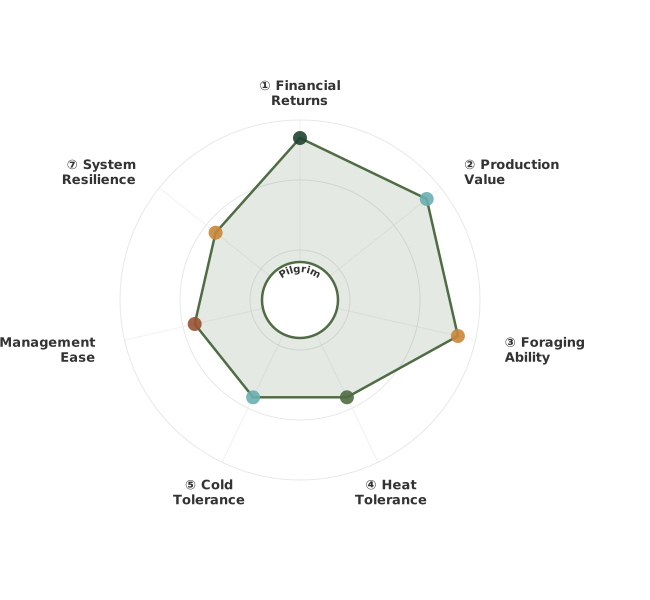
How These Traits Are Calculated
Trait dimensions are ordered clockwise starting from the top of the chart (12 o'clock position):
1. Financial Returns
Annual income per bird from eggs, meat, or specialty products
WHAT: Evaluates profit potential for specialty poultry (turkeys, ducks, geese, guinea fowl) combining meat yield, egg production (where applicable), growth timelines, and market premiums for specialty products.
WHY: Specialty poultry targets premium markets—heritage turkeys at $6-8/lb versus $1.50 commodity, duck eggs at $8-12/dozen versus $3-5 chicken eggs. Understanding enterprise-specific returns helps match birds to market opportunities, with successful operations generating 2-4× returns of conventional poultry.
HOW: Calculated from production data (market weight, timelines, egg yield) combined with efficiency traits and premium market access. Exceptional (≥2.6): strong output + premium markets + efficient growth. Typical (1.8-2.5): moderate production and markets. Limited (<1.8): low output or limited market access.
2. Production Value
Meat yield, egg production, and specialty product quality
WHAT: Measures output quality and quantity combining meat characteristics (size, flavor, texture prized by consumers), egg production (for laying breeds), and specialty products (foie gras, down feathers) that command premiums.
WHY: Production value determines market positioning. Heritage turkeys with superior flavor justify $6-8/lb premiums, duck eggs with rich yolks attract baking customers at $1+ per egg, quality down commands $20-40/lb. High production value enables profitable small-scale operations where commodity birds require large volume to achieve viability.
HOW: Composite assessment of documented production characteristics and market quality. Exceptional (≥2.6): superior product quality + strong output + specialty attributes. Typical (1.8-2.5): good standard production. Limited (<1.8): commodity quality, minimal specialty value.
3. Foraging Ability
Feed cost reduction through natural foraging behavior
WHAT: Measures effectiveness at obtaining nutrition through foraging—consuming insects, seeds, greens, and other natural foods—reducing purchased feed requirements 20-50% in pasture-based systems.
WHY: Aggressive foragers reduce feed costs while providing pest control (insects, ticks, slugs) and weed management services. Turkeys consuming 30-40% of calories from forage save $15-30 per bird over growing season, making the difference between profitable and marginal operations.
HOW: Rated from documented foraging behavior and feed reduction potential. Exceptional (≥2.6): excellent foragers, 40-50% feed reduction, active pest control. Typical (1.8-2.5): moderate foraging, 20-30% reduction. Limited (<1.8): minimal foraging, requires full feeding.
4. Heat Tolerance
Performance in hot weather above 85°F (29°C)
WHAT: Evaluates adaptation to sustained heat above 85°F (29°C), measuring heat stress resistance, growth/production maintenance, and survival during summer peaks. Critical for southern operations and summer meat production.
WHY: Heat stress reduces feed intake 20-40%, slows growth, and increases mortality—particularly problematic for turkeys naturally susceptible to heat. Heat-adapted breeds maintain production schedules where others require expensive cooling or suffer significant losses during summer.
HOW: Rated from database trait 'heat_tolerance' based on documented characteristics. Exceptional (≥2.6): maintains production in 95°F+ (35°C+), low mortality. Typical (1.8-2.5): manageable with shade and water. Limited (<1.8): high heat sensitivity, struggles above 85°F.
5. Cold Tolerance
Performance in cold weather below 20°F (-7°C)
WHAT: Evaluates adaptation to sustained cold below 20°F (-7°C), measuring feather insulation, cold-weather foraging activity, and winter production/growth maintenance. Important for year-round outdoor systems in northern climates.
WHY: Cold-sensitive birds require heated housing ($50-200 monthly winter costs), reduce activity limiting foraging value, and experience higher mortality. Cold-hardy breeds remain active outdoors year-round, maintain winter egg production (ducks/geese), and thrive with basic shelter.
HOW: Rated from database trait 'cold_tolerance' based on breed characteristics. Exceptional (≥2.6): excellent insulation, active in <0°F (-18°C), maintains winter production. Typical (1.8-2.5): moderate hardiness. Limited (<1.8): requires heated shelter, limited winter activity.
6. Management Ease
Handling temperament and care requirements
WHAT: Measures daily management simplicity combining temperament (calm vs flighty/aggressive), health needs, natural breeding ability (versus artificial insemination required), and routine handling cooperation.
WHY: Difficult birds increase labor 2-3× and create safety concerns. Aggressive turkeys or geese require protective equipment during handling, flighty birds complicate catching for processing, breeds requiring AI add complexity. Calm birds with good health enable confident management by beginners.
HOW: Weighted assessment: temperament (50%), health needs (30%), breeding ease (20%). Exceptional (≥2.6): calm and manageable, robust health, natural breeding. Typical (1.8-2.5): manageable with experience. Limited (<1.8): aggressive or nervous, high health needs, or breeding complications.
7. Flock Resilience
Disease resistance and survival under typical stresses
WHAT: Evaluates flock robustness across disease resistance (particularly respiratory issues and common poultry diseases), parasite tolerance, predator awareness, and general hardiness determining survival through typical challenges.
WHY: Resilient breeds maintain productivity through challenges causing 20-50% losses in susceptible birds—surviving disease pressure, evading predators through awareness, resisting parasites. This determines whether flocks thrive with basic care or require intensive interventions and predator-proof housing.
HOW: Composite assessment of documented health and survival characteristics. Exceptional (≥2.6): strong disease resistance + predator-savvy + hardy. Typical (1.8-2.5): standard resilience with routine care. Limited (<1.8): health-sensitive or vulnerable, requires intensive management and protection.
Regenerative Advantages
- Grazing Ability: Pilgrim Geese are benchmarks for exceptional grazing ability on quality grass-based pasture. Their efficient conversion of grass makes them ideal for regenerative grazing systems, thriving in diverse polycultures and well-managed pastures. They require minimal supplemental feed even for production, representing a gold standard for pasture-based poultry systems and demonstrating high utilization of quality forage.
- Foraging Ability: Pilgrim Geese exhibit exceptional foraging ability, thriving on diverse and often marginal vegetation. Their heritage genetics provide centuries of self-sufficiency, enabling them to effectively utilize browse, rough forage, and weeds. They can maintain condition on unimproved rangeland and scrubland, requiring very little supplementation due to their broad dietary intake and robust foraging instincts.
- Hardiness: Developed for self-sufficiency, this heritage breed thrives in extensive systems, requiring minimal care and maintaining condition through seasonal changes.
- Docility: Pilgrim Geese are exceptionally calm and easy to handle, rarely exhibiting defensive behaviors, which simplifies management and reduces stress for both bird and handler.
- Fence Requirements: Pilgrim geese are not strong fliers and generally stay grounded. A 4ft fence is usually sufficient for containment.
Value Streams
- Meat & Egg production
- Insect and pest control
- Scratch tillage and compost distribution
Experience Level
Suitable for first-time livestock owners
3
Understanding Pilgrim Goose Characteristics
Physical traits, temperament, and what makes this breed unique
Understanding Pilgrim Goose Characteristics
Physical traits, temperament, and what makes this breed unique
The Pilgrim goose is a distinct American breed, recognized for its excellent foraging abilities and ease of management, particularly due to its pronounced sexual dimorphism. Ganders (males) are entirely white, while females (hens) are a striking slate grey, a trait that makes sex identification straightforward for flock managers without the need for invasive techniques. This visual distinction simplifies breeding programs and allows for easier separation of sexes if desired. Pilgrim geese are medium-sized, typically weighing between 15-20 pounds when mature, and are known for their calm temperament and hardiness, making them well-suited to a variety of climates.
The breed's origins trace back to the early settlers of America, likely brought over from Europe and developed through selective breeding in the United States. They were historically valued for their dual-purpose nature, providing both meat and eggs, and their ability to thrive on pasture. Their self-sufficient nature and strong maternal instincts also made them a popular choice for homesteaders seeking a low-input waterfowl option. The Pilgrim's development highlights a focus on practical traits beneficial for traditional farming practices.
What truly sets the Pilgrim goose apart is the combination of its easily identifiable sex characteristics and its robust foraging instinct. Unlike many other breeds that require more supplemental feeding, Pilgrims excel at converting grass, weeds, and insects into meat and eggs. This natural efficiency, coupled with their docile nature and adaptability, makes them a unique and valuable asset for farmers looking for a self-reliant and easily managed waterfowl breed for diverse agricultural settings.
Sources behind this view
 Community
-
Geese (Pilgrim, Tolouse, African, Chinese, Shetland) offer low-input, predator-resistant benefits in permaculture, acting as guardians and pest controllers. Downsides include garden consumption and ma
Read more (opens in new window) permies.com
4
Management, Care & Feeding
Operational guidance for raising this breed successfully
Management, Care & Feeding
Operational guidance for raising this breed successfully
Managing Pilgrim geese effectively in a regenerative system centers on maximizing their natural foraging instincts and providing appropriate environmental resources. These geese thrive on well-managed pastures, requiring access to ample grazing throughout the growing season. Rotational grazing is highly recommended; moving them frequently to fresh paddocks allows for optimal intake of forage, prevents overgrazing, and ensures their droppings are distributed effectively, contributing to soil fertility. While they are excellent foragers, providing access to clean water for drinking and bathing is crucial for their health and hygiene. A simple, predator-proof shelter should be available for protection against inclement weather and nighttime security.
Feeding for Pilgrim geese should prioritize pasture access, supplemented as needed based on forage availability and production goals. During the peak growing season, good quality pasture may provide the majority of their nutritional needs. However, as forage quality or quantity declines (e.g., late fall, winter, or during drought), a balanced ration of grains, potentially including oats, barley, or corn, should be offered. A grower or layer feed, depending on the age and purpose of the birds, can be provided as a supplement, ensuring it meets their protein and energy requirements. Avoid over-reliance on concentrated feeds, as this can reduce their natural foraging drive and potentially lead to health issues like obesity.
Health management for Pilgrim geese is generally straightforward due to their inherent hardiness. Regular observation is key to identifying any signs of illness or injury early. Ensure clean water is always available, as geese are susceptible to issues if their drinking water is contaminated. Parasite control can often be managed through effective pasture rotation, which breaks parasite life cycles. While generally robust, monitor for common waterfowl ailments and consult with a veterinarian experienced with poultry if concerns arise. Their natural foraging helps them source beneficial plants, but providing grit can aid digestion. Their calm nature typically means they integrate well into mixed-grazing systems with minimal stress.
Sources behind this view
Community
-
Geese can be rotationally grazed after sheep to manage shorter grasses, control snails/slugs (reducing parasite needs), and fertilize pastures. They require fresh grass or grain in winter, not just ha
Read more (opens in new window) permies.com -
Geese (Pilgrim, Tolouse, African, Chinese, Shetland) offer low-input, predator-resistant benefits in permaculture, acting as guardians and pest controllers. Downsides include garden consumption and ma
Read more (opens in new window) permies.com