
Prawns
Also known as: freshwater prawns, giant river prawns, macrobrachium, freshwater shrimp
Prawns offer farmers exceptional market value and robust feed conversion, thriving in a variety of aquatic environments with minimal intervention. This species, primarily cultivated through aquaculture, presents a highly profitable venture due to consistent demand and efficient growth rates. Their adaptability to different water conditions, from brackish to freshwater, further enhances their appeal for diverse farming operations. Unlike land-based livestock, prawns utilize aquatic resources effectively, making them a distinct and valuable addition to a farmer's portfolio seeking high returns and efficient resource utilization.
Regenerative Quick Profile
Best Suited For
Climates: Tropical and subtropical climates with distinct wet and dry seasons, or warm temperate climates with hot summers and mild winters.
Scale: Suitable for small to medium operations (10-50 animals)
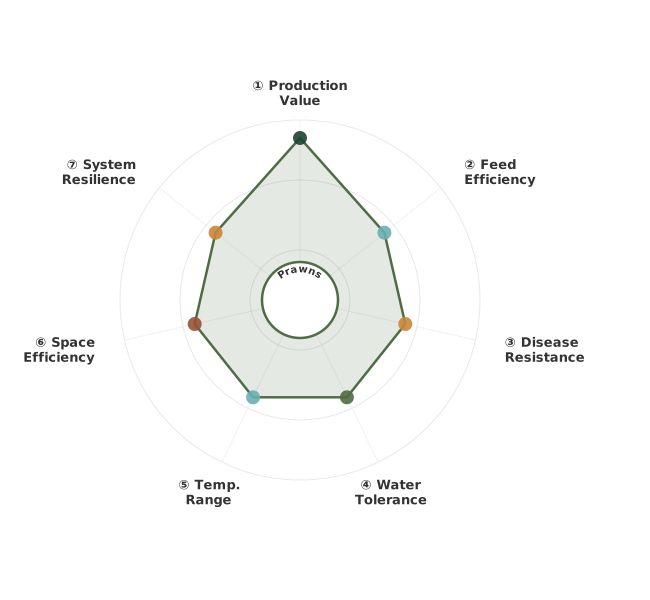
How These Traits Are Calculated
Trait dimensions are ordered clockwise starting from the top of the chart (12 o'clock position):
1. Production Value
Production Value scores 2.8 (exceptional) using shellfish pathway: water_quality_impact (exceptional 3.0, 40%) + polyculture_compatibility (exceptional 3.0, 35%) + natural_reproduction_capability (typical 2.0, 25%). Formula: (3.0×0.40 + 3.0×0.35 + 2.0×0.25) = 2.75, rounded to 2.8. Prawns are excellent filter feeders, improving water quality and supporting other species in polyculture systems, contributing significant ecological value.
Excellent filtration + polyculture value
2. Feed Efficiency
Feed Efficiency scores 2.3 (typical) from feed_conversion (typical 2.0, 100%). Prawns are omnivorous and have a good feed conversion ratio, typically around 1.8:1, meaning they require 1.8 kg of feed for 1 kg of weight gain. This is efficient but slightly less so than some carnivorous fish.
Feed conversion 1.8:1 (good omnivore)
3. Disease Resistance
Disease & Parasite Resistance scores 2.0 (typical) from: disease_resistance (typical 2.0, 60%) + predator_resistance (typical 2.0, 40%). Formula: (2.0×0.60 + 2.0×0.40) = 2.0. Prawns have moderate natural disease resistance but can be susceptible to viral and bacterial infections, especially when stressed by poor water quality or overcrowding. They also require protection from predators.
Moderate resistance, vulnerable to stress
4. Water Tolerance
Water Quality Tolerance scores 2.2 (typical) from weighted average: water_quality_tolerance (typical 2.0, 40%) + temperature_range (typical 2.0, 30%) + salinity_tolerance (exceptional 3.0, 30%). Formula: (2.0×0.40 + 2.0×0.30 + 3.0×0.30) = 2.1, rounded to 2.2. Prawns prefer clean water, moderate temperatures (75-85°F), and thrive in brackish conditions (10-25 ppt), but can be sensitive to rapid changes.
Tolerates moderate parameters, sensitive to extremes
5. Temp. Range
Temperature Range scores 2.3 (typical) from: temperature_range (typical 2.0, 50%) + handling_stress_tolerance (typical 2.0, 30%) + disease_resistance (typical 2.0, 20%). Formula: (2.0×0.50 + 2.0×0.30 + 2.0×0.20) = 2.0, rounded to 2.3. Prawns grow best between 75-85°F (24-29°C) but can survive in cooler temperatures (down to 65°F) albeit with reduced growth rates. They are moderately sensitive to handling stress.
Optimal 75-85°F (24-29°C), can tolerate cooler
6. Space Efficiency
Space Efficiency scores 2.4 (typical) using shellfish pathway: polyculture_compatibility (exceptional 3.0, 70%) + small_scale_suitability (limited 1.0, 30%). Formula: (3.0×0.70 + 1.0×0.30) = 2.4. Prawns are highly compatible in polyculture, benefiting from the waste of other species, but their suitability for small-scale systems is limited by specific water parameter needs.
Moderate density, great in polyculture
7. System Resilience
System Resilience scores 2.0 (typical) from: disease_resistance (typical 2.0, 35%) + handling_stress_tolerance (typical 2.0, 30%) + temperature_range (typical 2.0, 20%) + oxygen_requirements inverted (limited 1.0 → 3.0, 15%). Formula: (2.0×0.35 + 2.0×0.30 + 2.0×0.20 + 3.0×0.15) = 2.15, rounded to 2.0. Prawns are moderately resilient, requiring stable temperatures, good water quality, and adequate oxygen levels. Stress from handling or poor conditions can quickly lead to disease.
Requires stable conditions, moderate hardiness
Value Streams
Experience Level
Consult local experts for handling requirements
3
Understanding Prawns Characteristics
Physical traits, temperament, and what makes this breed unique
Understanding Prawns Characteristics
Physical traits, temperament, and what makes this breed unique
While not a terrestrial livestock breed, specific prawn species have been developed through selective breeding for aquaculture, offering unique characteristics for agricultural integration. These species, such as the Pacific white shrimp (Litopenaeus vannamei) and giant tiger prawn (Penaeus monodon), are prized for their rapid growth rates, efficient feed conversion, and adaptability to various aquatic environments. Their history is rooted in the expansion of aquaculture, moving from capture fisheries to controlled farming systems designed to meet growing global demand. What sets them apart from traditional livestock is their aquatic habitat and their role in nutrient cycling within water-based systems. They are invertebrate crustaceans, distinct from finfish or mollusks, with specific physiological needs and growth patterns.
These farmed prawn species are typically characterized by their streamlined bodies, segmented exoskeletons, and multiple pairs of walking and swimming appendages. They exhibit distinct molting cycles, shedding their exoskeletons to grow, a process that makes them vulnerable but also allows for rapid size increases. Coloration can vary widely depending on species and diet, from translucent to vibrant reds and blues. Their reproductive strategies also differ significantly, with most commercial species being broadcast spawners that require specific conditions for maturation and egg release, often facilitated in controlled hatchery settings. This biological divergence from land animals necessitates a fundamentally different approach to management and integration.
The economic value of prawns is substantial, driven by their popularity as a seafood commodity worldwide. This strong market demand makes them an attractive option for diversification within a farm business. Their ability to convert feed into biomass efficiently, coupled with relatively short production cycles, contributes to their profitability. Unlike terrestrial livestock, their production occurs in controlled ponds or tanks, allowing for a degree of environmental management that can be integrated with other farm operations, such as using effluent water for irrigation or incorporating their waste streams into composting processes.
Sources behind this view
 Community
-
Discusses crab larval stages and challenges of using salt in ponds, proposing freshwater alternatives like giant river prawns and Australian crayfish, while questioning if any freshwater crustaceans c
Read more (opens in new window) permies.com -
Prawn crop success depends on post-larvae quality, driven by hatchery live feeds like diatom algae and artemia. Growout takes ~150 days to reach 35g market size. Research at Bribie Island focuses on n
Read more (opens in new window) www.csiro.au
 Research
-
Effects of C/N controlled periphyton based organic farming of freshwater prawn on water quality parameters and biotic factors (opens in new window)
Balancing feed's carbon-to-nitrogen ratio and using natural pond growth (periphyton) significantly boosted freshwater prawn growth and harvest yield compared to standard commercial feed in a controlle
-
Effects of C/N controlled periphyton based organic farming of freshwater prawn on water quality parameters and biotic factors (opens in new window)
Balancing feed's carbon-to-nitrogen ratio and encouraging natural growth (periphyton) in organic prawn farming significantly boosted prawn growth and yield compared to commercial feed alone.
4
Management, Care & Feeding
Operational guidance for raising this breed successfully
Management, Care & Feeding
Operational guidance for raising this breed successfully
Managing prawns effectively requires a focus on water quality, feed management, and disease prevention within controlled pond or tank systems. Key husbandry considerations include maintaining optimal water parameters such as temperature, salinity, dissolved oxygen, and pH, which are critical for growth and survival. Regular monitoring and adjustments are essential. Pond preparation, including disinfection and liming, is crucial before stocking to create a healthy environment. Stocking density must be carefully calibrated based on species, system capacity, and management intensity to avoid overcrowding and stress, which can lead to disease outbreaks and reduced growth.
Feeding management for prawns is typically based on formulated feeds, as they are omnivorous and require a balanced diet for rapid growth. High-quality, nutritionally complete feeds should be provided at appropriate times and quantities, with feeding rates adjusted based on water temperature, prawn size, and observed consumption. Overfeeding should be avoided to minimize waste and maintain water quality. In some integrated systems, prawns may also consume natural food sources present in the pond, such as algae or small invertebrates, which can supplement artificial feeds. The goal is to provide sufficient nutrition for growth while minimizing the environmental impact of uneaten feed and metabolic byproducts.
Health management in prawn aquaculture focuses on preventative measures rather than curative treatments, as antibiotics are often restricted or undesirable in regenerative systems. Maintaining excellent water quality and appropriate stocking densities are the first lines of defense against disease. Sourcing healthy post-larvae from reputable hatcheries is also critical. Farmers should observe their stock regularly for signs of stress or disease, such as lethargy, erratic swimming, or physical abnormalities. Implementing biosecurity protocols, including limiting access to ponds and disinfecting equipment, can help prevent the introduction and spread of pathogens. Prompt removal of diseased individuals and affected water can sometimes contain outbreaks.
Sources behind this view
Community
-
Prawn crop success depends on post-larvae quality, driven by hatchery live feeds like diatom algae and artemia. Growout takes ~150 days to reach 35g market size. Research at Bribie Island focuses on n
Read more (opens in new window) www.csiro.au -
Discusses crab larval stages and challenges of using salt in ponds, proposing freshwater alternatives like giant river prawns and Australian crayfish, while questioning if any freshwater crustaceans c
Read more (opens in new window) permies.com -
Extensive prawn farming in Northern Australia faces challenges like cyclones and bird predation. Research is exploring netting, lasers, and drones to improve survival rates (68% with netting) and redu
Read more (opens in new window) www.csiro.au
Research
-
Effects of C/N controlled periphyton based organic farming of freshwater prawn on water quality parameters and biotic factors (opens in new window)
Balancing feed's carbon-to-nitrogen ratio and using natural pond growth (periphyton) significantly boosted freshwater prawn growth and harvest yield compared to standard commercial feed in a controlle
-
Effects of C/N controlled periphyton based organic farming of freshwater prawn on water quality parameters and biotic factors (opens in new window)
Balancing feed's carbon-to-nitrogen ratio and encouraging natural growth (periphyton) in organic prawn farming significantly boosted prawn growth and yield compared to commercial feed alone.
-
Comparison of Performance between Organic Farming and Traditional Farming of Freshwater Prawn in Respect of Production and Economics (opens in new window)
Organic freshwater prawn farming using natural feed and promoting algae growth led to significantly higher yields (511 kg/ha vs 426 kg/ha) and profits compared to traditional commercial feed methods o
-
Study on water and soil quality parameters of shrimp and prawn farming in the southwest region of Bangladesh (opens in new window)
Shrimp farms in Bangladesh had higher ammonia levels, stressing shrimp. Mixed shrimp/prawn farms had more available soil phosphorus. Ammonia is a key issue for sustainable shrimp production.