
Rabbits
Rabbits excel as livestock, offering unparalleled feed conversion, remarkable space efficiency, and a rapid reproduction rate that significantly boosts productivity for farmers. Their inherent hardiness and ease of management, coupled with good disease resistance and temperature tolerance, simplify daily operations and reduce labor demands. These traits make them an ideal choice for maximizing output with minimal input. While specific breed origins vary, the inherent biological advantages of rabbits, particularly their efficient nutrient utilization and prolificacy, set them apart as a distinct and valuable livestock option. They thrive exceptionally well with rotational grazing practices, further enhancing their suitability for efficient farm management.
Regenerative Quick Profile
Best Suited For
Climates: Temperate to cool continental and semi-arid climates
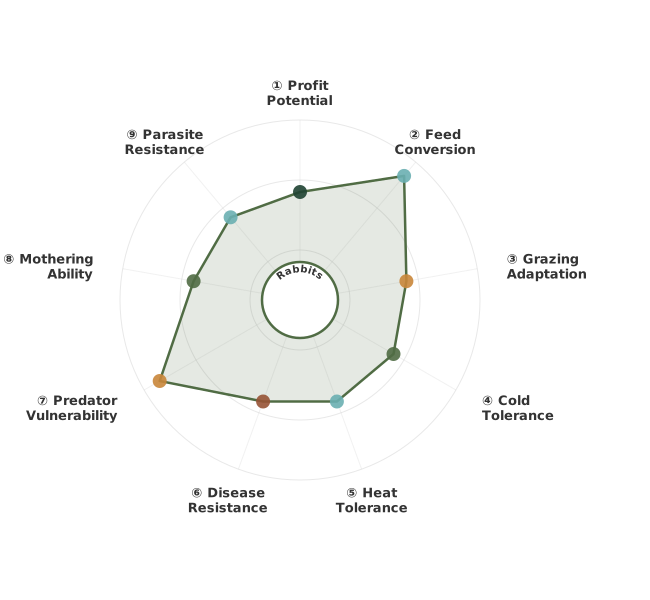
How These Traits Are Calculated
Trait dimensions are ordered clockwise starting from the top of the chart (12 o'clock position):
1. Financial Returns
Monthly income per doe from meat sales and breeding
WHAT: Evaluates profit potential combining litter size, growth rates, meat yield, and input costs. Productive does raising 8-12 kits per litter with fast growth (8-10 lbs in 10-12 weeks) generate strong monthly returns.
WHY: Rabbit profitability depends on litter frequency and kit survival. Does producing 30-50 kits annually with good survival rates generate $600-1,200 annual revenue versus $200-400 for lower producers, determining whether rabbit enterprises provide meaningful income or remain hobbies.
HOW: Calculated from production data (litter size, frequency, growth rates) combined with feed efficiency and mothering ability. Exceptional (≥2.6): large litters + fast growth + high survival. Typical (1.8-2.5): moderate production. Limited (<1.8): small litters, slow growth, or high mortality eroding returns.
2. Feed Conversion Efficiency
Measures how efficiently rabbits turn feed into body mass.
WHAT: Feed conversion efficiency measures the ratio of feed consumed to weight gained by a rabbit. Breeds can vary significantly in how much feed they require to produce a pound of meat or gain a pound of body weight.
WHY: High feed conversion efficiency means rabbits require less feed to reach market weight, reducing overall feed costs and the land/resources needed for feed production. This is crucial for profitability and sustainability in regenerative systems.
HOW: Exceptional breeds convert feed at less than 3.5 lbs of feed per pound of gain. Typical breeds fall between 3.5 and 4.5 lbs of feed per pound of gain. Limited breeds require more than 4.5 lbs of feed per pound of gain.
3. Grazing Adaptation
Measures a rabbit breed's ability to thrive on pasture and forage.
WHAT: This trait assesses a rabbit breed's natural inclination and physical suitability for foraging on pasture. Breeds vary in their preference for grazing versus pellet feeding and their ability to efficiently digest and utilize forages.
WHY: For regenerative farmers, good grazing adaptation means reduced reliance on concentrated feed, lower input costs, and improved land management as rabbits graze pastures. This contributes to a more self-sufficient and environmentally sound rabbit farming system.
HOW: Exceptional breeds demonstrate a strong preference for pasture, readily consume a wide variety of grasses and herbs, and show good weight gain on forage alone. Typical breeds will graze but may require supplemental feed for optimal growth. Limited breeds show minimal interest in grazing and perform best on conventional feed.
4. Cold Tolerance
Performance in cold weather below 20°F (-7°C)
WHAT: Evaluates adaptation to sustained cold below 20°F (-7°C), measuring coat insulation, metabolic adaptation, and winter breeding success. Critical for year-round production in northern climates.
WHY: Cold-sensitive rabbits require heated buildings ($50-150 monthly winter costs), cease breeding in winter, and experience higher kit mortality. Cold-hardy breeds maintain year-round breeding in unheated hutches with basic wind protection, enabling consistent production through harsh winters.
HOW: Rated from database trait 'cold_tolerance' based on breed characteristics. Exceptional (≥2.6): thick fur, proven winter breeding in <0°F (-18°C), minimal shelter needed. Typical (1.8-2.5): moderate hardiness. Limited (<1.8): requires heated shelter for winter breeding, high kit mortality in cold.
5. Heat Tolerance
Performance in hot weather above 85°F (29°C)
WHAT: Evaluates adaptation to sustained heat above 85°F (29°C), measuring heat stress resistance, reproductive performance in heat (fertility and litter size often drop 30-50%), and survival during summer peaks.
WHY: Heat stress halts breeding, reduces feed intake, and increases mortality. Heat-adapted breeds maintain reproduction through summer where others experience 2-4 month breeding gaps, creating production holes that reduce annual output 20-40% in hot climates.
HOW: Rated from database trait 'heat_tolerance' based on documented characteristics. Exceptional (≥2.6): tropical adaptations, maintains breeding in 95°F+ (35°C+). Typical (1.8-2.5): moderate tolerance with cooling measures. Limited (<1.8): breeding stops above 85°F, high mortality risk without cooling systems.
6. Disease Resistance
Measures how well rabbits resist common illnesses and recover from them.
WHAT: This trait assesses a rabbit breed's innate ability to withstand and recover from common diseases, parasites, and injuries. Some breeds are naturally more robust and less susceptible to prevalent rabbit ailments than others.
WHY: High disease resistance reduces the need for veterinary interventions and medications, lowering costs and supporting a more natural, chemical-free approach to animal husbandry. This is crucial for regenerative systems aiming for self-sufficiency and minimal external inputs.
HOW: Exceptional breeds typically require minimal veterinary care, rarely succumb to common infections, and recover quickly from minor health issues. Typical breeds may need occasional treatment for common ailments. Limited breeds are prone to frequent illnesses and may require consistent monitoring and intervention.
7. Predator Vulnerability
Measures a rabbit breed's susceptibility to predation from common predators.
WHAT: This trait assesses a rabbit breed's natural defenses and alertness against predators like foxes, hawks, and weasels. Some breeds are naturally more skittish and quick to flee, while others may be more docile and less aware of their surroundings.
WHY: For regenerative farmers, understanding predator vulnerability helps in selecting breeds that can thrive with minimal human intervention. A breed with lower vulnerability can reduce losses and the need for costly predator exclusion measures, contributing to a more self-sufficient system.
HOW: Exceptional breeds exhibit strong flight responses and excellent spatial awareness, often being naturally wary of strange noises or movements, making them difficult for predators to catch. Typical breeds have moderate alertness and escape instincts. Limited breeds are more docile, less aware, and slower to react, potentially leading to higher predation losses.
8. Mothering Ability
Measures how well a rabbit doe cares for and raises her litter.
WHAT: This trait assesses a doe's instinct and skill in nurturing her kits, including nest building, milk production, and protection. Breeds vary in their natural attentiveness, with some being highly proactive and others requiring more human intervention.
WHY: Good mothering ability reduces kit mortality and the need for supplemental feeding or care, saving valuable time and resources. This directly impacts the efficiency and profitability of a rabbitry, especially in a regenerative system focused on minimizing external inputs.
HOW: Exceptional mothers consistently wean over 90% of their litters without significant human assistance. Typical mothers wean 75-90% of kits, sometimes needing minor support. Limited mothers may struggle with milk let-down, nest abandonment, or aggression, weaning less than 75% of kits without substantial intervention.
9. Parasite Resistance
Measures a rabbit breed's natural ability to withstand internal and external parasites.
WHAT: This trait assesses a rabbit breed's inherent ability to resist and recover from common internal parasites like coccidia and external ones like mites. Some breeds naturally have stronger immune responses, leading to fewer parasite-related health issues and better overall vigor.
WHY: For regenerative rabbit farmers, good parasite resistance reduces the need for chemical treatments, promoting a healthier ecosystem and lower input costs. Breeds with higher resistance are more resilient, requiring less intensive management and contributing to the farm's sustainability goals.
HOW: Exceptional breeds demonstrate very low susceptibility, often showing less than 5% incidence of significant parasite issues in typical conditions. Typical breeds may require occasional monitoring or preventative measures, with around 10-20% experiencing mild issues. Limited breeds are more prone to severe infestations and may require frequent, proactive interventions.
Regenerative Advantages
- Feed Conversion: Breeds like the New Zealand and Californian are specifically selected for rapid growth and superior feed conversion. This highlights their high efficiency potential in optimized settings.
- Space Efficiency: Commercial meat rabbit breeds are selected for high production in confined settings. This demonstrates their superior space efficiency compared to less specialized types.
- Reproduction Rate: Certain domestic breeds are specifically selected for prolificacy, leading to high reproductive performance. This accounts for the 'excellent' rating within the general category.
- Predator Vulnerability: As ground-dwelling prey animals, rabbits have minimal natural defenses and universally require secure housing. This highlights their inherent vulnerability.
Value Streams
- Meat production
Experience Level
Suitable for first-time livestock owners
3
Understanding Rabbits Characteristics
Physical traits, temperament, and what makes this breed unique
Understanding Rabbits Characteristics
Physical traits, temperament, and what makes this breed unique
Rabbits, while not a single breed in the traditional sense like cattle or sheep, represent a diverse group of small lagomorphs prized for meat production. Their defining characteristics include remarkable reproductive efficiency, with does capable of producing multiple litters per year, and a short gestation period of around 30-31 days. They possess an exceptionally high feed conversion ratio, meaning they can turn a significant amount of feed into body mass with minimal waste. This efficiency is a key trait that sets them apart from larger livestock, allowing for rapid turnover and consistent production.
Historically, rabbits have been domesticated for centuries, initially for fur and later for meat. Breeds like the New Zealand White, Californian, and Flemish Giant were selectively bred for specific traits such as size, meat yield, and temperament. While many breeds exist, the focus for meat production often centers on those with rapid growth rates and a good meat-to-bone ratio. Their adaptability has allowed them to be raised in various climates and conditions, from backyard homesteads to larger commercial operations.
What truly distinguishes rabbits is their unique niche in the livestock ecosystem. Their small size and relatively low land requirement make them ideal for integrated farming systems where space is a consideration. Unlike larger animals that require extensive pasture, rabbits can be managed in controlled environments, such as hutches or colony pens, allowing for precise control over their diet and waste. This controllability, combined with their rapid growth cycle, makes them a unique and accessible option for diversified farm enterprises.
Sources behind this view
 Community
-
Raising rabbits in colony settings requires robust predator protection (electric fence, buried fencing, guard dogs) and ample hiding places. Experienced raisers recommend sheds with deep straw bedding
Read more (opens in new window) permies.com -
Silver Fox rabbits are described as 'docile meat bricks' with good pelts, while Giant Chinchillas are praised as heritage breeds with fast forage conversion and good temperament. The choice depends on
Read more (opens in new window) permies.com
 Research
-
Response to Selection for Body weight and Linear Body Traits in Breeds of Rabbit (opens in new window)
Dutch rabbits showed the most progress in weight and body measurements through selective breeding over three years in Nigeria, making them recommended for farmers.
-
One Health Approach to Rabbit Farming: Balancing Act between Environmental Impact, Farmers Livelihood, and Animal Welfare (opens in new window)
Rabbit farming can be a sustainable meat production model by balancing environmental impact, farmer income, and animal welfare, due to their efficiency and lower resource needs.
4
Management, Care & Feeding
Operational guidance for raising this breed successfully
Management, Care & Feeding
Operational guidance for raising this breed successfully
Effective rabbit management in regenerative systems hinges on providing appropriate housing, nutrition, and health monitoring. Housing should protect rabbits from extreme weather and predators while allowing for ventilation and ease of cleaning. Options range from elevated hutches to colony pens, with considerations for space to prevent stress and allow natural behaviors. Rotational grazing in portable pens requires careful planning to ensure adequate forage and prevent overgrazing, while also managing manure distribution for soil benefit. Regular observation is key to identifying any issues early.
Feeding is a critical aspect, capitalizing on rabbits' ability to process fibrous plant matter. A base diet of high-quality hay or grass should be supplemented with a balanced commercial pellet, especially for lactating does or growing kits. Fresh greens, vegetables, and approved forages can be incorporated, turning potential waste streams into valuable feed. Water must be fresh and readily available at all times. For pasture-raised rabbits, ensuring a diverse and safe forage mix is paramount, avoiding toxic plants and managing parasite loads through rotation.
Health management focuses on prevention through good husbandry and biosecurity. Common issues include digestive problems (GI stasis), respiratory infections, and parasites. Maintaining clean living conditions, providing a consistent diet, and minimizing stress are the best defenses. Regular checks for fleas, mites, and internal parasites are important, especially for pasture-raised animals. While vaccines are available for some diseases, proactive care and prompt attention to any signs of illness, such as lethargy, changes in appetite, or abnormal droppings, are essential for maintaining a healthy and productive rabbitry.
Sources behind this view
 Videos & Podcasts
-
Explains portable rabbit pens ('hair pins') for pasturing on grass, emphasizing ease of movement and child entrepreneurship. Rabbits derive 70% of diet from pasture, with potential income of $480 per

-
A system for intensive protein production in small spaces (e.g., 3-car garage) integrates rabbits and chickens, utilizing yard waste and grass for feed. It yields thousands of pounds of meat and dozen

Community
-
Raising rabbits in colony settings requires robust predator protection (electric fence, buried fencing, guard dogs) and ample hiding places. Experienced raisers recommend sheds with deep straw bedding
Read more (opens in new window) permies.com -
Manages rabbit parasites through rotation (60+ days) and culling, not worming. Uses California x New Zealand rabbits, feeding hay and root crops in winter, and references century-old grazing hutch tec
Read more (opens in new window) permies.com
Research
-
One Health Approach to Rabbit Farming: Balancing Act between Environmental Impact, Farmers Livelihood, and Animal Welfare (opens in new window)
Rabbit farming can be a sustainable meat production model by balancing environmental impact, farmer income, and animal welfare, due to their efficiency and lower resource needs.
-
Precision Feeding Systems in Animal Husbandry: Guiding Rabbit Farming from Concept to Implementation (opens in new window)
Smart feeding systems using sensors and AI can boost rabbit farming efficiency and sustainability. This review guides implementation, highlighting benefits like better feed use and animal welfare, whi
-
Potential for Developing Rabbit Farming Business in Salokaraja Village, Lalabata District, Soppeng Regency (opens in new window)
Rabbit farming has high potential in Salokaraja Village due to good resources and few breeders, but marketing rabbit meat faces low public acceptance, requiring education on processing and benefits.
 From the Web
-
Offers comprehensive advice on raising rabbits for meat, covering housing, feeding, reproduction, pasturing, health management (especially coccidiosis), and processing, emphasizing their suitability f