Romeldale Sheep
Also known as: romeldale, california variegated mutant, cvm
For farmers seeking a hardy and efficient flock, the Romeldale sheep excels with its exceptional lambing ease, superior wool quality, and remarkable cold hardiness, simplifying management and reducing labor. Originating from the United States, these sheep possess a medium frame and a desirable fleece that is both heavy and fine. Their outstanding mothering ability ensures strong lamb survival rates, and they require minimal intervention during lambing. Romeldales thrive on diverse forage, demonstrating good foraging capabilities and inherent parasite resistance, making them well-suited for extensive grazing systems. Their dual-purpose quality, combined with their adaptability to practices like rotational and mob grazing, silvopasture, and grass finishing, offers a compelling option for producers prioritizing resourcefulness and genetic resilience.
Regenerative Quick Profile
Best Suited For
Climates: Temperate to semi-arid climates with distinct seasons, including humid summers and cold winters.
Terrain: Adaptable to most terrain types
Scale: Suitable for small to medium operations (10-50 animals)
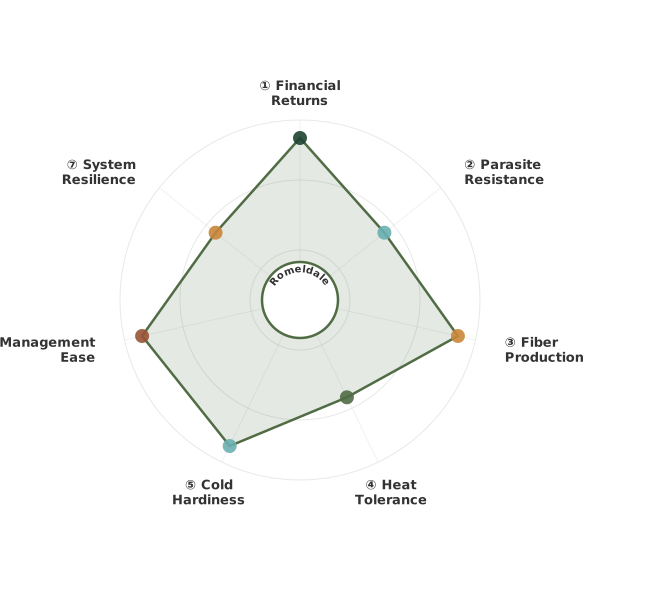
Regenerative Trait Ratings
How These Traits Are Calculated
Trait dimensions are ordered clockwise starting from the top of the chart (12 o'clock position):
1. Financial Returns
Annual income per ewe from lamb sales and wool
WHAT: Evaluates annual profit potential combining lamb production (twins, growth rates), wool value, and input costs. Dual-purpose breeds excelling in both meat and wool provide diversified income streams more resilient to market fluctuations.
WHY: Sheep economics depend on lambing percentages and fleece value. Breeds consistently producing twins with good growth plus quality fleece generate $200-400 annual returns per ewe, while single-lamb low-wool breeds struggle to cover costs at small scales.
HOW: Calculated from production data (lambing rate, lamb growth, fleece weight, wool quality) combined with input costs and efficiency traits. Exceptional (≥2.6): high lambing percentage + valuable wool + low costs. Typical (1.8-2.5): moderate production. Limited (<1.8): low output or high costs.
2. Parasite Resistance
Natural resistance to internal parasites (worms)
WHAT: Measures genetic resistance to gastrointestinal parasites (primarily barber pole worm and other internal worms), evaluated through fecal egg counts, documented resistance breeding programs, and performance in parasite-prone regions.
WHY: Internal parasites are the #1 health challenge in sheep, causing 30-50% of flock deaths and requiring frequent deworming that breeds resistance. Breeds with natural parasite resistance reduce deworming 60-80%, lower mortality, and maintain productivity in warm humid climates where parasites thrive year-round.
HOW: Rated from database trait 'parasite_resistance' based on genetic selection and documented performance. Exceptional (≥2.6): tested resistance lines, low fecal egg counts, thrives in parasite-heavy regions. Typical (1.8-2.5): moderate resistance, standard deworming sufficient. Limited (<1.8): highly susceptible, requires intensive parasite management.
3. Wool Production
Annual fleece weight and wool quality value
WHAT: Evaluates wool production combining fleece weight (total pounds annually) and wool quality (fineness, crimp, luster, cleanliness) that determines market value. Measures both quantity and quality of fiber output.
WHY: Wool provides significant income diversification—quality fleeces fetch $50-200 annually versus $10-30 for low-grade wool. In meat-focused operations, wool that covers shearing costs is sufficient, but fiber-focused flocks need high-quality production to be viable.
HOW: Weighted formula: wool quality characteristics (60%), fleece weight (40%). Exceptional (≥2.6): premium quality (fine, lustrous, clean) + heavy fleeces 10-15 lbs. Typical (1.8-2.5): standard wool, moderate weight. Limited (<1.8): coarse or light fleeces with minimal market value.
4. Heat Tolerance
Performance in hot weather above 85°F (29°C)
WHAT: Evaluates adaptation to sustained heat above 85°F (29°C), measuring coat characteristics (hair vs wool, shedding ability), heat stress resistance, and documented performance in hot climates.
WHY: Heat stress reduces feed intake, lowers reproduction rates, and increases mortality, especially in wool breeds where heavy fleeces trap heat. Hair sheep and shedding breeds thrive in southern climates where wool breeds struggle without intensive cooling or frequent shearing.
HOW: Rated from database trait 'heat_tolerance' based on breed type and adaptation. Exceptional (≥2.6): hair breeds or natural shedders, proven in 95°F+ (35°C+), minimal cooling needed. Typical (1.8-2.5): moderate tolerance with shade and water. Limited (<1.8): heavy fleece, struggles above 85°F.
5. Cold Hardiness
Performance in cold weather below 20°F (-7°C)
WHAT: Evaluates adaptation to sustained cold below 20°F (-7°C), measuring wool insulation, body size, metabolic efficiency, and documented winter performance. Particularly important for wool breeds in northern climates.
WHY: Cold stress increases feed requirements for maintenance, complicates winter lambing, and can cause mortality in newborns. Cold-hardy breeds with dense wool coats thrive outdoors year-round, minimizing barn infrastructure and winter feed costs.
HOW: Rated from database trait 'cold_hardiness' based on documented characteristics. Exceptional (≥2.6): dense fleece, northern origins, thrives in <0°F (-18°C) with basic shelter. Typical (1.8-2.5): moderate hardiness. Limited (<1.8): requires heated shelter or struggles with winter lambing.
6. Management Ease
Handling temperament and maternal care quality
WHAT: Measures daily management simplicity combining temperament, lambing ease (unassisted births), and mothering ability (bonding, milk production, lamb survival). Easy breeds require minimal intervention during critical lambing period.
WHY: Difficult sheep increase labor 3-4× through lambing interventions, bottle-feeding rejected lambs, and handling challenges. Breeds with easy lambing and strong mothers enable one-person operations where complicated breeds require round-the-clock monitoring during lambing season.
HOW: Weighted formula: lambing ease (50%), mothering ability (50%). Exceptional (≥2.6): unassisted lambing, excellent mothers, high lamb survival. Typical (1.8-2.5): occasional assistance, good maternal instincts. Limited (<1.8): frequent interventions, weak mothers, high rejection rates.
7. Flock Resilience
Health and survival under stress conditions
WHAT: Evaluates flock robustness across multiple dimensions: drought tolerance (forage scarcity adaptation), fescue toxicity resistance (endophyte tolerance), browsing ability (dietary flexibility), and terrain adaptation (sure-footedness on hills or rough ground).
WHY: Resilient breeds maintain productivity through challenges that devastate others—surviving drought years on sparse forage, thriving on fescue pastures toxic to others, utilizing brushy terrain, navigating steep hillsides. This determines whether flocks require intensive management or thrive with minimal inputs.
HOW: Weighted formula: drought tolerance (40%), fescue tolerance (25%), browsing ability (20%), terrain adaptation (15%). Exceptional (≥2.6): thrives through drought + fescue-tolerant + browsers + sure-footed. Typical (1.8-2.5): moderate resilience. Limited (<1.8): sensitive to stress, requires controlled conditions.
Regenerative Advantages
- Mothering Ability: Romeldales exhibit excellent maternal traits, including strong milk production and attentive care, ensuring successful rearing of lambs, even multiples.
- Lambing Ease: With strong maternal instincts and a history of management ease, Romeldales typically lamb without difficulty and demonstrate excellent lamb survival rates.
- Wool Quality: This breed produces a fine to medium grade wool with a lustrous sheen and excellent crimp, ideal for premium textiles and handspinning.
- Fleece Weight: Romeldale fleeces consistently exceed 8 lbs, featuring long, fine, lustrous fibers that place them in the exceptional category for fine wool production.
- Cold Hardiness: Developed in North America, their dense fleece and hardy constitution allow successful lambing with minimal protection, indicating good cold tolerance.
Value Streams
- Nutrient cycling and soil building
- Pasture management
Experience Level
Consult local experts for handling requirements
How These Traits Are Calculated
Profit Potential
Profit Potential combines meat quality (25%), wool quality (20%), dual-purpose quality (20%), foraging ability (15%), parasite resistance (10%), and lambing ease (10%). This score reflects multiple revenue streams (meat + fiber), low-input adaptability, and reproductive success in regenerative grazing systems.
All other traits (Feed Efficiency, Foraging Ability, Cold Tolerance, etc.) are pulled directly from regenerative suitability assessments based on breed characteristics and historical performance data.
1
Climate Suitability Assessment
Will this breed thrive in your climate?
Climate Suitability Assessment
Will this breed thrive in your climate?
Köppen Zone: Cfa (Humid Subtropical), Cfb (Oceanic (Maritime Temperate)), Csb (Warm-Summer Mediterranean), Cwb (Subtropical Highland), Dfa (Hot-Summer Continental), Dfb (Warm-Summer Continental)
US Zone: 5a, 5b, 6a
EU Climate Region: Oceanic, Atlantic
Humid subtropical climates with mild winters and hot, humid summers align well with Romeldale's temperate origins. Their fleece is advantageous in cooler periods, and with shade and water, they manage summer heat adequately.
Köppen Zone: BSk (Cold Semi-Arid (Steppe)), Csa (Hot-Summer Mediterranean), Cwa (Monsoon-Influenced Humid Subtropical), Dfc (Subarctic), Dwa (Monsoon-Influenced Hot-Summer Continental)
US Zone: 4a, 7a, 8a
Australian Zone: Zone 3, Zone 4, Zone 5
EU Climate Region: Boreal, Pannonian
Cold semi-arid climates can be managed, especially in the colder USDA zones (4a-6a). Winters are tolerable with housing, but summers can be hot and dry, requiring careful pasture management and supplemental water.
Köppen Zone: Af (Tropical Rainforest), Am (Tropical Monsoon), Aw (Tropical Savanna), ET (Tundra), BSh (Hot Semi-Arid (Steppe)), BWh (Hot Desert), BWk (Cold Desert)
US Zone: 2a, 3a, 3b, 9a, 10a, 11a, 12a
EU Climate Region: Continental
Constant high heat and humidity are detrimental to Romeldale sheep. Their fleece will cause severe heat stress, and parasite pressure will be high.
Note: This breed's performance varies significantly by climate zone. Above are suitability ratings for major climate types where this breed can be raised successfully. If your climate isn't listed, this breed may not be a good fit. Breeds can technically survive in other climates with intensive management, but we don't recommend this for most regenerative operations due to questionable economics and high resource requirements.
2
Is This Breed Right for Your Operation?
Climate fit, terrain suitability, and scale considerations
Is This Breed Right for Your Operation?
Climate fit, terrain suitability, and scale considerations
Terrain & Environment
Can this breed handle my landscape? Performance on different terrain types and farm scales.
| Attribute | Suitability | Explanation |
|---|---|---|
| Flat Terrain | Adequate | Adapted to varied pastures, Romeldales graze efficiently on flat terrain but lack specialized adaptations for extensive speed or endurance. |
| Rolling Terrain | Adequate | As a dual-purpose breed adapted to typical pasture conditions, Romeldales navigate moderate rolling terrain effectively but are not specialized for steep inclines. |
| Small Scale Suitability | Adequate | Medium-sized (150-250 lbs) sheep are well-suited for small acreage, with stocking rates of 5-10 ewes per acre. Their temperament is generally docile, making them manageable for one person. |
Forage & Feeding Adaptations
What can I feed them and how efficiently? Grazing ability, feed conversion, and seasonal adaptation.
| Attribute | Suitability | Explanation |
|---|---|---|
| Foraging Ability | Adequate | The Romeldale's description highlights their ability to 'thrive on diverse forage' and possess 'good foraging capabilities,' indicating they can effectively utilize a range of non-grass vegetation beyond high-quality pasture. Their adaptability to extensive grazing systems and inherent resilience suggests a capacity to handle less optimal feed sources, positioning them above a typical grazer but not as specialists on truly marginal or rough browse. |
| Browsing Ability | Adequate | Romeldales are primarily described as excelling in 'extensive grazing systems' and adapted to 'grass finishing,' indicating a preference for grasses. While they may opportunistically consume some browse when available or as grasses become scarce, the text does not suggest specialized adaptations or active seeking behavior for woody vegetation. They are primarily grazers with a limited, secondary capacity for browsing. |
| Fescue Tolerance | Adequate | Without specific selection for fescue challenges, Romeldales exhibit typical tolerance, suggesting they are hardy but may require monitoring in fescue-dominant pastures. |
| Dry Season Grazing | Adequate | Developed for wool and hardiness, Romeldales are not specifically adapted to arid environments and will likely need supplementation during dry seasons. |
Foraging Ability: Thriving on diverse/marginal vegetation broadly (woody plants, forbs, weeds, rough forage, scrubland) without supplementation. Focus: self-sufficiency on poor-quality or varied vegetation beyond quality grass.
Browsing Ability: Specialized consumption of woody vegetation specifically (shrubs, trees, branches). Actively seeks woody plants, not just opportunistic. A specialized subset of foraging ability.
Fescue Tolerance: Resistance to endophyte-infected tall fescue toxicity (critical for Southern US pastures). Exceptional = minimal impact, Typical = manageable symptoms, Limited = poor performance.
Dry Season Grazing: Ability to utilize dormant or low-quality forage during dry periods. Important for year-round grazing systems.
Scale Considerations
Small-Scale Suitability: Adequate
Medium-sized (150-250 lbs) sheep are well-suited for small acreage, with stocking rates of 5-10 ewes per acre. Their temperament is generally docile, making them manageable for one person.
Water Requirements: 1-2 gal/day (4-8 L/day) gallons/day
3
Understanding Romeldale Sheep Characteristics
Physical traits, temperament, and what makes this breed unique
Understanding Romeldale Sheep Characteristics
Physical traits, temperament, and what makes this breed unique
The Romeldale is a unique American heritage breed, developed in the early 20th century by A.O. "Slim" Shaw in Dixon, California. Shaw aimed to create a dual-purpose sheep that excelled in both wool production and flocking instinct, while also being hardy and adaptable. He achieved this by crossing English Romneys with New Zealand Hampshires and then selecting for specific traits. The resulting Romeldale sheep are known for their medium size, docile temperament, and excellent foraging ability. A truly distinctive feature is their fleece, which is a unique blend of fine wool fibers and coarser guard hairs. This composition often results in a fleece that is more weather-resistant and, in many cases, exhibits a degree of natural shedding, particularly around the britch and neck, which can simplify management.
What truly sets the Romeldale apart is this specialized fleece. Unlike breeds bred solely for fine wool, the Romeldale fleece has a staple length of 3-5 inches and a spinning count typically between 48s and 56s (medium wool). The presence of the guard hair, while different from the fine wool, adds resilience and character to the yarn, making it highly sought after by hand spinners and artisans for its durability and unique texture. This dual-fiber nature means the fleece isn't just for warmth; it's a versatile material that can be processed into various textile applications, offering a niche market advantage.
Compared to more common commercial breeds, the Romeldale offers a blend of traits that are increasingly valued in niche and regenerative systems. Their heritage status means they often possess robust genetics less diluted by intensive commercial breeding programs. Their moderate frame size contributes to efficient grazing and reduced impact on pasture compared to larger breeds. Furthermore, their natural hardiness and adaptability to varied climates, combined with their distinctive fleece, position them as an appealing choice for farmers seeking to diversify their offerings and tap into markets that appreciate heritage breeds and unique fiber qualities.
4
Management, Care & Feeding
Operational guidance for raising this breed successfully
Management, Care & Feeding
Operational guidance for raising this breed successfully
Managing Romeldale sheep effectively in a regenerative system centers on their natural attributes. Their primary needs revolve around access to clean water, adequate forage, and protection from extreme weather and predators. Due to their excellent foraging ability, they can thrive on a variety of pastures, including those with diverse plant species that might be less palatable to other breeds. Rotational grazing is highly recommended to maximize pasture utilization, prevent overgrazing, and improve soil health. Providing minerals, especially those deficient in the local forage, is crucial. Given their heritage status and robust genetics, they generally require less intensive veterinary intervention than highly specialized commercial breeds, but regular observation for any signs of illness or injury is still paramount.
Feeding should be primarily forage-based. High-quality pasture is ideal during the grazing season. Supplemental feeding, such as hay or a suitable grain mix, may be necessary during winter months, periods of drought, or for ewes during late gestation and lactation. The amount and type of supplement should be adjusted based on forage availability, the condition of the sheep, and their production stage. Avoid sudden changes in diet to prevent digestive upset. For fiber production, ensuring the sheep are in good body condition without being overly fat is beneficial for fleece quality. Monitoring parasite loads is important, and an integrated parasite management plan, potentially including grazing management and strategic deworming, is advisable.
Health management for Romeldales emphasizes preventative care and observation. Regular checks for external parasites like lice and mites are important, especially before shearing or during colder months. Hoof trimming should be done as needed, typically annually or biannually, depending on hoof growth and environmental conditions. Vaccinations against common sheep diseases (e.g., clostridial diseases) are recommended based on regional risks. Due to their natural hardiness, major health issues are less common, but vigilance is key. Working with a veterinarian familiar with sheep and regenerative practices can help establish a tailored health plan. The shedding trait, while beneficial, means farmers should be aware of the timing and extent of shedding to plan shearing accordingly, often focusing on collecting the wool that is naturally released.
5
Complete Trait Reference
Comprehensive trait ratings and explanations
Complete Trait Reference
Comprehensive trait ratings and explanations
Climate & Environmental Adaptation
How does this breed handle environmental challenges? Weather resilience, natural resistance, and adaptation.
| Attribute | Suitability | Explanation |
|---|---|---|
| Heat Tolerance | Adequate | Featuring medium wool and temperate origins, Romeldales perform adequately up to 85°F with management, though their fleece can cause heat stress in prolonged high temperatures. |
| Cold Tolerance | Adequate | Their dense, medium-fine wool offers substantial insulation, enabling Romeldales to withstand moderate cold with standard winter housing and feed. |
| Drought Tolerance | Adequate | Adapted to temperate climates, Romeldales require consistent pasture and water, necessitating supplemental feed during extended dry periods. |
| Parasite Resistance | Adequate | Generally hardy, Romeldales typically require strategic deworming for optimal parasite management, indicating typical resistance levels. |
Terrain & Land Suitability
Can this breed handle my landscape? Performance on different terrain types and farm scales.
| Attribute | Suitability | Explanation |
|---|---|---|
| Flat Terrain | Adequate | Adapted to varied pastures, Romeldales graze efficiently on flat terrain but lack specialized adaptations for extensive speed or endurance. |
| Rolling Terrain | Adequate | As a dual-purpose breed adapted to typical pasture conditions, Romeldales navigate moderate rolling terrain effectively but are not specialized for steep inclines. |
| Small Scale Suitability | Adequate | Medium-sized (150-250 lbs) sheep are well-suited for small acreage, with stocking rates of 5-10 ewes per acre. Their temperament is generally docile, making them manageable for one person. |
Forage & Feeding Characteristics
What can I feed them and how efficiently? Grazing ability, feed conversion, and seasonal adaptation.
| Attribute | Suitability | Explanation |
|---|---|---|
| Foraging Ability | Adequate | The Romeldale's description highlights their ability to 'thrive on diverse forage' and possess 'good foraging capabilities,' indicating they can effectively utilize a range of non-grass vegetation beyond high-quality pasture. Their adaptability to extensive grazing systems and inherent resilience suggests a capacity to handle less optimal feed sources, positioning them above a typical grazer but not as specialists on truly marginal or rough browse. |
| Browsing Ability | Adequate | Romeldales are primarily described as excelling in 'extensive grazing systems' and adapted to 'grass finishing,' indicating a preference for grasses. While they may opportunistically consume some browse when available or as grasses become scarce, the text does not suggest specialized adaptations or active seeking behavior for woody vegetation. They are primarily grazers with a limited, secondary capacity for browsing. |
| Fescue Tolerance | Adequate | Without specific selection for fescue challenges, Romeldales exhibit typical tolerance, suggesting they are hardy but may require monitoring in fescue-dominant pastures. |
| Dry Season Grazing | Adequate | Developed for wool and hardiness, Romeldales are not specifically adapted to arid environments and will likely need supplementation during dry seasons. |
Foraging Ability: Thriving on diverse/marginal vegetation broadly (woody plants, forbs, weeds, rough forage, scrubland) without supplementation. Focus: self-sufficiency on poor-quality or varied vegetation beyond quality grass.
Browsing Ability: Specialized consumption of woody vegetation specifically (shrubs, trees, branches). Actively seeks woody plants, not just opportunistic. A specialized subset of foraging ability.
Fescue Tolerance: Resistance to endophyte-infected tall fescue toxicity (critical for Southern US pastures). Exceptional = minimal impact, Typical = manageable symptoms, Limited = poor performance.
Dry Season Grazing: Ability to utilize dormant or low-quality forage during dry periods. Important for year-round grazing systems.
Handling, Temperament & Reproduction
How easy are they to work with? Temperament, handling ease, and reproductive efficiency.
| Attribute | Suitability | Explanation |
|---|---|---|
| Mothering Ability | Ideally Suited | Romeldales exhibit excellent maternal traits, including strong milk production and attentive care, ensuring successful rearing of lambs, even multiples. |
| Lambing Ease | Ideally Suited | With strong maternal instincts and a history of management ease, Romeldales typically lamb without difficulty and demonstrate excellent lamb survival rates. |
Production Characteristics
What do they produce and how well? Meat, milk, eggs, fiber, and other products.
| Attribute | Suitability | Explanation |
|---|---|---|
| Meat Quality | Adequate | Romeldale sheep yield a desirable lean carcass with mild flavor, fitting the 'typical' quality tier for well-rounded meat production. |
| Wool Quality | Ideally Suited | This breed produces a fine to medium grade wool with a lustrous sheen and excellent crimp, ideal for premium textiles and handspinning. |