
Rouen Ducks
Also known as: rouen, rouen duck, french ducks, mallard-type ducks
Rouen ducks simplify management for farmers by thriving on diverse forage and exhibiting exceptional cold hardiness, requiring minimal intervention even in harsh climates. Originating from France, these large, stately birds are renowned for their robust nature and water dependency, making them ideal for producers seeking efficient pest control and strong natural foraging abilities. While not the highest egg producers, their good disease resistance and dual-purpose quality, coupled with excellent mothering instincts, make them a valuable addition, particularly for those engaging in seasonal dairying where their foraging prowess can significantly reduce feed costs. Their adaptability makes them a standout choice for farmers prioritizing resilience and self-sufficiency.
Regenerative Quick Profile
Best Suited For
Climates: Temperate to humid subtropical, with moderate to cool summers and cold winters
Scale: Suitable for small to medium operations (10-50 animals)
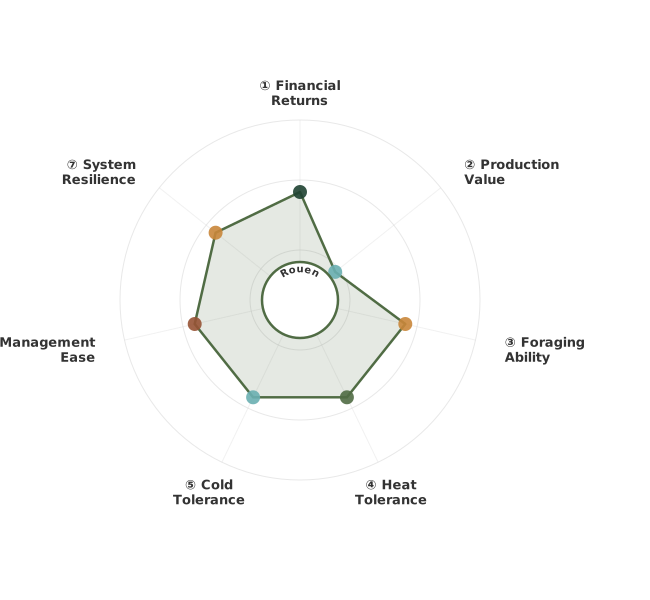
How These Traits Are Calculated
Trait dimensions are ordered clockwise starting from the top of the chart (12 o'clock position):
1. Financial Returns
Annual income per bird from eggs, meat, or specialty products
WHAT: Evaluates profit potential for specialty poultry (turkeys, ducks, geese, guinea fowl) combining meat yield, egg production (where applicable), growth timelines, and market premiums for specialty products.
WHY: Specialty poultry targets premium markets—heritage turkeys at $6-8/lb versus $1.50 commodity, duck eggs at $8-12/dozen versus $3-5 chicken eggs. Understanding enterprise-specific returns helps match birds to market opportunities, with successful operations generating 2-4× returns of conventional poultry.
HOW: Calculated from production data (market weight, timelines, egg yield) combined with efficiency traits and premium market access. Exceptional (≥2.6): strong output + premium markets + efficient growth. Typical (1.8-2.5): moderate production and markets. Limited (<1.8): low output or limited market access.
2. Production Value
Meat yield, egg production, and specialty product quality
WHAT: Measures output quality and quantity combining meat characteristics (size, flavor, texture prized by consumers), egg production (for laying breeds), and specialty products (foie gras, down feathers) that command premiums.
WHY: Production value determines market positioning. Heritage turkeys with superior flavor justify $6-8/lb premiums, duck eggs with rich yolks attract baking customers at $1+ per egg, quality down commands $20-40/lb. High production value enables profitable small-scale operations where commodity birds require large volume to achieve viability.
HOW: Composite assessment of documented production characteristics and market quality. Exceptional (≥2.6): superior product quality + strong output + specialty attributes. Typical (1.8-2.5): good standard production. Limited (<1.8): commodity quality, minimal specialty value.
3. Foraging Ability
Feed cost reduction through natural foraging behavior
WHAT: Measures effectiveness at obtaining nutrition through foraging—consuming insects, seeds, greens, and other natural foods—reducing purchased feed requirements 20-50% in pasture-based systems.
WHY: Aggressive foragers reduce feed costs while providing pest control (insects, ticks, slugs) and weed management services. Turkeys consuming 30-40% of calories from forage save $15-30 per bird over growing season, making the difference between profitable and marginal operations.
HOW: Rated from documented foraging behavior and feed reduction potential. Exceptional (≥2.6): excellent foragers, 40-50% feed reduction, active pest control. Typical (1.8-2.5): moderate foraging, 20-30% reduction. Limited (<1.8): minimal foraging, requires full feeding.
4. Heat Tolerance
Performance in hot weather above 85°F (29°C)
WHAT: Evaluates adaptation to sustained heat above 85°F (29°C), measuring heat stress resistance, growth/production maintenance, and survival during summer peaks. Critical for southern operations and summer meat production.
WHY: Heat stress reduces feed intake 20-40%, slows growth, and increases mortality—particularly problematic for turkeys naturally susceptible to heat. Heat-adapted breeds maintain production schedules where others require expensive cooling or suffer significant losses during summer.
HOW: Rated from database trait 'heat_tolerance' based on documented characteristics. Exceptional (≥2.6): maintains production in 95°F+ (35°C+), low mortality. Typical (1.8-2.5): manageable with shade and water. Limited (<1.8): high heat sensitivity, struggles above 85°F.
5. Cold Tolerance
Performance in cold weather below 20°F (-7°C)
WHAT: Evaluates adaptation to sustained cold below 20°F (-7°C), measuring feather insulation, cold-weather foraging activity, and winter production/growth maintenance. Important for year-round outdoor systems in northern climates.
WHY: Cold-sensitive birds require heated housing ($50-200 monthly winter costs), reduce activity limiting foraging value, and experience higher mortality. Cold-hardy breeds remain active outdoors year-round, maintain winter egg production (ducks/geese), and thrive with basic shelter.
HOW: Rated from database trait 'cold_tolerance' based on breed characteristics. Exceptional (≥2.6): excellent insulation, active in <0°F (-18°C), maintains winter production. Typical (1.8-2.5): moderate hardiness. Limited (<1.8): requires heated shelter, limited winter activity.
6. Management Ease
Handling temperament and care requirements
WHAT: Measures daily management simplicity combining temperament (calm vs flighty/aggressive), health needs, natural breeding ability (versus artificial insemination required), and routine handling cooperation.
WHY: Difficult birds increase labor 2-3× and create safety concerns. Aggressive turkeys or geese require protective equipment during handling, flighty birds complicate catching for processing, breeds requiring AI add complexity. Calm birds with good health enable confident management by beginners.
HOW: Weighted assessment: temperament (50%), health needs (30%), breeding ease (20%). Exceptional (≥2.6): calm and manageable, robust health, natural breeding. Typical (1.8-2.5): manageable with experience. Limited (<1.8): aggressive or nervous, high health needs, or breeding complications.
7. Flock Resilience
Disease resistance and survival under typical stresses
WHAT: Evaluates flock robustness across disease resistance (particularly respiratory issues and common poultry diseases), parasite tolerance, predator awareness, and general hardiness determining survival through typical challenges.
WHY: Resilient breeds maintain productivity through challenges causing 20-50% losses in susceptible birds—surviving disease pressure, evading predators through awareness, resisting parasites. This determines whether flocks thrive with basic care or require intensive interventions and predator-proof housing.
HOW: Composite assessment of documented health and survival characteristics. Exceptional (≥2.6): strong disease resistance + predator-savvy + hardy. Typical (1.8-2.5): standard resilience with routine care. Limited (<1.8): health-sensitive or vulnerable, requires intensive management and protection.
Regenerative Advantages
- Cold Hardiness: Developed from the wild mallard, Rouens possess dense plumage and a robust constitution, allowing them to thrive in cold climates with minimal shelter.
- Integration Ease: Very docile and calm. New Rouens are readily accepted with minimal aggression, allowing for integration within 1-2 weeks and a simple health check.
- Fence Requirements: Rouen ducks are large and heavy, with poor flight capabilities. A 4ft fence is generally sufficient for containment.
Value Streams
- Meat & Egg production
- Insect and pest control
- Scratch tillage and compost distribution
Experience Level
Suitable for first-time livestock owners
3
Understanding Rouen Ducks Characteristics
Physical traits, temperament, and what makes this breed unique
Understanding Rouen Ducks Characteristics
Physical traits, temperament, and what makes this breed unique
The Rouen duck is a distinctive and robust breed, originating from France and selectively bred from the wild Mallard for enhanced size and meat characteristics. This heritage makes it a dual-purpose fowl, valued for both its substantial meat yield and its manageable temperament in various agricultural settings. Visually, Rouens are striking, with drakes exhibiting iridescent green heads, white neck rings, chestnut breasts, and slate-blue bodies, while ducks display a more camouflaged pattern of dark and light brown striping. Their physical build is characterized by a deep, broad body and a well-rounded breast, indicating their suitability for meat production. Understanding these foundational physical and biological traits is key to appreciating their role and potential on a regenerative farm.
Physical Characteristics:• Size and Weight: Adult drakes typically weigh between 9-10 lbs (4-4.5 kg), and ducks between 8-9 lbs (3.6-4 kg), establishing them as a heavy breed.
• Body Conformation: They possess a deep, broad body with a prominent, well-rounded breast.
• Plumage: Drakes feature a rich, iridescent green head, a distinct white collar, a chestnut breast, and a blue-gray body.
• Duck Plumage: Ducks display a more muted, yet elegant, pattern of dark and light brown striping, providing natural camouflage.
• Legs and Feet: Their orange legs are set well apart, supporting their broad frames, and their webbed feet are adapted for both land and water.
• Bill: The bill is typically yellow to orange, often with a black nail at the tip.
Behavioral Traits:• Temperament: Rouens are known for their docile and placid nature, making them easier to handle and manage compared to more flighty breeds.
• Foraging Instinct: They possess a strong natural drive to forage, actively seeking out insects, slugs, snails, and plant matter.
• Vocalization: While moderately vocal, their sounds are generally less disruptive than some other poultry breeds, with drakes producing a rasping call and ducks a louder quack.
Biological Traits and Environmental Adaptability:• Cold Hardiness: Rouen ducks exhibit excellent resilience to cold temperatures due to their dense plumage, often requiring minimal supplemental heating even in harsh winters, provided unfrozen water is accessible. They can remain active and productive in temperatures as low as -20°F with appropriate shelter.
• Heat Tolerance: While possessing good heat tolerance, they benefit from shade and water access during extreme heat waves, typical for heavy breeds. This adaptability allows them to thrive in a broad range of climates, including USDA zones 4-8.
• Disease Resistance: Generally robust, Rouens demonstrate good resistance to common diseases when maintained in clean environments with adequate nutrition and water.
• Water Dependency: Access to water for drinking and preening is essential for their hygiene and overall health, making them well-suited for environments with ponds, streams, or even large water tubs.
The Rouen's combination of substantial size, calm disposition, and environmental hardiness makes it a notable breed for those seeking a dual-purpose fowl with a strong connection to natural foraging behaviors and resilience across various climates.
Sources behind this view
 Community
-
Muscovy ducks are lauded for their toughness, health, foraging ability, and trainability, outperforming Pekin breeds in hardiness and ease of management, though they lay seasonally.
Read more (opens in new window) permies.com
4
Management, Care & Feeding
Operational guidance for raising this breed successfully
Management, Care & Feeding
Operational guidance for raising this breed successfully
Integrating Rouen ducks into a regenerative farm system requires thoughtful planning that aligns their physical needs with economic goals and ecological benefits. This involves establishing appropriate housing, managing their access to water and foraging grounds, and developing a clear market strategy. Their docile nature and robust build simplify handling and containment, but secure fencing is essential to protect them from predators. The economic viability hinges on capitalizing on their dual-purpose nature, focusing on direct marketing to capture premium prices for their meat, while their environmental contributions—pest control and nutrient cycling—are maximized through strategic placement within the farm's landscape. Successful integration is about optimizing their natural behaviors for farm productivity and ecological enhancement.
Physical Requirements and Housing:• Shelter: While cold-hardy, Rouens require protection from extreme weather, including heavy rain, wind, and intense sun. Simple, well-ventilated structures like A-frames or open-sided sheds offer adequate shelter.
• Predator Protection: Secure housing and fencing are paramount, as ducks can be vulnerable to predators such as foxes, raccoons, and birds of prey. A minimum of 4-5 foot fencing, potentially with an apron to deter digging, is recommended.
• Water Access: A consistent supply of clean drinking water is non-negotiable for their health and hygiene. Access to larger bodies of water for swimming and preening is highly beneficial but not strictly mandatory if drinking water is abundant and clean. Large tubs or kiddie pools can serve as sufficient water sources for smaller flocks.
• Space: While not requiring extensive space, providing adequate room (approximately 4-8 sq ft per duck in confinement, more in free-range setups) prevents overcrowding and associated health issues.
Economic Implementation and Market Strategy:• Finishing Period and Cycles: Plan for a 3-4 month finishing period per batch, allowing for multiple production cycles annually. This requires forecasting market demand and production capacity.
• Input Cost Management: Annual input costs per head range from $15-$30, heavily influenced by feed prices. Maximizing on-farm foraging can significantly reduce purchased feed reliance.
• Market Development: Focus on direct-to-consumer sales channels (farmers' markets, CSAs, online stores) to achieve the +15%-+30% price premium over commodity poultry. Building a loyal customer base typically takes 1-3 years.
• Processing and Infrastructure: Identify local processing options or plan for on-farm processing if regulations allow. Initial setup costs for processing and marketing infrastructure can take 2-5 years to recoup.
• Pricing Strategy: Price competitively within the specialty poultry market, justifying premiums based on breed quality, size, and the regenerative practices employed.
Management Practices for System Integration:• Rotational Grazing: Implement rotational grazing through pastures, orchards, or gardens to leverage their foraging for pest control and manure distribution. Move ducks frequently (e.g., every few days) to prevent overgrazing and allow vegetation to recover.
• Pest Control Application: Rotate them through areas with high insect or slug pressure. Their effectiveness is enhanced by allowing them access to these areas during peak pest activity.
• Nutrient Management: Utilize their manure as a valuable fertilizer by directing their grazing onto cover crops or depleted pasture areas. This enhances soil fertility and sequesters carbon.
• Water Management: Integrate them into managed pond systems or constructed wetlands to assist in controlling algae and mosquito populations, thereby improving water quality.
• Health Monitoring: Regularly observe ducks for signs of illness or distress. Maintain clean living conditions and provide a balanced diet supplemented by their foraging activities. Their natural robustness generally means fewer health interventions are needed compared to more intensively farmed breeds.
Common Challenges and Solutions:• Predation: Employ robust fencing, secure night housing, and potentially guardian animals if issues persist.
• Feed Costs: Maximize foraging opportunities and supplement with farm-grown grains or byproducts where feasible.
• Market Access: Invest time in building relationships with consumers and specialty retailers, consistently delivering high-quality products.
• Water Management: Ensure reliable, clean water sources are accessible at all times, especially in hotter weather or during dry spells.
Successfully integrating Rouen ducks involves understanding their basic needs, strategically planning their placement within the farm ecosystem, and developing robust marketing channels to capture the full value of their dual-purpose attributes.
Sources behind this view
 Videos & Podcasts
-
The farm plans to achieve carbon-negative duck eggs by replacing soy feed with black soldier fly larvae raised on local food waste. They will integrate poultry with short-rotation coppice for biomass

Community
-
A SARE-funded project tested integrating ducks into shiitake mushroom agroforestry, finding heritage breeds best for meat, establishing a 'slug-free moat' for pest control, and shifting focus from cos
Read more (opens in new window) smallfarms.cornell.edu -
Jack Spirko of Nine Mile Farm shares strategies for profiting from duck eggs, highlighting them as an underserved niche for part-time farmers. The presentation covers building a customer base, selecti
Read more (opens in new window) permies.com
 Research
-
PRESENT STATUS OF FREE-RANGE DUCK FARMING SYSTEM OF TULSIPUR DANG, NEPAL (opens in new window)
Nepal study: Free-range ducks often raised with chickens, fed corn. Traditional methods lack proper housing, vaccines, and supplements, leading to 15% annual mortality.