Saanen Goats
The Saanen goat breed offers farmers superior milk production and exceptional docility, simplifying herd management and making them ideal for family farms. Originating from the Saanen Valley in Switzerland, these large, white goats are renowned for their high milk yields and butterfat content, often exceeding other dairy breeds. Their gentle temperament makes them easy to handle and train, reducing stress for both animals and handlers. Saanens are also known for their hardy constitution, adapting well to various climates and requiring minimal intervention for good health. Their efficient feed conversion further enhances their economic viability, making them a distinct and profitable choice for dairy operations.
Regenerative Quick Profile
Best Suited For
Climates: Tropical rainforest, Tropical monsoon, Tropical savanna, Hot semi-arid
Terrain: Best for flat to rolling terrain
Scale: Suitable for small to medium operations (10-50 animals)
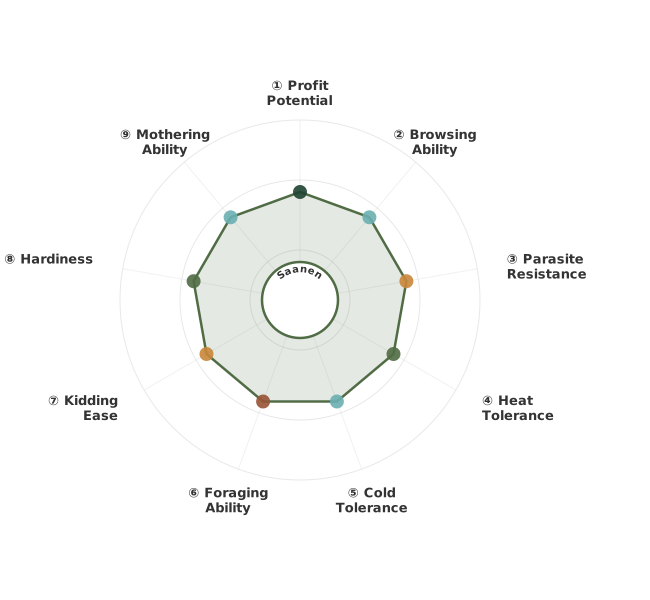
Regenerative Trait Ratings
How These Traits Are Calculated
Trait dimensions are ordered clockwise starting from the top of the chart (12 o'clock position):
1. Financial Returns
Annual income per doe from kids, milk, or fiber
WHAT: Evaluates annual profit potential across meat (kid sales), dairy (milk production), fiber (cashmere/mohair), or dual-purpose value. Combines production output with input costs, kidding rates, and market premiums.
WHY: Goat profitability varies by enterprise type—dairy goats producing 1,500-2,500 lbs milk annually generate $400-800 revenue versus meat goats at $150-300 from kid sales. Understanding income potential by enterprise type helps match breeds to market opportunities and farm goals.
HOW: Calculated from enterprise-specific production data (milk yield, kid growth, fiber weight) combined with efficiency traits and costs. Exceptional (≥2.6): high output for enterprise type + low inputs + strong markets. Typical (1.8-2.5): moderate production and costs. Limited (<1.8): low output or premium-dependent without reliable access.
2. Browsing Ability
Effectiveness at consuming brush, weeds, and woody plants
WHAT: Measures goat effectiveness at controlling unwanted vegetation—clearing brush, managing invasive plants, consuming woody browse—while providing land management services that reduce fuel loads and restore degraded pastures.
WHY: Browsers reduce land clearing costs $200-600 per acre compared to mechanical methods while providing income. Effective browsers tackle multiflora rose, kudzu, poison ivy, and small trees where grazers fail, converting liability into profitability.
HOW: Rated from database trait 'browsing_ability' and documented land management effectiveness. Exceptional (≥2.6): aggressive browsers, thrives on brush, excellent weed control. Typical (1.8-2.5): moderate browsing with mixed diet. Limited (<1.8): prefers grass, minimal brush consumption.
3. Parasite Resistance
No detailed explanation available.
4. Heat Tolerance
Milk production and health in hot weather above 85°F (29°C)
WHAT: Evaluates adaptation to sustained heat above 85°F (29°C), measuring production maintenance, heat stress resistance, and cooling behavior. Critical for dairy goats where heat drops milk production 20-40%.
WHY: Heat-sensitive breeds stop milking during summer peaks, creating 2-4 month income gaps in hot climates. Heat-adapted breeds maintain production year-round, provide consistent cash flow, and eliminate need for expensive cooling systems (fans, misters, air conditioning).
HOW: Rated from database trait 'heat_tolerance' based on documented characteristics. Exceptional (≥2.6): tropical origins, maintains production in 95°F+ (35°C+). Typical (1.8-2.5): moderate tolerance with shade and water. Limited (<1.8): production drops significantly above 85°F, requires cooling.
5. Cold Tolerance
Performance in cold weather below 20°F (-7°C)
WHAT: Evaluates adaptation to sustained cold below 20°F (-7°C), measuring coat thickness, metabolic adaptation, and winter performance. Important for northern climates with harsh winters and winter kidding systems.
WHY: Cold stress increases feed requirements 30-50%, complicates kidding (newborns at high risk), and drops milk production in dairy breeds. Cold-hardy breeds maintain production and kid successfully outdoors where others require heated barns.
HOW: Rated from database trait 'cold_tolerance' based on breed characteristics. Exceptional (≥2.6): thick winter coats, northern origins, thrives in <0°F (-18°C). Typical (1.8-2.5): moderate hardiness, basic shelter sufficient. Limited (<1.8): requires heated shelter, struggles with winter kidding.
6. Foraging Ability
No detailed explanation available.
7. Kidding Ease
No detailed explanation available.
8. Hardiness
No detailed explanation available.
9. Mothering Ability
No detailed explanation available.
Regenerative Advantages
- Cold Tolerance:
- Milk Production:
Value Streams
- Dairy production
- Nutrient cycling and soil building
- Brush clearing and fire risk reduction
- Invasive species control
Experience Level
Consult local experts for handling requirements
1
Climate Suitability Assessment
Will this breed thrive in your climate?
Climate Suitability Assessment
Will this breed thrive in your climate?
Köppen Zone: Cfa (Humid Subtropical), Cfb (Oceanic (Maritime Temperate)), Csa (Hot-Summer Mediterranean), Csb (Warm-Summer Mediterranean), Cwa (Monsoon-Influenced Humid Subtropical), Cwb (Subtropical Highland)
US Zone: 6a, 7a, 8a, 9a
Humid subtropical climates offer mild winters and warm summers, ideal for Saanen goats. Long growing seasons support good pasture, and milk production is generally high.
Köppen Zone: Aw (Tropical Savanna), BSh (Hot Semi-Arid (Steppe)), BSk (Cold Semi-Arid (Steppe)), Dfa (Hot-Summer Continental), Dfb (Warm-Summer Continental)
US Zone: 5a, 5b, 10a, 11a
Tropical savanna offers a distinct dry season which can be managed. However, the hot temperatures year-round require significant shade and water management, and parasite control is crucial.
Köppen Zone: Af (Tropical Rainforest), Am (Tropical Monsoon), ET (Tundra), BWh (Hot Desert), BWk (Cold Desert), Dfc (Subarctic), Dwa (Monsoon-Influenced Hot-Summer Continental)
US Zone: 2a, 3a, 3b, 4a, 12a
Tropical rainforest climates are too hot and humid year-round for Saanen goats. They are highly susceptible to heat stress, parasites, and diseases in these conditions.
Note: This breed's performance varies significantly by climate zone. Above are suitability ratings for major climate types where this breed can be raised successfully. If your climate isn't listed, this breed may not be a good fit. Breeds can technically survive in other climates with intensive management, but we don't recommend this for most regenerative operations due to questionable economics and high resource requirements.
2
Is This Breed Right for Your Operation?
Climate fit, terrain suitability, and scale considerations
Is This Breed Right for Your Operation?
Climate fit, terrain suitability, and scale considerations
Terrain & Environment
Can this breed handle my landscape? Performance on different terrain types and farm scales.
| Attribute | Suitability |
|---|---|
| Flat Terrain | Adequate |
| Rolling Terrain | Adequate |
| Small Scale Suitability | Adequate |
Forage & Feeding Adaptations
What can I feed them and how efficiently? Grazing ability, feed conversion, and seasonal adaptation.
| Attribute | Suitability |
|---|---|
| Foraging Ability | Adequate |
| Browsing Ability | Adequate |
| Fescue Tolerance | Adequate |
| Dry Season Grazing | Adequate |
Foraging Ability: Thriving on diverse/marginal vegetation broadly (woody plants, forbs, weeds, rough forage, scrubland) without supplementation. Focus: self-sufficiency on poor-quality or varied vegetation beyond quality grass.
Browsing Ability: Specialized consumption of woody vegetation specifically (shrubs, trees, branches). Actively seeks woody plants, not just opportunistic. A specialized subset of foraging ability.
Fescue Tolerance: Resistance to endophyte-infected tall fescue toxicity (critical for Southern US pastures). Exceptional = minimal impact, Typical = manageable symptoms, Limited = poor performance.
Dry Season Grazing: Ability to utilize dormant or low-quality forage during dry periods. Important for year-round grazing systems.
Scale Considerations
Small-Scale Suitability: Adequate
3
Understanding Saanen Goats Characteristics
Physical traits, temperament, and what makes this breed unique
Understanding Saanen Goats Characteristics
Physical traits, temperament, and what makes this breed unique
Saanen goats are a distinguished dairy breed, originating from the picturesque Saanen Valley in Switzerland, renowned globally for their exceptional milk production. These large-framed animals are easily identifiable by their striking white or cream-colored coats and possess a robust, well-developed physique optimized for efficient feed conversion into milk. Their calm and docile temperament makes them amenable to managed environments where consistent milk output is the primary goal, setting them apart from many other goat breeds. Saanens are particularly well-suited for temperate to cool-temperate climates, exhibiting excellent cold hardiness while requiring consideration for shade and ventilation in warmer conditions due to their fair heat tolerance. Their adaptability to flatter or rolling terrain further contributes to their suitability for various managed agricultural settings, though they are less adept on extremely steep slopes.
Physical Characteristics:• Mature weight: Bucks typically range from 180-250 lbs, while does are between 130-200 lbs.
• Conical build: Characterized by a deep chest and a long, well-formed body that tapers towards the hindquarters.
• Coat color: Primarily white or cream, though occasional light tan markings may be present; hair is short and fine.
• Head and ears: Possess refined heads with a straight or slightly dished facial profile, complemented by medium-sized ears that are typically held erect or slightly forward.
• Udder development: Does are celebrated for their large, well-attached udders, capable of substantial milk volume.
Biological and Behavioral Traits:• Temperament: Generally docile and calm, facilitating easier handling and management, especially within larger herds.
• Foraging behavior: While they can browse, Saanens are primarily grazers and thrive on diets rich in high-quality forages and grains. Their browse tolerance is estimated between 20-30%.
• Cold hardiness: Exhibit excellent resilience in cooler climates, adapting well to winter conditions.
• Heat tolerance: Possess fair heat tolerance, necessitating access to shade and adequate ventilation during warmer periods.
• Water requirements: Require approximately 3-4 gallons (11-15 liters) of water per day, with higher-producing individuals consuming more.
Environmental Adaptability:• Terrain preference: Best suited for relatively flat to rolling terrain, with a rating of 4 for both. Steep terrain is rated at 2, indicating less suitability.
• Fescue tolerance: Demonstrates good adaptability to fescue pastures, a common forage grass.
• Drought tolerance: Their drought tolerance is considered moderate, meaning they can withstand dry periods but may require supplementation during extended droughts.
• Dry season grazing: Their ability to maintain high milk production solely on pasture during dry seasons is fair, often requiring supplementary feeding for high producers.
4
Management, Care & Feeding
Operational guidance for raising this breed successfully
Management, Care & Feeding
Operational guidance for raising this breed successfully
Integrating Saanen goats into a regenerative farming system requires careful consideration of their physical, biological, and economic requirements to maximize their benefits and ensure successful management. This breed's suitability for dairy production means that infrastructure for milking, cooling, and housing is paramount. Their high milk yield potential, while economically advantageous, also dictates specific nutritional needs and water consumption, which must be met consistently for optimal performance. Environmentally, their preference for temperate climates and moderate terrain means site selection and facility design should account for temperature regulation and ease of movement. The economic viability hinges on securing premium markets for their milk and managing production costs efficiently, often involving a 1-3 year establishment period to build market relationships and consistent quality.
Physical and Environmental Requirements:• Housing: Provide adequate shelter that offers excellent protection from cold and good ventilation to mitigate heat stress. Ensure easy access to clean water at all times, with higher-producing individuals requiring more.
• Terrain Management: Saanen goats are best suited for relatively flat to rolling terrain, rated at 4 for suitability. While they can navigate some steeper slopes (rated at 2), operations on very steep terrain may present challenges for milking and general management.
• Climate Adaptation: Their excellent cold hardiness allows them to thrive in cooler climates. In warmer regions or during heat waves, access to shade and adequate ventilation is crucial due to their fair heat tolerance. Moderate drought tolerance means supplemental water and feed may be necessary during dry periods.
• Pasture Management: While they are primarily grazers, their ability to utilize 20-30% browse is beneficial for controlling understory vegetation and invasive species in silvopasture or woodland settings. They also demonstrate good tolerance for fescue pastures.
Economic Implementation and Market Access:• Infrastructure Investment: Establish necessary dairy infrastructure, including milking parlors, cooling tanks, and appropriate housing. Ongoing costs for feed, veterinary care, and labor must be factored into the operational budget.
• Market Channel Selection: Proactively identify and establish relationships with markets that offer a premium for Saanen goat milk. This is critical for realizing the potential +15% price premium and achieving profitability. Building these relationships typically takes 1-3 years and requires consistent delivery of high-quality product.
• Revenue and Cost Management: Focus on maximizing milk yield through balanced nutrition and proper herd health. Efficiently manage feed costs, considering their preference for high-quality forages and grains, and be prepared for potential supplementation needs, especially during dry seasons or for high-producing does.
Management Practices for Integration:• Nutrition: Develop balanced rations that include high-quality forages and grains to support high milk production. Monitor water intake closely, particularly for lactating does.
• Health and Handling: Maintain a regular veterinary care schedule. Their docile temperament generally makes them easier to handle, but consistent, calm interaction is key for herd management.
• Rotational Grazing: Implement rotational grazing strategies to optimize pasture utilization, encourage forage growth, and effectively distribute manure for soil enrichment, aligning with regenerative principles.
• Vegetation Management: Utilize their browsing capability for targeted control of woody invasives and understory growth, integrating them into landscape management plans for silvopastures or brushy areas.
• Breeding Program: Select breeding stock that exhibits strong dairy characteristics and a robust constitution to ensure consistent milk production and herd health.
Successful integration of Saanen goats involves a holistic approach, balancing their specific needs with the economic opportunities and environmental benefits they offer, all within a well-planned management framework.
5
Complete Trait Reference
Comprehensive trait ratings and explanations
Complete Trait Reference
Comprehensive trait ratings and explanations
Climate & Environmental Adaptation
How does this breed handle environmental challenges? Weather resilience, natural resistance, and adaptation.
| Attribute | Suitability |
|---|---|
| Hardiness | Adequate |
| Heat Tolerance | Not Recommended |
| Cold Tolerance | Ideally Suited |
| Drought Tolerance | Not Recommended |
| Parasite Resistance | Not Recommended |
Terrain & Land Suitability
Can this breed handle my landscape? Performance on different terrain types and farm scales.
| Attribute | Suitability |
|---|---|
| Flat Terrain | Adequate |
| Rolling Terrain | Adequate |
| Small Scale Suitability | Adequate |
Forage & Feeding Characteristics
What can I feed them and how efficiently? Grazing ability, feed conversion, and seasonal adaptation.
| Attribute | Suitability |
|---|---|
| Foraging Ability | Adequate |
| Browsing Ability | Adequate |
| Fescue Tolerance | Adequate |
| Dry Season Grazing | Adequate |
Foraging Ability: Thriving on diverse/marginal vegetation broadly (woody plants, forbs, weeds, rough forage, scrubland) without supplementation. Focus: self-sufficiency on poor-quality or varied vegetation beyond quality grass.
Browsing Ability: Specialized consumption of woody vegetation specifically (shrubs, trees, branches). Actively seeks woody plants, not just opportunistic. A specialized subset of foraging ability.
Fescue Tolerance: Resistance to endophyte-infected tall fescue toxicity (critical for Southern US pastures). Exceptional = minimal impact, Typical = manageable symptoms, Limited = poor performance.
Dry Season Grazing: Ability to utilize dormant or low-quality forage during dry periods. Important for year-round grazing systems.
Handling, Temperament & Reproduction
How easy are they to work with? Temperament, handling ease, and reproductive efficiency.
| Attribute | Suitability |
|---|---|
| Mothering Ability | Adequate |
| Kidding Ease | Adequate |
Production Characteristics
What do they produce and how well? Meat, milk, eggs, fiber, and other products.
| Attribute | Suitability |
|---|---|
| Milk Production | Ideally Suited |
| Meat Quality | Not Recommended |
6
Production Capabilities & Market Economics
Business case evaluation and production metrics
Production Capabilities & Market Economics
Business case evaluation and production metrics
Dairy Production Economics
| Category | Value |
|---|---|
| Milk/Doe/Year | 2000-3000 lbs |
| Lactation Period (Months) | 275-305 |
| Age First Kidding (Months) | 12-15 |
| Price Premium | +15% |
| Annual Input Cost | 500-900 |
Price Premium: Premium above conventional goat milk prices. Grass-fed goat dairy typically sells for premium prices through direct sales or specialty markets. Premium only applies when farm qualifies through certification (organic, grass-fed, raw milk license where legal) or direct sales channels. Without certification or qualifying market access, premium falls to $0.