
Saxony Duck
Also known as: saxony
The Saxony duck excels with exceptional cold hardiness, superior foraging prowess, and remarkable pest control abilities, simplifying management and reducing labor needs for farmers. Originating from Germany, these large, dual-purpose ducks are known for their striking chestnut and white plumage. Their docility and good disease resistance further contribute to their ease of care, while their good egg production makes them a valuable addition to any farm. The Saxony duck particularly thrives in silvopasture settings, demonstrating a unique affinity for diverse forage and natural pest management, making them a distinct and beneficial livestock choice.
Regenerative Quick Profile
Best Suited For
Climates: Temperate to continental climates with moderate rainfall
Scale: Excellent for small homesteads (1-10 animals)
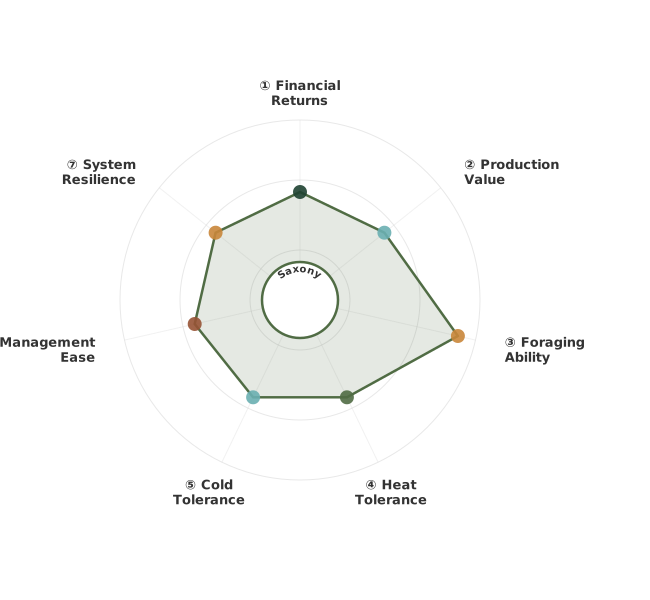
How These Traits Are Calculated
Trait dimensions are ordered clockwise starting from the top of the chart (12 o'clock position):
1. Financial Returns
Annual income per bird from eggs, meat, or specialty products
WHAT: Evaluates profit potential for specialty poultry (turkeys, ducks, geese, guinea fowl) combining meat yield, egg production (where applicable), growth timelines, and market premiums for specialty products.
WHY: Specialty poultry targets premium markets—heritage turkeys at $6-8/lb versus $1.50 commodity, duck eggs at $8-12/dozen versus $3-5 chicken eggs. Understanding enterprise-specific returns helps match birds to market opportunities, with successful operations generating 2-4× returns of conventional poultry.
HOW: Calculated from production data (market weight, timelines, egg yield) combined with efficiency traits and premium market access. Exceptional (≥2.6): strong output + premium markets + efficient growth. Typical (1.8-2.5): moderate production and markets. Limited (<1.8): low output or limited market access.
2. Production Value
Meat yield, egg production, and specialty product quality
WHAT: Measures output quality and quantity combining meat characteristics (size, flavor, texture prized by consumers), egg production (for laying breeds), and specialty products (foie gras, down feathers) that command premiums.
WHY: Production value determines market positioning. Heritage turkeys with superior flavor justify $6-8/lb premiums, duck eggs with rich yolks attract baking customers at $1+ per egg, quality down commands $20-40/lb. High production value enables profitable small-scale operations where commodity birds require large volume to achieve viability.
HOW: Composite assessment of documented production characteristics and market quality. Exceptional (≥2.6): superior product quality + strong output + specialty attributes. Typical (1.8-2.5): good standard production. Limited (<1.8): commodity quality, minimal specialty value.
3. Foraging Ability
Feed cost reduction through natural foraging behavior
WHAT: Measures effectiveness at obtaining nutrition through foraging—consuming insects, seeds, greens, and other natural foods—reducing purchased feed requirements 20-50% in pasture-based systems.
WHY: Aggressive foragers reduce feed costs while providing pest control (insects, ticks, slugs) and weed management services. Turkeys consuming 30-40% of calories from forage save $15-30 per bird over growing season, making the difference between profitable and marginal operations.
HOW: Rated from documented foraging behavior and feed reduction potential. Exceptional (≥2.6): excellent foragers, 40-50% feed reduction, active pest control. Typical (1.8-2.5): moderate foraging, 20-30% reduction. Limited (<1.8): minimal foraging, requires full feeding.
4. Heat Tolerance
Performance in hot weather above 85°F (29°C)
WHAT: Evaluates adaptation to sustained heat above 85°F (29°C), measuring heat stress resistance, growth/production maintenance, and survival during summer peaks. Critical for southern operations and summer meat production.
WHY: Heat stress reduces feed intake 20-40%, slows growth, and increases mortality—particularly problematic for turkeys naturally susceptible to heat. Heat-adapted breeds maintain production schedules where others require expensive cooling or suffer significant losses during summer.
HOW: Rated from database trait 'heat_tolerance' based on documented characteristics. Exceptional (≥2.6): maintains production in 95°F+ (35°C+), low mortality. Typical (1.8-2.5): manageable with shade and water. Limited (<1.8): high heat sensitivity, struggles above 85°F.
5. Cold Tolerance
Performance in cold weather below 20°F (-7°C)
WHAT: Evaluates adaptation to sustained cold below 20°F (-7°C), measuring feather insulation, cold-weather foraging activity, and winter production/growth maintenance. Important for year-round outdoor systems in northern climates.
WHY: Cold-sensitive birds require heated housing ($50-200 monthly winter costs), reduce activity limiting foraging value, and experience higher mortality. Cold-hardy breeds remain active outdoors year-round, maintain winter egg production (ducks/geese), and thrive with basic shelter.
HOW: Rated from database trait 'cold_tolerance' based on breed characteristics. Exceptional (≥2.6): excellent insulation, active in <0°F (-18°C), maintains winter production. Typical (1.8-2.5): moderate hardiness. Limited (<1.8): requires heated shelter, limited winter activity.
6. Management Ease
Handling temperament and care requirements
WHAT: Measures daily management simplicity combining temperament (calm vs flighty/aggressive), health needs, natural breeding ability (versus artificial insemination required), and routine handling cooperation.
WHY: Difficult birds increase labor 2-3× and create safety concerns. Aggressive turkeys or geese require protective equipment during handling, flighty birds complicate catching for processing, breeds requiring AI add complexity. Calm birds with good health enable confident management by beginners.
HOW: Weighted assessment: temperament (50%), health needs (30%), breeding ease (20%). Exceptional (≥2.6): calm and manageable, robust health, natural breeding. Typical (1.8-2.5): manageable with experience. Limited (<1.8): aggressive or nervous, high health needs, or breeding complications.
7. Flock Resilience
Disease resistance and survival under typical stresses
WHAT: Evaluates flock robustness across disease resistance (particularly respiratory issues and common poultry diseases), parasite tolerance, predator awareness, and general hardiness determining survival through typical challenges.
WHY: Resilient breeds maintain productivity through challenges causing 20-50% losses in susceptible birds—surviving disease pressure, evading predators through awareness, resisting parasites. This determines whether flocks thrive with basic care or require intensive interventions and predator-proof housing.
HOW: Composite assessment of documented health and survival characteristics. Exceptional (≥2.6): strong disease resistance + predator-savvy + hardy. Typical (1.8-2.5): standard resilience with routine care. Limited (<1.8): health-sensitive or vulnerable, requires intensive management and protection.
Regenerative Advantages
- Foraging Ability: Saxony ducks possess a remarkable capacity to thrive on a diverse array of marginal vegetation, including insects, seeds, greens, and aquatic life. Their ability to effectively exploit scrubland, silvopastures, and less-than-ideal terrain allows them to secure a substantial portion of their diet independently. This broad-spectrum foraging means they require minimal supplementation, even on unimproved pastures, demonstrating a strong self-sufficiency characteristic of breeds excelling on varied and low-quality forage sources.
- Docility: Saxony ducks are remarkably placid and easy to manage, readily accepting human presence, which makes them an excellent choice for integrated farm settings.
- Cold Hardiness: Their substantial size and dense feathering provide excellent insulation, allowing Saxonies to remain active and productive even in sub-freezing temperatures with minimal supplemental care.
- Integration Ease: Docile and adaptable. Saxony ducks integrate easily into existing flocks with minimal aggression, requiring only a brief health check and 1-2 weeks.
- Dual Purpose Quality: This breed excels as a true dual-purpose type, effectively balancing excellent meat conformation with strong laying potential for diversified farming.
Know the Debate
- Dual-purpose excels in meat & eggs, superior foraging
- Hardy, docile, good for regenerative integration
- Manageable scale offers diversified income
- Pest control & soil benefits from foraging manure
Value Streams
- Meat & Egg production
- Insect and pest control
- Scratch tillage and compost distribution
Experience Level
Suitable for first-time livestock owners
4
Management, Care & Feeding
Operational guidance for raising this breed successfully
Management, Care & Feeding
Operational guidance for raising this breed successfully
Managing Saxony ducks effectively revolves around providing ample space for foraging and ensuring access to clean water. As large birds, they require more room than smaller duck breeds, both on land and in water. A minimum of 50-100 square feet per duck in a pasture setting is recommended, with access to a pond, large trough, or pool for bathing and preening being essential for their health and hygiene. Their housing should be predator-proof, offering protection from foxes, raccoons, and other threats, especially at night. Regular cleaning of their living space is important to prevent ammonia buildup and maintain a healthy environment.
Feeding for Saxony ducks in a regenerative system should prioritize pasture access. During the growing season, they can derive a significant portion of their diet from foraging, supplemented with a quality waterfowl feed. Ensure they have access to grit to aid digestion. Laying hens require a layer feed with adequate calcium for strong eggshells. Avoid over-reliance on commercial feeds; instead, focus on maximizing their natural foraging abilities. Providing supplemental grains like cracked corn or oats can be beneficial, especially during colder months or when pasture quality is lower. Always ensure fresh, clean water is available, as ducks need it for drinking, cooling, and keeping their nostrils and eyes clear.
Saxony ducks are generally hardy and disease-resistant, but vigilance is still necessary. Monitor for common poultry ailments such as bumblefoot, mites, or internal parasites. Regular observation of droppings and behavior can help detect early signs of illness. Quarantine new birds before introducing them to the flock to prevent disease transmission. While they lay well, their reproductive rate might be slightly lower than some specialized laying breeds, so if breeding is a goal, select the most vigorous and productive individuals. Their calm nature makes them less prone to stress, which is a significant factor in maintaining flock health and productivity in dynamic pasture environments.
Sources behind this view
 Research
-
PRESENT STATUS OF FREE-RANGE DUCK FARMING SYSTEM OF TULSIPUR DANG, NEPAL (opens in new window)
Nepal study: Free-range ducks often raised with chickens, fed corn. Traditional methods lack proper housing, vaccines, and supplements, leading to 15% annual mortality.