
Silver Fox Rabbit
Also known as: silver fox
The Silver Fox rabbit excels at simplifying pasture-based livestock operations, demonstrating exceptional docility, cold tolerance, and mothering ability while thriving on diverse forage. Originating in the United States, this medium-sized breed is known for its striking silver-tipped fur and robust constitution. Its superior grazing adaptation and foraging skills significantly reduce feed costs and labor, making it ideal for rotational grazing, silvopasture, and multi-species grazing systems. Silver Foxes exhibit good hardiness and parasite resistance, requiring minimal intervention and offering a reliable, low-maintenance livestock option for farmers prioritizing efficient, pasture-focused production. Their calm temperament also makes them easy to handle, further streamlining farm management.
Regenerative Quick Profile
Best Suited For
Climates: Temperate to semi-arid climates with distinct seasons, including humid subtropical, continental, and cold semi-arid regions.
Scale: Excellent for small homesteads (1-10 animals)
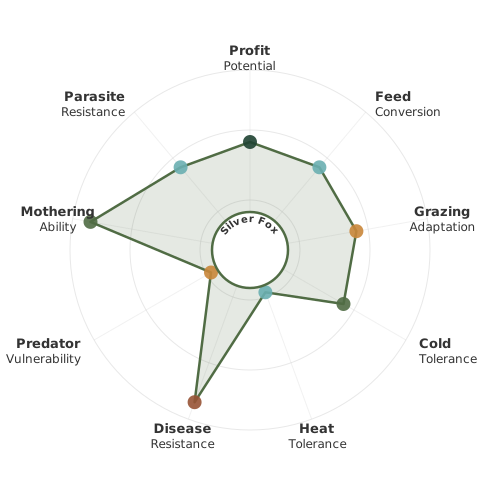
How These Traits Are Calculated
Trait dimensions are ordered clockwise starting from the top of the chart (12 o'clock position):
1. Financial Returns
Monthly income per doe from meat sales and breeding
WHAT: Evaluates profit potential combining litter size, growth rates, meat yield, and input costs. Productive does raising 8-12 kits per litter with fast growth (8-10 lbs in 10-12 weeks) generate strong monthly returns.
WHY: Rabbit profitability depends on litter frequency and kit survival. Does producing 30-50 kits annually with good survival rates generate $600-1,200 annual revenue versus $200-400 for lower producers, determining whether rabbit enterprises provide meaningful income or remain hobbies.
HOW: Calculated from production data (litter size, frequency, growth rates) combined with feed efficiency and mothering ability. Exceptional (≥2.6): large litters + fast growth + high survival. Typical (1.8-2.5): moderate production. Limited (<1.8): small litters, slow growth, or high mortality eroding returns.
2. Breeding Performance
Litter size, frequency, and kit survival rates
WHAT: Measures reproductive success combining litter size (kits born), breeding frequency (litters per year), conception rates, and kit survival to weaning. High performers consistently produce large, healthy litters.
WHY: Reproductive performance determines production capacity. Does averaging 8-10 kits per litter at 4-5 litters annually with 85%+ survival produce 30-45 market kits yearly versus 15-25 for lower performers—doubling output from same feeding and housing investment.
HOW: Composite assessment of documented breeding characteristics. Exceptional (≥2.6): 8-10+ kits per litter, 4-5+ litters yearly, high survival. Typical (1.8-2.5): 6-8 kits, 3-4 litters. Limited (<1.8): small litters, low frequency, or poor survival rates.
3. Feed Efficiency
Growth rate and meat yield per pound of feed consumed
WHAT: Measures how effectively rabbits convert feed into meat, evaluating feed-to-gain ratio (typically 3.5-4.5:1), growth rate to market weight (10-12 weeks), and meat dress-out percentage (actual meat from live weight).
WHY: Feed represents 60-75% of rabbit production costs. Breeds converting 3.5:1 versus 4.5:1 save $3-5 per fryer, adding $90-150 annually per doe's production. Efficient breeds reach market weight 2-3 weeks faster, accelerating cash flow and reducing cage occupancy time.
HOW: Rated from documented feed conversion, growth rates, and meat yield. Exceptional (≥2.6): 3.5:1 or better conversion, fast growth, high dress-out. Typical (1.8-2.5): 3.5-4.5:1 conversion. Limited (<1.8): >4.5:1 or slow growth extending feeding period.
4. Heat Tolerance
Performance in hot weather above 85°F (29°C)
WHAT: Evaluates adaptation to sustained heat above 85°F (29°C), measuring heat stress resistance, reproductive performance in heat (fertility and litter size often drop 30-50%), and survival during summer peaks.
WHY: Heat stress halts breeding, reduces feed intake, and increases mortality. Heat-adapted breeds maintain reproduction through summer where others experience 2-4 month breeding gaps, creating production holes that reduce annual output 20-40% in hot climates.
HOW: Rated from database trait 'heat_tolerance' based on documented characteristics. Exceptional (≥2.6): tropical adaptations, maintains breeding in 95°F+ (35°C+). Typical (1.8-2.5): moderate tolerance with cooling measures. Limited (<1.8): breeding stops above 85°F, high mortality risk without cooling systems.
5. Cold Tolerance
Performance in cold weather below 20°F (-7°C)
WHAT: Evaluates adaptation to sustained cold below 20°F (-7°C), measuring coat insulation, metabolic adaptation, and winter breeding success. Critical for year-round production in northern climates.
WHY: Cold-sensitive rabbits require heated buildings ($50-150 monthly winter costs), cease breeding in winter, and experience higher kit mortality. Cold-hardy breeds maintain year-round breeding in unheated hutches with basic wind protection, enabling consistent production through harsh winters.
HOW: Rated from database trait 'cold_tolerance' based on breed characteristics. Exceptional (≥2.6): thick fur, proven winter breeding in <0°F (-18°C), minimal shelter needed. Typical (1.8-2.5): moderate hardiness. Limited (<1.8): requires heated shelter for winter breeding, high kit mortality in cold.
6. Management Ease
Handling temperament and mothering quality
WHAT: Measures daily management simplicity combining temperament (calm vs nervous), mothering ability (nest-building, nursing, kit survival), handling cooperation, and health needs.
WHY: Difficult rabbits increase labor 2-3× through nervous behavior complicating handling, poor mothers requiring hand-rearing rejected kits, and health complications. Calm does with strong maternal instincts enable efficient colony management where problem breeds create constant interventions.
HOW: Weighted assessment: temperament (40%), mothering ability (40%), handling cooperation (20%). Exceptional (≥2.6): calm and docile, excellent mothers, easy handling. Typical (1.8-2.5): manageable with experience. Limited (<1.8): nervous or aggressive, poor mothers, frequent kit losses.
7. Colony Resilience
Disease resistance and survival under typical stresses
WHAT: Evaluates colony robustness across disease resistance (pasteurellosis, coccidiosis, respiratory infections), genetic vigor, stress adaptation, and overall hardiness determining survival through typical challenges.
WHY: Resilient breeds reduce veterinary costs, maintain productivity through disease challenges that cause 20-40% losses in susceptible lines, and thrive across diverse environments. This determines whether colonies require constant medical interventions or remain productive with basic preventive care.
HOW: Composite assessment of documented health characteristics and hardiness. Exceptional (≥2.6): strong disease resistance + genetic vigor + thrives with minimal intervention. Typical (1.8-2.5): standard resilience with routine care. Limited (<1.8): health-sensitive, requires intensive management.
Regenerative Advantages
- Mothering Ability: Possessing excellent maternal instincts and a calm demeanor, Silver Fox rabbits consistently achieve high litter survival rates.
- Hardiness: Developed in the US for fur and meat, this breed exhibits robust health and adaptability, requiring less intensive care across various climates.
- Docility: With a naturally calm and placid temperament, Silver Fox rabbits remain relaxed during handling, making them exceptionally easy to manage.
- Disease Resistance: Developed from hardy stock, this breed demonstrates a strong constitution and good natural immunity, performing well with standard husbandry.
- Shelter Dependency: Its thick fur provides substantial protection against cold and wind, reducing the need for elaborate supplemental shelter.
Know the Debate
- Heritage breeds offer niche value beyond meat production.
- Commercial viability depends on market, management, and scale.
- Rabbits are efficient but require diligent health and environmental control.
- Integrated systems leverage manure as a valuable fertility resource.
Value Streams
- Meat production
Experience Level
Suitable for first-time livestock owners
3
Understanding Silver Fox Rabbit Characteristics
Physical traits, temperament, and what makes this breed unique
Understanding Silver Fox Rabbit Characteristics
Physical traits, temperament, and what makes this breed unique
The Silver Fox rabbit is a visually striking heritage breed, immediately recognizable by its dense, silvery-grey fur that shimmers with a unique metallic sheen. This striking coat is complemented by a robust, well-muscled body, typically weighing between 9 to 10 pounds, making it a substantial animal. Originating in the United States in the early 20th century, the Silver Fox was developed as a dual-purpose breed, intended to provide both quality meat and luxurious fur. Its development involved crossing various breeds, including the Champagne d'Argent and the American, to achieve its distinctive appearance and productive traits.
What truly sets the Silver Fox apart is its combination of aesthetic appeal and practical utility. Unlike many smaller, specialized breeds, the Silver Fox offers a significant meat yield while also possessing fur that was historically highly valued. This dual-purpose nature means it can contribute effectively to a diversified farm enterprise. Furthermore, its calm and docile temperament is a notable characteristic, making it easier to handle and manage, which is a significant advantage for farmers, especially those new to rabbit husbandry or working within a busy regenerative system.
The breed's heritage status also means it carries genetic diversity that might be lost in more commercially focused breeds. This resilience and adaptability are crucial for regenerative systems that often rely on breeds capable of thriving in varied conditions and contributing to a closed-loop ecosystem. The Silver Fox is not just a rabbit; it's a living piece of agricultural history, embodying a time when farm animals were bred for multiple valuable outputs.
Sources behind this view
 Community
-
Silver Fox rabbits are described as 'docile meat bricks' with good pelts, while Giant Chinchillas are praised as heritage breeds with fast forage conversion and good temperament. The choice depends on
Read more (opens in new window) permies.com
4
Know the Debate
Raising Silver Fox rabbits on pasture offers unique benefits for regenerative farmers, especially concerning manure fertility and integration into ...
Know the Debate
Raising Silver Fox rabbits on pasture offers unique benefits for regenerative farmers, especially concerning manure fertility and integration into ...
Raising Silver Fox rabbits on pasture offers unique benefits for regenerative farmers, especially concerning manure fertility and integration into diverse livestock systems. However, their viability for commercial meat and fur production hinges on specific market demand and management intensity. While academic research confirms the general efficiency of rabbits and the importance of welfare-oriented housing for meat quality, field practitioners highlight that heritage breeds like the Silver Fox may present different economic trade-offs compared to high-volume commercial breeds. The decision to integrate them into a farm operation often depends on the farmer's specific goals, from niche market fur and meat production to leveraging their manure for garden fertility or integrating them into multi-species grazing systems.
Is Silver Fox rabbit viable for commercial meat and fur production?
Niche Market Potential (Fur & Meat)
Heritage breeds like the Silver Fox can be economically viable by focusing on dual-purpose traits (fur and meat) for niche markets. Their history as dual-purpose animals and unique fur quality offer value beyond standard meat production, appealing to farmers seeking diversified income streams or specialized customers.
Sources behind this view
Sources behind this view
 Videos & Podcasts
-
Explores raising heat-tolerant New Zealand rabbits on pasture, contrasting it with cage methods and referencing specialized breeds from Texas A&M. Discusses diversification benefits and observations of other grazing small animal systems.

-
Rabbit manure is a valuable 'cold' fertilizer with high nitrogen (2.4%), beneficial for vegetable gardens. White Oak Pastures uses a hybrid breeding model and pasture housing, aiming for full pasture-based breeding in the future using systems like 'rabbit hats' and tractors.

-
Diversified livestock includes pastured layers, pigs utilizing dairy byproducts, and pastured rabbits raised in small tractors around fruit trees. Rabbits fill a niche market, offering good returns with low input costs and are sold on-farm.

Commercial Scale Challenges
Commercial scale meat and fur production with heritage breeds like the Silver Fox faces challenges due to slower growth rates, potentially smaller litter sizes, and higher labor for specialized management compared to optimized commercial breeds. Some practitioners find scaling difficult to maintain profitability.
Sources behind this view
Sources behind this view
Videos & Podcasts
-
Cedric Shannon of Weathertop Farm found rabbits time-intensive and not economically viable for his business, despite market demand. While he loves rabbits and they can be synergistic with gardens, the labor and scaling challenges led him to focus on more profitable livestock.

 Research
-
One Health Approach to Rabbit Farming: Balancing Act between Environmental Impact, Farmers Livelihood, and Animal Welfare (opens in new window)
This study found: Raising rabbits offers a way to produce meat sustainably by considering the environment, farmers' income, and the animals' well-being. Rabbits are efficient at turning feed into meat, need less land, water, and food than many other farm animals, and produce fewer greenhouse gases and less waste. This makes rabbit farming a good option for sustainable meat production. It's important to give rabbits enough space to prevent stress and health problems, which also helps improve their productivity and the quality of the meat. Good animal welfare is not only the right thing to do but also makes good economic sense. By carefully managing population and ethical concerns, rabbit farming can successfully balance environmental protection, profitability, and animal welfare.
-
Potential for Developing Rabbit Farming Business in Salokaraja Village, Lalabata District, Soppeng Regency (opens in new window)
This study found: A study in Salokaraja Village, Indonesia, looked at the potential for starting a rabbit farming business. Rabbits are prolific breeders, having many litters per year with large numbers of kits each time. The village has excellent conditions for raising rabbits, including plenty of land, a cool climate, and easily accessible food like pasture and farm byproducts. There's also a large population, but not many people are currently raising rabbits, meaning less competition. Many existing livestock owners could benefit from more knowledge on how to care for and feed rabbits. While the farmers are experienced, a major hurdle is selling the meat, as people aren't very familiar with or keen on eating rabbit. More education on rabbit meat processing and its benefits is needed to boost demand.
System Integration Synergies
Rabbits, including heritage breeds, are highly productive and efficient when integrated into broader farm systems, yielding valuable manure for fertility and filling ecological niches in diversified or pasture-based setups. Their role in a holistic operation can significantly reduce external input costs.
Sources behind this view
Sources behind this view
Videos & Podcasts
-
A system for intensive protein production in small spaces (e.g., 3-car garage) integrates rabbits and chickens, utilizing yard waste and grass for feed. It yields thousands of pounds of meat and dozens of eggs daily, producing compost and allowing for year-round breeding and genetic selection.

-
Rabbits are essential for garden fertility in northern climates. Their manure, mixed with straw bedding, can be composted or applied directly to the garden, significantly boosting fertility and providing mulch.

-
Polyface Farm uses chickens to sanitize cow patties, control pests, and spread fertility. Egg-laying hens are in mobile 'egg mobiles,' and broilers/rabbits use mobile tractors. Winter housing integrates rabbit droppings for chickens, building soil.

Making Sense of the Differences
The viability of Silver Fox rabbits for commercial production depends heavily on market focus and system integration. While commercial meat operations may favor faster-growing, specialized breeds, heritage breeds like the Silver Fox can be successful in niche markets emphasizing fur quality or as part of diversified systems that leverage their manure for fertility. Academic insights point to general rabbit efficiencies but also acknowledge market and health challenges, while field practitioners show that successful integration into pasture-based or multi-species operations can offset some of the economic challenges of traditional meat scaling.
5
Management, Care & Feeding
Operational guidance for raising this breed successfully
Management, Care & Feeding
Operational guidance for raising this breed successfully
Managing Silver Fox rabbits effectively in a regenerative setting centers on providing them with a natural and stimulating environment. While they are hardy, access to fresh, clean water at all times is non-negotiable. Housing should offer protection from extreme weather and predators, with ample space for movement. For pasture-based systems, portable hutches or secure enclosures that allow rabbits to graze on fresh greens are ideal. This grazing not only supplements their diet but also allows them to express natural behaviors. Regular checks for parasites and maintaining good hygiene within their living spaces are crucial for preventing health issues.
Feeding Silver Foxes should prioritize high-quality forage, mimicking their natural diet. This includes a base of good quality hay and fresh greens, supplemented with a small amount of high-protein pellets, especially for pregnant or nursing does and growing kits. Avoid over-reliance on commercial feeds; instead, use them to balance the nutritional gaps. Introduce new greens gradually to prevent digestive upset. Their manure is a valuable resource; collect it regularly and compost it thoroughly before applying to fields or gardens to kill weed seeds and pathogens, maximizing its benefit to soil fertility.
Health management for Silver Foxes is largely preventative. Their calm nature means they are less susceptible to stress-related illnesses, but vigilance is still required. Monitor for common rabbit ailments such as respiratory infections, flystrike (especially in warmer months), and dental problems. Regular observation of appetite, droppings, and activity levels will help catch issues early. Due to their heritage status and genetic diversity, they tend to be quite robust, but maintaining optimal living conditions, a balanced diet, and a clean environment are the most effective ways to ensure a healthy, productive rabbitry.
Sources behind this view
Community
-
Raising rabbits, like Silver Fox, offers benefits such as manure for year-round food production due to slow-release nitrogen. The Livestock Conservancy aids in preserving endangered breeds.
Read more (opens in new window) permies.com -
Raising rabbits in colony settings requires robust predator protection (electric fence, buried fencing, guard dogs) and ample hiding places. Experienced raisers recommend sheds with deep straw bedding
Read more (opens in new window) permies.com