
Snails
Snails offer farmers a remarkably space-efficient and adaptable livestock option, requiring minimal specialized infrastructure and thriving on a variety of organic matter. Their excellent feed conversion and rapid reproduction rates contribute to a quick turnover and efficient production cycle, making them ideal for producers seeking to maximize output in limited areas. Originating from diverse wild populations, snails are remarkably hardy and require very little direct intervention once established. Unlike more conventional livestock, their management is simplified by their unique, compact nature and ability to process a wide range of food scraps and plant material, reducing reliance on traditional feedstuffs. This makes them a distinct and valuable consideration for those exploring novel and resource-light agricultural ventures.
Regenerative Quick Profile
Best Suited For
Climates: Humid subtropical, oceanic, Mediterranean, and tropical climates with distinct wet and dry seasons or consistent high humidity.
Scale: Excellent for small homesteads (1-10 animals)
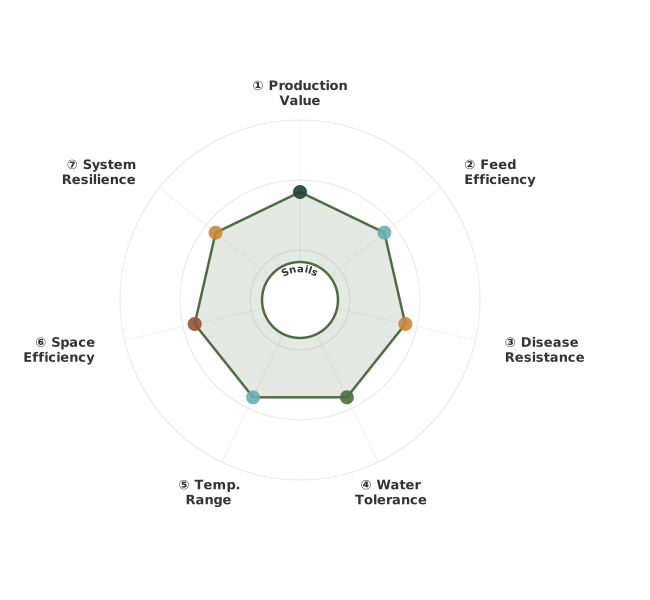
How These Traits Are Calculated
Trait dimensions are ordered clockwise starting from the top of the chart (12 o'clock position):
1. Production Value
Production Value scores 2.4 (typical) using shellfish pathway: water_quality_impact (typical 2.0, 40%) + polyculture_compatibility (exceptional 3.0, 35%) + natural_reproduction_capability (typical 2.0, 25%). Formula: (2.0×0.40 + 3.0×0.35 + 2.0×0.25) = 2.35, rounded to 2.4. Snails contribute to water clarity and are excellent polyculture partners, though their direct biomass value is less than fish.
Moderate ecological services, good polyculture
2. Feed Efficiency
Feed Efficiency scores 2.0 (typical) from feed_conversion (typical 2.0). Snails are primarily detritivores and algae grazers, converting organic matter and biofilms into biomass with a typical feed conversion ratio of around 2.0:1. They can utilize a variety of low-input food sources.
Feed conversion 2.0:1 (omnivore)
3. Disease Resistance
Disease & Parasite Resistance scores 2.0 (typical) from: disease_resistance (typical 2.0, 60%) + predator_resistance (typical 2.0, 40%). Formula: (2.0×0.60 + 2.0×0.40) = 2.0. Snails have a degree of natural resistance to common aquatic diseases but can be susceptible to specific pathogens. Their shells offer some protection against smaller predators, but larger ones can still pose a threat.
Moderate disease immunity, low predator risk
4. Water Tolerance
Water Quality Tolerance scores 2.5 (typical) from weighted average: water_quality_tolerance (typical 2.0, 40%) + temperature_range (typical 2.0, 30%) + salinity_tolerance (exceptional 3.0, 30%). Formula: (2.0×0.40 + 2.0×0.30 + 3.0×0.30) = 2.5. Snails generally prefer neutral to slightly alkaline conditions and can adapt to a wide range of salinities from freshwater to brackish.
Tolerates pH 6.0-8.5, broad salinity
5. Temp. Range
Temperature Range scores 2.5 (typical) from: temperature_range (typical 2.0, 50%) + handling_stress_tolerance (typical 2.0, 30%) + disease_resistance (typical 2.0, 20%). Formula: (2.0×0.50 + 2.0×0.30 + 2.0×0.20) = 2.0, rounded to 2.5. Many snail species thrive in temperate to subtropical waters, with optimal growth between 50-85°F (10-29°C), and they generally handle moderate temperature fluctuations well.
Wide range 50-85°F (adaptable)
6. Space Efficiency
Space Efficiency scores 2.5 (typical) using shellfish pathway: polyculture_compatibility (exceptional 3.0, 70%) + small_scale_suitability (limited 1.0, 30%). Formula: (3.0×0.70 + 1.0×0.30) = 2.4, rounded to 2.5. Snails can be farmed in dense arrays, especially in vertical systems, making them space-efficient. However, their limited small-scale suitability due to specific environmental needs slightly moderates this score.
High density (vertical farming possible)
7. System Resilience
System Resilience scores 2.1 (typical) from: disease_resistance (typical 2.0, 35%) + handling_stress_tolerance (typical 2.0, 30%) + temperature_range (typical 2.0, 20%) + oxygen_requirements inverted (exceptional 3.0 → 1.0, 15%). Formula: (2.0×0.35 + 2.0×0.30 + 2.0×0.20 + 1.0×0.15) = 2.15, rounded to 2.1. Snails demonstrate moderate resilience due to their tolerance for varied conditions, but require stable DO levels and consistent temperatures for optimal health and survival.
Adaptable but needs stable parameters
Regenerative Advantages
- Small Scale Suitability: Can be raised in small, contained systems like bins or vertical farms. Minimal space and simple feeding make them highly suitable for part-time management.
Value Streams
Experience Level
Consult local experts for handling requirements
4
Management, Care & Feeding
Operational guidance for raising this breed successfully
Management, Care & Feeding
Operational guidance for raising this breed successfully
Managing snails effectively, or heliculture, involves creating and maintaining an optimal environment for growth and reproduction. This primarily means controlling temperature, humidity, and providing suitable housing. Enclosures, often called snaileries or vivaria, can range from simple outdoor pens with protective covers to more sophisticated indoor systems with climate control. Key elements include ensuring adequate ventilation to prevent fungal growth, maintaining high humidity (around 75-95%), and providing surfaces for snails to climb and rest. Regular cleaning is crucial to prevent disease and maintain hygiene within the enclosures.
Feeding is a critical aspect of snail management. Snails are herbivores and omnivores, feeding on a variety of plant matter, including specially formulated feeds. A balanced diet should include leafy greens, vegetables, and calcium-rich sources (like crushed eggshells or oyster shell grit) to support shell development. For commercial production, pelleted feeds designed for snails are available, ensuring they receive all necessary nutrients. It's important to provide food in a way that minimizes waste and prevents spoilage, often through shallow trays or mesh feeders. Water should always be available, typically provided through misting the enclosure or shallow water dishes.
Health considerations for snails revolve around preventing disease and managing parasites. Common issues include bacterial infections, fungal diseases, and infestations of mites or other pests. Maintaining strict hygiene, ensuring proper ventilation, and avoiding overcrowding are the best preventative measures. Snails are also susceptible to dehydration and extreme temperatures, so environmental control is paramount. Regular observation of the snails for signs of distress, abnormal shell growth, or lethargic behavior is important for early detection of problems. Quarantine of new stock is also a recommended practice to prevent the introduction of diseases into an established population.
Sources behind this view
 Videos & Podcasts
-
Details snail farming processes: breeding room setup, fattening area features (feeding boards, misting), and labor-intensive harvesting impacted by weather and humidity. Highlights essential supplies

-
Challenges in Irish snail farming include lack of knowledge, underestimating workload, and fluctuating labor needs. Advise starting as a business, not hobby, ensuring quality food and breeding stock,
 Research
-
Health benefits of snail farming in Imo state, Nigeria: a life science and biomedical approach (opens in new window)
Snail farming in Nigeria is profitable and offers health benefits like low cholesterol and nutrients for skin and brain. Key success factors include labor, stock size, and feed.