
Texas Longhorn Cattle
The Texas Longhorn cattle breed simplifies management for farmers through their exceptional hardiness, superior mothering instincts, and remarkable foraging ability, thriving on diverse pasture. Originating from the Iberian Peninsula and adapted over centuries in the challenging Texas landscape, these cattle are renowned for their striking horns and lean carcasses. They require minimal intervention due to their inherent heat tolerance and impressive parasite resistance, making them ideal for extensive grazing operations and grass-finishing programs. Their adaptability to various grazing strategies, including mob and rotational grazing, further enhances their appeal for producers seeking efficient and resilient livestock.
Regenerative Quick Profile
Best Suited For
Climates: Semi-arid to humid subtropical, with hot summers and mild winters.
Terrain: Excels on flat to rolling terrain
Scale: Excellent for small homesteads (1-10 animals)
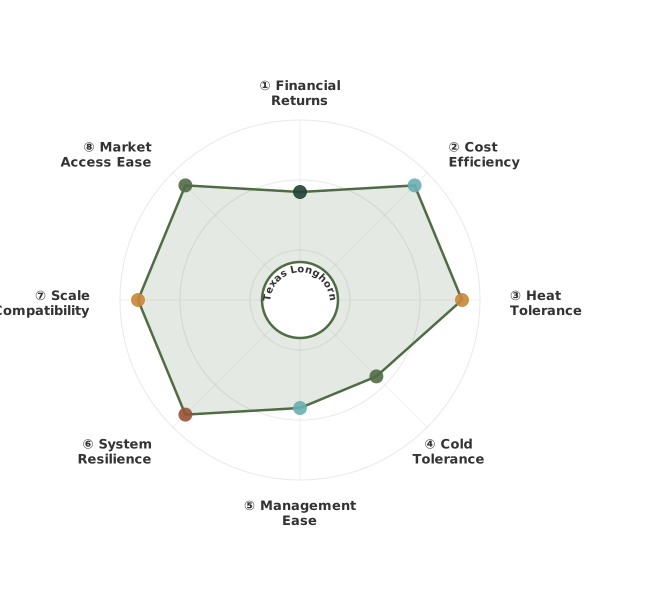
How These Traits Are Calculated
Trait dimensions are ordered clockwise starting from the top of the chart (12 o'clock position):
1. Financial Returns
Monthly income per animal after feed and care costs
WHAT: Evaluates net monthly profit by combining finish weight, time to market, price premiums, and input costs. Breeds with fast growth, efficient feed conversion, and premium market access generate higher returns per animal.
WHY: Farmers need clear income projections to sustain operations. Breeds returning $150+/month enable profitable small-scale operations, while those under $80/month require larger herds or alternative revenue streams to achieve viability.
HOW: Calculated from economics data (finish weight, months to finish, price premiums) combined with trait scores (feed efficiency, mothering ability, drought tolerance). Exceptional (≥2.6): fast growth ≤24 months + high capital efficiency >$180/month + low costs <30% of revenue. Typical (1.8-2.5): moderate returns or longer timelines. Limited (<1.8): slow growth >36 months or high input costs >50%.
2. Cost Efficiency
Feed, water, and input costs relative to output value
WHAT: Measures how well cattle convert inputs (pasture, hay, grain, water) into saleable output. Combines grass-finishing ability, feed efficiency, foraging capability, and water requirements into a composite efficiency score.
WHY: Input costs determine profitability more than market price. Breeds excelling on grass alone with minimal supplementation and low water needs reduce operating costs 40-60%, enabling viability even in drought years or when hay prices spike.
HOW: Weighted formula: grass finishing ability (30%), feed efficiency (30%), foraging ability (30%), water requirements inverted (10%). Exceptional (≥2.6): finishes on grass, exceptional feed conversion, thrives on rough forage. Typical (1.8-2.5): moderate efficiency, some grain needed. Limited (<1.8): grain-dependent, high inputs required.
3. Heat Tolerance
Performance in hot climates above 85°F (29°C)
WHAT: Evaluates breed adaptation to sustained heat above 85°F (29°C), measuring coat characteristics, metabolic adaptations, and documented performance in tropical or semi-arid regions.
WHY: Heat stress reduces feed intake 15-30%, lowers reproduction rates, and increases mortality. Heat-adapted breeds maintain productivity where others require expensive shade structures, cooling systems, or fail completely during summer peaks.
HOW: Rated from database trait 'heat_tolerance' based on breed characteristics. Exceptional (≥2.6): tropical origins, short sleek coats, proven success in regions >95°F (35°C). Typical (1.8-2.5): moderate tolerance, manageable with some shade. Limited (<1.8): temperate-adapted, struggles above 85°F without intensive cooling.
4. Cold Tolerance
Performance in cold climates below 20°F (-7°C)
WHAT: Evaluates breed adaptation to sustained cold below 20°F (-7°C), measuring coat thickness, body mass, metabolic efficiency, and documented performance in northern climates with harsh winters.
WHY: Cold stress increases feed requirements 20-40% for maintenance alone, elevates mortality in young stock, and complicates winter management. Cold-hardy breeds thrive outdoors year-round where others need expensive barns and supplemental heating.
HOW: Rated from database trait 'cold_tolerance' based on breed characteristics. Exceptional (≥2.6): northern origins, thick winter coats, proven success in regions <0°F (-18°C). Typical (1.8-2.5): moderate hardiness, windbreaks sufficient. Limited (<1.8): warm-adapted, requires shelter below 30°F (-1°C).
5. Management Ease
Temperament, handling requirements, and daily care needs
WHAT: Measures how straightforward cattle are to work with daily, combining temperament docility, calving ease, mothering ability, and fence respect into a management complexity score.
WHY: Difficult cattle increase labor 2-4× through longer handling times, more frequent escapes, calving interventions, and safety risks. Easy-handling breeds enable one-person operations and reduce stress for both farmer and animals.
HOW: Weighted formula: docility (40%), calving ease (30%), mothering ability (20%), fence respect (10%). Exceptional (≥2.6): calm docile temperament, unassisted calving, excellent mothers, respects basic fencing. Typical (1.8-2.5): manageable with experience. Limited (<1.8): nervous or aggressive, frequent interventions needed.
6. Drought & Disease Resilience
Survival and productivity under stress conditions
WHAT: Evaluates breed robustness across drought tolerance, parasite resistance, general hardiness, and disease resistance. Measures ability to maintain productivity when conditions deteriorate or health challenges arise.
WHY: Resilient breeds reduce veterinary costs 30-50%, survive drought years that devastate others, and maintain production through typical disease pressures. This determines whether you can sustain a herd through inevitable challenges or face repeated losses.
HOW: Weighted formula: drought tolerance (40%), parasite resistance (30%), general hardiness (20%), disease resistance (10%). Exceptional (≥2.6): thrives through drought, strong natural immunity, minimal interventions needed. Typical (1.8-2.5): moderate resilience, standard care sufficient. Limited (<1.8): requires intensive management to maintain health.
7. Farm Size Adaptability
Suitability across different farm scales and intensities
WHAT: Evaluates whether breeds work across small (1-10 head), medium (11-50 head), or large (50+ head) operations, considering size, handling needs, and infrastructure requirements.
WHY: Size mismatches create inefficiencies. Large commercial breeds overwhelm small pastures and facilities, while breeds requiring individual attention don't scale to large herds. Matching breed to scale prevents costly infrastructure changes or unmanageable daily workloads.
HOW: Matrix scoring based on breed size × small-scale suitability rating. Exceptional (≥2.6): adapts well to all scales or excels across 2+ scales. Typical (1.8-2.5): works best at specific scales. Limited (<1.8): narrow scale requirements, struggles outside optimal range.
8. Market Accessibility
Availability of buyers and premium market opportunities
WHAT: Evaluates market pathways by examining price premium potential, buyer network strength, and market accessibility. Inverted dimension where breeds requiring premiums to be viable score lower than those profitable at commodity prices.
WHY: Premium dependence creates risk. Breeds requiring 30-50% premiums need specialty buyers, direct marketing channels, and consumer education—adding 10-20 hours monthly overhead. Commodity-viable breeds sell through standard auctions with minimal marketing effort.
HOW: Inverted scoring: lower premiums = higher scores. Exceptional (≥2.6): profitable at commodity prices, sells through standard channels. Typical (1.8-2.5): moderate premium needs (10-20%), accessible specialty markets. Limited (<1.8): requires high premiums (30-50%), niche buyers, intensive marketing.
Regenerative Advantages
- Heat Tolerance: Descended from Spanish cattle, Texas Longhorns exhibit remarkable physiological adaptations for thriving in hot, arid conditions with minimal stress.
- Drought Tolerance: Evolved on sparse rangelands, Texas Longhorns are exceptionally water-efficient and adept at thriving on dry forage with minimal supplementation.
- Parasite Resistance: Their long history in parasite-rich environments has fostered superior natural resistance in Texas Longhorns, minimizing the need for treatments.
- Foraging Ability: Originating from challenging Iberian and Texan environments, Texas Longhorns were naturally selected for survival on meager resources. They possess an inherent drive to consume a wide spectrum of vegetation, including tough grasses, forbs, and scrub. Their ability to thrive and maintain reproductive success on sparse, unimproved rangelands with minimal supplementation solidifies their 'exceptional' rating for broad foraging ability, encompassing diverse marginal vegetation.
- Browsing Ability: Texas Longhorns demonstrate remarkable adeptness at utilizing woody vegetation, a direct consequence of their adaptation to arid rangelands where browse is a critical food source. They actively seek and efficiently consume shrubs, branches, and trees, efficiently converting this woody material into energy and maintaining good body condition. This specialized consumption of woody plants aligns perfectly with the 'exceptional' rating for browsing ability.
Know the Debate
- Longhorns offer lean beef but slower growth vs. modern breeds.
- Excel in heat and drought; many breed options exist.
- Focus on fertility, adaptation, and efficiency over single traits.
Value Streams
- Meat production
- Nutrient cycling and soil building
- Grassland management through grazing
- Carbon sequestration in grasslands
Experience Level
Requires confident handling, needs experienced handler
4
Know the Debate
Texas Longhorn cattle offer a resilient option for regenerative systems, particularly in challenging environments. Their suitability varies based o...
Know the Debate
Texas Longhorn cattle offer a resilient option for regenerative systems, particularly in challenging environments. Their suitability varies based o...
Texas Longhorn cattle offer a resilient option for regenerative systems, particularly in challenging environments. Their suitability varies based on the specific climate, management intensity, and desired production goals. In hotter, drier regions, producers may find Longhorns or other hardy breeds excel due to inherent heat and parasite resistance, often requiring fewer inputs and specialized handling. Conversely, operations focused on rapid growth and high carcass yields typical of commercial feedlot systems might find modern breeds more suited. The choice hinges on balancing environmental adaptation, input costs, and market demands for meat quality and production efficiency.
How do Texas Longhorns compare to modern breeds in growth and carcass yield?
Lean beef, slower growth vs. modern breeds
Ranchers and some research highlight heritage breeds like Texas Longhorns for lean beef and hardiness. However, they typically exhibit slower growth rates and lower carcass weights compared to breeds optimized for intensive feedlot finishing.
Sources behind this view
Sources behind this view
 Videos & Podcasts
-
Discusses 'feral cattle,' a tough, fertile, grass-finishing breed developed in the US, offering low maintenance, high calving ease, and increased productivity per hectare compared to larger breeds.

-
Explores the origins and traits of African cattle breeds (Cipole, Tuli, Maona) and their role in the 'Star South Texas Angus Red' composite, developed for hardiness, parasite resistance, and docility in low-input systems, contrasting with Western management practices.

-
Grazing Lands is developing low-input cattle genetics for regenerative systems, prioritizing hardiness, parasite resistance, and docility. They are experimenting with African-influenced breeds and composites to create efficient, self-sufficient herds.
 From the Web
-
Starting a beef herd involves choosing between cow-calf, backgrounding, or feedlot operations. Producers must also decide on purebred vs. commercial cattle, select breeds like Black Angus or Hereford, and establish a reproductive plan.
Faster growth with high yield from commercial breeds
Academic studies and extension guides often focus on breeds optimized for rapid growth and high carcass yield. These breeds are typically selected for traits that lead to faster finishing times and higher meat output in more controlled or intensive systems.
Sources behind this view
Sources behind this view
 Research
-
Comparison of growth traits of eight beef cattle breeds in the Czech Republic (opens in new window)
This study found: Abstract. Eight beef cattle breeds, Angus (A), Blonde d' Aquitaine (BA), Charolais (C), Czech Pied (CP), Hereford (H), Limousin (L), Piemontese (P) and Simmental (S), were analysed for the following calf traits: birth weight (BW), 210- and 365-day weight ( 210W, 365W) and average daily gains from birth to 210 days (ADG1), from 210 to 365 days (ADG2) and from birth to 365 days (ADG3). Phenotypic parameters were estimated by linear model procedures including the fixed effects of year of birth (1992–1998), herd, sex (male, female), calf number (single, twin), parity and random sire effects. Literature values of heritability estimates were used to derive genetic standard deviations and genetic range for comparison of genetic variation within and between breeds. The means of Blonde d' Aquitaine were highest for all growth traits except for BW, followed by Charolais and Simmental, then Angus, Czech Pied and Limousin with intermediate values and Piemontese and Hereford with lowest growth except for BW in Piemontese and ADG1 in Hereford. Blonde d' Aquitaine also showed high standard deviations for most growth traits except for BW, whereas for Limousin and Piemontese low standard deviations were estimated and for other breeds no consistent pattern was observed. Coefficients of variation were generally high for Hereford and low for Angus. Hypothetical frequency curves were used for comparison of genetic variation within breeds and between breeds. Comparison of extreme and average breeds showed ranges of genetic levels between 79 and 154 % of the average breed level thus indicating the large overall genetic variation for growth traits in beef cattle. Between-breed selection with immediate impact, but steady erosion by time, as well as within-breed selection with slow but steady increase and renewed variation should both be applied for optimal exploitation of genetic resources in the beef industry.
From the Web
-
Starting a beef herd involves choosing between cow-calf, backgrounding, or feedlot operations. Producers must also decide on purebred vs. commercial cattle, select breeds like Black Angus or Hereford, and establish a reproductive plan.
-
Prioritizes longevity, adaptability, fertility, and soundness in livestock genetic selection, particularly for beef cattle. Recommends practical, on-farm observation over catalog data for breeding stock, emphasizing that non-breeding females and underperforming bulls can be finished for meat, ensuring financial return.
Making Sense of the Differences
The difference in growth rates and carcass yield between Texas Longhorns and modern beef breeds lies in their breeding objectives and adaptation. Modern breeds are often optimized for rapid growth and high marbling in feedlot settings, leading to faster finishing times and higher yields. Texas Longhorns, evolved for efficiency on sparse forage and with lower input needs, naturally have slower growth and leaner carcasses. Farmers weighing this choice should consider their market focus: high-volume, rapid turnover meat production favors modern breeds, while low-input, pasture-based systems and demand for lean beef may benefit from Longhorns.
How do Texas Longhorns compare to other breeds in heat tolerance and drought adaptation?
Hardy adaptation to heat and drought
Texas Longhorns and other heritage breeds are noted for their excellent heat tolerance and ability to thrive in arid, low-input environments. They often exhibit natural pest resistance and can utilize sparse forage effectively.
Sources behind this view
Sources behind this view
Videos & Podcasts
-
Explores the origins and traits of African cattle breeds (Cipole, Tuli, Maona) and their role in the 'Star South Texas Angus Red' composite, developed for hardiness, parasite resistance, and docility in low-input systems, contrasting with Western management practices.
-
African cattle breeds offer valuable traits like heat and disease resistance, stemming from evolutionary pressures. They exhibit strong herd instinct, easy-care, and sexual dimorphism.

-
Adequate energy intake is crucial for cow breeding success. Avoid underfeeding and select genetics suited to the environment, such as red-hided cattle for hot climates, to ensure good body condition and performance.

From the Web
-
Regenerative ranching emphasizes grazing management, not specific breeds. Desirable cows fit their environment, are moderate in size (1,000-1,200 lbs), efficient in reproduction and forage use, and rebreed annually. Crossbreeding for heterosis is beneficial. Moderate milking ability and alignment with peak forage production are key.
Breed-specific adaptations for extreme climates
Research and breed development highlight certain breeds, including African types and composites, for superior physiological adaptations to heat, disease, and drought, suggesting that specific genetic lines are key.
Sources behind this view
Sources behind this view
Videos & Podcasts
-
Explores the origins and traits of African cattle breeds (Cipole, Tuli, Maona) and their role in the 'Star South Texas Angus Red' composite, developed for hardiness, parasite resistance, and docility in low-input systems, contrasting with Western management practices.
-
Grazing Lands is developing low-input cattle genetics for regenerative systems, prioritizing hardiness, parasite resistance, and docility. They are experimenting with African-influenced breeds and composites to create efficient, self-sufficient herds.
Research
-
Knowledge co‐production with traditional herders on cattle grazing behaviour for better management of species‐rich grasslands (opens in new window)
This study found: Researchers studied how beef cattle graze in diverse pastures in Central Europe and interviewed over 450 local herders about their traditional management techniques. They found that cattle are selective eaters, recognizing many different plant species. Herders possess deep knowledge of animal behavior and actively manage their herds to influence grazing patterns, ensuring animals spend more time in less-eaten areas and less time being overly selective in varied fields. These traditional herding methods offer significant conservation benefits, such as preventing under- and overgrazing, and helping to control weeds and invasive plants. The study emphasizes the value of combining scientific research with the practical, long-held knowledge of herders to create more effective and sustainable grassland management strategies.
-
Assessing cow-calf welfare. Part 1: Benchmarking beef cow health and behavior, handling; and management, facilities, and producer perspectives. (opens in new window)
This study found: A study on 30 beef ranches in California looked at how well cows and their calves were being cared for. Researchers measured the health of the animals, how they behaved, and how people handled them during routine procedures like pregnancy checks. They also interviewed ranchers about their management practices and facilities. Overall, serious health issues were rare, but how animals behaved and how stockpeople handled them varied a lot from ranch to ranch. For example, some ranches used electric prods frequently, while others didn't at all. Ranchers generally agreed on herd health plans but had different ideas about animal pain. The study highlighted challenges in creating a standardized way to assess welfare, such as making sure visits were scheduled when animals were being processed and ensuring observations were clear and comparable across different farms.
Making Sense of the Differences
Texas Longhorns are widely recognized for their heat and drought tolerance due to their genetic history in arid Southwestern climates. While they perform exceptionally well in these conditions, other breeds, particularly those from African origins like Zebu types, also possess significant adaptations for hot and dry environments. The superiority of one breed over another often depends on the specific environmental pressures, management intensity, and desired production outcomes. For producers in extreme climates, selecting animals with documented adaptation (e.g., nocturnal grazing, physiological markers of heat tolerance) is crucial, and may involve crossbreeding or choosing breeds specifically evolved for such conditions.
5
Management, Care & Feeding
Operational guidance for raising this breed successfully
Management, Care & Feeding
Operational guidance for raising this breed successfully
Managing Texas Longhorns effectively in a regenerative context emphasizes working with their natural hardiness and foraging instincts. Their needs are relatively simple: access to adequate pasture, clean water, and essential minerals. Due to their robust nature, they typically require less intensive management than more specialized breeds. Rotational grazing is highly recommended to maximize pasture utilization, stimulate plant growth, and improve soil health, allowing Longhorns to move and graze diverse forage types as they would naturally.
Feeding management should focus on providing high-quality forages, as this is their primary and most efficient nutrient source. While they can survive on sparser vegetation, optimal health and production will be achieved with access to good pasture. Supplemental feeding, if necessary, should be based on forage analysis and the specific needs of the herd, often involving mineral supplements tailored to their environment. Their lean meat is a result of their genetics and diet, so avoiding excessive grain finishing is key to maintaining the breed's characteristic meat quality.
Health management for Longhorns is generally straightforward. Their natural disease and parasite resistance means fewer interventions are typically required. Regular observation for any signs of illness or injury is still crucial, as with any livestock. Vaccinations should follow a veterinarian's recommendation based on regional risks. Their longevity and ease of calving are significant advantages, reducing the need for assistance during birth. Horn care might be a consideration in very confined spaces, but in pasture settings, it's rarely an issue.
Sources behind this view
Videos & Podcasts
-
Alejandro, a rancher in the Chihuahuan Desert, transitioned from conventional to regenerative grazing. He emphasizes education, mentorship, and adapting cattle genetics (e.g., Hereford, Red Angus, Bra
-
Advocates for single large herds, multi-species grazing on rangeland, raising own bulls/heifers for ranch-specific genetics, and calving during the growing season for improved cattle management.

-
Ranching in the Chihuahuan Desert using holistic management and regenerative grazing, transforming degraded land into diverse grasslands by mimicking nature, focusing on adapted genetics, and leveragi

Research
-
Pecuária bovina regenerativa na América Latina e no Caribe, muito além do oximoro (opens in new window)
Latin America and the Caribbean are prime locations for regenerative cattle farming, focusing on animal welfare, biodiversity, and human health to reduce environmental impact and methane emissions.
7
Production Capabilities & Market Economics
Business case evaluation and production metrics
Production Capabilities & Market Economics
Business case evaluation and production metrics
Meat Production Economics
| Category | Value |
|---|---|
| Finish Weight | 900-1200 lbs 408.2-544.3 kg |
| Months to Finish | 24-36 |
| Price Premium | 0% to 20% |
| Annual Input Cost/Head | $300-600 |
| DTC Retail Price | $10-14 |
| Hanging Weight Yield | 57-61 |
| Packaged Meat per Animal | 300-440 lbs 136-200 kg |
| Processing Cost | $700-1000 |
| Gross DTC Revenue | $3300-5800 |
Finish Weight: Market weight for grass-finished cattle. Varies by breed genetics, frame size, and forage quality. Smaller-framed heritage breeds typically finish at 900-1100 lbs vs. 1200-1400 lbs for larger commercial breeds.
Months to Finish: Time from weaning to finish weight on grass alone (no grain). Grass-finishing takes 24-30 months vs. 14-18 months for grain-finished feedlot cattle. Patient timeline suits regenerative grazing operations.
Price Premium: Premium above conventional beef prices ($0-6/lb range). Grass-finished beef typically sells for $6-12/lb vs. $4-6/lb for conventional. Premium only applies when farm qualifies through certification (organic, grass-fed verified, Animal Welfare Approved) or direct marketing establishes provenance. Without certification or direct sales channels, premium falls to $0.
Annual Input Cost/Head: Minerals, health care, pasture maintenance, and winter hay per animal per year. Excludes infrastructure, land, and labor. Grass-based systems have minimal input costs compared to grain finishing.
DTC Retail Price: Direct-to-consumer retail price range per pound of packaged beef (cuts average). Grass-finished DTC beef typically sells for $8-14/lb across all cuts. Breed reputation, marbling quality, and local market demand drive variation. Prices reflect farm-gate or farmers market sales — wholesale and commodity channels are significantly lower.
Hanging Weight Yield: Percentage of live weight retained as hanging carcass (after hide, head, organs removed). Most cattle dress out at 58-64% of live weight. Leaner grass-finished cattle may hang slightly lower than grain-finished. Breed frame size and condition affect yield.
Packaged Meat per Animal: Take-home meat after cutting and wrapping (typically 60-65% of hanging weight). Bone-in cuts yield more weight than boneless. Final packaged weight depends on cut sheet choices — ground beef maximizes total pounds, premium steaks reduce total weight but increase per-pound value.
Processing Cost: USDA-inspected slaughter, cutting, wrapping, and labeling per animal. Costs vary by region and processor availability — rural areas with more processors tend to be cheaper. Includes kill fee ($75-150), cut-and-wrap ($0.65-1.10/lb hanging), and any specialty processing (jerky, sausage). USDA inspection required for retail sales; custom-exempt processing costs less but meat cannot be resold.
Gross DTC Revenue: Total revenue per animal when selling all cuts direct to consumer. Calculated from packaged weight × average DTC price per pound. Does not deduct processing, marketing, delivery, or production costs. Actual net profit depends heavily on marketing efficiency and processing costs.
Sources behind this view
Videos & Podcasts
-
For profitable grass-finished beef, select appropriate genetics (smaller frame size, e.g., 1200-1300 lb bulls) and focus on animal performance. Larger frame animals often require supplemental feed and
-
Grass-finishing mechanics involve using quality genetics on planted forages in irrigated circles, with daily moves to ensure optimal nutrient intake. Animals are finished to 1200-1250 lbs, aiming for
-
Explains how finishing speed, genetics, soil fertility, pasture diversity, and proper processing are crucial for high-quality grass-finished beef. Addresses issues like cold shortening and the importa

-
Achieve profitable grass-finished beef by focusing on low cost of production through good pasture management, single-mob grazing, and ensuring animals have healthy digestive systems and shed winter co

 Community
-
Conventional beef systems yield standardized, higher-quality carcasses compared to grass-fed systems, which have variable harvest ages and lower marbling. While grass-fed beef has more omega-3s, conve
Read more (opens in new window) ucanr.edu -
Grass-finishing is the final fattening stage before slaughter, requiring target weight and minimal stress. While forage quality impacts fat profile and flavor, achieving tender, flavorful beef relies
Read more (opens in new window) permies.com
Research
-
Grass-fed vs. grain-fed beef systems: performance, economic, and environmental trade-offs. (opens in new window)
California study found conventional beef had better carcass quality and lower GHG emissions, while grass-fed systems had varied water/energy use and higher costs. No single system was superior across
-
Growth curve, blood parameters and carcass traits of grass-fed Angus steers. (opens in new window)
Grass-fed Angus steers took 188 days longer to market with 70% slower weight gain than grain-fed, but produced similar tenderness and better yield grades, though grain-fed had higher quality grades.
-
Integrated metabolomic and transcriptome analyses reveal finishing forage affects metabolic pathways related to beef quality and animal welfare. (opens in new window)
Grass-finished beef is more tender, has better fat profiles (more omega-3s), and comes from less stressed animals compared to grain-finished beef, according to gene and body chemistry analysis.
-
Net protein contribution and enteric methane production of pasture and grain-finished beef cattle supply chains. (opens in new window)
Australian study: Grass-fed beef is far more efficient at producing human-usable protein than grain-finished beef, but grass-fed systems have higher methane emissions per unit of protein.