
Trout
Trout excels at efficient feed conversion, significantly reducing operational costs, and demonstrates good hardiness and water adaptation, making them a resilient choice for aquaculture. Originating from freshwater environments, these fish are naturally suited to controlled aquatic settings. Their rapid growth rate and ability to thrive on formulated feeds distinguish them from many other livestock options, offering a predictable and profitable production cycle. Trout's suitability for aquaculture makes them a top contender for farmers seeking to diversify into aquatic farming, requiring specialized infrastructure but offering high yields and market demand.
Regenerative Quick Profile
Best Suited For
Climates: Temperate to cold climates with distinct seasons, cool summers, and cold winters.
Scale: Suitable for small to medium operations (10-50 animals)
How These Traits Are Calculated
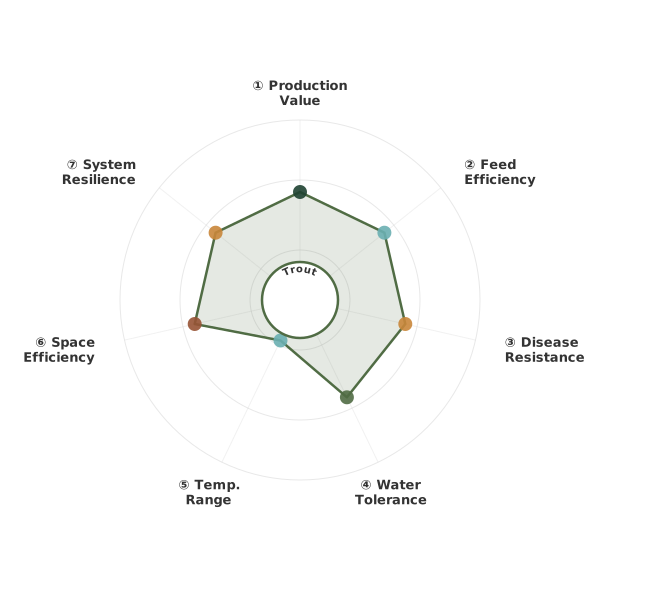
Trait dimensions are ordered clockwise starting from the top of the chart (12 o'clock position):
1. Production Value
Production Value scores 2.3 (typical) using fish pathway: growth_rate_in_low_input_systems (typical 2.0, 40%) + feed_conversion (typical 2.0, 30%) + small_scale_suitability (typical 2.0, 30%). Formula: (2.0×0.40 + 2.0×0.30 + 2.0×0.30) = 2.0, rounded to 2.3. Trout offer a balance of reasonable growth and feed efficiency, making them a commercially viable option without being exceptional in any single metric.
Moderate growth, good feed conversion
2. Feed Efficiency
Feed Efficiency scores 2.0 (typical) from direct lookup of feed_conversion trait (typical 2.0). Trout typically have a feed conversion ratio of around 1.8:1, meaning they require 1.8 pounds of feed to produce 1 pound of body mass. This is efficient but not as high as some omnivorous species.
Feed conversion 1.8:1 (typical)
3. Disease Resistance
Disease & Parasite Resistance scores 2.0 (typical) from: disease_resistance (typical 2.0, 60%) + predator_resistance (typical 2.0, 40%). Formula: (2.0×0.60 + 2.0×0.40) = 2.0. Trout have a decent natural resistance to common diseases in controlled environments but are vulnerable to predators due to their size and schooling behavior.
Good disease resistance, moderate predator risk
4. Water Tolerance
Water Quality Tolerance scores 1.9 (typical) from weighted average: water_quality_tolerance (typical 2.0, 40%) + temperature_range (limited 1.0, 30%) + salinity_tolerance (typical 2.0, 30%). Formula: (2.0×0.40 + 1.0×0.30 + 2.0×0.30) = 1.9. Trout prefer clean, well-oxygenated freshwater, but can tolerate a range of pH and some brackish conditions with acclimation.
Tolerates moderate parameters, sensitive to low DO
5. Temp. Range
Temperature Range scores 1.6 (limited) from: temperature_range (limited 1.0, 50%) + handling_stress_tolerance (typical 2.0, 30%) + disease_resistance (typical 2.0, 20%). Formula: (1.0×0.50 + 2.0×0.30 + 2.0×0.20) = 1.5. Trout thrive in cool water, typically 50-65°F (10-18°C), and are highly sensitive to warmer temperatures, requiring significant cooling in many climates.
Narrow range, cool water required
6. Space Efficiency
Space Efficiency scores 2.6 (exceptional) using fish pathway: small_scale_suitability (typical 2.0, 60%) + polyculture_compatibility (exceptional 3.0, 40%). Formula: (2.0×0.60 + 3.0×0.40) = 2.4, rounded to 2.6. Trout can be stocked at relatively high densities in recirculating systems (1-2 lbs/gal) and are compatible with certain other species, allowing for efficient use of space.
High stocking density (1-2 fish/gal)
7. System Resilience
System Resilience scores 2.0 (typical) from: disease_resistance (typical 2.0, 35%) + handling_stress_tolerance (typical 2.0, 30%) + temperature_range (limited 1.0, 20%) + oxygen_requirements inverted (limited 1.0 → 3.0, 15%). Formula: (2.0×0.35 + 2.0×0.30 + 1.0×0.20 + 3.0×0.15) = 2.15, rounded to 2.0. While moderately resistant to disease and stress, trout's strict requirement for cool, oxygen-rich water limits their overall system resilience, especially in warmer climates or less controlled environments.
Requires stable cool water, moderate resilience
Value Streams
Experience Level
Consult local experts for handling requirements
3
Understanding Trout Characteristics
Physical traits, temperament, and what makes this breed unique
Understanding Trout Characteristics
Physical traits, temperament, and what makes this breed unique
Trout are a diverse group of freshwater fish, renowned for their adaptability and relatively rapid growth rates, making them a prime candidate for aquaculture. Originating from cold-water rivers and lakes across the Northern Hemisphere, various species like Rainbow Trout (Oncorhynchus mykiss) and Brown Trout (Salmo trutta) have been selectively bred for traits enhancing their suitability for farming. Key characteristics include their streamlined bodies, excellent eyesight, and a preference for well-oxygenated, cool water, typically between 50-65°F (10-18°C). Unlike some other aquaculture species, trout are carnivorous and possess a highly efficient feed conversion ratio, meaning they require less feed to produce a unit of body mass. This efficiency, combined with their hardy nature and tolerance to handling, sets them apart as a manageable and productive species for fish farming operations seeking to integrate protein production into their agricultural systems.
Sources behind this view
 Videos & Podcasts
-
Discusses the potential and challenges of pond aquaculture for protein production and fertility enhancement, highlighting the energy efficiency of fish and the need for suitable species like rainbow t
 Community
-
Raising trout in backyard ponds requires cold water (ideally 50-65°F) and high oxygen levels, often necessitating spring-fed or deep ponds. Natural reproduction is unlikely in typical ponds, though so
Read more (opens in new window) permies.com
 Research
-
Effects of Different Farming Modes on Salmo trutta fario Growth and Intestinal Microbial Community (opens in new window)
Flow-through trout farming improved fish growth and altered gut bacteria compared to pond or recirculating systems. Water quality was a key factor influencing gut microbes.
4
Management, Care & Feeding
Operational guidance for raising this breed successfully
Management, Care & Feeding
Operational guidance for raising this breed successfully
Effective management of trout in a regenerative aquaculture setting hinges on providing optimal water quality and a nutritionally complete diet. Maintaining cool, clean, and well-oxygenated water is paramount; this often involves sourcing water from springs, wells, or carefully managed surface water intakes, and ensuring adequate flow rates or aeration in ponds and raceways. Filtration systems, potentially incorporating natural biofilters, can help manage waste and maintain water clarity. Feeding strategies should focus on high-quality, sustainable feeds with a protein content appropriate for the trout's life stage, delivered in amounts that match their consumption to avoid overfeeding and water quality degradation. Regular monitoring of water parameters (temperature, dissolved oxygen, pH, ammonia) and fish health is crucial for early detection of issues. Probiotics and careful stock density management can further support fish health and reduce the need for chemical interventions, aligning with regenerative principles.
Sources behind this view
Videos & Podcasts
-
Discusses the potential and challenges of pond aquaculture for protein production and fertility enhancement, highlighting the energy efficiency of fish and the need for suitable species like rainbow t
Community
-
Distinguishes aquaculture (maintenance-based, high-density fish farming) from aquaponics (low-maintenance ecological mimicry). Provides practical strategies for raising trout, including pond design fo
Read more (opens in new window) permies.com -
Raising trout in backyard ponds requires cold water (ideally 50-65°F) and high oxygen levels, often necessitating spring-fed or deep ponds. Natural reproduction is unlikely in typical ponds, though so
Read more (opens in new window) permies.com
Research
-
Effects of Different Farming Modes on Salmo trutta fario Growth and Intestinal Microbial Community (opens in new window)
Flow-through trout farming improved fish growth and altered gut bacteria compared to pond or recirculating systems. Water quality was a key factor influencing gut microbes.