
Welsh Harlequin Duck
Also known as: welsh harlequin
The Welsh Harlequin duck simplifies management for farmers with its remarkable cold hardiness and exceptional foraging ability, thriving on diverse pasture and significantly reducing feed costs. Originating from Wales, these medium-sized ducks are also highly water-dependent, making them ideal for environments with access to ponds or water features, where they excel at pest control. Their good disease resistance and docility further contribute to their low-maintenance profile. Welsh Harlequins are particularly well-suited for silvopasture systems, where their foraging prowess can be utilized to manage undergrowth and insect populations amongst trees, requiring minimal intervention beyond providing adequate water. Their reliable egg production adds another valuable dimension for farmers seeking multi-purpose livestock.
Regenerative Quick Profile
Best Suited For
Climates: Temperate oceanic to subpolar oceanic
Scale: Excellent for small homesteads (1-10 animals)
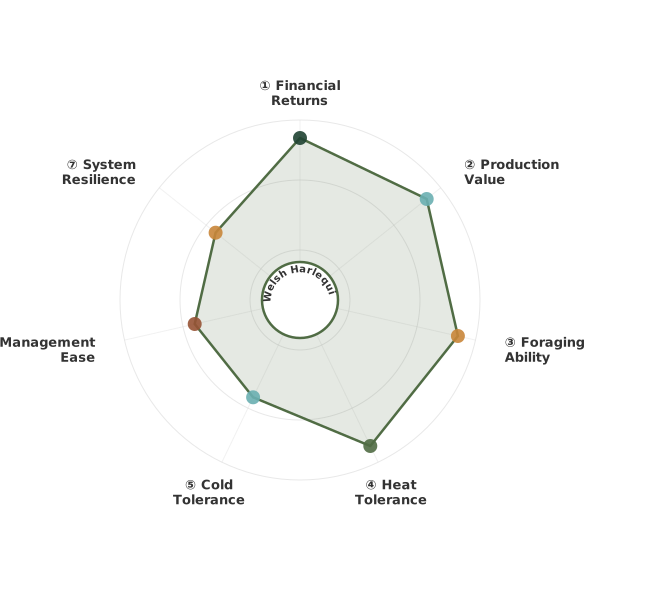
How These Traits Are Calculated
Trait dimensions are ordered clockwise starting from the top of the chart (12 o'clock position):
1. Financial Returns
Annual income per bird from eggs, meat, or specialty products
WHAT: Evaluates profit potential for specialty poultry (turkeys, ducks, geese, guinea fowl) combining meat yield, egg production (where applicable), growth timelines, and market premiums for specialty products.
WHY: Specialty poultry targets premium markets—heritage turkeys at $6-8/lb versus $1.50 commodity, duck eggs at $8-12/dozen versus $3-5 chicken eggs. Understanding enterprise-specific returns helps match birds to market opportunities, with successful operations generating 2-4× returns of conventional poultry.
HOW: Calculated from production data (market weight, timelines, egg yield) combined with efficiency traits and premium market access. Exceptional (≥2.6): strong output + premium markets + efficient growth. Typical (1.8-2.5): moderate production and markets. Limited (<1.8): low output or limited market access.
2. Production Value
Meat yield, egg production, and specialty product quality
WHAT: Measures output quality and quantity combining meat characteristics (size, flavor, texture prized by consumers), egg production (for laying breeds), and specialty products (foie gras, down feathers) that command premiums.
WHY: Production value determines market positioning. Heritage turkeys with superior flavor justify $6-8/lb premiums, duck eggs with rich yolks attract baking customers at $1+ per egg, quality down commands $20-40/lb. High production value enables profitable small-scale operations where commodity birds require large volume to achieve viability.
HOW: Composite assessment of documented production characteristics and market quality. Exceptional (≥2.6): superior product quality + strong output + specialty attributes. Typical (1.8-2.5): good standard production. Limited (<1.8): commodity quality, minimal specialty value.
3. Foraging Ability
Feed cost reduction through natural foraging behavior
WHAT: Measures effectiveness at obtaining nutrition through foraging—consuming insects, seeds, greens, and other natural foods—reducing purchased feed requirements 20-50% in pasture-based systems.
WHY: Aggressive foragers reduce feed costs while providing pest control (insects, ticks, slugs) and weed management services. Turkeys consuming 30-40% of calories from forage save $15-30 per bird over growing season, making the difference between profitable and marginal operations.
HOW: Rated from documented foraging behavior and feed reduction potential. Exceptional (≥2.6): excellent foragers, 40-50% feed reduction, active pest control. Typical (1.8-2.5): moderate foraging, 20-30% reduction. Limited (<1.8): minimal foraging, requires full feeding.
4. Heat Tolerance
Performance in hot weather above 85°F (29°C)
WHAT: Evaluates adaptation to sustained heat above 85°F (29°C), measuring heat stress resistance, growth/production maintenance, and survival during summer peaks. Critical for southern operations and summer meat production.
WHY: Heat stress reduces feed intake 20-40%, slows growth, and increases mortality—particularly problematic for turkeys naturally susceptible to heat. Heat-adapted breeds maintain production schedules where others require expensive cooling or suffer significant losses during summer.
HOW: Rated from database trait 'heat_tolerance' based on documented characteristics. Exceptional (≥2.6): maintains production in 95°F+ (35°C+), low mortality. Typical (1.8-2.5): manageable with shade and water. Limited (<1.8): high heat sensitivity, struggles above 85°F.
5. Cold Tolerance
Performance in cold weather below 20°F (-7°C)
WHAT: Evaluates adaptation to sustained cold below 20°F (-7°C), measuring feather insulation, cold-weather foraging activity, and winter production/growth maintenance. Important for year-round outdoor systems in northern climates.
WHY: Cold-sensitive birds require heated housing ($50-200 monthly winter costs), reduce activity limiting foraging value, and experience higher mortality. Cold-hardy breeds remain active outdoors year-round, maintain winter egg production (ducks/geese), and thrive with basic shelter.
HOW: Rated from database trait 'cold_tolerance' based on breed characteristics. Exceptional (≥2.6): excellent insulation, active in <0°F (-18°C), maintains winter production. Typical (1.8-2.5): moderate hardiness. Limited (<1.8): requires heated shelter, limited winter activity.
6. Management Ease
Handling temperament and care requirements
WHAT: Measures daily management simplicity combining temperament (calm vs flighty/aggressive), health needs, natural breeding ability (versus artificial insemination required), and routine handling cooperation.
WHY: Difficult birds increase labor 2-3× and create safety concerns. Aggressive turkeys or geese require protective equipment during handling, flighty birds complicate catching for processing, breeds requiring AI add complexity. Calm birds with good health enable confident management by beginners.
HOW: Weighted assessment: temperament (50%), health needs (30%), breeding ease (20%). Exceptional (≥2.6): calm and manageable, robust health, natural breeding. Typical (1.8-2.5): manageable with experience. Limited (<1.8): aggressive or nervous, high health needs, or breeding complications.
7. Flock Resilience
Disease resistance and survival under typical stresses
WHAT: Evaluates flock robustness across disease resistance (particularly respiratory issues and common poultry diseases), parasite tolerance, predator awareness, and general hardiness determining survival through typical challenges.
WHY: Resilient breeds maintain productivity through challenges causing 20-50% losses in susceptible birds—surviving disease pressure, evading predators through awareness, resisting parasites. This determines whether flocks thrive with basic care or require intensive interventions and predator-proof housing.
HOW: Composite assessment of documented health and survival characteristics. Exceptional (≥2.6): strong disease resistance + predator-savvy + hardy. Typical (1.8-2.5): standard resilience with routine care. Limited (<1.8): health-sensitive or vulnerable, requires intensive management and protection.
Regenerative Advantages
- Heat Tolerance: An active, foraging lifestyle and efficient thermoregulation, coupled with water access, enable them to perform well in heat, exceeding many temperate breeds.
- Foraging Ability: The Welsh Harlequin duck demonstrates exceptional foraging ability by readily consuming a wide array of non-grass vegetation, including weeds, insects, and forbs. Their description emphasizes thriving in diverse, unimproved environments and silvopasture systems, indicative of their capacity to utilize marginal vegetation far beyond quality forage. This breed significantly reduces reliance on supplemental feed by actively scavenging for nutrition in varied landscapes. Their ability to manage undergrowth and thrive in such conditions solidifies their status as exceptional foragers.
- Docility: Their calm disposition and ease of handling, rarely displaying fear or aggression, establish them as a benchmark for placid duck breeds.
- Cold Hardiness: Robust feathering and an active nature allow Welsh Harlequins to maintain excellent production and activity levels even in cold weather, fitting exceptional criteria.
- Egg Production: Consistently laying over 200 quality eggs annually, they rival top breeds like the Khaki Campbell, placing them in the highest tier for egg yield.
Know the Debate
- Egg production rivals specialized layers; foraging reduces feed costs.
- Ducks control slugs, insects, and weeds effectively in pastures.
- Hardy, adaptable breeds simplify management in various climates.
Value Streams
- Egg production
- Insect and pest control
- Scratch tillage and compost distribution
Experience Level
Suitable for first-time livestock owners
4
Know the Debate
Welsh Harlequin ducks offer a versatile solution for regenerative farms, balancing egg production with natural pest control. Their success hinges o...
Know the Debate
Welsh Harlequin ducks offer a versatile solution for regenerative farms, balancing egg production with natural pest control. Their success hinges o...
Welsh Harlequin ducks offer a versatile solution for regenerative farms, balancing egg production with natural pest control. Their success hinges on climate and farm integration; they thrive in cooler, moist environments and excel in systems with ample foraging space and water access. While their egg output is high, the true value lies in their ability to reduce inputs by managing pests and lessening feed dependency. Farmers must consider their specific environmental conditions and farm labor capacity when integrating these ducks for optimal benefit.
Are Welsh Harlequin ducks suitable for commercial egg production?
Competitive egg layers with additional benefits
Producers value Welsh Harlequins for their competitive egg production, often rivaling specialized layers, combined with strong foraging abilities and hardiness. They are considered a productive and lower-input option for diversified farms seeking both eggs and ancillary services.
Sources behind this view
Sources behind this view
 Videos & Podcasts
-
Park Carrig raises Khaki Campbell, Dark Campbell, and rare Welsh Harlequin ducks for their egg-laying and slug-slaying abilities. They are the UK's only organic duck breeders, focusing on genetics for improved foraging and free-ranging traits.
-
Acquiring new chicks (broilers and layers like Rhode Island Reds, B Rocks, Wyandottes) and ducks. Key advice on managing brooder temperature to prevent overheating. Also harvesting and drying apple mint tea, a frost-unbothered perennial.
-
Recommends specific chicken breeds (Rhode Island Red, Black Australorp, Plymouth Rock) for beginners based on egg-laying and hardiness, advising early ordering for spring delivery.

 From the Web
-
Guidance on selecting chicken breeds for meat or eggs, with commercial layers reaching ~300 eggs/year via calcium-rich diets. Meat birds (broilers) should be harvested at desired weight for efficiency. Dual-purpose and heritage breeds are options for backyard flocks. Food safety, including HACCP for *Salmonella* reduction, is crucial.
Specialized breeds optimize for maximum yield
Academic and industry guidance often favors specialized breeds for maximum yield (egg or meat), citing higher annual egg counts (>300) and faster growth rates. These breeds are seen as more efficient for large-scale commercial operations focused solely on output.
Sources behind this view
Sources behind this view
Videos & Podcasts
-
Recommends Cornish Cross for efficient meat production and White Leghorns for efficient egg-laying. Briefly touches on legal recourse for trespassers.

 Research
-
A critical review on the welfare of Japanese quail in cage-free housing: Current knowledge and future perspectives. (opens in new window)
This study found: This review looks at how to best house Japanese quail without cages, focusing on their well-being. Quail naturally spend time on the ground, pecking, scratching, and hiding. They also need suitable nests to lay eggs and a place to dust bathe. However, there's limited research on what works best in cage-free systems, including how many birds to keep together, how crowded the space should be, and what kind of litter is ideal. We also don't have clear guidance on managing aggression, especially among male quail, or the best male-to-female ratios for breeding flocks. The review suggests using technology like smart cameras and AI to gather more information on farms and in research. It also proposes using genetics to breed out aggressive tendencies. While moving away from cages is good for quail welfare, more research is needed to ensure this transition doesn't create new problems. Learning from how laying hens are managed in cage-free systems could help.
-
Innovative layer genetics to handle global challenges in egg production. (opens in new window)
This study found: Breeding programs for egg-laying hens are focused on anticipating market needs, like improved animal welfare and cage-free systems, for the next five years. Key traits being selected for include good nesting behavior and reduced feather-pecking, which can be influenced by genetics. To ensure hens can handle longer production cycles without molting, breeders are also focusing on stronger bones and better skeletal health. Methods like beak shape adjustment (with low heritability) and assessing bone quality through palpation or ultrasound are being used. By combining these efforts with advanced genetic analysis, breeders aim to improve overall hen performance, health, and behavior.
-
Growth Performance, Carcass Traits, and Economic Aspects of Pekin Duck Growing in Dhamrai Area of Bangladesh (opens in new window)
This study found: White Pekin ducks are a valuable addition to the poultry industry in Bangladesh with their adaptability, rapid growth rate, and excellent meat quality. This study aimed to evaluate the growth performance, meat quality, and socio-economic aspects of White Pekin ducks in the Dhamrai area of Bangladesh. The study was carried out between January and April 2024 by distributing a total of 250 one-day-old Pekin ducklings among 25 selected farmers. Farmers were chosen based on their willingness, capacity, and adequate housing facilities to observe the growth characteristics, carcass traits, and economic values of Pekin ducks. The farmers were mainly middle-aged (46 years) with an average family size of 4.16 and had farming experience of 9 years. Livestock and poultry rearing were the primary occupation for 72% of farmers, and Pekin duck farming was pursued for both household consumption and extra income. The ducks showed consistent growth, increasing from 53.17 g at day-old to 1812.82 g at 9 weeks, with an average daily gain of 82.97 g. At the marketing age (10 weeks), the average dressing percentage was 74. The carcasses of male and female ducks differed slightly in terms of organ and fat distribution, with males generally had heavier internal organs and giblets, while females had slightly higher fat (2.10%). The nutrient content of breast and thigh muscles showed differences in water and fat content, with males generally having a higher dry matter of 29.13%. The Benefit-Cost ratio of Pekin duck farming was 1.59; however, the majority of farmers faced constraints due to higher feed prices and a lack of quality ducklings for Pekin duck production. Therefore, improving management practices, biosecurity measures, and access to better inputs could enhance the profitability and sustainability of Pekin duck farming.
Making Sense of the Differences
The suitability of Welsh Harlequin ducks for commercial egg production depends on the farm's goals. Specialized breeds achieve higher individual output metrics, ideal for pure output-driven enterprises. However, Welsh Harlequins offer competitive egg yields alongside significant foraging benefits and hardiness, making them a strong choice for regenerative or diversified farms prioritizing lower inputs and multiple ecological services.
How effectively do ducks control pests and weeds in integrated systems?
Effective natural pest and weed control
Farmers and practitioners report that ducks, especially Welsh Harlequins, excel at consuming slugs, snails, insects, and weed seeds in pastures and gardens. Their foraging reduces reliance on external pest control inputs and their presence can deter unwanted wildlife.
Sources behind this view
Sources behind this view
Videos & Podcasts
-
Ducks are preferred over chickens in the Welsh climate due to their tolerance for rain. Their flat feet protect shallow-rooted crops like blueberries from damage, and they are highly effective at controlling slug populations.
-
Discusses adapting duck production based on market demand, particularly from chefs, and highlights ducks' strong foraging ability requiring frequent pasture moves.
-
Switched from Cornish Cross to Rainbow Ranger chickens for pasture poultry due to better foraging, flavor, and manageability. Utilizes mobile coops and livestock guardian dogs for efficiency and predator control, with custom feed rations being crucial.

-
Heritage hens lay for 6-7 years, with production dropping in winter and during molting. Artificial light can encourage laying. Hens also provide natural pest control and valuable manure, reducing reliance on petrochemical fertilizers and supporting soil health.
Research indicates but lacks precise quantification
Available academic research confirms that waterfowl can control pests like slugs and insects, but specific studies on breeds like Welsh Harlequins and precise impact quantification across diverse farm systems remain limited.
Sources behind this view
Sources behind this view
Research
-
PRESENT STATUS OF FREE-RANGE DUCK FARMING SYSTEM OF TULSIPUR DANG, NEPAL (opens in new window)
This study found: A study in Nepal looked at how 100 farmers raise ducks outdoors. Most farmers (74%) also raise chickens, and about 40% feed their ducks corn. Half of the farmers keep ducks inside their homes, and many don't use bedding. On average, ducks started laying eggs around 190 days old, weighed about 2 kg as adults, and produced around 105 eggs per year, with eggs weighing about 61 grams. While most farmers said their ducks didn't get sick, duck cholera was a problem. Very few farmers vaccinated their ducks or gave them vitamin and mineral supplements. The death rate for ducks was about 15% per year. The study concluded that duck farming methods are traditional and need improvement in housing, vaccination, and nutrition to reduce problems.
From the Web
-
Offers detailed guidance on small-scale poultry production, covering species selection (chickens, ducks, turkeys, etc.), housing, pasture management, seasonal challenges, processing regulations, and predator control.
-
Pastured poultry breeds like Cornish Cross, Freedom Rangers, and heritage varieties are discussed, alongside management of mortality and predation. Controlling chick brooding, preventing piling, and using protective measures like guardian dogs and electric fencing are crucial for reducing losses.
Making Sense of the Differences
The practical benefit of Welsh Harlequin ducks for pest and weed control is widely reported by farmers who observe significant reductions in slugs, insects, and weed seeds. While academic research acknowledges waterfowl efficacy in pest control, it often lacks specificity regarding breeds and quantitative impact. The effectiveness is likely enhanced in moist environments where slugs and insects thrive, and within integrated, rotational grazing systems that allow ducks ample foraging opportunities.