
Welsh Harlequin Ducks
Also known as: welsh harlequins, harlequin ducks, welsh ducks, heritage ducks
The Welsh Harlequin duck simplifies farm management with its exceptional cold hardiness and superb foraging ability, thriving on diverse pasture and requiring minimal intervention for pest control. Originating from Wales, this medium-sized duck is also highly water-dependent, making it ideal for farms with access to ponds or water sources. While good at egg production and possessing a docile temperament, their true distinction lies in their robust constitution and natural inclination to forage, significantly reducing feed costs and labor for pastured poultry operations. Their disease resistance further contributes to a low-maintenance livestock choice.
Regenerative Quick Profile
Best Suited For
Climates: Temperate oceanic to subpolar oceanic
Scale: Excellent for small homesteads (1-10 animals)
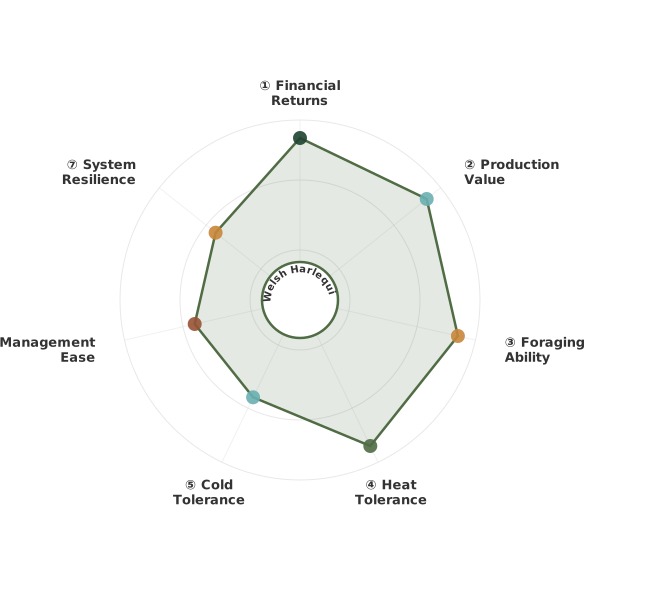
How These Traits Are Calculated
Trait dimensions are ordered clockwise starting from the top of the chart (12 o'clock position):
1. Financial Returns
Annual income per bird from eggs, meat, or specialty products
WHAT: Evaluates profit potential for specialty poultry (turkeys, ducks, geese, guinea fowl) combining meat yield, egg production (where applicable), growth timelines, and market premiums for specialty products.
WHY: Specialty poultry targets premium markets—heritage turkeys at $6-8/lb versus $1.50 commodity, duck eggs at $8-12/dozen versus $3-5 chicken eggs. Understanding enterprise-specific returns helps match birds to market opportunities, with successful operations generating 2-4× returns of conventional poultry.
HOW: Calculated from production data (market weight, timelines, egg yield) combined with efficiency traits and premium market access. Exceptional (≥2.6): strong output + premium markets + efficient growth. Typical (1.8-2.5): moderate production and markets. Limited (<1.8): low output or limited market access.
2. Production Value
Meat yield, egg production, and specialty product quality
WHAT: Measures output quality and quantity combining meat characteristics (size, flavor, texture prized by consumers), egg production (for laying breeds), and specialty products (foie gras, down feathers) that command premiums.
WHY: Production value determines market positioning. Heritage turkeys with superior flavor justify $6-8/lb premiums, duck eggs with rich yolks attract baking customers at $1+ per egg, quality down commands $20-40/lb. High production value enables profitable small-scale operations where commodity birds require large volume to achieve viability.
HOW: Composite assessment of documented production characteristics and market quality. Exceptional (≥2.6): superior product quality + strong output + specialty attributes. Typical (1.8-2.5): good standard production. Limited (<1.8): commodity quality, minimal specialty value.
3. Foraging Ability
Feed cost reduction through natural foraging behavior
WHAT: Measures effectiveness at obtaining nutrition through foraging—consuming insects, seeds, greens, and other natural foods—reducing purchased feed requirements 20-50% in pasture-based systems.
WHY: Aggressive foragers reduce feed costs while providing pest control (insects, ticks, slugs) and weed management services. Turkeys consuming 30-40% of calories from forage save $15-30 per bird over growing season, making the difference between profitable and marginal operations.
HOW: Rated from documented foraging behavior and feed reduction potential. Exceptional (≥2.6): excellent foragers, 40-50% feed reduction, active pest control. Typical (1.8-2.5): moderate foraging, 20-30% reduction. Limited (<1.8): minimal foraging, requires full feeding.
4. Heat Tolerance
Performance in hot weather above 85°F (29°C)
WHAT: Evaluates adaptation to sustained heat above 85°F (29°C), measuring heat stress resistance, growth/production maintenance, and survival during summer peaks. Critical for southern operations and summer meat production.
WHY: Heat stress reduces feed intake 20-40%, slows growth, and increases mortality—particularly problematic for turkeys naturally susceptible to heat. Heat-adapted breeds maintain production schedules where others require expensive cooling or suffer significant losses during summer.
HOW: Rated from database trait 'heat_tolerance' based on documented characteristics. Exceptional (≥2.6): maintains production in 95°F+ (35°C+), low mortality. Typical (1.8-2.5): manageable with shade and water. Limited (<1.8): high heat sensitivity, struggles above 85°F.
5. Cold Tolerance
Performance in cold weather below 20°F (-7°C)
WHAT: Evaluates adaptation to sustained cold below 20°F (-7°C), measuring feather insulation, cold-weather foraging activity, and winter production/growth maintenance. Important for year-round outdoor systems in northern climates.
WHY: Cold-sensitive birds require heated housing ($50-200 monthly winter costs), reduce activity limiting foraging value, and experience higher mortality. Cold-hardy breeds remain active outdoors year-round, maintain winter egg production (ducks/geese), and thrive with basic shelter.
HOW: Rated from database trait 'cold_tolerance' based on breed characteristics. Exceptional (≥2.6): excellent insulation, active in <0°F (-18°C), maintains winter production. Typical (1.8-2.5): moderate hardiness. Limited (<1.8): requires heated shelter, limited winter activity.
6. Management Ease
Handling temperament and care requirements
WHAT: Measures daily management simplicity combining temperament (calm vs flighty/aggressive), health needs, natural breeding ability (versus artificial insemination required), and routine handling cooperation.
WHY: Difficult birds increase labor 2-3× and create safety concerns. Aggressive turkeys or geese require protective equipment during handling, flighty birds complicate catching for processing, breeds requiring AI add complexity. Calm birds with good health enable confident management by beginners.
HOW: Weighted assessment: temperament (50%), health needs (30%), breeding ease (20%). Exceptional (≥2.6): calm and manageable, robust health, natural breeding. Typical (1.8-2.5): manageable with experience. Limited (<1.8): aggressive or nervous, high health needs, or breeding complications.
7. Flock Resilience
Disease resistance and survival under typical stresses
WHAT: Evaluates flock robustness across disease resistance (particularly respiratory issues and common poultry diseases), parasite tolerance, predator awareness, and general hardiness determining survival through typical challenges.
WHY: Resilient breeds maintain productivity through challenges causing 20-50% losses in susceptible birds—surviving disease pressure, evading predators through awareness, resisting parasites. This determines whether flocks thrive with basic care or require intensive interventions and predator-proof housing.
HOW: Composite assessment of documented health and survival characteristics. Exceptional (≥2.6): strong disease resistance + predator-savvy + hardy. Typical (1.8-2.5): standard resilience with routine care. Limited (<1.8): health-sensitive or vulnerable, requires intensive management and protection.
Regenerative Advantages
- Heat Tolerance: Their active foraging nature and efficient thermoregulation allow Welsh Harlequins to perform well in hotter conditions compared to many temperate breeds.
- Foraging Ability: Welsh Harlequin ducks are distinctly well-suited to the 'FORAGING' rubric through their innate drive to exploit a wide array of food sources. Their historical context and inherent behavior demonstrate a strong capacity to thrive on unimproved areas, actively consuming insects, weed seeds, and varied herbaceous plants beyond just quality grasses. This breed's robust constitution and non-specialized consumption patterns allow them to maintain condition on diverse, marginal vegetation, fulfilling the 'exceptional' criteria for broad foraging.
- Docility: Welsh Harlequins exhibit remarkable calmness and a gentle disposition, making them exceptionally easy to handle and rarely prone to aggression.
- Cold Hardiness: Their robust build and good feathering allow Welsh Harlequins to maintain activity and production even in colder climates, fitting the exceptional criteria for cold hardiness.
- Egg Production: These ducks are exceptional layers, consistently producing over 200 high-quality eggs annually, rivaling top breeds and placing them in the highest tier for egg yield.
Value Streams
- Meat & Egg production
- Insect and pest control
- Scratch tillage and compost distribution
Experience Level
Suitable for first-time livestock owners
4
Management, Care & Feeding
Operational guidance for raising this breed successfully
Management, Care & Feeding
Operational guidance for raising this breed successfully
Managing Welsh Harlequin ducks effectively in a regenerative system centers on providing ample space for foraging and ensuring access to clean water. While hardy, they benefit from a secure shelter at night to protect them from predators. Rotational grazing is highly recommended; moving the ducks regularly through pastures allows them to effectively manage insect populations and weed seeds in one area before moving to a fresh patch. This also ensures their manure is distributed widely, maximizing its fertilizing benefit and preventing over-fertilization of any single spot.
Their diet should be supplemented with a quality waterfowl feed, especially during laying periods, but their foraging ability significantly reduces the amount of supplemental feed required. Ensure they have access to a reliable water source large enough for them to submerge their heads and clean their nostrils and eyes – a large tub, trough, or pond works well. Avoid deep water if predator protection is a concern, or ensure the water area is secured. During colder months or when foraging is limited, a higher protein feed may be necessary to maintain egg production and body condition.
Welsh Harlequins are generally robust and healthy birds, but standard biosecurity practices are still important. Monitor for common poultry ailments, though they are less prone to foot issues than some heavier breeds due to their active nature. Providing clean water and avoiding overcrowding are key preventative measures against disease. Regular observation of the flock for any signs of illness, parasites, or injury will allow for prompt intervention. Their hardiness means they typically require minimal veterinary intervention if managed appropriately within a well-maintained pasture system.
Sources behind this view
 Community
-
Integrating six Welsh Harlequin ducks into a wood-chipped orchard involves predator protection, potential compost pile relocation for fly control, and planting clover/comfrey. Ducks forage in mulch an
Read more (opens in new window) permies.com