
Yak
For farmers seeking exceptionally hardy and efficient livestock, the Yak presents a unique proposition, thriving in challenging environments with remarkable feed and browse efficiency. These animals, originating from the high-altitude regions of the Himalayas, exhibit superior cold tolerance and require minimal intervention, simplifying management in harsh climates. Their ability to subsist on a wide variety of vegetation, including tough grasses and shrubs, makes them ideal for marginal lands where other livestock might struggle. This innate resilience and adaptability translate directly into reduced input costs and robust production potential for farmers looking to diversify their operations with a truly distinctive and undemanding breed.
Regenerative Quick Profile
Best Suited For
Climates: Cold, dry, high-altitude climates with significant temperature fluctuations between day and night.
Scale: Best for medium to large operations (50+ animals)
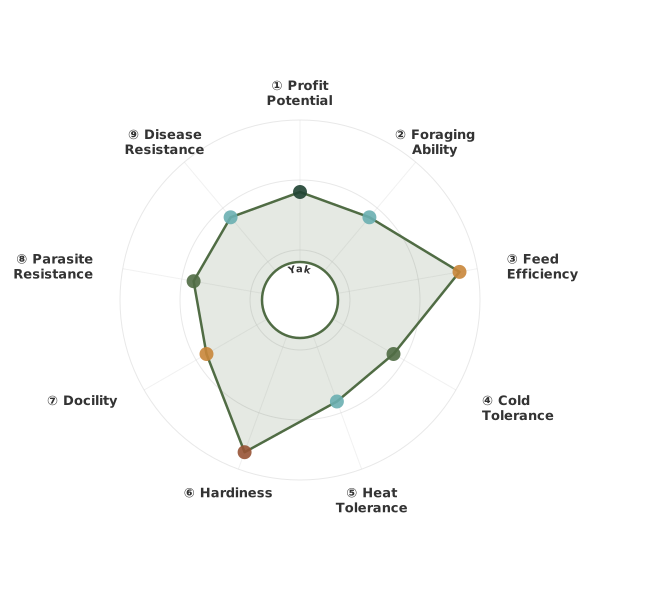
How These Traits Are Calculated
Trait dimensions are ordered clockwise starting from the top of the chart (12 o'clock position):
1. Profit Potential
Measures the yak's capacity to generate income through products and services.
WHAT: This trait evaluates a yak breed's ability to produce high-value products like fiber, meat, milk, and hides, alongside potential for tourism or land management services. Variation exists based on breed-specific traits like fiber fineness, growth rate, milk yield, and docility.
WHY: For regenerative farmers, high profit potential ensures financial viability, allowing for reinvestment in soil health, biodiversity, and animal welfare practices. It directly impacts the sustainability and scalability of the entire regenerative operation.
HOW: Exceptional breeds offer premium fiber (e.g., average micron < 20), rapid meat growth (e.g., reaching market weight by 18-24 months), or high milk yields (e.g., > 2 liters/day). Typical breeds offer good all-around production, while Limited breeds may have lower yields or less desirable product characteristics, requiring more intensive management to achieve comparable returns.
2. Foraging Ability
Measures how well yaks find and utilize diverse forage in challenging environments.
WHAT: This trait assesses a yak's innate ability to efficiently locate and consume a wide variety of plant matter, including grasses, forbs, and shrubs, even in sparse or harsh conditions. Different yak breeds may exhibit variations in their selectivity, grazing intensity, and ability to digest tougher vegetation.
WHY: For regenerative yak farmers, strong foraging ability is crucial for reducing reliance on external feed inputs, improving pasture health through selective grazing, and adapting to varied landscapes. Yaks with superior foraging skills can thrive on marginal lands, contributing to a more self-sufficient and environmentally sound operation.
HOW: Exceptional yaks can maintain good condition with minimal supplemental feed, demonstrating a broad diet and efficient digestion. Typical yaks may require some supplementation during lean periods but generally perform well on available pasture. Limited foragers may struggle to gain weight or maintain health without significant supplemental feeding, especially in less productive environments.
3. Feed Efficiency
Measures how well yaks convert feed into usable products.
WHAT: Feed efficiency measures how many pounds of feed a yak needs to gain one pound of body weight or produce a unit of milk/fiber. Some yak breeds naturally require less feed for the same output than others, due to their metabolism and digestive capabilities.
WHY: For regenerative farmers, feed efficiency is crucial for reducing external inputs and improving profitability. More efficient yaks mean lower feed costs, less land needed for grazing or forage production, and a reduced environmental footprint.
HOW: Exceptional breeds convert feed with a ratio of 5:1 or better, while Typical breeds are around 7:1. Limited breeds may require 9:1 or more. Lower ratios indicate better feed conversion and higher efficiency.
4. Cold Tolerance
Measures yak's ability to thrive in frigid environments.
WHAT: This trait assesses a yak breed's innate ability to withstand and perform well in extremely cold temperatures, including snow, ice, and prolonged frigid conditions. Different yak breeds have evolved varying degrees of adaptation, impacting their resilience to severe winter weather.
WHY: For regenerative farmers, high cold tolerance is crucial for reducing supplemental feed needs and shelter requirements during harsh winters, thereby lowering operational costs and environmental impact. It ensures animal well-being and productivity even when natural forage is scarce and temperatures plummet.
HOW: Exceptional breeds demonstrate robust health and maintain good body condition with minimal intervention, often able to graze effectively in deep snow (over 30 cm). Typical breeds require moderate shelter and supplementary feed during extreme cold snaps. Limited breeds may struggle with health issues or significantly reduced productivity without substantial protection and feeding.
5. Heat Tolerance
Measures yak's ability to thrive in warm conditions.
WHAT: This trait assesses a yak's capacity to cope with and perform well in hot weather. Differences in heat tolerance are influenced by coat density, shedding ability, and physiological adaptations like efficient sweating or panting.
WHY: For regenerative farmers, heat tolerance is crucial for maintaining yak health, productivity, and reducing stress-related issues in warmer climates. Animals that handle heat better require less intervention and can graze more effectively during hot periods.
HOW: Exceptional breeds consistently maintain good health and productivity with minimal signs of heat stress, even above 25°C (77°F) for extended periods. Typical breeds show moderate adaptation and may experience some reduced performance or increased respiratory rate above this threshold. Limited breeds struggle significantly in warm conditions, exhibiting severe heat stress, reduced appetite, and decreased productivity even at moderate temperatures.
6. Yak Hardiness
Measures yak's ability to thrive in harsh conditions.
WHAT: This trait evaluates a yak breed's innate ability to withstand challenging environmental stressors like extreme cold, heat, high altitudes, and limited forage. Some yak breeds are naturally more robust and adaptable to diverse and severe climates than others.
WHY: For regenerative farmers, hardiness is crucial for reducing reliance on supplemental feed, veterinary care, and shelter, leading to lower input costs and a more resilient herd. Hardy yak breeds are better suited to extensive grazing systems and contribute to ecosystem health with minimal external support.
HOW: Exceptional hardiness means yaks can thrive with minimal intervention in temperatures below -40°F and above 80°F, and at altitudes over 15,000 feet. Typical hardiness indicates good adaptation to regional extremes, while limited hardiness suggests a greater need for managed environments and supplemental care.
7. Yak Docility
Measures a yak's calm temperament and ease of handling.
WHAT: This trait evaluates a yak's natural inclination to be calm, cooperative, and non-aggressive towards humans and other yaks. It reflects how readily they accept handling, movement, and proximity to people. Some yak breeds are naturally more skittish or independent, while others are known for their gentle nature.
WHY: High docility is crucial for regenerative yak operations, enabling safer and more efficient management, especially for tasks like health checks, herding, and transport. Easier handling reduces stress on both animals and farmers, contributing to overall herd health and productivity. It also makes yaks more suitable for diverse roles, such as pack animals or even for agritourism.
HOW: Exceptional breeds consistently exhibit minimal flight response and readily accept touch and restraint, often requiring minimal force. Typical breeds are manageable with standard handling techniques but may show some initial apprehension. Limited breeds are prone to panic, aggression, or extreme flightiness, making routine handling challenging and potentially dangerous, often requiring specialized facilities.
8. Parasite Resistance
Measures yak's natural ability to resist internal and external parasites.
WHAT: This trait assesses the inherent ability of yak breeds to withstand parasitic infections, both internal (like worms) and external (like ticks and mites). Some yak populations, due to their ancestral environments, have developed stronger immune responses and physiological adaptations to combat parasites, while others may be more susceptible.
WHY: For regenerative yak farming, high parasite resistance reduces the need for chemical dewormers and external treatments, promoting animal health and minimizing environmental impact. Selecting breeds with superior resistance contributes to a more self-sufficient and sustainable herd management system.
HOW: Exceptional breeds typically show very low mortality or morbidity rates from common parasites with minimal or no intervention, often requiring less than 1 deworming treatment per year. Typical breeds may require occasional, targeted treatments, perhaps 1-2 dewormings annually. Limited resistance indicates a higher prevalence of parasitic issues, potentially needing more frequent treatments or specialized management.
9. Disease Resistance
Measures yak's natural ability to withstand common diseases and parasites.
WHAT: This trait assesses the inherent ability of yak breeds to resist common diseases, infections, and parasitic infestations. Genetic variations between yak populations can lead to significant differences in their immune system strength and susceptibility to pathogens.
WHY: For regenerative farmers, robust disease resistance in yak reduces the need for veterinary interventions, antibiotics, and dewormers, aligning with ecological principles. Healthier animals contribute to lower operational costs and a more sustainable, resilient herd.
HOW: Exceptional breeds show minimal incidence of common ailments like parasitic gastroenteritis or respiratory infections with less than 5% annual loss. Typical breeds experience moderate issues requiring occasional treatment, while Limited breeds show higher susceptibility and losses exceeding 10% annually without consistent intervention.
Regenerative Advantages
- Grazing Ability: Yaks graze efficiently on sparse alpine vegetation at 4000-5500m elevation, consuming plants in conditions where other livestock cannot survive.
- Hardiness: Yaks survive -40°C winters and thin air at 5500m with minimal care, resisting altitude sickness and cold-related diseases that affect lowland cattle.
- Feed Efficiency: Yaks extract maximum nutrition from sparse alpine vegetation, requiring 30-40% less feed than lowland cattle while maintaining productivity at high altitude.
- Draft Capability: Yaks pull plows, carts, and sleds through steep mountain terrain at altitude where horses and cattle fail, carrying 60-100 kg loads with superior sure-footedness.
- Fiber Production: Yaks produce 1-3 kg premium fiber (khullu) annually, rivaling cashmere in softness (15-19 microns) and commanding premium prices in specialty markets.
Value Streams
Experience Level
Some livestock experience recommended (better for larger operations)