
Angus Cattle
The Angus breed simplifies management with its exceptional docility, remarkable hardiness, and superior mothering ability, allowing for reduced labor and minimal intervention. Originating from Scotland, these polled, solid-colored cattle are renowned for their adaptability and thrive on diverse forage, excelling in cold climates and demonstrating good heat tolerance. Angus cattle are particularly well-suited for finishing on grass and exhibit robust grazing adaptation, requiring less intensive feeding programs. Their inherent parasite resistance further contributes to their low-maintenance profile, making them a solid choice for farmers prioritizing efficiency and consistent performance across various grazing strategies, including mob grazing and rotational systems.
Regenerative Quick Profile
Best Suited For
Climates: Cool temperate oceanic to humid continental, with some subpolar oceanic influence
Terrain: Adaptable to most terrain types
Scale: Suitable for small to medium operations (10-50 animals)
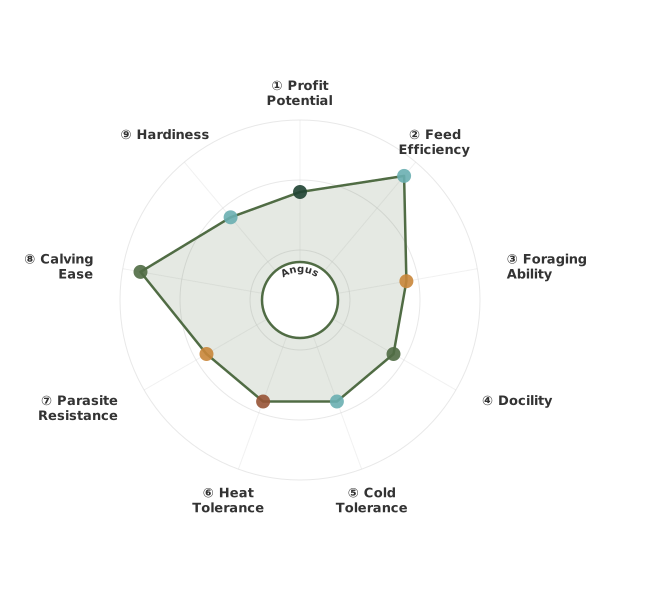
How These Traits Are Calculated
Trait dimensions are ordered clockwise starting from the top of the chart (12 o'clock position):
1. Financial Returns
Monthly income per animal after feed and care costs
WHAT: Evaluates net monthly profit by combining finish weight, time to market, price premiums, and input costs. Breeds with fast growth, efficient feed conversion, and premium market access generate higher returns per animal.
WHY: Farmers need clear income projections to sustain operations. Breeds returning $150+/month enable profitable small-scale operations, while those under $80/month require larger herds or alternative revenue streams to achieve viability.
HOW: Calculated from economics data (finish weight, months to finish, price premiums) combined with trait scores (feed efficiency, mothering ability, drought tolerance). Exceptional (≥2.6): fast growth ≤24 months + high capital efficiency >$180/month + low costs <30% of revenue. Typical (1.8-2.5): moderate returns or longer timelines. Limited (<1.8): slow growth >36 months or high input costs >50%.
2. Feed Efficiency
Measures how effectively cattle convert feed into meat or milk.
WHAT: Feed efficiency in cattle refers to how much feed an animal consumes to produce a unit of output, like weight gain or milk. Breeds can vary significantly in their genetic predisposition for efficient feed conversion, with some requiring less feed to achieve the same production levels.
WHY: For regenerative farmers, high feed efficiency means less feed needs to be grown or purchased, reducing land use and input costs. This directly supports reduced environmental impact and improved profitability by maximizing output from available resources.
HOW: Exceptional breeds convert feed into product with minimal waste, perhaps requiring 5-10% less feed per pound of gain than average. Typical breeds represent the industry standard, while Limited breeds may require significantly more feed (15%+) to achieve the same production, indicating lower genetic potential for conversion.
3. Foraging Ability
Measures how well cattle find and consume forage in varied pasture conditions.
WHAT: This trait assesses a cattle breed's natural inclination and physical capability to efficiently locate, graze, and digest a wide variety of grasses, forbs, and browse. Breeds vary significantly, with some excelling at grazing short, sparse pastures while others are better suited to dense, taller vegetation or even browsing on woody plants.
WHY: High foraging ability is crucial for regenerative systems as it reduces reliance on external feed inputs, allowing cattle to thrive on diverse pasture ecosystems. This trait directly impacts soil health through improved grazing distribution and nutrient cycling, and it enhances the economic viability of the operation by maximizing the use of on-farm resources.
HOW: Exceptional breeds consistently gain weight (e.g., >1.5 lbs/day on pasture alone) and maintain body condition on low-quality or limited forage, demonstrating agility and persistence in grazing. Typical breeds perform well on good to excellent pastures but may require supplemental feed under less ideal conditions. Limited breeds struggle to find sufficient nutrition even on decent forage, requiring significant supplementation and potentially impacting herd health.
4. Docility
Measures how calm and manageable cattle are around people and situations.
WHAT: Docility in cattle refers to their temperament, specifically their willingness to cooperate and their reaction to human presence and handling. Breeds vary significantly, with some naturally more flighty or nervous, while others are known for their gentle disposition.
WHY: Docile cattle are safer and easier to work with, reducing stress for both animals and handlers. This leads to fewer injuries, better herd health, and more efficient management practices crucial for sustainable farming.
HOW: Exceptional breeds exhibit minimal fear and aggression, readily accepting handling with less than 5% showing signs of agitation. Typical breeds may require some patient handling but generally remain manageable. Limited breeds often display significant fear or aggression, making them difficult and potentially dangerous to handle, with over 20% showing strong resistance.
5. Cold Tolerance
Performance in cold climates below 20°F (-7°C)
WHAT: Evaluates breed adaptation to sustained cold below 20°F (-7°C), measuring coat thickness, body mass, metabolic efficiency, and documented performance in northern climates with harsh winters.
WHY: Cold stress increases feed requirements 20-40% for maintenance alone, elevates mortality in young stock, and complicates winter management. Cold-hardy breeds thrive outdoors year-round where others need expensive barns and supplemental heating.
HOW: Rated from database trait 'cold_tolerance' based on breed characteristics. Exceptional (≥2.6): northern origins, thick winter coats, proven success in regions <0°F (-18°C). Typical (1.8-2.5): moderate hardiness, windbreaks sufficient. Limited (<1.8): warm-adapted, requires shelter below 30°F (-1°C).
6. Heat Tolerance
Performance in hot climates above 85°F (29°C)
WHAT: Evaluates breed adaptation to sustained heat above 85°F (29°C), measuring coat characteristics, metabolic adaptations, and documented performance in tropical or semi-arid regions.
WHY: Heat stress reduces feed intake 15-30%, lowers reproduction rates, and increases mortality. Heat-adapted breeds maintain productivity where others require expensive shade structures, cooling systems, or fail completely during summer peaks.
HOW: Rated from database trait 'heat_tolerance' based on breed characteristics. Exceptional (≥2.6): tropical origins, short sleek coats, proven success in regions >95°F (35°C). Typical (1.8-2.5): moderate tolerance, manageable with some shade. Limited (<1.8): temperate-adapted, struggles above 85°F without intensive cooling.
7. Parasite Resistance
Measures a cattle breed's natural ability to withstand internal and external parasites.
WHAT: This trait evaluates a cattle breed's inherent ability to resist infestations and infections from common internal parasites (like worms) and external parasites (like ticks and flies). Some breeds naturally possess stronger immune responses and physical deterrents, leading to lower parasite loads.
WHY: For regenerative farmers, high parasite resistance means less reliance on costly and potentially harmful chemical dewormers and pesticides, contributing to a healthier ecosystem and reduced input costs. This trait supports a more self-sufficient and environmentally sound approach to herd management.
HOW: An 'Exceptional' rating indicates breeds that consistently require minimal or no parasite treatments, often demonstrating high tolerance even in high-challenge environments. 'Typical' breeds may need occasional, targeted treatments. 'Limited' breeds are highly susceptible and require regular, often broad-spectrum, interventions to maintain herd health and productivity.
8. Calving Ease
Measures how easily a cow gives birth with minimal human intervention.
WHAT: Calving Ease assesses the natural ability of a cow to deliver a calf without assistance. Breeds vary significantly, with some known for consistently easy births and others prone to more challenging deliveries, often related to calf size and birth weight.
WHY: For regenerative farmers, minimizing intervention during calving is crucial for cow welfare and reducing labor costs. Easier calving leads to healthier cows and calves, fewer losses, and less stress on the herd, aligning with natural processes.
HOW: Exceptional breeds typically have over 90% unassisted births, while Typical breeds have 70-90% unassisted births. Limited breeds often require assistance for more than 30% of calvings, indicating a higher risk of complications.
9. Hardiness
Measures a cattle breed's ability to thrive in challenging environments.
WHAT: Hardiness in cattle refers to their natural ability to withstand environmental stressors such as extreme temperatures, poor forage quality, and disease pressure with minimal human intervention. Breeds can vary significantly, with some originating from harsh climates demonstrating superior resilience compared to those selectively bred for more controlled conditions.
WHY: For regenerative farmers, hardiness is crucial for reducing input costs and reliance on external resources. Hardy cattle require less supplemental feed, veterinary care, and shelter, making them more sustainable and profitable on pasture-based systems with fluctuating conditions.
HOW: Exceptional hardiness indicates breeds that can maintain excellent body condition and reproductive performance with less than 10% supplemental feed and minimal veterinary intervention in harsh climates. Typical breeds may require up to 25% supplemental feed and occasional vet care. Limited breeds may struggle to maintain condition and health without significant supplementation and consistent veterinary support, especially in challenging environments.
Regenerative Advantages
- Grazing Ability: Angus cattle are the benchmark for exceptional grazing ability, genetically predisposed to efficiently convert high-quality temperate grasslands into marketable beef. Their robust performance in well-managed rotational and mob grazing systems, enabling effective grass-finishing with minimal supplementation, solidifies their gold standard status. They are a prime example of a breed thriving on quality grass-based pastures without needing extensive supplements.
- Mothering Ability: Renowned for strong maternal instincts and ease of calving, Angus are a benchmark for maternal ability in pasture systems.
- Feed Efficiency: Angus excel in converting forage to high-quality beef due to their renowned marbling and efficient growth.
- Calving Ease: Renowned for moderate birth weights and strong maternal instincts, Angus consistently ensure unassisted births and vigorous calves, ranking them top for ease.
Know the Debate
- Finishing time varies: 18-30 months by genetics and management.
- Genetics matter: lean towards maternal, smaller frames for grass.
- Pasture efficiency is key for cost-effective grass finishing.
Value Streams
- Meat production
- Nutrient cycling and soil building
- Grassland management through grazing
- Carbon sequestration in grasslands
Experience Level
Some livestock experience recommended
3
Understanding Angus Cattle Characteristics
Physical traits, temperament, and what makes this breed unique
Understanding Angus Cattle Characteristics
Physical traits, temperament, and what makes this breed unique
Angus cattle are a globally recognized breed of beef cattle, originating from the northeastern counties of Scotland, Angus and Aberdeenshire. They are distinguished by a suite of unique physical and biological characteristics that have made them a cornerstone of beef production systems worldwide. Most notably, Angus are naturally polled, meaning they are genetically hornless, a trait that significantly enhances safety for both animal handlers and other livestock, reducing the risk of injuries. Their coat coloration is typically a uniform solid black or red, a genetic marker that contributes to their adaptability across a wide array of environmental conditions and climates. This breed is known for its robust constitution, moderate frame size, and well-muscled build, which collectively contribute to their reputation as efficient converters of forage into high-quality beef.
Physical Characteristics:• Naturally polled (hornless) head: Eliminates the need for dehorning and reduces injury risks.
• Solid black or red coat color: Uniform coloration aids in environmental adaptability.
• Moderate frame size: Typically mature at weights between 1,000-1,300 lbs, suitable for various market demands.
• Smooth hair coat: Facilitates efficient temperature regulation in diverse climates.
Behavioral Traits:• Docile temperament: Exhibits a calm disposition, simplifying handling and management, particularly in intensive grazing systems.
• Strong maternal instincts: Cows are highly attentive and protective of their calves, contributing to high calf survival rates.
• Innate grazing ability: Possess a natural aptitude for efficiently harvesting forage, making them well-suited for pasture environments.
Biological Attributes:• Cold tolerance: Demonstrates excellent hardiness in colder climates, allowing for sustained productivity with reduced need for extensive supplemental housing.
• Heat tolerance: Possesses good heat tolerance, enabling them to remain active and productive during warmer periods, though shade and water are crucial.
• Foraging efficiency: Capable of utilizing a wide variety of grasses and forages, contributing to their effectiveness in diverse pasture settings.
• Dry season grazing capability: Can effectively utilize dry forage, particularly with appropriate supplementation, extending their grazing potential.
These inherent qualities make Angus cattle a practical choice for producers seeking a hardy, manageable, and efficient beef breed. Their genetic predispositions for docility and strong maternal instincts, combined with their physical adaptability to various climates and terrains, lay the groundwork for their widespread adoption in both traditional and regenerative agricultural systems.
Sources behind this view
 Videos & Podcasts
-
Beef quality depends on diet, not breed; Angus beef superiority is a myth. Macintosh favors Limousin, Bonmară, and South Pole cattle for their adaptability and uses a closed breeding season, aiming fo

 Research
-
Genetic Distinctness and Diversity of American Aberdeen Cattle Compared to Common Beef Breeds in the United States (opens in new window)
Genetic study shows American Aberdeen cattle are distinct from other U.S. beef breeds due to strong artificial selection, with lower genetic diversity and unique genetic makeup.
4
Know the Debate
Successfully finishing Angus cattle on grass hinges on understanding your region's climate, the scale of your operation, and the labor required for...
Know the Debate
Successfully finishing Angus cattle on grass hinges on understanding your region's climate, the scale of your operation, and the labor required for...
Successfully finishing Angus cattle on grass hinges on understanding your region's climate, the scale of your operation, and the labor required for management. While Angus are hardy and adaptable, optimal environmental integration and economic viability are achieved through strategic genetics selection and careful pasture management. The finishing timeline can vary significantly, from 18 to 30 months, depending on these factors and the producer's specific goals and strategies.
How fast do Angus cattle finish on grass?
Longer finish (24-30 months)
Academic research suggests a 24-30 month finishing period for grass-fed Angus cattle, noting slower weight gain and differing quality grades compared to grain-fed systems. This timeline is influenced by forage availability and breed characteristics favoring resilience over rapid growth.
Sources behind this view
Sources behind this view
Research
-
Growth curve, blood parameters and carcass traits of grass-fed Angus steers. (opens in new window)
This study found: A study comparing grass-fed and grain-fed Angus cattle found that cattle finished on grass took about 188 extra days to reach market weight and gained weight about 70% slower than those fed grain. While both diets produced linear growth patterns, cattle fed grain had heavier carcasses, more back fat, and higher quality grades. However, cattle finished on grass had better yield grades and larger ribeye areas relative to carcass size. Importantly, meat tenderness was similar and good in both groups, showing that tender beef can be produced from grass-fed animals, even though grain-fed animals received higher official quality grades. This information is valuable for farmers considering a transition to grass-based beef production.
-
186 Effect of Feedlot Finishing Compared with Grass fed Beef Following Bale Grazing and Delayed Feedlot Entry on Steer Performance, Carcass Measurement and net Return (opens in new window)
This study found: Abstract In a grass-fed system grazing study, yearling crossbred Aberdeen Angus x Red Angus x Angus x Angus steers (n = 72; 3 reps/8 steers/rep) were assigned to either a grass-fed annual forage (GFANN) or a grass-fed native range (GFNR) system, and compared with a NR feedlot control system (FLT), in a delayed feedlot entry program, to determine the effect of grazing and feedlot finishing performance, carcass measurements, and systems net return. Data were analyzed using the MIXED procedure of SAS. After 176.0 grazing days, GFANN, GFNR, and FLT steers were transitioned to free-choice cover crop hay bale feeding (BGRZ) and 3.09 kg daily of a wheatmidd-based supplement (SUP). GFANN and GFNR received hay and SUP for 92 d; FLT control steers received hay and SUP for 69 d before transfer to the University of Wyoming feedlot. Grass-fed and FLT steers were harvested at federally inspected abattoirs in Green Bay, WI, and Ft. Morgan, CO, respectively. BGRZ gain and ADG for GFANN and FLT were greater than GFNR (P = 0.075; P = 0.072). When GFANN and GFNR bale grazing finishing costs were combined with FLT cost, feed cost/unit of gain were greater for GFANN and GFNR compared with FLT (P = 0.006). Steer FLT HCW was 26% and 34% heavier (P = 0.001), marbling score was 32% and 38% greater (P = 0.001), and carcass value was 16% and 24% greater (P = 0.001) than GFANN and GFNR, respectively. Net return was -$88.25, $62.70, and $160.22 for GFANN, GFNR, and FLT, respectively. Farming and long-haul transportation cost for GFANN and GFNR negatively affected net return.
Faster finish (18-24 months)
Many grass-finishers achieve 18-24 month timelines by selecting smaller-framed, maternal Angus genetics and implementing intensive rotational grazing, focusing on efficient grass conversion and optimal body condition.
Sources behind this view
Sources behind this view
Videos & Podcasts
-
Acquiring four 12-month-old Aberdine Angus steers for grass finishing on 10 acres in Claremore, Oklahoma. Breed chosen for size and grass-finishing potential. Discussion covers water access, pond management, and using movable troughs, emphasizing clean water for animal growth.

-
Green Acres Foundation uses 100% grass-fed, 24-hour rotational grazing with Black Angus cattle, focusing on smaller genetics for efficient grass finishing (22-24 months). They manage fescue toxicity and aim for continuous improvement in genetics and pasture management.
-
Transitioning to grass-finishing, Dan Glenn found that old-line Angus genetics struggled in the hot, humid climate. He now selects for smaller frame scores (around frame 4, 1100-1225 lbs) for improved efficiency, fertility, and faster finishing times, prioritizing environmental adaptability over extreme size.

Making Sense of the Differences
The finishing timeline for Angus cattle on grass varies significantly based on genetics, pasture quality, climate, and management intensity. While some research indicates longer periods, many experienced producers achieve faster finishing through careful breed selection (smaller frame, maternal lines), optimized rotational grazing, and attention to animal health, suggesting management and genetics play key roles. Farmers should plan for 24-30 months as a baseline but consult local successful operations for region-specific benchmarks.
Which Angus genetics are best for grass finishing?
Moderate frame/maternal lines preferred
Academic and institute advice favors genetics prioritizing fertility, resilience, and moderate size, often suggesting maternal lines or crossbreeds over terminal sires for better grass conversion and long-term sustainability.
Sources behind this view
Sources behind this view
Videos & Podcasts
-
Distinguishing between terminal sires (bred for feedlots) and maternal lines is crucial for grass-based production. Maternal genetics, often found in older or native breeds, prioritize fertility and resilience, while terminal sires may have higher energy needs and structural issues, making them less suitable for grass-fed systems.
Research
-
Review: New considerations to refine breeding objectives of dairy cows for increasing robustness and sustainability of grass-based milk production systems. (opens in new window)
This study found: This review looks at how to breed dairy cows that are better suited for grass-based farming systems, which are popular with consumers for animal welfare reasons. These systems present unique challenges, like relying on daily weather for feed and sometimes requiring cows to walk long distances to graze. To succeed, cows need to be highly fertile, easy to manage in large herds, good walkers, and resilient to changes in feed availability. As we focus more on sustainability and animal well-being, future breeding goals will need to include traits that improve the cow's quality of life and reduce the farm's environmental impact. Research shows that some cow genetics work better in grazing environments than others, meaning breeding goals should be adapted to specific regions and farm conditions to boost both profitability and sustainability.
 From the Web
-
Guide to selecting 'regenerative cows' based on environmental fit, balanced maternal/terminal traits, moderate size, moderate milking, heterosis from crossbreeding, overall efficiency, and calf health. Specific breed examples are provided for each consideration.
-
Choosing a beef cattle production system (cow-calf, backgrounding, feedlot) depends on climate, budget, and goals. Proper management of resources, health, nutrition, and reproduction is key, with advice from experts recommended for beginners.
Smaller frame, hardy genotypes favored
Field practitioners often select smaller-framed Angus genetics (frame score 4, 1100-1225 lbs), older lines, or composites with good digestive capacity and environmental adaptability for efficient grass finishing and increased fertility.
Sources behind this view
Sources behind this view
Videos & Podcasts
-
Select cattle genetics adapted to non-selective grazing for improved fertility and beef conversion. Non-selective grazing, when managed correctly with sufficient recovery, enhances pasture composition and soil fertility by promoting leaf growth and preventing selective overgrazing.
-
Profitable ranching relies on good body condition, driven by efficient grass conversion, characterized by high maturity rate relative to size. Key traits include climate adaptation, disease resistance, and hormonal balance.

-
Transitioning to grass-finishing, Dan Glenn found that old-line Angus genetics struggled in the hot, humid climate. He now selects for smaller frame scores (around frame 4, 1100-1225 lbs) for improved efficiency, fertility, and faster finishing times, prioritizing environmental adaptability over extreme size.
-
Focuses on selecting Red Angus genetics adapted for 100% forage-based systems, emphasizing moderate body types with good gut capacity and rib shape for efficiency in varied conditions.
Making Sense of the Differences
The choice of Angus genetics for grass finishing involves balancing theoretical efficiency with practical on-farm results. While moderate frames and maternal traits are often recommended for resilience and fertility, many successful grass-finishers favor smaller, hardy genotypes. These tend to have better digestive capacity and thrive in diverse environmental conditions, leading to more consistent and efficient finishing on forage alone. Producers should consider their specific climate, pasture type, and long-term goals when selecting genetics.
5
Management, Care & Feeding
Operational guidance for raising this breed successfully
Management, Care & Feeding
Operational guidance for raising this breed successfully
Integrating Angus cattle into a farm or land stewardship operation requires a thoughtful approach that leverages their unique physical and biological traits while aligning with economic goals and environmental considerations. The breed's adaptability and docility make them amenable to various management styles, but success hinges on understanding their specific needs and the farm's capacity. Careful planning around genetics, pasture management, nutrition, and market access is crucial for maximizing their potential and ensuring a sustainable, profitable operation.
Physical and Environmental Integration:• Pasture and Terrain Suitability: Angus cattle are well-suited for pasture-based systems and can effectively utilize rolling terrain and moderate slopes. Ensure pastures are adequately fenced and provide access to clean water, especially during warmer months.
• Climate Considerations: While hardy, provide adequate shade and water during prolonged heat waves. In colder climates, their natural hardiness reduces the need for extensive housing, but shelter from extreme wind and precipitation is beneficial.
• Breed Selection: Choose Angus genetics that align with your specific goals, whether it's for purebred breeding, commercial production, or crossbreeding to leverage desirable traits. Focus on animals with proven maternal abilities and efficient growth on forage.
Economic Implementation and Management:• Finishing Strategy: Understand the 24-30 month finishing timeline for forage-finished cattle. This requires long-term planning for feed availability, capital investment, and cash flow.
• Market Access: Identify and secure target markets before significant investment. Direct-to-consumer sales, local butcher relationships, or programs offering Angus premiums require proactive engagement and marketing efforts. Building these relationships typically takes 2-3 years.
• Cost Management: Monitor annual input costs, estimated between $400-$600 per head. Focus on optimizing pasture utilization to minimize supplemental feed costs. Investment in fencing, water systems, and potentially handling facilities will be necessary.
• Infrastructure: While Angus are adaptable, appropriate handling facilities (e.g., corrals, chutes) will be needed for health checks, vaccinations, and processing. The polled nature of the breed simplifies some handling procedures.
Regenerative Management Practices:• Rotational Grazing: Implement a well-designed rotational grazing plan to maximize forage utilization, improve pasture health, and distribute manure evenly. This is key to unlocking the breed's potential for soil health enhancement.
• Nutritional Management: Provide a balanced mineral supplement tailored to your region's forage deficiencies. During dry seasons or periods of lower forage quality, strategic supplementation is essential to maintain body condition and prevent significant weight loss.
• Health Management: Focus on preventative health care, including vaccinations and parasite control, tailored to your local environment. The docile temperament of Angus cattle generally makes them easier to work with during health interventions.
• Breeding and Calving: Plan your breeding season to coincide with peak forage availability, typically leading to spring calving. Strong maternal instincts contribute to high calf survival rates, but close observation during calving is always recommended.
Integrating Angus cattle effectively means recognizing their strengths as efficient forage converters and adaptable animals, while also planning for the economic realities of their longer finishing cycle and the management requirements of regenerative grazing systems. By aligning production practices with market opportunities and ecological principles, producers can build a successful and sustainable operation.
Sources behind this view
Videos & Podcasts
-
Acquiring four 12-month-old Aberdine Angus steers for grass finishing on 10 acres in Claremore, Oklahoma. Breed chosen for size and grass-finishing potential. Discussion covers water access, pond mana
 Community
-
Recommends exploring ancient cattle breeds like Aubrac, Shorthorn, Galloway, Highland, and Longhorn for improved resilience and minimal input needs, contrasting them with modern breeds like Angus and
Read more (opens in new window) permies.com
7
Production Capabilities & Market Economics
Business case evaluation and production metrics
Production Capabilities & Market Economics
Business case evaluation and production metrics
Meat Production Economics
| Category | Value |
|---|---|
| Finish Weight | 1000-1300 lbs 453.6-589.7 kg |
| Months to Finish | 24-30 |
| Price Premium | Market price |
| Annual Input Cost/Head | $400-600 |
| DTC Retail Price | $9-13 |
| Hanging Weight Yield | 60-63 |
| Packaged Meat per Animal | 420-520 lbs 190-236 kg |
| Processing Cost | $900-1200 |
| Gross DTC Revenue | $4200-6000 |
Finish Weight: Market weight for grass-finished cattle. Varies by breed genetics, frame size, and forage quality. Smaller-framed heritage breeds typically finish at 900-1100 lbs vs. 1200-1400 lbs for larger commercial breeds.
Months to Finish: Time from weaning to finish weight on grass alone (no grain). Grass-finishing takes 24-30 months vs. 14-18 months for grain-finished feedlot cattle. Patient timeline suits regenerative grazing operations.
Price Premium: Premium above conventional beef prices ($0-6/lb range). Grass-finished beef typically sells for $6-12/lb vs. $4-6/lb for conventional. Premium only applies when farm qualifies through certification (organic, grass-fed verified, Animal Welfare Approved) or direct marketing establishes provenance. Without certification or direct sales channels, premium falls to $0.
Annual Input Cost/Head: Minerals, health care, pasture maintenance, and winter hay per animal per year. Excludes infrastructure, land, and labor. Grass-based systems have minimal input costs compared to grain finishing.
DTC Retail Price: Direct-to-consumer retail price range per pound of packaged beef (cuts average). Grass-finished DTC beef typically sells for $8-14/lb across all cuts. Breed reputation, marbling quality, and local market demand drive variation. Prices reflect farm-gate or farmers market sales — wholesale and commodity channels are significantly lower.
Hanging Weight Yield: Percentage of live weight retained as hanging carcass (after hide, head, organs removed). Most cattle dress out at 58-64% of live weight. Leaner grass-finished cattle may hang slightly lower than grain-finished. Breed frame size and condition affect yield.
Packaged Meat per Animal: Take-home meat after cutting and wrapping (typically 60-65% of hanging weight). Bone-in cuts yield more weight than boneless. Final packaged weight depends on cut sheet choices — ground beef maximizes total pounds, premium steaks reduce total weight but increase per-pound value.
Processing Cost: USDA-inspected slaughter, cutting, wrapping, and labeling per animal. Costs vary by region and processor availability — rural areas with more processors tend to be cheaper. Includes kill fee ($75-150), cut-and-wrap ($0.65-1.10/lb hanging), and any specialty processing (jerky, sausage). USDA inspection required for retail sales; custom-exempt processing costs less but meat cannot be resold.
Gross DTC Revenue: Total revenue per animal when selling all cuts direct to consumer. Calculated from packaged weight × average DTC price per pound. Does not deduct processing, marketing, delivery, or production costs. Actual net profit depends heavily on marketing efficiency and processing costs.
Sources behind this view
Videos & Podcasts
-
For profitable grass-finished beef, select appropriate genetics (smaller frame size, e.g., 1200-1300 lb bulls) and focus on animal performance. Larger frame animals often require supplemental feed and
-
Grass-finishing mechanics involve using quality genetics on planted forages in irrigated circles, with daily moves to ensure optimal nutrient intake. Animals are finished to 1200-1250 lbs, aiming for
-
Explains how finishing speed, genetics, soil fertility, pasture diversity, and proper processing are crucial for high-quality grass-finished beef. Addresses issues like cold shortening and the importa
-
Achieve profitable grass-finished beef by focusing on low cost of production through good pasture management, single-mob grazing, and ensuring animals have healthy digestive systems and shed winter co

Community
-
Conventional beef systems yield standardized, higher-quality carcasses compared to grass-fed systems, which have variable harvest ages and lower marbling. While grass-fed beef has more omega-3s, conve
Read more (opens in new window) ucanr.edu -
Grass-finishing is the final fattening stage before slaughter, requiring target weight and minimal stress. While forage quality impacts fat profile and flavor, achieving tender, flavorful beef relies
Read more (opens in new window) permies.com
Research
-
Grass-fed vs. grain-fed beef systems: performance, economic, and environmental trade-offs. (opens in new window)
California study found conventional beef had better carcass quality and lower GHG emissions, while grass-fed systems had varied water/energy use and higher costs. No single system was superior across
-
Growth curve, blood parameters and carcass traits of grass-fed Angus steers. (opens in new window)
Grass-fed Angus steers took 188 days longer to market with 70% slower weight gain than grain-fed, but produced similar tenderness and better yield grades, though grain-fed had higher quality grades.
-
Integrated metabolomic and transcriptome analyses reveal finishing forage affects metabolic pathways related to beef quality and animal welfare. (opens in new window)
Grass-finished beef is more tender, has better fat profiles (more omega-3s), and comes from less stressed animals compared to grain-finished beef, according to gene and body chemistry analysis.
-
Net protein contribution and enteric methane production of pasture and grain-finished beef cattle supply chains. (opens in new window)
Australian study: Grass-fed beef is far more efficient at producing human-usable protein than grain-finished beef, but grass-fed systems have higher methane emissions per unit of protein.