
Black Soldier Fly
The Black Soldier Fly excels at rapidly converting waste into valuable biomass, drastically reducing organic matter and accelerating compost decomposition with minimal intervention. Originating from the Americas, these industrious insects are not typically raised for meat but rather for their larvae's remarkable efficiency. Their key strength lies in their unparalleled feed conversion ratio and prolific reproduction rate, making them ideal for processing organic waste streams from farms and households. While they exhibit good temperature tolerance, their primary value proposition for farmers lies in their waste processing capabilities and their ability to significantly speed up composting, offering a sustainable solution for organic byproduct management.
Regenerative Quick Profile
Best Suited For
Climates: Warm temperate to tropical climates, with distinct wet and dry seasons, or consistently humid and warm conditions.
Scale: Excellent for small homesteads (1-10 animals)
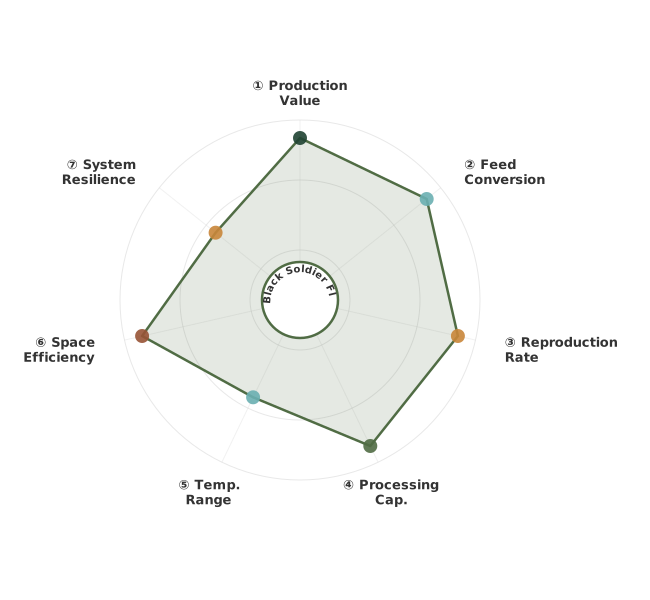
How These Traits Are Calculated
Trait dimensions are ordered clockwise starting from the top of the chart (12 o'clock position):
1. Production Value
Production Value scores 3.0 (exceptional) using waste processor pathway: feed_conversion (exceptional 3.0, 40%) larvae convert organic waste into protein at exceptional rates (1.5:1 feed ratio), reproduction_rate (exceptional 3.0, 30%) females lay 500+ eggs, 14-day generation time enables rapid scaling, protein_yield (exceptional 3.0, 30%) larvae are 40-45% protein by dry weight. Formula: (3.0×0.40 + 3.0×0.30 + 3.0×0.30) = 3.0. BSF larvae process food waste, manure, and agricultural byproducts into high-value animal feed, closing nutrient loops on farms.
Rapid waste conversion + high protein
2. Feed Conversion
Feed Conversion Efficiency scores 3.0 (exceptional) from direct trait evaluation. Black Soldier Fly larvae convert organic waste into biomass at 1.5:1 ratio (1.5 kg waste produces 1 kg larvae), far superior to traditional livestock (poultry 2:1, pigs 3-4:1, cattle 6-8:1). Their voracious appetite and efficient digestion make them ideal for waste stream valorization, reducing landfill burden while producing protein.
Converts waste at 1.5:1 ratio (excellent)
3. Reproduction Rate
Reproduction Rate scores 3.0 (exceptional) from breed characteristics. BSF females lay 500-900 eggs per clutch after mating, with 14-day egg-to-larva-to-prepupa cycle. This rapid generation time and high fecundity enable exponential population growth, allowing farms to scale production quickly from small starter colonies. Compare to livestock: poultry 280 eggs/year (1 egg/day), cattle 1 calf/year.
500+ eggs/cycle, 14-day generation
4. Processing Cap.
Processing Capacity scores 3.0 (exceptional) from observed performance. BSF larvae consume 2-3 times their body weight in organic waste daily during peak feeding (days 10-14 of larval stage). A mature colony (10,000 larvae at 0.1g each = 1 kg biomass) processes 2-3 kg waste per day. This rapid bioconversion drastically reduces waste volume (50-80% reduction) and odor, making BSF ideal for on-farm waste management.
Processes 2-3× body weight/day
5. Temp. Range
Temperature Range scores 2.0 (typical) inferred from species requirements. BSF larvae thrive at 75-85°F (24-29°C) with 70-80% humidity. Below 60°F (15°C) or above 95°F (35°C), activity slows significantly or ceases. Temperate climates require heated enclosures for year-round production (4-8 months of heating), adding operational costs. Tropical/subtropical climates (zones 9-13) can operate unheated year-round.
Optimal 75-85°F (needs climate control)
6. Space Efficiency
Space Efficiency scores 3.0 (exceptional) from small_scale_suitability trait and production system design. BSF larvae can be raised in stacked bins or containers at very high densities (200-500 larvae per square foot). A 10 sq ft system can process 50-100 lbs of waste weekly, producing 10-20 lbs of larvae. Compare to livestock: 1 pig needs 50-100 sq ft, 1 cow needs acres. Ideal for urban farming and small-scale operations.
Minimal space (bin systems, high density)
7. System Resilience
System Resilience scores 2.3 (typical) from: hardiness (typical 2.5, 40%) BSF tolerate varied waste streams and water quality but sensitive to temperature/humidity extremes, disease_resistance (typical 2.0, 30%) generally robust but can suffer from mites or fungal issues in poorly managed systems, adaptability (typical 2.3, 30%) adapt to diverse waste inputs but require consistent environmental conditions. Formula: (2.5×0.40 + 2.0×0.30 + 2.3×0.30) = 2.31, rounded to 2.3. Resilient in managed systems but not as bulletproof as field livestock.
Hardy in optimal conditions, sensitive to extremes
Regenerative Advantages
- Small Scale Suitability: Minimal space requirements for composting bins. Easy to manage and require little specialized infrastructure, making them ideal for waste reduction.
Value Streams
Experience Level
Consult local experts for handling requirements
3
Understanding Black Soldier Fly Characteristics
Physical traits, temperament, and what makes this breed unique
Understanding Black Soldier Fly Characteristics
Physical traits, temperament, and what makes this breed unique
The Black Soldier Fly (BSF), Hermetia illucens, is not a traditional livestock breed but an insect with remarkable potential for waste management in agriculture. Native to the Americas, this species has gained significant attention for its role as a highly efficient decomposer. Adult BSF are harmless, resembling small wasps, but they do not bite or sting and are not known to transmit diseases. Their primary value lies in their larval stage, which possesses an insatiable appetite for organic matter. This larval stage is characterized by rapid growth, reaching maturity in a matter of weeks under optimal conditions. The species' natural prevalence and adaptability mean they can thrive in a wide range of climates, making them a versatile tool for on-farm resource cycling. Unlike many other insects, BSF larvae exhibit a high tolerance for varying environmental conditions, including fluctuating temperatures and moisture levels, contributing to their robustness. Their life cycle, from egg to adult, is relatively short, allowing for rapid deployment and scaling of operations. This efficiency in reproduction and development is a key distinguishing trait that sets them apart in the realm of biological waste processing. The ability to rapidly convert significant volumes of organic material into valuable biomass is their most significant characteristic.
Sources behind this view
 Videos & Podcasts
-
Black soldier fly (BSF) bioconversion is enhanced by symbiotic microbes, not sterile lab conditions. Adults mimic wasps for defense and focus on breeding. Larvae produce antibiotics, reducing pathogen
-
Details the 2-week life cycle of black soldier fly larvae, their consumption of organic waste (5-8x their weight), and production of animal feed and fertilizer. Emphasizes their ability to eliminate b

-
Black soldier fly larvae efficiently decompose waste, including human waste, and serve as a nutritious feed for livestock, offering high protein, fats, and calcium.

-
Black soldier fly larvae efficiently consume food waste with no added water, providing a high-protein feed for poultry, livestock, and pets. Their frass also acts as a natural plant protector, reducin
 Community
-
Black Soldier Fly larvae efficiently decompose organic waste (kitchen scraps, manure) in warm, moist conditions, converting it into protein- and fat-rich food for livestock and pets. Adult flies are h
Read more (opens in new window) ucanr.edu -
Black soldier flies (BSF) are beneficial for waste management in outhouses, outcompeting houseflies and not spreading pathogens as adults. Their larvae interact with feces, but adult BSF cannot bite o
Read more (opens in new window) permies.com -
Black Soldier Fly larvae are beneficial for waste decomposition, outcompeting houseflies and not spreading pathogens due to their life cycle, making them useful in agricultural settings like outhouses
Read more (opens in new window) permies.com -
Black Soldier Fly larvae can make worm bin soil acidic, harming red worms; removal is advised. BSF frass produces clean, odor-free compost, but in low volumes due to efficient larval conversion.
Read more (opens in new window) ucanr.edu
 Research
-
Black soldier fly (Hermetia illucens): Driving circular agriculture through organic waste recovery (opens in new window)
Black soldier flies efficiently convert organic waste into valuable protein-rich biomass for feed and biodiesel. They reduce waste, cut greenhouse gases, and recycle nutrients, supporting circular agr
-
<i>Hermetia illucens</i>
: Multifaceted Advancements in Organic Waste Valorization From Sustainable Farming to Biomedical Innovation (opens in new window)
Black soldier flies efficiently convert organic waste into valuable resources like animal feed and biomedical compounds, offering a sustainable solution for waste management and resource recovery.
-
Utilizing Black Soldier Fly Larvae for Sustainable Organic Waste Management and Urban Farming: Efficiency, Challenges, and Scalability (opens in new window)
Black Soldier Fly larvae rapidly reduced organic waste by up to 86%, producing nutrient-rich compost suitable for urban farming. Key factors for efficiency include larval density, temperature, and moi
-
Using black soldier fly larval frass to restore soil health. (opens in new window)
Black soldier fly larval frass, a byproduct of insect bioconversion of organic waste, shows potential to restore soil health by addressing acidification, fertility loss, microbial imbalance, and soil-
4
Management, Care & Feeding
Operational guidance for raising this breed successfully
Management, Care & Feeding
Operational guidance for raising this breed successfully
Managing Black Soldier Flies effectively involves creating and maintaining optimal conditions for their life cycle, primarily focusing on the larval stage. This typically requires a controlled environment, often referred to as a BSF breeder or processing unit. Key husbandry considerations include providing a suitable substrate for the larvae to feed on and develop within. This substrate should be moist but not waterlogged, and the temperature should ideally be maintained between 70-85°F (21-30°C) for optimal growth. Ventilation is also crucial to prevent the buildup of ammonia and other gases. Feeding management involves supplying a consistent and diverse stream of organic waste. While BSF larvae are voracious and can consume a wide range of materials, an unbalanced diet can affect their growth rate and the quality of the resulting biomass. It's important to avoid materials that are excessively acidic, alkaline, or contain high levels of salt. Health considerations are minimal in the traditional sense, as BSFs are generally robust. However, maintaining the correct environmental parameters is paramount to preventing disease or stress within the colony. Ensuring the feed source is free from harmful pesticides or chemicals is also important for producing safe insect biomass. Regular monitoring of the colony's activity, growth rate, and environmental conditions will help ensure efficient waste processing and biomass production.
Sources behind this view
Videos & Podcasts
-
Details the 2-week life cycle of black soldier fly larvae, their consumption of organic waste (5-8x their weight), and production of animal feed and fertilizer. Emphasizes their ability to eliminate b
-
Black soldier fly larvae efficiently consume food waste with no added water, providing a high-protein feed for poultry, livestock, and pets. Their frass also acts as a natural plant protector, reducin
-
Provides guidance on initial BSFL feeding (4-5 lbs, moist), discusses the resilience of larvae to starvation, and explains how colony odors attract more females, enabling population magnification. Men
-
Black soldier fly larvae efficiently decompose waste, including human waste, and serve as a nutritious feed for livestock, offering high protein, fats, and calcium.
Community
-
Utilizing black soldier fly larvae for poultry and fish feed, leveraging their ability to consume organic waste for nutrient cycling and on-farm protein production.
Read more (opens in new window) permies.com -
Black Soldier Fly larvae efficiently decompose organic waste (kitchen scraps, manure) in warm, moist conditions, converting it into protein- and fat-rich food for livestock and pets. Adult flies are h
Read more (opens in new window) ucanr.edu -
Utilize Black Soldier Flies (BSF) to process animal waste (dog poop, pig manure, roadkill deer) into fish or chicken food. Large bins with active colonies can rapidly decompose waste, creating a susta
Read more (opens in new window) permies.com -
Black soldier fly larvae efficiently decompose waste, reducing manure mass and creating high-protein feed. Larvae self-harvest into specialized digesters with ramps, offering a sustainable solution fo
Read more (opens in new window) smallfarms.cornell.edu
Research
-
Black soldier fly (Hermetia illucens): Driving circular agriculture through organic waste recovery (opens in new window)
Black soldier flies efficiently convert organic waste into valuable protein-rich biomass for feed and biodiesel. They reduce waste, cut greenhouse gases, and recycle nutrients, supporting circular agr
-
Utilizing Black Soldier Fly Larvae for Sustainable Organic Waste Management and Urban Farming: Efficiency, Challenges, and Scalability (opens in new window)
Black Soldier Fly larvae rapidly reduced organic waste by up to 86%, producing nutrient-rich compost suitable for urban farming. Key factors for efficiency include larval density, temperature, and moi
-
<i>Hermetia illucens</i>
: Multifaceted Advancements in Organic Waste Valorization From Sustainable Farming to Biomedical Innovation (opens in new window)
Black soldier flies efficiently convert organic waste into valuable resources like animal feed and biomedical compounds, offering a sustainable solution for waste management and resource recovery.
-
Analysis of the Application of Black Soldier Fly in Sustainable Agriculture and Carbon Emission Reduction Potential (opens in new window)
Black soldier fly larvae efficiently convert organic waste into protein-rich feed for poultry and aquaculture, significantly reducing greenhouse gas emissions and offering a sustainable alternative to
 From the Web
-
Utilizes Black Soldier Fly larvae to convert organic waste from dairy farms into protein and fat for fish feed, with fish excretions then used for aquaponic vegetable fertilization, creating a closed-