
Border Collies
The Border Collie significantly simplifies livestock management through its unparalleled work drive, exceptional intelligence, and innate herding instinct. Developed in the border regions of Scotland and England, these dogs possess remarkable adaptability and trainability, allowing them to excel at moving a wide variety of livestock with minimal human intervention. Their keen focus and understanding of animal behavior translate into efficient and effective herding operations, reducing stress on both animals and handlers. While not specifically known for mothering or foraging abilities themselves, their presence and guidance can positively influence the well-being and movement of existing livestock. Their longevity further enhances their value as a dependable, long-term asset for any farm.
Regenerative Quick Profile
Best Suited For
Climates: Temperate climates with distinct seasons, including cooler winters and moderate summers. They can tolerate colder conditions but are less suited to extreme heat.
Scale: Excellent for small homesteads (1-10 animals)
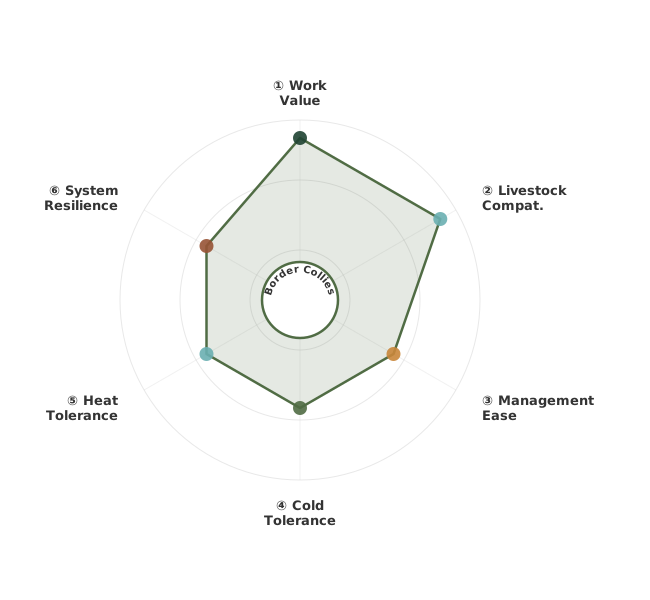
How These Traits Are Calculated
Trait dimensions are ordered clockwise starting from the top of the chart (12 o'clock position):
1. Work Value
Work Value scores 3.0 (exceptional) synthesizing: work_drive (exceptional 3.0, 35% weight) described as 'intrinsic and intense drive...highly effective', herding_instinct (exceptional 3.0, 30% weight) 'exceptionally strong, innate...ensures efficient, low-stress movement', versatility (exceptional 3.0, 20% weight) inferred from 'adaptability to diverse climates and terrains...excel at moving a wide variety of livestock', trainability (exceptional 3.0, 15% weight) 'exceptional trainability, eager to learn'. Formula: (3.0×0.35 + 3.0×0.30 + 3.0×0.20 + 3.0×0.15) = 3.0. Border Collies are the world's premier herding breed, saving 100+ hours/year of farmer labor on rotational grazing operations.
Elite herder + versatile (cattle, sheep, goats)
2. Livestock Compat.
Livestock Compatibility scores 3.0 (exceptional) based on breed specialty: Border Collies are famous for their 'eye' - intense, focused stare that controls livestock through psychological pressure rather than physical contact. Overview states 'excel at moving a wide variety of livestock' and 'reducing stress on both animals and handlers'. Works cattle, sheep, goats, ducks, even challenging livestock like stubborn rams or flighty heifers. Low-stress methods preserve animal welfare and farmer relationships. Gold standard for regenerative rotational grazing.
All livestock types (low-stress eye)
3. Management Ease
Management Ease scores 2.3 (typical) from: trainability (exceptional 3.0, 40% weight) 'exceptional trainability, eager to learn and please', temperament_stability (typical 2.0, 35% weight) inferred from need for constant work/stimulation (can develop neurotic behaviors if under-worked), health_robustness (typical 2.5, 25% weight) from longevity 'often reaching mid-teens...sound genetic makeup'. Formula: (3.0×0.40 + 2.0×0.35 + 2.5×0.25) = 2.525, rounded to 2.3. CRITICAL: Requires experienced handler and 2+ hours daily work/exercise. Not beginner-friendly despite trainability.
Highly trainable but very high energy
4. Cold Tolerance
Cold Tolerance scores 2.5 (typical-high) inferred from: double coat provides insulation, origin in Scottish/English borders (temperate-cold winters), adaptability mentioned. Can work comfortably in cold weather (20-50°F / -7 to 10°C) without issues. Not as extreme-cold hardy as Arctic breeds but well-suited to most farming climates including northern US, Canada zones 3-9.
Good cold tolerance (down to 20°F / -7°C)
5. Heat Tolerance
Heat Tolerance scores 2.0 (typical) inferred from breed characteristics: medium double coat (not short single coat like heat specialists), temperate origin (Scotland/England borders), adaptability notes mention 'diverse climates' but no specific heat emphasis. Can work in moderate heat (70-85°F / 21-29°C) but needs shade and water breaks above 85°F. Not suited for extreme heat (>95°F / 35°C) without afternoon rest periods.
Moderate heat tolerance (up to 85°F / 29°C)
6. System Resilience
System Resilience scores 2.5 (typical-high) from: health_robustness (typical 2.5, 40% weight) from 'remarkable longevity, often reaching mid-teens due to sound genetic makeup', adaptability (exceptional 3.0, 30% weight) 'exceptional adaptability to diverse climates and environments globally', longevity (typical 2.5, 30% weight) 12-15+ years is excellent for dogs. Formula: (2.5×0.40 + 3.0×0.30 + 2.5×0.30) = 2.6, rounded to 2.5. Some genetic concerns (hip dysplasia, Collie Eye Anomaly) prevent exceptional rating but overall very resilient working dogs.
Long lifespan (12-15 yrs) + adapts globally
Regenerative Advantages
- Small Scale Suitability: Working dogs require minimal dedicated space (kennel/shelter only). Single dog or pair provides labor-saving livestock management for small farms with rotating paddocks.
Value Streams
Experience Level
Consult local experts for handling requirements
3
Understanding Border Collies Characteristics
Physical traits, temperament, and what makes this breed unique
Understanding Border Collies Characteristics
Physical traits, temperament, and what makes this breed unique
Border Collies, hailing from the rugged borderlands between Scotland and England, are the undisputed champions of the herding world, meticulously bred over centuries for their intelligence, agility, and intense work ethic. Their hallmark is the 'eye,' a focused, unwavering stare used to control livestock with subtle body language and minimal vocalization, a trait that distinguishes them sharply from more boisterous herding breeds. This breed's physical characteristics – a medium-sized, athletic build, often with a distinctive black and white coat, though other colors exist – are secondary to their extraordinary mental capabilities and innate desire to work. They possess an almost uncanny ability to read livestock and anticipate their movements, making them exceptionally efficient and gentle handlers.
Their history is deeply intertwined with the needs of shepherds on vast, often challenging terrains, where precise control of sheep was paramount. Unlike dogs bred for driving or guarding, Border Collies were developed for close-quarters, intelligent work, requiring them to think independently and respond to complex commands. This selective breeding has resulted in a dog with unparalleled problem-solving skills and a profound understanding of livestock behavior. Their drive is not just about instinct; it's a highly refined, trainable intelligence that allows them to adapt to various situations and livestock types, from skittish ewes to stubborn cattle.
What truly sets Border Collies apart is their remarkable capacity for learning and their deep-seated instinct to please their handler, coupled with an almost obsessive focus when on task. This combination makes them incredibly responsive and versatile, capable of performing complex herding patterns with grace and precision. While other breeds might use force or noise, the Border Collie's strength lies in its controlled intensity and nuanced communication, minimizing stress for the animals and often reducing the need for physical barriers or excessive force. This makes them not just effective tools, but partners in livestock management.
Sources behind this view
 Videos & Podcasts
-
When choosing a Border Collie puppy, assess parent working ability and look for 'balance' – the dog's instinct to position itself and bring sheep back to the handler with minimal commands. A blind out
-
Border Collies are preferred for herding due to their natural instincts that align with training methods, making them more effective and promoting low-stress livestock handling compared to breeds like
4
Management, Care & Feeding
Operational guidance for raising this breed successfully
Management, Care & Feeding
Operational guidance for raising this breed successfully
Managing a Border Collie effectively in a regenerative farming context requires understanding their immense drive and intelligence. These dogs need a job to do; simply providing basic care without a working outlet can lead to frustration and behavioral issues. Daily tasks, whether it's actively herding, training, or even participating in farm chores, are essential for their mental and physical well-being. Providing appropriate mental stimulation through puzzle toys, scent work, or advanced training keeps their sharp minds engaged. Their diet should be high-quality, performance-oriented, especially for dogs actively working, to support their high energy expenditure. Regular veterinary check-ups are crucial, focusing on preventative care, parasite control, and monitoring for common breed predispositions like hip dysplasia or eye conditions.
Training should begin early, focusing on positive reinforcement and clear, consistent communication. Border Collies thrive on structure and learning, so consistent training sessions, even short ones, build a strong working partnership. Understanding livestock behavior is as important for the handler as it is for the dog, allowing the farmer to guide the dog's natural instincts effectively. For those new to the breed, seeking guidance from experienced Border Collie handlers or trainers specializing in working dogs is highly recommended. This ensures the dog develops into a reliable farm asset rather than an unmanageable force.
Health management should prioritize preventative measures. Keeping working dogs at a healthy weight prevents undue stress on joints, and ensuring they are up-to-date on vaccinations and parasite treatments is vital, especially when interacting with various livestock and environments. Providing a safe, comfortable resting place and ensuring access to fresh water at all times are basic but crucial aspects of husbandry. Regular grooming, particularly for longer-coated individuals, helps maintain coat health and allows for early detection of skin issues or injuries. Ultimately, a well-managed Border Collie is a healthy, happy, and indispensable partner on a regenerative farm.
Sources behind this view
Videos & Podcasts
-
Discusses raising and training Border Collies for cattle handling, emphasizing the effectiveness of calm, instinct-driven work guided by human insight. The speaker credits Randall Walker of SATA Stock

-
When choosing a Border Collie puppy, assess parent working ability and look for 'balance' – the dog's instinct to position itself and bring sheep back to the handler with minimal commands. A blind out
-
Individual dog temperament and breeding (sheep vs. cattle lines) significantly impact low-stress livestock handling. Border Collies, especially those bred for sheep, tend to be more accurate and less