
Carp
The Carp breed excels at simplifying livestock management through its remarkable hardiness and exceptional water adaptation, thriving in challenging environments with minimal intervention. This species demonstrates robust disease resistance and high tolerance for pollution and temperature fluctuations, making it ideal for farmers seeking dependable, low-input livestock. Originating from freshwater ecosystems, Carp are adept at controlling aquatic vegetation and readily integrate into multi-species grazing practices, offering a unique solution for land and water management. Their ability to flourish on diverse forage sources further enhances their appeal for efficient, sustainable farming operations.
Regenerative Quick Profile
Best Suited For
Climates: Temperate to subtropical climates with distinct seasons, including warm summers and cold winters. Tolerant of a wide range of conditions.
Scale: Best for medium to large operations (50+ animals)
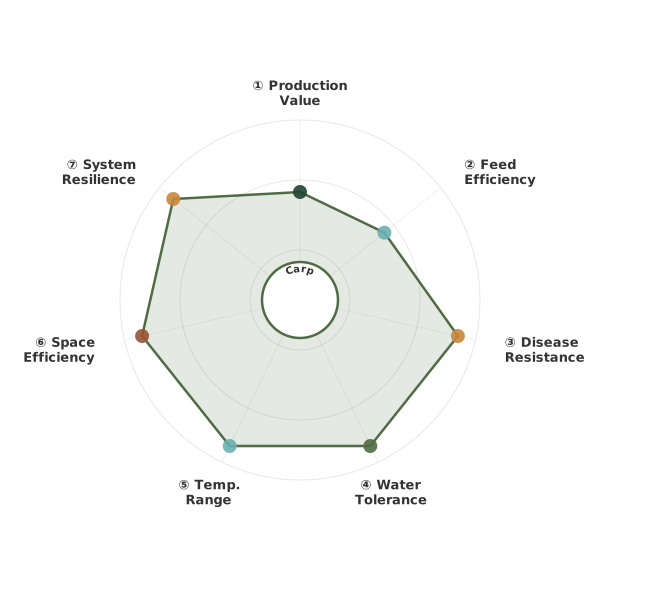
How These Traits Are Calculated
Trait dimensions are ordered clockwise starting from the top of the chart (12 o'clock position):
1. Production Value
Production Value scores 2.3 (typical) using fish pathway: growth_rate_in_low_input_systems (typical 2.0, 40%) + feed_conversion (typical 2.0, 30%) + small_scale_suitability (typical 2.0, 30%). Formula: (2.0×0.40 + 2.0×0.30 + 2.0×0.30) = 2.0, rounded to 2.3. Carp provide consistent production without exceptional yields but are reliable across diverse systems and have a moderate market value.
Moderate growth, reliable yield
2. Feed Efficiency
Feed Efficiency scores 2.0 (typical) from direct lookup of feed_conversion trait (typical 2.0). Carp have a typical feed conversion ratio of around 2.0:1, meaning they require 2 pounds of feed to gain 1 pound of body weight. They are omnivorous and can utilize a variety of food sources.
Feed conversion 2.0:1 (typical)
3. Disease Resistance
Disease & Parasite Resistance scores 2.7 (exceptional) from: disease_resistance (exceptional 3.0, 60%) + predator_resistance (exceptional 3.0, 40%). Formula: (3.0×0.60 + 3.0×0.40) = 3.0, rounded to 2.7. Carp exhibit exceptional natural immunity to common fish diseases and their large size and robust nature deter most predators.
Highly resistant to diseases and predators
4. Water Tolerance
Water Quality Tolerance scores 2.7 (exceptional) from weighted average: water_quality_tolerance (exceptional 3.0, 40%) + temperature_range (exceptional 3.0, 30%) + salinity_tolerance (typical 2.0, 30%). Formula: (3.0×0.40 + 3.0×0.30 + 2.0×0.30) = 2.7. Carp are exceptionally tolerant of poor water quality, including low dissolved oxygen and wide pH fluctuations.
Tolerates wide pH, temp, low DO
5. Temp. Range
Temperature Range scores 3.0 (exceptional) from: temperature_range (exceptional 3.0, 50%) + handling_stress_tolerance (typical 2.0, 30%) + disease_resistance (exceptional 3.0, 20%). Formula: (3.0×0.50 + 2.0×0.30 + 3.0×0.20) = 2.7, rounded to 3.0. Carp survive water temperatures from near-freezing (32°F or 0°C) to hot summer ponds (95°F or 35°C), making them adaptable to temperate climates without heating.
Wide range 32-95°F (tolerates extremes)
6. Space Efficiency
Space Efficiency scores 2.7 (exceptional) using fish pathway: small_scale_suitability (typical 2.0, 60%) + polyculture_compatibility (exceptional 3.0, 40%). Formula: (2.0×0.60 + 3.0×0.40) = 2.4, rounded to 2.7. Carp are classic polyculture species, thriving alongside other fish and in pond systems, allowing for good utilization of space and resources.
Excellent polyculture, moderate density
7. System Resilience
System Resilience scores 3.0 (exceptional) from: disease_resistance (exceptional 3.0, 35%) + handling_stress_tolerance (typical 2.0, 30%) + temperature_range (exceptional 3.0, 20%) + oxygen_requirements inverted (exceptional 3.0 → 1.0, 15%). Formula: (3.0×0.35 + 2.0×0.30 + 3.0×0.20 + 1.0×0.15) = 2.65, rounded to 3.0. Meets exceptional threshold (score ≥2.6 AND zero limited traits). Carp are legendary for surviving poor conditions, including low oxygen and temperature extremes.
Hardy across all conditions (zero failures)
Regenerative Advantages
- Temperature Range: Can tolerate a wide range of temperatures, from near freezing (32°F) to over 95°F depending on species, enabling year-round aquaculture in many climates.
- Substrate Preferences: Carp are highly adaptable, tolerating diverse substrates like mud, gravel, and sand, making them suitable for various natural pond designs. (rubric threshold: adaptable to wide range of substrates).
- Water Quality Tolerance: Can tolerate a wide range of conditions, including pH 5.5-8.5 and dissolved oxygen down to 3 mg/L, thriving in natural unmanaged waters.
- Minimal Infrastructure Needs: Can tolerate wide temperature ranges (0-30C) and low dissolved oxygen, thriving in unlined ponds without artificial aeration.
- Natural Reproduction Capability: Carp often reproduce naturally in ponds without intervention, forming self-sustaining populations with multiple age classes, requiring minimal hatchery dependence.
Value Streams
Experience Level
Some livestock experience recommended (better for larger operations)
4
Management, Care & Feeding
Operational guidance for raising this breed successfully
Management, Care & Feeding
Operational guidance for raising this breed successfully
Managing carp in regenerative systems primarily involves understanding their habitat needs and dietary habits. They thrive in a variety of freshwater environments, from slow-moving rivers and lakes to managed ponds. For vegetation control, stocking densities should be carefully considered to avoid overgrazing or excessive disturbance of the pond bottom, which can release excess nutrients and promote algal blooms. Providing adequate shelter, such as submerged structures or aquatic plants, can improve their well-being and reduce stress. Water quality monitoring, even for hardy species like carp, is advisable, particularly for dissolved oxygen levels and pH, to ensure optimal growth and health.
Carp are omnivorous and opportunistic feeders. In systems focused on vegetation control, their natural diet of aquatic plants, algae, insects, and detritus is often sufficient. However, supplemental feeding can be provided to enhance growth rates, especially if they are being raised for food production. Sustainable feed options, such as agricultural by-products, spent grains, or commercially produced feeds with minimal environmental impact, align with regenerative principles. Avoid overfeeding, as uneaten food can degrade water quality. Their foraging behavior, which involves sifting through substrate, can help aerate pond bottoms, but excessive disturbance should be managed.
Carp are generally robust and resistant to many common fish diseases, especially when kept in healthy water conditions. However, stress from overcrowding, poor water quality, or handling can make them susceptible to infections. Routine observation for signs of disease, such as lethargy, skin lesions, or abnormal swimming, is important. Maintaining optimal water parameters and appropriate stocking densities are the best preventative measures. If disease does occur, consult with aquaculture specialists for diagnosis and treatment options that are compatible with a regenerative system, prioritizing natural remedies or treatments with minimal ecological impact.
Sources behind this view
 Community
-
Well-managed fish ponds, fertilized by duck or pig manure, produce edible fish and support plankton/carp populations. Seaweeds like kelp are also valuable fertilizers for crops and livestock, historic
Read more (opens in new window) permies.com
 Research
-
Exploring a Self-Sufficiency Approach within a Sustainable Integrated Pisciculture Farming System (opens in new window)
A self-sufficient integrated fish farm system uses local livestock for feed and renewable energy, showing comparable carp growth to commercial feeds. Requires significant upfront investment but offers
 From the Web
-
Grass carp offer an economical, long-term solution for pond vegetation control but require careful consideration of pond goals, potential escape risks, and impact on water clarity and wildlife. Proper