Regenerative Quick Profile

Best Suited For

Climates: Cool temperate maritime to humid continental, with some tolerance for subpolar oceanic climates.

Terrain: Requires carefully managed terrain

Scale: Best for medium to large operations (50+ animals)
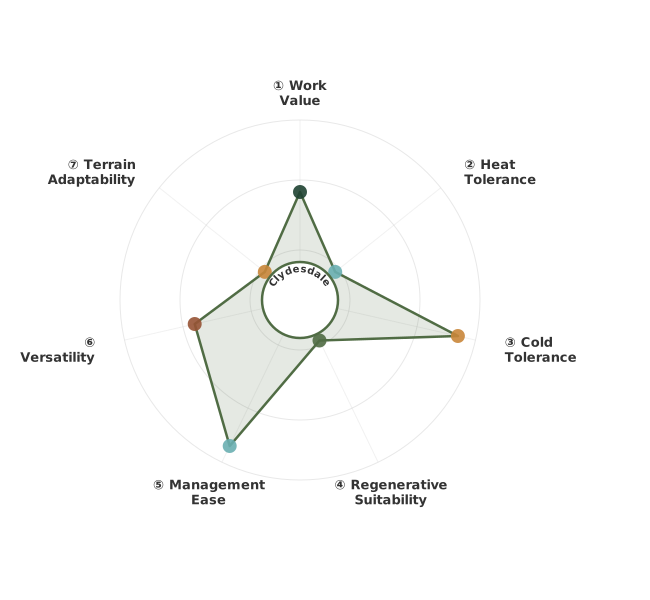
Regenerative Advantages

  • Cold Tolerance: Their dense feathering and thick coats equip Clydesdales to withstand frigid conditions with minimal supplemental needs, showcasing exceptional adaptation to cold.
  • Temperament: Clydesdales are celebrated for their calm and patient disposition, making them exceptionally easy to handle and integrate into various farm environments with minimal stress.
  • Draft Capability: Renowned for size and strength, Clydesdales exhibit exceptional musculature and stamina for demanding heavy hauling and farm work, demonstrating exceptional draft capability.

Value Streams

  • Nutrient cycling and soil building

Experience Level

Intermediate

Some livestock experience recommended (better for larger operations)

1

Climate Suitability Assessment

Will this breed thrive in your climate?

IDEALLY SUITED

Köppen Zone: Cfa (Humid Subtropical), Cfb (Oceanic (Maritime Temperate)), Csb (Warm-Summer Mediterranean), Cwb (Subtropical Highland), Dfa (Hot-Summer Continental), Dfb (Warm-Summer Continental), Dfc (Subarctic)
US Zone: 4a, 5a, 5b, 6a
Australian Zone: Zone 3
EU Climate Region: Boreal, Oceanic, Atlantic

Humid subtropical climates offer mild winters and warm, humid summers. While heat can be a factor, it's generally manageable with adequate shade and water.

ADEQUATE

Köppen Zone: BSk (Cold Semi-Arid (Steppe)), Csa (Hot-Summer Mediterranean), Cwa (Monsoon-Influenced Humid Subtropical), Dwa (Monsoon-Influenced Hot-Summer Continental)
US Zone: 3a, 3b, 7a
Australian Zone: Zone 4
EU Climate Region: Continental

Cold winters are well-tolerated. However, the dryness requires careful pasture management and supplemental feeding, especially during summer months.

NOT RECOMMENDED

Köppen Zone: Af (Tropical Rainforest), Am (Tropical Monsoon), Aw (Tropical Savanna), ET (Tundra), BSh (Hot Semi-Arid (Steppe)), BWh (Hot Desert), BWk (Cold Desert)
US Zone: 2a, 8a, 9a, 10a, 11a, 12a
EU Climate Region: Pannonian

Tropical rainforests are characterized by high heat and humidity year-round, which is detrimental to Clydesdales' limited heat tolerance. Intensive cooling and management would be required.

Better alternatives for these "not recommended" zones: Haflinger (A smaller, more adaptable breed that handles heat better than heavy draft horses.), Noriker (A draft breed that is generally more robust and adaptable to varied climates, including warmer periods.)

Note: This breed's performance varies significantly by climate zone. Above are suitability ratings for major climate types where this breed can be raised successfully. If your climate isn't listed, this breed may not be a good fit. Breeds can technically survive in other climates with intensive management, but we don't recommend this for most regenerative operations due to questionable economics and high resource requirements.

2

Is This Breed Right for Your Operation?

Climate fit, terrain suitability, and scale considerations

Terrain & Environment

Can this breed handle my landscape? Performance on different terrain types and farm scales.

Attribute Suitability Explanation
Flat Terrain Not Recommended Possessing immense power but lacking natural speed and agility, Clydesdales are not efficient for prolonged, fast movement on vast, featureless flat terrain, preferring more varied ground for work.
Rolling Terrain Not Recommended The Clydesdale's large size and feathering make them less agile and more susceptible to slips on uneven or steep terrain, limiting their suitability for rolling landscapes.
Small Scale Suitability Not Recommended Large size (1,500-2,200 lbs) requires significant acreage (5+ acres per animal) and robust infrastructure. Handling can be challenging for solo operators.

Forage & Feeding Adaptations

What can I feed them and how efficiently? Grazing ability, feed conversion, and seasonal adaptation.

Attribute Suitability Explanation
Browsing Ability Not Recommended Clydesdale horses are primarily grazers, with a physiology and dentition optimized for efficient consumption of grasses. Their historical selection for high-energy diets and draft work means they are not adapted to actively seek out and efficiently process the tougher, more fibrous woody vegetation characteristic of browsing. While they might opportunistically nibble on available branches or leaves when grass is scarce, they would not maintain condition solely on browse and lack the specialized behaviors and physical attributes to be considered proficient browsers. Their foraging preference strongly favors grasslands.
Fescue Tolerance Not Recommended Developed in Scotland, a region not associated with fescue-dominant pastures, Clydesdales are not predisposed to metabolizing fescue alkaloids, leading to limited tolerance.
Dry Season Grazing Not Recommended The Clydesdale's high energy demands make it dependent on abundant, quality forage and prone to condition loss on dry pastures without intensive supplementation, indicating limited suitability.

Browsing Ability: Specialized consumption of woody vegetation specifically (shrubs, trees, branches). Actively seeks woody plants, not just opportunistic. A specialized subset of foraging ability.

Fescue Tolerance: Resistance to endophyte-infected tall fescue toxicity (critical for Southern US pastures). Exceptional = minimal impact, Typical = manageable symptoms, Limited = poor performance.

Dry Season Grazing: Ability to utilize dormant or low-quality forage during dry periods. Important for year-round grazing systems.

Scale Considerations

Small-Scale Suitability: Not Recommended

Large size (1,500-2,200 lbs) requires significant acreage (5+ acres per animal) and robust infrastructure. Handling can be challenging for solo operators.

Water Requirements: 10-15 gal/day (38-57 L/day) gallons/day

3

Understanding Clydesdale Horse Characteristics

Physical traits, temperament, and what makes this breed unique

The Clydesdale horse is a distinguished breed of draft horse, originating from the Clyde Valley in Scotland, renowned for its impressive size, robust physique, and characteristic "feathering" – long hair around its lower legs. Historically developed for heavy agricultural labor and haulage, these horses possess a naturally calm and willing temperament, essential for managing their considerable strength. Their deep chests and powerful musculature are direct evolutionary adaptations for sustained pulling power, making them capable of significant physical exertion. As members of the *Equus caballus* species, Clydesdales were meticulously bred for both their tractability and their capacity to perform demanding tasks. Their distinctive appearance, often featuring bay, brown, or black coats with prominent white markings, further sets them apart in the equine world.

Physical Characteristics:Imposing stature and strength: Mature stallions typically weigh between 1,800 and 2,200 pounds (816-998 kg) and stand 16 to 18 hands (64-72 inches or 163-183 cm) at the withers, with mares being slightly smaller.
Anatomical foundation for draft work: Characterized by a deep chest cavity and powerful hindquarters, providing the necessary structure for immense pulling capability.
Signature feathering: A distinctive feature of long, silky hair that extends from the knees and hocks down to the fetlocks, adding to their unique aesthetic.
Broad, sturdy feet: Designed to distribute weight effectively and provide reliable traction across varied and often challenging terrain.
Robust skeletal structure: A strong bone framework is vital for supporting their substantial body mass and withstanding the considerable stresses associated with pulling heavy loads.

Behavioral Traits:Docile and willing disposition: Clydesdales are celebrated for their gentle, calm, and agreeable nature, which makes them manageable even for individuals with less experience handling large animals.
High trainability: They respond positively to consistent and clear training methods, allowing them to be effectively utilized in a wide range of working environments.
Alert yet composed: While generally placid, they maintain a good level of awareness of their surroundings, a crucial trait for safety and efficacy when working.
Socially adaptable: These horses typically exhibit good social behavior and integrate well with other horses and livestock on a farm.

Physiological Adaptations:Cold climate resilience: Clydesdales possess excellent tolerance for colder weather, largely due to their dense coats and significant body mass, which help retain heat.
Moderate heat tolerance: While capable of enduring warmer temperatures, prolonged strenuous activity in extreme heat requires careful management to prevent overheating.
Water consumption: Their daily water intake averages between 10 to 15 gallons (38-57 liters), with needs increasing based on workload and ambient temperature.
Forage utilization: They have a low browse tolerance, around 5-10%, indicating a primary reliance on grasses and hay for their nutritional requirements. Their physiology is geared towards processing fibrous feed efficiently for sustained energy.

4

Management, Care & Feeding

Operational guidance for raising this breed successfully

Integrating Clydesdale horses into a regenerative farming system requires careful planning, a commitment to specialized training, and an understanding of their unique physical and behavioral needs, alongside their economic and environmental roles. The process begins with assessing the farm's specific needs for draft power, identifying tasks that a Clydesdale can efficiently and safely perform, and determining the necessary infrastructure to support the animal. This often involves a significant upfront investment in acquiring a well-trained horse, along with appropriate harness, tack, and shelter, which must be weighed against the long-term savings in machinery and fuel costs. A phased approach, perhaps starting with one horse and gradually increasing capacity as skills and workload develop, can be a prudent strategy for successful integration.

Acquisition and Initial Investment:Horse acquisition: Well-trained Clydesdales suitable for farm work can range from $5,000 to $15,000+, with price influenced by age, training level, and temperament. Thorough vetting and seeking advice from experienced draft horse users are recommended.
Essential equipment: Costs for a suitable harness, collars, bridles, reins, and a sturdy cart or plow can add $1,000 to $3,000 or more, depending on quality and customization.
Shelter and fencing: Basic shelter providing windbreak and protection from the elements is necessary, along with secure fencing to manage grazing and prevent escapes. This infrastructure cost can vary widely but is generally less than for large tractor storage.

Daily Care and Management Practices:Feeding regimen: A diet primarily consisting of quality hay and appropriate grain supplements is crucial for working horses, with annual feed costs estimated between $1,500 to $3,000 per horse. Access to clean water (10-15 gallons daily) is non-negotiable.
Health and veterinary care: Routine veterinary check-ups, vaccinations, and deworming, along with regular hoof care from a farrier (estimated $300-$800 annually), are essential. Proactive health monitoring can prevent more costly issues later.
Grooming and conditioning: Daily grooming not only maintains coat health but also allows for inspection for injuries or skin issues. Regular work, tailored to the horse's conditioning, is key to maintaining muscle tone and stamina.
Training and work integration: Consistent, positive reinforcement training is vital for developing responsiveness and obedience. Tasks such as plowing, harrowing, seeding, or hauling should be introduced gradually, respecting the horse's capabilities and the terrain.

Systems Integration and Operational Considerations:Workflow assessment: Identify specific tasks where draft power offers the most significant advantage, such as in areas prone to soil compaction, on slopes unsuitable for heavy machinery, or for precision work in organic systems.
Seasonal workload planning: Develop a year-round schedule that utilizes the Clydesdale's capabilities across different seasons, from spring plowing to summer hauling and autumn harvesting. Their cold tolerance allows for work well into the cooler months.
Manure management: Clydesdale manure is a valuable resource for regenerative systems. Composting strategies can effectively transform manure into rich soil amendment, further enhancing farm fertility and closing nutrient loops.
Labor commitment: Factor in the daily labor requirement of 1-2 hours for feeding, watering, grooming, and harnessing, which represents a significant time investment that must be allocated within the farm's overall labor plan.
Environmental synergy: Leverage their adaptability to temperate climates by utilizing them for tasks that minimize soil disturbance and reduce reliance on fossil fuels, thereby enhancing the farm's ecological footprint and resilience.

Successfully integrating Clydesdales involves a holistic approach that balances the animal's welfare with the farm's operational goals, recognizing that their true value is unlocked through consistent, knowledgeable application within a regenerative framework.

5

Complete Trait Reference

Comprehensive trait ratings and explanations

Climate & Environmental Adaptation

How does this breed handle environmental challenges? Weather resilience, natural resistance, and adaptation.

Attribute Suitability Explanation
Hardiness Adequate Bred for heavy draft work in Scotland, Clydesdales are robust; however, their large size and feathering necessitate careful management in challenging environments, placing their hardiness as typical.
Heat Tolerance Not Recommended With Northern European origins and a heavy build, Clydesdales are prone to heat stress above 80°F, necessitating active cooling and limiting sustained work capacity, thus rating as limited.
Cold Tolerance Ideally Suited Their dense feathering and thick coats equip Clydesdales to withstand frigid conditions with minimal supplemental needs, showcasing exceptional adaptation to cold.
Drought Tolerance Not Recommended Evolved in a cool, moist climate and bred for power, Clydesdales require substantial nutrition and water, making them less suited for extended dry periods without significant supplementation, rating as limited.

Terrain & Land Suitability

Can this breed handle my landscape? Performance on different terrain types and farm scales.

Attribute Suitability Explanation
Flat Terrain Not Recommended Possessing immense power but lacking natural speed and agility, Clydesdales are not efficient for prolonged, fast movement on vast, featureless flat terrain, preferring more varied ground for work.
Rolling Terrain Not Recommended The Clydesdale's large size and feathering make them less agile and more susceptible to slips on uneven or steep terrain, limiting their suitability for rolling landscapes.
Small Scale Suitability Not Recommended Large size (1,500-2,200 lbs) requires significant acreage (5+ acres per animal) and robust infrastructure. Handling can be challenging for solo operators.

Forage & Feeding Characteristics

What can I feed them and how efficiently? Grazing ability, feed conversion, and seasonal adaptation.

Attribute Suitability Explanation
Browsing Ability Not Recommended Clydesdale horses are primarily grazers, with a physiology and dentition optimized for efficient consumption of grasses. Their historical selection for high-energy diets and draft work means they are not adapted to actively seek out and efficiently process the tougher, more fibrous woody vegetation characteristic of browsing. While they might opportunistically nibble on available branches or leaves when grass is scarce, they would not maintain condition solely on browse and lack the specialized behaviors and physical attributes to be considered proficient browsers. Their foraging preference strongly favors grasslands.
Fescue Tolerance Not Recommended Developed in Scotland, a region not associated with fescue-dominant pastures, Clydesdales are not predisposed to metabolizing fescue alkaloids, leading to limited tolerance.
Dry Season Grazing Not Recommended The Clydesdale's high energy demands make it dependent on abundant, quality forage and prone to condition loss on dry pastures without intensive supplementation, indicating limited suitability.

Browsing Ability: Specialized consumption of woody vegetation specifically (shrubs, trees, branches). Actively seeks woody plants, not just opportunistic. A specialized subset of foraging ability.

Fescue Tolerance: Resistance to endophyte-infected tall fescue toxicity (critical for Southern US pastures). Exceptional = minimal impact, Typical = manageable symptoms, Limited = poor performance.

Dry Season Grazing: Ability to utilize dormant or low-quality forage during dry periods. Important for year-round grazing systems.

Working Capability

Can this breed perform work? Draft power, pack transport, riding, and training ease.

Attribute Suitability Explanation
Draft Capability Ideally Suited Renowned for size and strength, Clydesdales exhibit exceptional musculature and stamina for demanding heavy hauling and farm work, demonstrating exceptional draft capability.
Riding Suitability Not Recommended Primarily bred for draft work, Clydesdales lack the natural agility, stamina, and refined trainability needed for most riding disciplines, rating them as limited.
View Full Document (Printable single-page version)