
Dexter Cattle
Dexter cattle simplify management for farmers with their exceptional docility, remarkable hardiness, and outstanding mothering instincts, thriving on diverse forage with minimal intervention. Originating from Ireland, these small-framed, dual-purpose animals are renowned for their longevity and feed efficiency, making them an excellent choice for small-scale operations or those seeking a gentler, more manageable herd. Their cold tolerance and excellent foraging ability mean they require less supplemental feed, while their hardiness also contributes to good parasite resistance and adaptation to various grazing systems, including mob and rotational grazing, and excel at finishing on grass.
Regenerative Quick Profile
Best Suited For
Climates: Temperate oceanic to cool summer Mediterranean
Terrain: Best for rolling to steep terrain
Scale: Excellent for small homesteads (1-10 animals)
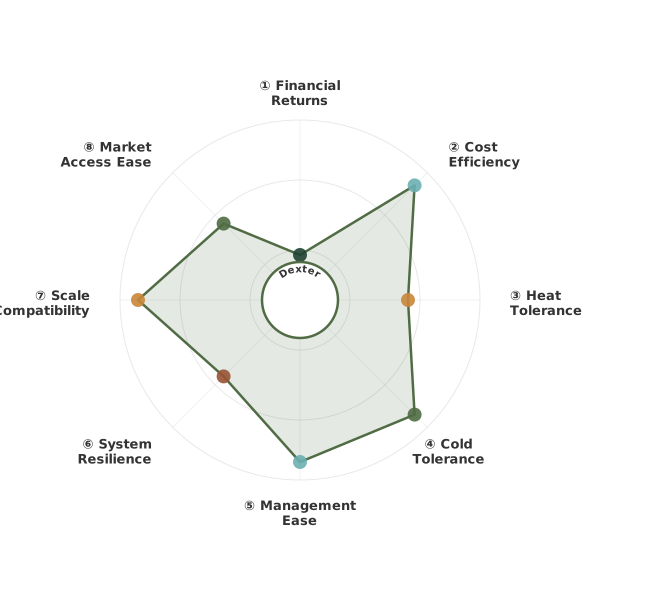
How These Traits Are Calculated
Trait dimensions are ordered clockwise starting from the top of the chart (12 o'clock position):
1. Financial Returns
Monthly income per animal after feed and care costs
WHAT: Evaluates net monthly profit by combining finish weight, time to market, price premiums, and input costs. Breeds with fast growth, efficient feed conversion, and premium market access generate higher returns per animal.
WHY: Farmers need clear income projections to sustain operations. Breeds returning $150+/month enable profitable small-scale operations, while those under $80/month require larger herds or alternative revenue streams to achieve viability.
HOW: Calculated from economics data (finish weight, months to finish, price premiums) combined with trait scores (feed efficiency, mothering ability, drought tolerance). Exceptional (≥2.6): fast growth ≤24 months + high capital efficiency >$180/month + low costs <30% of revenue. Typical (1.8-2.5): moderate returns or longer timelines. Limited (<1.8): slow growth >36 months or high input costs >50%.
2. Cost Efficiency
Feed, water, and input costs relative to output value
WHAT: Measures how well cattle convert inputs (pasture, hay, grain, water) into saleable output. Combines grass-finishing ability, feed efficiency, foraging capability, and water requirements into a composite efficiency score.
WHY: Input costs determine profitability more than market price. Breeds excelling on grass alone with minimal supplementation and low water needs reduce operating costs 40-60%, enabling viability even in drought years or when hay prices spike.
HOW: Weighted formula: grass finishing ability (30%), feed efficiency (30%), foraging ability (30%), water requirements inverted (10%). Exceptional (≥2.6): finishes on grass, exceptional feed conversion, thrives on rough forage. Typical (1.8-2.5): moderate efficiency, some grain needed. Limited (<1.8): grain-dependent, high inputs required.
3. Heat Tolerance
Performance in hot climates above 85°F (29°C)
WHAT: Evaluates breed adaptation to sustained heat above 85°F (29°C), measuring coat characteristics, metabolic adaptations, and documented performance in tropical or semi-arid regions.
WHY: Heat stress reduces feed intake 15-30%, lowers reproduction rates, and increases mortality. Heat-adapted breeds maintain productivity where others require expensive shade structures, cooling systems, or fail completely during summer peaks.
HOW: Rated from database trait 'heat_tolerance' based on breed characteristics. Exceptional (≥2.6): tropical origins, short sleek coats, proven success in regions >95°F (35°C). Typical (1.8-2.5): moderate tolerance, manageable with some shade. Limited (<1.8): temperate-adapted, struggles above 85°F without intensive cooling.
4. Cold Tolerance
Performance in cold climates below 20°F (-7°C)
WHAT: Evaluates breed adaptation to sustained cold below 20°F (-7°C), measuring coat thickness, body mass, metabolic efficiency, and documented performance in northern climates with harsh winters.
WHY: Cold stress increases feed requirements 20-40% for maintenance alone, elevates mortality in young stock, and complicates winter management. Cold-hardy breeds thrive outdoors year-round where others need expensive barns and supplemental heating.
HOW: Rated from database trait 'cold_tolerance' based on breed characteristics. Exceptional (≥2.6): northern origins, thick winter coats, proven success in regions <0°F (-18°C). Typical (1.8-2.5): moderate hardiness, windbreaks sufficient. Limited (<1.8): warm-adapted, requires shelter below 30°F (-1°C).
5. Management Ease
Temperament, handling requirements, and daily care needs
WHAT: Measures how straightforward cattle are to work with daily, combining temperament docility, calving ease, mothering ability, and fence respect into a management complexity score.
WHY: Difficult cattle increase labor 2-4× through longer handling times, more frequent escapes, calving interventions, and safety risks. Easy-handling breeds enable one-person operations and reduce stress for both farmer and animals.
HOW: Weighted formula: docility (40%), calving ease (30%), mothering ability (20%), fence respect (10%). Exceptional (≥2.6): calm docile temperament, unassisted calving, excellent mothers, respects basic fencing. Typical (1.8-2.5): manageable with experience. Limited (<1.8): nervous or aggressive, frequent interventions needed.
6. Drought & Disease Resilience
Survival and productivity under stress conditions
WHAT: Evaluates breed robustness across drought tolerance, parasite resistance, general hardiness, and disease resistance. Measures ability to maintain productivity when conditions deteriorate or health challenges arise.
WHY: Resilient breeds reduce veterinary costs 30-50%, survive drought years that devastate others, and maintain production through typical disease pressures. This determines whether you can sustain a herd through inevitable challenges or face repeated losses.
HOW: Weighted formula: drought tolerance (40%), parasite resistance (30%), general hardiness (20%), disease resistance (10%). Exceptional (≥2.6): thrives through drought, strong natural immunity, minimal interventions needed. Typical (1.8-2.5): moderate resilience, standard care sufficient. Limited (<1.8): requires intensive management to maintain health.
7. Farm Size Adaptability
Suitability across different farm scales and intensities
WHAT: Evaluates whether breeds work across small (1-10 head), medium (11-50 head), or large (50+ head) operations, considering size, handling needs, and infrastructure requirements.
WHY: Size mismatches create inefficiencies. Large commercial breeds overwhelm small pastures and facilities, while breeds requiring individual attention don't scale to large herds. Matching breed to scale prevents costly infrastructure changes or unmanageable daily workloads.
HOW: Matrix scoring based on breed size × small-scale suitability rating. Exceptional (≥2.6): adapts well to all scales or excels across 2+ scales. Typical (1.8-2.5): works best at specific scales. Limited (<1.8): narrow scale requirements, struggles outside optimal range.
8. Market Accessibility
Availability of buyers and premium market opportunities
WHAT: Evaluates market pathways by examining price premium potential, buyer network strength, and market accessibility. Inverted dimension where breeds requiring premiums to be viable score lower than those profitable at commodity prices.
WHY: Premium dependence creates risk. Breeds requiring 30-50% premiums need specialty buyers, direct marketing channels, and consumer education—adding 10-20 hours monthly overhead. Commodity-viable breeds sell through standard auctions with minimal marketing effort.
HOW: Inverted scoring: lower premiums = higher scores. Exceptional (≥2.6): profitable at commodity prices, sells through standard channels. Typical (1.8-2.5): moderate premium needs (10-20%), accessible specialty markets. Limited (<1.8): requires high premiums (30-50%), niche buyers, intensive marketing.
Regenerative Advantages
- Cold Tolerance: A double coat provides good insulation, enabling Dexters to withstand colder temperatures with less supplemental care than many breeds.
- Grazing Ability: Dexter cattle are indeed benchmark grazers, excelling on high-quality grass-based pastures. Their compact size and efficient metabolism allow them to thrive in well-managed rotational systems, converting diverse grasslands into production with minimal need for supplementation, making them ideal for grass-finished or pasture-based operations.
- Foraging Ability: The Dexter's heritage from the challenging Irish landscape has instilled exceptional foraging ability. They demonstrate a remarkable capacity to utilize a wide array of marginal vegetation, including roughage, weeds, and less palatable forages, maintaining condition even on unimproved or diverse pastures, showcasing true self-sufficiency.
- Mothering Ability: With ease of calving and good milk production, Dexters demonstrate excellent maternal qualities, successfully raising calves in varied conditions.
- Hardiness: Originating from Ireland, this heritage breed thrives on rough pastures, demonstrating remarkable resilience to varied weather with minimal external support.
Value Streams
- Meat & Dairy production
- Nutrient cycling and soil building
- Grassland management through grazing
- Carbon sequestration in grasslands
Experience Level
Suitable for first-time livestock owners
3
Understanding Dexter Cattle Characteristics
Physical traits, temperament, and what makes this breed unique
Understanding Dexter Cattle Characteristics
Physical traits, temperament, and what makes this breed unique
Dexter cattle are a small, hardy breed originating from southwestern Ireland, believed to have descended from ancient Celtic cattle. They are the smallest of the European breeds, typically standing only 36-42 inches at the shoulder. This diminutive stature is coupled with a robust, well-muscled frame, giving them a surprising amount of meat for their size. Dexters are known for their dual-purpose nature, excelling as both beef and dairy animals. Their milk is exceptionally rich, with a high butterfat content, making it ideal for cheese and butter production. A unique characteristic is their natural polled (hornless) trait, though some may have small scurs. Their legs can be either standard or disproportionately short, a trait known as 'bulling' or 'dwarfism,' which is a recessive gene. This variation doesn't affect their overall health or productivity, but it's a notable visual distinction within the breed.
Sources behind this view
 Community
-
Dexter cattle are recommended for homesteaders as a hardy, dual-purpose breed (meat/milk) that thrives on sparse grazing, unlike potentially gimmicky 'mini cows'. Look for dairy genetics for optimal m
Read more (opens in new window) permies.com -
Discusses breeding strategies for Dexter/Devon cattle on small homesteads, including AI, renting bulls, or sharing. Emphasizes temperament, local adaptation, and caution regarding Dexter genetics. Men
Read more (opens in new window) permies.com
4
Management, Care & Feeding
Operational guidance for raising this breed successfully
Management, Care & Feeding
Operational guidance for raising this breed successfully
Managing Dexter cattle is relatively straightforward, thanks to their hardy constitution and gentle temperament. They are excellent foragers and can thrive on a pasture-only diet, making them ideal for grazing systems. Rotational grazing is highly recommended to maximize pasture utilization and maintain sward health. Supplementation with minerals, especially during gestation and lactation, is important, and access to clean water is crucial. Due to their smaller size, handling is generally easier and less intimidating than with larger cattle breeds, making them suitable for farmers of all experience levels. Regular observation for signs of illness or injury is standard practice, but Dexters are known for their robust health and longevity. Careful breeding management is needed if one wants to maintain or avoid the short-legged 'bulling' trait.
Sources behind this view
 Videos & Podcasts
-
The Dhys advocate for selecting livestock breeds adapted to pasture, favoring versatile animals like Dexters and Jerseys over high-production, grain-tolerant breeds, and discuss breed selection criter

-
Christine Martin transitioned from Dexter cattle to Red Angus for grass finishing due to demand and yield, noting Dexters' multi-purpose traits but lower beef output compared to Red Angus.

Community
-
Discusses breeding strategies for Dexter/Devon cattle on small homesteads, including AI, renting bulls, or sharing. Emphasizes temperament, local adaptation, and caution regarding Dexter genetics. Men
Read more (opens in new window) permies.com -
Dexter cattle are recommended for homesteaders as a hardy, dual-purpose breed (meat/milk) that thrives on sparse grazing, unlike potentially gimmicky 'mini cows'. Look for dairy genetics for optimal m
Read more (opens in new window) permies.com
6
Production Capabilities & Market Economics
Business case evaluation and production metrics
Production Capabilities & Market Economics
Business case evaluation and production metrics
Meat Production Economics
| Category | Value |
|---|---|
| Finish Weight | 600-800 lbs 272.2-362.9 kg |
| Months to Finish | 24-36 |
| Price Premium | 0% to 50% |
| Annual Input Cost/Head | $300-600 |
| DTC Retail Price | $10-14 |
| Hanging Weight Yield | 57-61 |
| Packaged Meat per Animal | 275-425 lbs 125-193 kg |
| Processing Cost | $700-950 |
| Gross DTC Revenue | $3000-5950 |
Finish Weight: Market weight for grass-finished cattle. Varies by breed genetics, frame size, and forage quality. Smaller-framed heritage breeds typically finish at 900-1100 lbs vs. 1200-1400 lbs for larger commercial breeds.
Months to Finish: Time from weaning to finish weight on grass alone (no grain). Grass-finishing takes 24-30 months vs. 14-18 months for grain-finished feedlot cattle. Patient timeline suits regenerative grazing operations.
Price Premium: Premium above conventional beef prices ($0-6/lb range). Grass-finished beef typically sells for $6-12/lb vs. $4-6/lb for conventional. Premium only applies when farm qualifies through certification (organic, grass-fed verified, Animal Welfare Approved) or direct marketing establishes provenance. Without certification or direct sales channels, premium falls to $0.
Annual Input Cost/Head: Minerals, health care, pasture maintenance, and winter hay per animal per year. Excludes infrastructure, land, and labor. Grass-based systems have minimal input costs compared to grain finishing.
DTC Retail Price: Direct-to-consumer retail price range per pound of packaged beef (cuts average). Grass-finished DTC beef typically sells for $8-14/lb across all cuts. Breed reputation, marbling quality, and local market demand drive variation. Prices reflect farm-gate or farmers market sales — wholesale and commodity channels are significantly lower.
Hanging Weight Yield: Percentage of live weight retained as hanging carcass (after hide, head, organs removed). Most cattle dress out at 58-64% of live weight. Leaner grass-finished cattle may hang slightly lower than grain-finished. Breed frame size and condition affect yield.
Packaged Meat per Animal: Take-home meat after cutting and wrapping (typically 60-65% of hanging weight). Bone-in cuts yield more weight than boneless. Final packaged weight depends on cut sheet choices — ground beef maximizes total pounds, premium steaks reduce total weight but increase per-pound value.
Processing Cost: USDA-inspected slaughter, cutting, wrapping, and labeling per animal. Costs vary by region and processor availability — rural areas with more processors tend to be cheaper. Includes kill fee ($75-150), cut-and-wrap ($0.65-1.10/lb hanging), and any specialty processing (jerky, sausage). USDA inspection required for retail sales; custom-exempt processing costs less but meat cannot be resold.
Gross DTC Revenue: Total revenue per animal when selling all cuts direct to consumer. Calculated from packaged weight × average DTC price per pound. Does not deduct processing, marketing, delivery, or production costs. Actual net profit depends heavily on marketing efficiency and processing costs.
Dairy Production Economics
| Category | Value |
|---|---|
| Milk/Cow/Year | 2500-5000 lbs 1134-2268 kg |
| Lactation Period (Months) | 7-9 |
| Age First Calving (Months) | 24-36 |
| Price Premium | 0% to 80% |
| Annual Input Cost | $300-$600 |
| Cull Cow Value | $800-$1500 |
| Productive Years | 4-7 |
Price Premium: Premium above conventional milk prices ($0-8/gallon range). Grass-fed dairy typically sells for $8-15/gallon vs. $4-6/gallon for conventional. Premium only applies when farm qualifies through certification (organic, grass-fed, A2, raw milk license where legal) or direct sales. Without certification or qualifying market channels, premium falls to $0.
Sources behind this view
 Research
-
Grass-fed vs. grain-fed beef systems: performance, economic, and environmental trade-offs. (opens in new window)
California study found conventional beef had better carcass quality and lower GHG emissions, while grass-fed systems had varied water/energy use and higher costs. No single system was superior across
-
Production Costs of Grass-Fed Organic Milk in the Northeastern United States: Empirical Results from Survey Data and Implications for Sustainable Development (opens in new window)
Grass-fed organic dairy farms in the Northeast US had average production costs of $45.91/cwt. Higher labor efficiency and milk per cow reduced costs, while more land per cow and smaller farm size incr