
Guernsey Cattle
Also known as: guernsey cows, guernsey dairy cattle, golden guernseys, butter cows
Guernsey cattle simplify management with their exceptional docility and remarkable longevity, thriving on diverse forage and requiring minimal intervention. Originating from the Channel Island of Guernsey, these fawn and white cattle are renowned for producing milk with superior quality, boasting high protein and butterfat content, making them ideal for cheese and butter production. Their excellent grazing ability and foraging skills allow them to adapt to various pasture conditions, while their good hardiness and tolerance to both heat and cold ensure year-round productivity. Guernseys excel in mob and rotational grazing systems, making them a prime choice for farmers prioritizing efficient grass conversion and a robust, high-quality milk supply with excellent mothering instincts.
Regenerative Quick Profile
Best Suited For
Climates: Temperate oceanic to humid subtropical with some semi-arid influence
Terrain: Adaptable to most terrain types
Scale: Suitable for small to medium operations (10-50 animals)
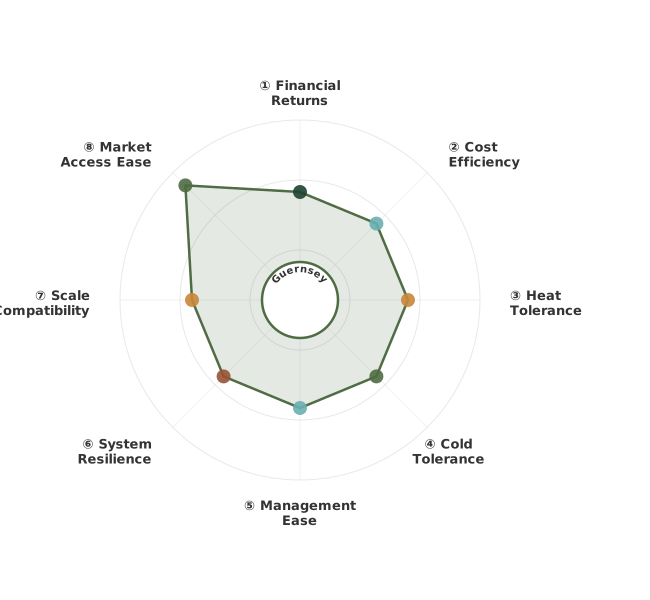
How These Traits Are Calculated
Trait dimensions are ordered clockwise starting from the top of the chart (12 o'clock position):
1. Financial Returns
Monthly income per animal after feed and care costs
WHAT: Evaluates net monthly profit by combining finish weight, time to market, price premiums, and input costs. Breeds with fast growth, efficient feed conversion, and premium market access generate higher returns per animal.
WHY: Farmers need clear income projections to sustain operations. Breeds returning $150+/month enable profitable small-scale operations, while those under $80/month require larger herds or alternative revenue streams to achieve viability.
HOW: Calculated from economics data (finish weight, months to finish, price premiums) combined with trait scores (feed efficiency, mothering ability, drought tolerance). Exceptional (≥2.6): fast growth ≤24 months + high capital efficiency >$180/month + low costs <30% of revenue. Typical (1.8-2.5): moderate returns or longer timelines. Limited (<1.8): slow growth >36 months or high input costs >50%.
2. Cost Efficiency
Feed, water, and input costs relative to output value
WHAT: Measures how well cattle convert inputs (pasture, hay, grain, water) into saleable output. Combines grass-finishing ability, feed efficiency, foraging capability, and water requirements into a composite efficiency score.
WHY: Input costs determine profitability more than market price. Breeds excelling on grass alone with minimal supplementation and low water needs reduce operating costs 40-60%, enabling viability even in drought years or when hay prices spike.
HOW: Weighted formula: grass finishing ability (30%), feed efficiency (30%), foraging ability (30%), water requirements inverted (10%). Exceptional (≥2.6): finishes on grass, exceptional feed conversion, thrives on rough forage. Typical (1.8-2.5): moderate efficiency, some grain needed. Limited (<1.8): grain-dependent, high inputs required.
3. Heat Tolerance
Performance in hot climates above 85°F (29°C)
WHAT: Evaluates breed adaptation to sustained heat above 85°F (29°C), measuring coat characteristics, metabolic adaptations, and documented performance in tropical or semi-arid regions.
WHY: Heat stress reduces feed intake 15-30%, lowers reproduction rates, and increases mortality. Heat-adapted breeds maintain productivity where others require expensive shade structures, cooling systems, or fail completely during summer peaks.
HOW: Rated from database trait 'heat_tolerance' based on breed characteristics. Exceptional (≥2.6): tropical origins, short sleek coats, proven success in regions >95°F (35°C). Typical (1.8-2.5): moderate tolerance, manageable with some shade. Limited (<1.8): temperate-adapted, struggles above 85°F without intensive cooling.
4. Cold Tolerance
Performance in cold climates below 20°F (-7°C)
WHAT: Evaluates breed adaptation to sustained cold below 20°F (-7°C), measuring coat thickness, body mass, metabolic efficiency, and documented performance in northern climates with harsh winters.
WHY: Cold stress increases feed requirements 20-40% for maintenance alone, elevates mortality in young stock, and complicates winter management. Cold-hardy breeds thrive outdoors year-round where others need expensive barns and supplemental heating.
HOW: Rated from database trait 'cold_tolerance' based on breed characteristics. Exceptional (≥2.6): northern origins, thick winter coats, proven success in regions <0°F (-18°C). Typical (1.8-2.5): moderate hardiness, windbreaks sufficient. Limited (<1.8): warm-adapted, requires shelter below 30°F (-1°C).
5. Management Ease
Temperament, handling requirements, and daily care needs
WHAT: Measures how straightforward cattle are to work with daily, combining temperament docility, calving ease, mothering ability, and fence respect into a management complexity score.
WHY: Difficult cattle increase labor 2-4× through longer handling times, more frequent escapes, calving interventions, and safety risks. Easy-handling breeds enable one-person operations and reduce stress for both farmer and animals.
HOW: Weighted formula: docility (40%), calving ease (30%), mothering ability (20%), fence respect (10%). Exceptional (≥2.6): calm docile temperament, unassisted calving, excellent mothers, respects basic fencing. Typical (1.8-2.5): manageable with experience. Limited (<1.8): nervous or aggressive, frequent interventions needed.
6. Drought & Disease Resilience
Survival and productivity under stress conditions
WHAT: Evaluates breed robustness across drought tolerance, parasite resistance, general hardiness, and disease resistance. Measures ability to maintain productivity when conditions deteriorate or health challenges arise.
WHY: Resilient breeds reduce veterinary costs 30-50%, survive drought years that devastate others, and maintain production through typical disease pressures. This determines whether you can sustain a herd through inevitable challenges or face repeated losses.
HOW: Weighted formula: drought tolerance (40%), parasite resistance (30%), general hardiness (20%), disease resistance (10%). Exceptional (≥2.6): thrives through drought, strong natural immunity, minimal interventions needed. Typical (1.8-2.5): moderate resilience, standard care sufficient. Limited (<1.8): requires intensive management to maintain health.
7. Farm Size Adaptability
Suitability across different farm scales and intensities
WHAT: Evaluates whether breeds work across small (1-10 head), medium (11-50 head), or large (50+ head) operations, considering size, handling needs, and infrastructure requirements.
WHY: Size mismatches create inefficiencies. Large commercial breeds overwhelm small pastures and facilities, while breeds requiring individual attention don't scale to large herds. Matching breed to scale prevents costly infrastructure changes or unmanageable daily workloads.
HOW: Matrix scoring based on breed size × small-scale suitability rating. Exceptional (≥2.6): adapts well to all scales or excels across 2+ scales. Typical (1.8-2.5): works best at specific scales. Limited (<1.8): narrow scale requirements, struggles outside optimal range.
8. Market Accessibility
Availability of buyers and premium market opportunities
WHAT: Evaluates market pathways by examining price premium potential, buyer network strength, and market accessibility. Inverted dimension where breeds requiring premiums to be viable score lower than those profitable at commodity prices.
WHY: Premium dependence creates risk. Breeds requiring 30-50% premiums need specialty buyers, direct marketing channels, and consumer education—adding 10-20 hours monthly overhead. Commodity-viable breeds sell through standard auctions with minimal marketing effort.
HOW: Inverted scoring: lower premiums = higher scores. Exceptional (≥2.6): profitable at commodity prices, sells through standard channels. Typical (1.8-2.5): moderate premium needs (10-20%), accessible specialty markets. Limited (<1.8): requires high premiums (30-50%), niche buyers, intensive marketing.
Regenerative Advantages
- Feed Efficiency: Guernseys are efficient dairy producers, recognized for high butterfat yields relative to their feed intake.
- Docility: Guernseys possess a calm demeanor, honed through centuries of dairy selection, making them exceptionally easy to manage and interact with.
- Efficiency: These dairy producers excel at converting feed into milk with high fat and protein content, demonstrating strong reproductive efficiency.
- Gentleness: Their consistently gentle nature ensures Guernseys integrate and manage with minimal stress, setting high handling standards.
- Milk Quality: Guernseys are prized for rich, golden milk high in butterfat and protein, ideal for artisanal products with excellent keeping qualities.
Know the Debate
- Jersey yields more milk solids; Guernsey excels in milk quality.
- Market focus (volume vs. artisanal) dictates breed choice.
- Genetics and management influence feed efficiency.
- Guernsey docility simplifies herd management.
Value Streams
- Dairy production
- Nutrient cycling and soil building
- Grassland management through grazing
- Carbon sequestration in grasslands
Experience Level
Suitable for first-time livestock owners
3
Understanding Guernsey Cattle Characteristics
Physical traits, temperament, and what makes this breed unique
Understanding Guernsey Cattle Characteristics
Physical traits, temperament, and what makes this breed unique
The Guernsey cow is a British breed of dairy cattle, originating from the Channel Island of Guernsey. Known for their docile temperament and distinctive fawn and white markings, Guernseys are a medium-sized breed with an efficient, well-proportioned build. They are renowned for producing milk that is rich in beta-carotene, giving it a golden hue and a characteristic flavor, often referred to as "Golden Guernsey" milk. This milk also typically has a higher butterfat and protein content compared to many other dairy breeds. Their origin on a small island meant that the breed developed with a strong emphasis on efficiency and hardiness, as resources were limited. This selective pressure contributed to their ability to thrive on forage and maintain good health with minimal intervention, traits that are highly valued in modern agriculture.
What truly sets the Guernsey apart is this combination of desirable milk components and their ease of management. Unlike larger, more demanding breeds, Guernseys are less prone to metabolic disorders and have a reputation for longevity. Their smaller frame also means they require less feed to maintain body condition, making them an economical choice. Furthermore, their gentle nature makes them a pleasure to work with, reducing stress for both the animals and the handlers, which is a significant advantage in any farm setting, especially those focused on animal welfare and a low-stress environment.
Historically, Guernseys were a popular choice for family farms due to their adaptability and consistent production. They are known for their strong maternal instincts and ease of calving. While perhaps not as numerically dominant as some other breeds globally, the Guernsey maintains a dedicated following among farmers who appreciate their unique milk quality, efficient production, and overall robustness. Their distinct appearance and rich milk make them a premium product, often commanding higher prices in niche markets.
Sources behind this view
 Videos & Podcasts
-
Compares Guernsey and Jersey dairy cows: Guernseys offer gentle temperament, superior milk taste, better calving ease, and higher A2A2/beta-carotene content, with profitable beef calves. Jerseys produ

 Community
-
Miniature Jerseys are highlighted for superior, rich milk production ideal for cheese, being gentle and consistent milkers. Dexters are hardy foragers but can be less reliable for milk unless specific
Read more (opens in new window) permies.com -
Discusses suitability of Highland, Dexter, and Miniature Belted Galloway cattle for silvopasture, noting their ability to eat tree branches and clear land. Emphasizes temperament as a key selection fa
Read more (opens in new window) permies.com
4
Know the Debate
Choosing between Guernsey and Jersey cattle involves weighing different production strengths that significantly affect farm economics and managemen...
Know the Debate
Choosing between Guernsey and Jersey cattle involves weighing different production strengths that significantly affect farm economics and managemen...
Choosing between Guernsey and Jersey cattle involves weighing different production strengths that significantly affect farm economics and management. Jerseys are often favored for their higher milk volume and solid content, making them suitable for larger operations focused on bulk production. Guernseys, on the other hand, are renowned for their superior milk quality—rich in butterfat and protein—and docile temperament, making them ideal for niche markets and smaller-scale, artisanal dairies. Factors like feed efficiency, initial cost, availability, and the specific market demands of your region will ultimately guide the best breed selection for a regenerative dairy.
Guernsey vs. Jersey: Which breed offers better production efficiency and market value?
Jersey: Higher volume & solids, adaptable to grass
Jersey cows are noted for producing more milk with higher butterfat and protein, making them efficient converters of grass into marketable solids. Their adaptability to pasture-based systems and relative hardiness make them a strong choice for farms seeking high output from forage.
Sources behind this view
Sources behind this view
Videos & Podcasts
-
Jersey cows produce more milk (up to 5 gallons/day) with higher butterfat and protein than Guernseys (up to 4 gallons/day). Jersey milk has a richer cream line, though the speaker prefers Guernsey milk taste. Guernseys can be harder to find and more expensive initially.
-
Details integrating Jersey milk cows on a homestead, prioritizing family use and on-farm diversification (feeding pigs, chickens). Stresses that conventional-bred Jerseys require grain and cannot live on grass alone, highlighting the importance of understanding genetics and nutrition.

 Research
-
Investigating the genomic background of calving-related traits in Canadian Jersey cattle. (opens in new window)
This study found: Researchers studied the genetics behind calving difficulties in Jersey cows in North America to help improve breeding programs. By analyzing the DNA of over 40,000 animals, they looked at traits like stillbirth, how long cows are pregnant, calf size, and how easy calving is. They found that while traits like stillbirth have low heritability (meaning genetics play a smaller role), there are specific genes that influence these traits. Genes like MTHFR, SERPINA5, IGFBP3, and ZRANB1 were identified as potentially important. The study suggests that using genetic information can help breeders select for cows that have easier calvings and fewer stillbirths, ultimately improving animal welfare and farm profitability. However, they also noted that reducing environmental factors that affect calving is also important due to the low heritability of some traits.
-
Effect of stocking rate and animal genotype on dry matter intake, milk production, body weight, and body condition score in spring-calving, grass-fed dairy cows. (opens in new window)
This study found: A two-year study in Ireland looked at how stocking density (how many cows per hectare) and cow genetics affected milk production, feed intake, and overall efficiency in grass-fed dairy cows. Researchers compared purebred Holstein-Friesian cows with crossbred Jersey x Holstein-Friesian cows at three different stocking rates: low, medium, and high. They found that as stocking rate increased, cows produced less milk, lost weight, and became less efficient, likely due to less grass available per cow. The crossbred Jersey cows were more efficient overall – they ate more, produced more milk solids (fat and protein), and used energy better than the purebred cows. This suggests that genetics play a key role in how well cows perform on pasture, especially when feed is limited by higher stocking densities. The study was conducted in Ireland on pasture-based systems.
Guernsey: Superior milk quality, docile, niche market potential
Guernseys produce milk with exceptional flavor, higher butterfat and protein, and valuable beta-carotene content, commanding premium prices for cheese and butter. Their docility and good calving ease simplify management, though they may yield less overall volume and can be harder to acquire.
Sources behind this view
Sources behind this view
Videos & Podcasts
-
Casey shares extensive insights into acquiring and managing dairy cows, emphasizing the need for specific traits like disease-free status, halter training, and good foraging ability. She details challenges with cow purchases, the suitability of Jerseys, calving management, milk production fluctuations, and direct-to-consumer raw milk sales strategies.
-
Compares Guernsey and Jersey dairy cows: Guernseys offer gentle temperament, superior milk taste, better calving ease, and higher A2A2/beta-carotene content, with profitable beef calves. Jerseys produce more milk with higher butterfat/protein. Guernseys can be harder to find and costlier upfront.
-
Training a Guernsey heifer calf for family milk production involves halter introduction at one week old, tying her up during morning milking to teach stillness, and leading her with a rope after a few weeks of consistent practice.

Research
-
Review: New considerations to refine breeding objectives of dairy cows for increasing robustness and sustainability of grass-based milk production systems. (opens in new window)
This study found: This review looks at how to breed dairy cows that are better suited for grass-based farming systems, which are popular with consumers for animal welfare reasons. These systems present unique challenges, like relying on daily weather for feed and sometimes requiring cows to walk long distances to graze. To succeed, cows need to be highly fertile, easy to manage in large herds, good walkers, and resilient to changes in feed availability. As we focus more on sustainability and animal well-being, future breeding goals will need to include traits that improve the cow's quality of life and reduce the farm's environmental impact. Research shows that some cow genetics work better in grazing environments than others, meaning breeding goals should be adapted to specific regions and farm conditions to boost both profitability and sustainability.
Making Sense of the Differences
The choice between Jersey and Guernsey cattle depends on farm goals and market strategy. Jerseys excel in milk volume and solids for larger-scale production or when maximizing grass conversion for bulk markets. Guernseys are distinguished by their superior milk quality and temperament, making them suitable for niche markets focused on artisanal products or direct-to-consumer sales where milk flavor and components, alongside ease of handling, are paramount. While some research suggests Jerseys are more feed-efficient at higher densities, Guernseys' holistic advantages in milk composition and management may offer a different kind of profitability.
5
Management, Care & Feeding
Operational guidance for raising this breed successfully
Management, Care & Feeding
Operational guidance for raising this breed successfully
Managing Guernsey cattle effectively in a regenerative system centers on maximizing their natural strengths as efficient, pasture-based converters. Their primary feed source should be high-quality forages, whether that's lush pasture, well-managed hay, or silage. Rotational grazing is key; moving Guernseys frequently allows them to graze selectively on the most nutritious plants, stimulates pasture regrowth, and distributes manure evenly across the land, enhancing soil fertility. While they are efficient, ensuring adequate protein and energy during peak lactation through high-quality forages or minimal, targeted supplementation is crucial for sustained production. Monitoring body condition scores regularly will help fine-tune feeding strategies and prevent over- or under-conditioning.
Husbandry practices should emphasize their docile nature. Gentle handling, low-stress loading and unloading, and consistent routines will minimize stress and improve cooperation during milking and routine checks. Their smaller size and good feet generally mean they are less prone to lameness, but regular hoof trimming and inspection are still important, especially in wetter conditions or on rough terrain. Providing clean, accessible water and adequate shelter from extreme weather are basic but essential components of their care. Given their longevity, careful record-keeping of health, production, and breeding is important for making informed management decisions over the long term.
Health management for Guernseys often benefits from a preventative, low-intervention approach. Their hardiness means they are less susceptible to common dairy ailments like ketosis and milk fever when managed appropriately on forage. Regular observation for any signs of illness or injury is paramount. Vaccination protocols should be tailored to regional risks. Mastitis prevention relies heavily on good milking hygiene, dry cow management, and ensuring cows have clean resting areas. Their ease of calving is a notable advantage, though basic calving observation and assistance preparedness are always prudent. Emphasizing nutrition, low stress, and good pasture management forms the bedrock of a healthy Guernsey herd.
Sources behind this view
Videos & Podcasts
-
Compares Guernsey and Jersey dairy cows: Guernseys offer gentle temperament, superior milk taste, better calving ease, and higher A2A2/beta-carotene content, with profitable beef calves. Jerseys produ
Community
-
Advocates for raising Jersey cows on well-managed pasture, detailing regenerative practices like rotational grazing and the benefits of natural fertilization, carbon sequestration, and improved water
Read more (opens in new window) permies.com
Research
-
Intensive rotational grazing for dairy cattle feeding (opens in new window)
Intensive rotational grazing for dairy cows was more profitable than confinement feeding due to lower costs, despite slightly lower milk yields. Health and body weight were similar. Supplemental feed
7
Production Capabilities & Market Economics
Business case evaluation and production metrics
Production Capabilities & Market Economics
Business case evaluation and production metrics
Dairy Production Economics
| Category | Value |
|---|---|
| Milk/Cow/Year | 12000-15000 lbs 5443.1-6803.9 kg |
| Lactation Period (Months) | 10-12 |
| Age First Calving (Months) | 24-30 |
| Price Premium | 0% to 80% |
| Annual Input Cost | $1500-$2500 |
| Cull Cow Value | $1200-$1800 |
| Productive Years | 4-6 |
Price Premium: Premium above conventional milk prices ($0-8/gallon range). Grass-fed dairy typically sells for $8-15/gallon vs. $4-6/gallon for conventional. Premium only applies when farm qualifies through certification (organic, grass-fed, A2, raw milk license where legal) or direct sales. Without certification or qualifying market channels, premium falls to $0.
Sources behind this view
Community
-
Estimates potential income from a single dairy cow: ~5 lbs butter and ~10 lbs cheese daily, yielding ~ $22,100 annually at $4/lb cheese and $5/lb butter, excluding expenses and labor.
Read more (opens in new window) permies.com
Research
-
Production Costs of Grass-Fed Organic Milk in the Northeastern United States: Empirical Results from Survey Data and Implications for Sustainable Development (opens in new window)
Grass-fed organic dairy farms in the Northeast US had average production costs of $45.91/cwt. Higher labor efficiency and milk per cow reduced costs, while more land per cow and smaller farm size incr
-
Economic values for health and feed efficiency traits of dual-purpose cattle in marginal areas. (opens in new window)
Economic values for Slovak Pinzgau cattle show mastitis costs €70.65/case/year, hoof issues €26.73. Feed efficiency and functional traits like fertility and lifespan are increasingly important for bre