
Honeybees
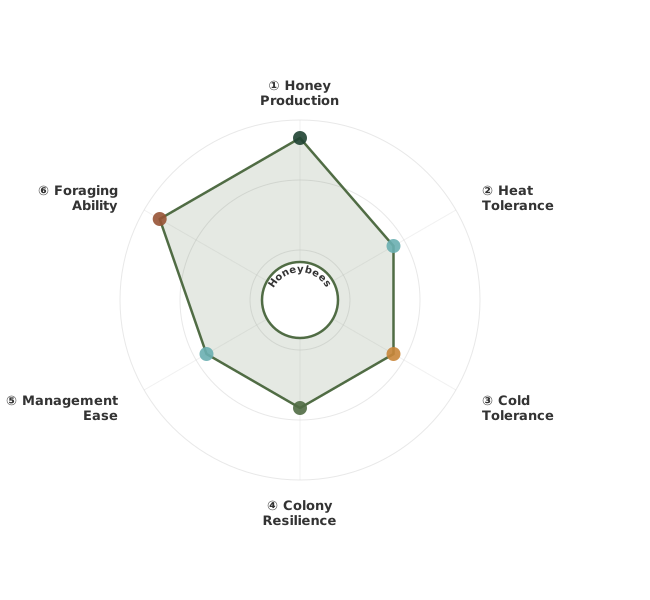
Honeybees offer farmers an exceptional foraging ability, robust honey production, and remarkable climate adaptation, simplifying apiary management. Originating from a diverse evolutionary history, these industrious insects are renowned for their efficiency in gathering nectar and pollen across a wide range of floral sources. While their overwintering capabilities are good, their true strength lies in their prolific honey yield and their adaptability to various environmental conditions, making them a top choice for farmers engaging in seasonal dairying, where a reliable and abundant honey harvest is paramount. Their consistent performance in diverse climates and strong foraging drive sets them apart from less adaptable bee populations.
Regenerative Quick Profile
Best Suited For
Climates: Tropical, subtropical, temperate, and semi-arid climates with sufficient floral resources.
Scale: Suitable for small to medium operations (10-50 animals)
How These Traits Are Calculated
Trait dimensions are ordered clockwise starting from the top of the chart (12 o'clock position):
1. Honey Production
Annual honey yield per hive in pounds
WHAT: Measures annual honey production per hive, typically ranging 30-100 lbs in temperate climates. High producers generate 70-100+ lbs annually while lower producers yield 30-50 lbs, directly affecting revenue from honey sales.
WHY: Honey revenue determines whether beekeeping is a profitable side enterprise or requires large colony counts to achieve viability. At $8-12 per pound, high-producing hives generate $560-1,200 annually versus $240-600 for low producers, making the difference between 10 hives providing income or requiring 30+ hives.
HOW: Rated from documented production levels and breed characteristics. Exceptional (≥2.6): 80-100+ lbs annually, consistent high yields. Typical (1.8-2.5): 50-80 lbs, standard production. Limited (<1.8): <50 lbs, primarily consumed by colony for winter survival.
2. Heat Tolerance
Colony survival and productivity in hot weather above 85°F (29°C)
WHAT: Evaluates colony adaptation to sustained heat above 85°F (29°C), measuring temperature regulation behaviors (fanning, water collection), brood survival, and honey production maintenance during hot periods.
WHY: Heat stress halts foraging, causes brood mortality, and requires intensive cooling (water collection, fanning) that redirects energy from honey production. Heat-adapted breeds maintain productivity in southern climates where others struggle, preventing 2-4 month production gaps during summer peaks.
HOW: Rated from database trait 'heat_tolerance' based on documented characteristics. Exceptional (≥2.6): tropical origins, efficient cooling, maintains production in 95°F+ (35°C+). Typical (1.8-2.5): moderate tolerance, manageable with shade and water access. Limited (<1.8): struggles above 85°F, reduced foraging and brood survival.
3. Cold Tolerance
Overwinter survival in cold climates below 20°F (-7°C)
WHAT: Evaluates colony survival through sustained cold below 20°F (-7°C), measuring cluster efficiency, winter honey consumption, brood-rearing timing, and spring buildup speed. Critical for northern beekeeping viability.
WHY: Cold-sensitive bees consume 50-80 lbs honey for winter survival, start brood-rearing late, and suffer high winter losses (40-60%). Cold-hardy breeds overwinter on 40-60 lbs, resume brood-rearing earlier, and maintain losses below 20%, making northern beekeeping economically viable.
HOW: Rated from database trait 'cold_tolerance' based on documented overwinter performance. Exceptional (≥2.6): proven success in <0°F (-18°C), efficient clustering, low winter stores needed. Typical (1.8-2.5): moderate hardiness, standard overwintering. Limited (<1.8): high losses, requires extensive feeding or indoor wintering.
4. Hive Stability
Disease resistance and survival under typical stresses
WHAT: Evaluates colony robustness across disease resistance (foulbrood, nosema, viruses), pest tolerance (varroa mites, small hive beetles), hygienic behavior (removing diseased brood), and general stress adaptation.
WHY: Resilient colonies maintain productivity through challenges causing 30-50% losses in susceptible bees—surviving varroa pressure, resisting diseases, adapting to forage gaps. This determines whether beekeeping requires intensive treatments (monthly medications) or colonies thrive with minimal interventions.
HOW: Composite assessment of documented health characteristics. Exceptional (≥2.6): strong hygienic behavior + disease/mite resistant + thrives with minimal treatment. Typical (1.8-2.5): standard resilience, routine management sufficient. Limited (<1.8): susceptible, requires intensive treatment regimes.
5. Management Ease
Colony temperament and handling complexity
WHAT: Measures handling simplicity combining temperament (calm vs defensive), swarming tendency (frequent vs controlled), comb-building behavior (straight vs wandering), and routine inspection cooperation.
WHY: Defensive bees require full protective gear, limit inspection frequency, and create liability concerns near homes or public spaces. Frequent swarmers lose half the workforce annually, reducing productivity. Calm bees enable confident inspections in light protection, making beekeeping accessible and pleasant.
HOW: Weighted assessment: temperament (50%), swarming tendency (30%), comb behavior (20%). Exceptional (≥2.6): gentle and calm, low swarming, straight comb. Typical (1.8-2.5): manageable with standard practices. Limited (<1.8): defensive requiring full suits, frequent swarmers, or challenging comb behavior.
6. Foraging Ability
Nectar and pollen collection efficiency across seasons
WHAT: Measures foraging effectiveness combining flight range, early/late season activity (when few others are foraging), poor weather tolerance (flying in cool or cloudy conditions), and diverse floral source utilization.
WHY: Aggressive foragers extend the honey production season 2-4 weeks at each end, collect more per flight, and maintain productivity during brief nectar flows. This produces 20-40% more honey annually than less vigorous foragers from the same floral resources.
HOW: Rated from documented foraging characteristics and behavior. Exceptional (≥2.6): extended season activity + poor weather tolerance + diverse sources + vigorous foragers. Typical (1.8-2.5): standard foraging behavior. Limited (<1.8): restricted season, fair-weather only, selective about sources.
Regenerative Advantages
- Foraging Ability: Honeybees display exceptional foraging drive and efficiency across vast areas, leading to high honey yields when well-managed.
- Honey Production: Well-managed populations of common subspecies like Italians and Carniolans are known for their exceptional honey production.
- Climate Adaptation: As a species, honeybees demonstrate remarkable resilience and adaptability across diverse global climates due to their evolutionary history.
Know the Debate
- Honeybee health debated: pure Italian vs. local hybrids
- Beekeeping labor varies by hive type and scale
- Pollinator decline driven by multiple factors, not just one
- Native and managed bees have different roles and needs
Value Streams
- Crop pollination (increases yields 20-40%)
- Biodiversity and ecosystem health indicator
Experience Level
Beekeeping requires specialized knowledge
3
Understanding Honeybees Characteristics
Physical traits, temperament, and what makes this breed unique
Understanding Honeybees Characteristics
Physical traits, temperament, and what makes this breed unique
Honeybees (Apis mellifera) are social insects renowned for their complex colony structure and their indispensable role as pollinators. Unlike solitary bees, honeybees live in highly organized colonies, typically numbering tens of thousands of individuals, each with specific roles – queen, workers, and drones. This social organization allows for efficient resource gathering, brood rearing, and defense. Their ability to communicate through intricate dances, like the 'waggle dance,' to indicate food sources is a remarkable trait that distinguishes them from many other pollinators.
Originating from Africa, Europe, and the Middle East, honeybees have been managed by humans for millennia, primarily for honey and wax. Their history is deeply intertwined with human civilization, with evidence of beekeeping dating back to ancient Egypt. Over time, various subspecies and breeds have been developed or have naturally adapted to different environments, leading to diverse characteristics in terms of temperament, disease resistance, and productivity. The most common breeds managed globally include the Italian bee (Apis mellifera ligustica), the Carniolan bee (Apis mellifera carnica), and the Russian bee (Apis mellifera якутская).
What truly sets honeybees apart is their prolific honey production and their capacity to form large, stable colonies that can overwinter. This allows them to be a consistent and reliable source of pollination services across vast agricultural landscapes, even in challenging weather conditions. Their ability to store honey provides a surplus that can be harvested, offering an additional income stream for farmers. Furthermore, their manageable nature, when handled correctly, makes them suitable for integration into diverse farm operations, from large-scale agriculture to small homesteads.
Sources behind this view
 Community
-
Details *Apis mellifera* history and cultivation, including historical figures like W.L. Coggshall. The book 'Homegrown Honey Bees' offers step-by-step guidance on the annual beekeeping cycle, from hi
Read more (opens in new window) smallfarms.cornell.edu -
Claire Preston's book *Bee* details honey bee social structure, with worker bees performing age-dependent roles from nursing to foraging. Drones are expelled in autumn to conserve resources, as noted
Read more (opens in new window) ucanr.edu -
Introduces beekeeping for small farmers, noting its role in pollination and the reduced prevalence of colony collapse disorder in small operations. Discusses bee gentleness, smoker use, and traditiona
Read more (opens in new window) smallfarms.cornell.edu
 Research
-
Honey bees as models for gut microbiota research. (opens in new window)
Honey bees are excellent models for studying gut microbes due to their simple, host-specific bacterial communities. Their gut microbes impact bee nutrition, immunity, and disease resistance, offering
-
Variation of gut microbiota composition in a honey bee breeding population: exploring potential links with docility and honey production. (opens in new window)
Honey bee gut bacteria change with seasons and diet, and are linked to honey production and bee docility. Research offers insights for beekeepers.
-
Biotic and abiotic stresses on honeybee health. (opens in new window)
Honeybees face combined threats from pests (mites, hornets), diseases, pesticides, habitat loss, and climate change, leading to colony losses and pollinator decline.
-
The honey bee gut microbiota: strategies for study and characterization. (opens in new window)
Review of methods for studying honey bee gut microbes, covering identification, genetic analysis, interactions, and functions, to aid future bee health research.
4
Know the Debate
Honeybee management for farmers involves balancing efficient honey production with the health of both managed and wild pollinator populations. Whil...
Know the Debate
Honeybee management for farmers involves balancing efficient honey production with the health of both managed and wild pollinator populations. Whil...
Honeybee management for farmers involves balancing efficient honey production with the health of both managed and wild pollinator populations. While honeybees are adaptable and provide valuable pollination services, their interaction with native pollinators and their susceptibility to pests and diseases are points of ongoing discussion. Factors like genetics, specific management practices, and the agroecosystem's overall floral diversity and pesticide load significantly influence colony success and the broader pollinator landscape.
Should beekeepers prioritize pure Italian bees or local hybrids for better health?
Pure Italian: predictable traits, high honey yields
Beekeepers favor pure Italian bee genetics for their consistent traits like gentleness and high honey production, which are predictable for commercial operations. This focus aims for reliable management and high yields, assuming healthy lines can be maintained.
Sources behind this view
Sources behind this view
 Videos & Podcasts
-
Bees are essential for small farm pollination of fruits and vegetables. Acquiring nucleus colonies of Italian or Kane Kolens bees in spring is a competitive process, with different varieties suited for early or late season.
 From the Web
-
New beekeepers should conduct thorough research, join local clubs, and find an experienced mentor. Understanding basic bee biology and hive components is essential, with regional advice being crucial for success.
Local Hybrids: enhanced disease resistance and adaptation
Others advocate for crossbreeding Italian bees with local populations (like Russian or VSH bees) to improve disease resistance and climate adaptation. This approach aims for more resilient bees that can better withstand local challenges, even if some predictable traits are altered.
Sources behind this view
Sources behind this view
Videos & Podcasts
-
Honeybees are not native to the Americas, though ancient native species existed. Human beekeeping has evolved over millennia. Modern honeybees face challenges from monoculture, pesticides, and inbreeding, highlighting broader land stewardship issues affecting all pollinators.
Research
-
Phenomic analysis of the honey bee pathogen-web and its dynamics on colony productivity, health and social immunity behaviors (opens in new window)
This study found: A two-year study across Canada looked at how different diseases and parasites affect honey bee colonies, and how the bees' own 'social immunity' behaviors help them fight back. Researchers tracked colony size, honey production, and the presence of common bee diseases like viruses (including Deformed Wing Virus), gut parasites (<jats:italic>Nosema</jats:italic>), and the notorious <jats:italic>Varroa</jats:italic> mites. They found that colonies with strong 'social immunity' behaviors, like effective grooming and hygienic responses, had fewer diseases. Importantly, higher levels of viruses and <jats:italic>Nosema</jats:italic> parasites were linked to lower colony productivity and smaller colony size. This research helps us understand the complex web of diseases and how bees' collective behaviors contribute to their overall health and ability to produce honey.
Context-dependent: best breed/hybrid varies by region
Many believe the ideal choice depends on local climate, disease pressures, and management goals. Some regions might favor pure Italian for prolificacy, while others with high disease prevalence benefit more from hybrid vigor and local adaptation.
Sources behind this view
Sources behind this view
Videos & Podcasts
-
Discusses the importance of place, power, and purpose in pollinator conservation, highlighting honeybee ecotypes as crucial to agriculture and the interconnectedness of cultures, food systems, and stewardship.
From the Web
-
New beekeepers should conduct thorough research, join local clubs, and find an experienced mentor. Understanding basic bee biology and hive components is essential, with regional advice being crucial for success.
Making Sense of the Differences
The choice between pure Italian bees and local hybrids hinges on balancing predictable honey yields and docile temperaments against improved disease resistance and adaptation to specific regional climates and pest pressures. While pure Italian lines are favored for consistent commercial traits, local or hybrid bees may offer greater long-term resilience in challenging environments. Farmers should consider their specific location's pressures and consult local beekeeping associations for guidance on which genetics perform best locally.
How much labor and expertise does honeybee management require at different scales?
Minimal labor for small hobby apiaries
Starting with 1-2 hives as a hobby can require as little as 1-2 hours per week for visual inspections and basic maintenance, assuming good hive health and minimal intervention. This low labor input makes it accessible for many small farmers.
Sources behind this view
Sources behind this view
Videos & Podcasts
-
Guides through assembling a honeybee hive, explaining components like entrance reducers, queen excluders, and bee space. Demonstrates transferring bees from a nuc box using smoke and highlights essential tools like bee brushes and smokers.
From the Web
-
Provides guidance on establishing and managing small-scale apiaries, covering legalities, hive location, swarm prevention, pest/disease management, and detailed instructions for Top Bar hives.
Significant labor and expertise for commercial operations
Scaling up to multiple commercial apiaries requires substantial labor for hive maintenance, health checks, swarm prevention, honey extraction, and winter preparation. This scale demands specialized knowledge and dedicated time, often necessitating full-time attention.
Sources behind this view
Sources behind this view
Videos & Podcasts
-
Honeybees are not native to the Americas, though ancient native species existed. Human beekeeping has evolved over millennia. Modern honeybees face challenges from monoculture, pesticides, and inbreeding, highlighting broader land stewardship issues affecting all pollinators.
-
Details a honeybee hive inspection, checking brood chambers for health, disease, and queen presence. Explains queen excluder function, bee communication (smoke effect), and hive temperature regulation.
-
Discusses adding honey supers and managing hives for optimal honey production, emphasizing genetics, nectar-to-honey conversion, and queen excluder use. Highlights rapid honey production potential and bees' self-management of hive entrances.
Expertise crucial for all scales, especially pest/disease management
Regardless of scale, understanding bee biology, seasonal cycles, and especially integrated pest and disease management (like Varroa mite control) is crucial. Lack of expertise can lead to rapid colony loss.
Sources behind this view
Sources behind this view
Research
-
Biotic and abiotic stresses on honeybee health. (opens in new window)
This study found: Honeybees are vital pollinators for our food system, but they face many threats. This review highlights how a combination of 'living' problems (biotic stressors) and 'environmental' problems (abiotic stressors) are harming bee colonies. Living threats include parasites like mites and viruses they carry, as well as invasive pests such as giant hornets and small hive beetles. Environmental threats include pesticides used on farms (even those meant to treat mites), pollution, loss of flower-rich habitats due to development and intensive farming, and climate change. The way humans manage bees, like moving hives around, can also spread diseases and invasive species. The combined impact of these many stressors is leading to significant bee colony losses and a decline in pollinators, which is a major concern for agriculture.
From the Web
-
Bumble bees are vital pollinators that also move soil during nest and hibernation burrow construction. They are social insects active in cooler weather and benefit from permanent farm habitat.
Making Sense of the Differences
Honeybee management labor and expertise needs vary dramatically with scale. Small hobby apiaries can be managed with minimal time, focusing on basic health checks. However, commercial operations require significant, dedicated labor for hive maintenance, swarm control, and honey extraction. Across all scales, a foundational understanding of bee biology, seasonal cycles, and particularly integrated pest and disease management is critical for colony survival and productivity. Expert mentorship and continuous learning are highly recommended.
Do honeybees compete with or complement native pollinators?
Competition for resources, especially in stressed environments
Honeybees, with their large colony sizes and efficient foraging, can outcompete native bees, particularly in areas with limited floral resources or high pesticide loads. This can reduce reproductive success for native bees and impact local bee diversity.
Sources behind this view
Sources behind this view
Research
-
The Conservation of Native Honey Bees Is Crucial. (opens in new window)
This study found: This article highlights the importance of protecting wild honey bee populations, not just managed ones. While honey bees are essential for farming and can sometimes compete with native wild bees, the wild, naturalized honey bee populations themselves are in decline. These wild bees, with their unique local genetic makeup, are crucial for biodiversity and need protection in natural areas. The authors suggest that conservation efforts should consider both managed and wild honey bees, alongside other endangered wild bees, to ensure a healthy ecosystem.
-
Functional trait mismatch between native and introduced bee pollinators servicing a global fruit crop. (opens in new window)
This study found: In orchards in New South Wales, Australia, researchers studied the bees that pollinate apple trees, comparing areas near natural vegetation to areas near more developed or 'disturbed' landscapes. They looked at the physical characteristics and behaviors of different bee species, and how these traits relate to their evolutionary history. While the number of bee species was similar in both landscape types, the natural areas had a more diverse and complex mix of bee types in terms of their evolutionary background and functional roles. Native bees filled most of these roles, but the introduced honey bee occupied a distinct functional niche. Even though both landscape types supported the same number of overall bee functional groups, the native bees didn't fully replace the honey bee's unique role. This suggests that if honey bee populations face health issues, apple pollination (and pollination for other crops) could be significantly impacted because there isn't a perfect native bee substitute for all of the honey bee's functions.
Honeybees fill a unique niche and can coexist
Honeybees, while non-native, can fulfill pollination roles that native bees do not, especially in agricultural settings. Their presence can complement native pollination services, with coexistence possible when diverse habitats and ample forage are available.
Sources behind this view
Sources behind this view
Videos & Podcasts
-
Honeybees are not native to the Americas, though ancient native species existed. Human beekeeping has evolved over millennia. Modern honeybees face challenges from monoculture, pesticides, and inbreeding, highlighting broader land stewardship issues affecting all pollinators.
Research
-
Functional trait mismatch between native and introduced bee pollinators servicing a global fruit crop. (opens in new window)
This study found: In orchards in New South Wales, Australia, researchers studied the bees that pollinate apple trees, comparing areas near natural vegetation to areas near more developed or 'disturbed' landscapes. They looked at the physical characteristics and behaviors of different bee species, and how these traits relate to their evolutionary history. While the number of bee species was similar in both landscape types, the natural areas had a more diverse and complex mix of bee types in terms of their evolutionary background and functional roles. Native bees filled most of these roles, but the introduced honey bee occupied a distinct functional niche. Even though both landscape types supported the same number of overall bee functional groups, the native bees didn't fully replace the honey bee's unique role. This suggests that if honey bee populations face health issues, apple pollination (and pollination for other crops) could be significantly impacted because there isn't a perfect native bee substitute for all of the honey bee's functions.
Focus on habitat for all pollinators is key
The most effective approach is to provide abundant, diverse floral resources and pesticide-free environments that support both honeybees and a wide array of native species. Managing landscapes for general pollinator health benefits all bees.
Sources behind this view
Sources behind this view
Videos & Podcasts
-
Support native bees by providing nesting habitat in bare soil or dead wood, managing invasives, and understanding their solitary nature. Bees collect pollen via electrostatic attraction between charged flowers and their hairy bodies, which also aid navigation.
From the Web
-
Explains the ecology of honey bees and wild bees, highlighting their shared needs for abundant pollen/nectar, pesticide protection, and undisturbed nesting sites for survival and reproduction.
-
Wild and honey bees require abundant pollen/nectar, protection from pesticides, and undisturbed nesting sites (soil, stems, cavities) to thrive.
Making Sense of the Differences
The interaction between honeybees and native pollinators is complex, with potential for both competition and coexistence. While large honeybee colonies can outcompete native bees for resources in resource-limited environments, they can also fill unique pollination niches, especially in agricultural landscapes. The consensus points towards a habitat-centric approach: providing abundant, diverse, pesticide-free forage and undisturbed nesting sites benefits all bee populations, mitigating direct competition and fostering a healthier, more resilient pollinator community overall.
5
Management, Care & Feeding
Operational guidance for raising this breed successfully
Management, Care & Feeding
Operational guidance for raising this breed successfully
Effective management of honeybees in a regenerative system begins with providing suitable habitat and ensuring access to diverse, pesticide-free forage. Hives should be placed in locations with ample sunlight, protection from strong winds, and proximity to a variety of flowering plants that bloom throughout the season. Regular inspections are crucial to monitor colony health, population size, and queen performance. Understanding the natural life cycle of the bee colony allows for proactive interventions, such as swarm prevention and supplemental feeding during dearth periods.
Feeding management for honeybees is primarily about ensuring they have adequate nutrition from natural sources. This means cultivating or preserving a diverse range of nectar and pollen-producing plants on the farm. When natural forage is insufficient, supplemental feeding with sugar syrup (for energy) or pollen patties (for protein) may be necessary, especially during early spring buildup or extended periods of poor weather. It's essential to use pure, clean water sources and avoid feeding during times when other pollinators are actively foraging to minimize competition and ensure they utilize natural resources.
Health considerations are paramount for honeybee colonies. Integrated Pest Management (IPM) strategies are vital, focusing on prevention and minimizing the use of chemical treatments. Regular monitoring for pests like Varroa mites, which are a major threat, is essential. Treatments should be judiciously applied, using least-toxic options when possible and rotating treatments to prevent resistance. Maintaining strong, healthy colonies with good genetics also improves their natural resistance to diseases. Biosecurity measures, such as cleaning equipment and avoiding the introduction of diseased bees, are critical for long-term colony success.
Sources behind this view
Videos & Podcasts
-
Feed bees their own honey, not sugar water, and avoid supermarket honey due to disease spores. Diverse pollen/nectar sources and elevated hive placement (30 inches) improve bee health, while reducing

Community
-
Provides guidance on organic beekeeping, winter feeding, hive insulation, and the importance of pollination. Discusses traditional vs. conventional beekeeping, alternative hive designs, native bee pol
Read more (opens in new window) permies.com -
Provides essential knowledge for new beekeepers, covering bee biology, hive management, seasonal tasks, and the importance of learning from mentors or classes like those offered by UC Davis.
Read more (opens in new window) ucanr.edu -
Adopt natural beekeeping by starting with 5+ hives, considering top-bar hives, and sourcing local, treatment-free bees. Prioritize diverse, abundant food sources and understand natural processes like
Read more (opens in new window) permies.com -
Provides foundational knowledge for backyard beekeeping, emphasizing planning, learning bee biology, and seeking mentors or classes like those from UC Davis. Covers seasonal tasks and benefits like po
Read more (opens in new window) ucanr.edu
Research
-
Native habitat mitigates feast-famine conditions faced by honey bees in an agricultural landscape. (opens in new window)
Adding native wildflowers to farms can help honey bees survive late-season food shortages common in corn and soybean landscapes, improving colony health and overwintering success.
From the Web
-
Provides guidance on establishing and managing small-scale apiaries, covering legalities, hive location, swarm prevention, pest/disease management, and detailed instructions for Top Bar hives.