
Jersey Giant Chicken
Also known as: jersey giant
The Jersey Giant chicken simplifies flock management with its exceptional docility and robust dual-purpose quality, making it a valuable addition for farmers seeking both meat and eggs. This breed, developed in New Jersey, is known for its large size and calm demeanor, which reduces handling stress and makes integration into various farm settings easier. Jersey Giants exhibit good broodiness, offering natural incubation for chicks, and demonstrate strong cold hardiness, allowing them to thrive in cooler climates with minimal supplemental heating. Their good foraging ability means they can effectively utilize a diverse range of pasture and woodland resources, aligning perfectly with silvopasture practices by contributing to insect control and nutrient cycling within wooded areas. Furthermore, their inherent disease resistance translates to lower veterinary costs and reduced labor for flock health maintenance.
Regenerative Quick Profile
Best Suited For
Climates: Humid subtropical to continental climates, with distinct seasons and moderate to high precipitation.
Scale: Excellent for small homesteads (1-10 animals)
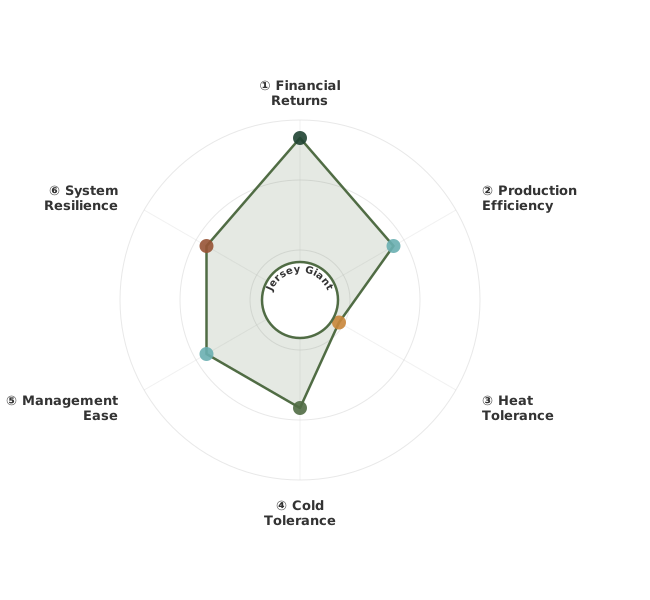
How These Traits Are Calculated
Trait dimensions are ordered clockwise starting from the top of the chart (12 o'clock position):
1. Financial Returns
Monthly income per bird from eggs, meat, or dual-purpose value
WHAT: Evaluates monthly profit potential combining egg production, meat yield, dual-purpose value, and input costs. Breeds with high output, efficient feed conversion, and minimal health costs generate stronger returns per bird.
WHY: Flock profitability depends on daily output relative to feed costs. Breeds laying 250+ eggs annually or reaching 6-8 lbs in 12-16 weeks provide income streams that cover feed plus profit, while lower producers require larger flocks or alternative revenue.
HOW: Calculated from production data (eggs per year or meat timeline) combined with feed efficiency and health characteristics. Exceptional (≥2.6): high output + low inputs + minimal health issues. Typical (1.8-2.5): moderate production or standard costs. Limited (<1.8): low output or high inputs eroding margins.
2. Production Efficiency
Output relative to feed consumed and space required
WHAT: Measures how effectively chickens convert feed and space into saleable products (eggs or meat), combining foraging ability, production levels, and resource needs into an efficiency score.
WHY: Efficient breeds reduce daily feed costs 20-40% while maximizing output, enabling profitability even when feed prices spike. Space-efficient breeds allow higher stocking density without stress, expanding flock size within existing infrastructure.
HOW: Weighted formula: foraging ability reduces feed costs (40%), egg or meat production measures output (30%), feed-to-output ratio (30%). Exceptional (≥2.6): excellent foragers + high production + low feed needs. Typical (1.8-2.5): moderate efficiency. Limited (<1.8): high inputs for output level.
3. Heat Tolerance
Egg production and health in hot weather above 85°F (29°C)
WHAT: Evaluates breed performance during sustained heat above 85°F (29°C), measuring production maintenance, heat stress resistance, and cooling behavior adaptations.
WHY: Heat stress drops egg production 15-40% and increases mortality. Heat-adapted breeds maintain laying through summer peaks where others stop production completely, avoiding 2-3 month income gaps in hot climates.
HOW: Rated from database trait 'heat_tolerance' based on breed characteristics. Exceptional (≥2.6): Mediterranean origins, large combs for cooling, maintains production in 95°F+ (35°C+). Typical (1.8-2.5): moderate tolerance with shade. Limited (<1.8): production drops significantly above 85°F, requires cooling systems.
4. Cold Tolerance
Egg production and health in cold weather below 20°F (-7°C)
WHAT: Evaluates breed performance during sustained cold below 20°F (-7°C), measuring production maintenance, frostbite resistance (especially combs and wattles), and winter hardiness.
WHY: Cold stress halts laying in non-adapted breeds, causes frostbite requiring amputations, and increases feed needs 30-50%. Cold-hardy breeds continue production through winter, maintaining year-round income where others require heated coops or accept seasonal gaps.
HOW: Rated from database trait 'cold_tolerance' based on breed characteristics. Exceptional (≥2.6): small combs, dense feathering, proven winter laying in <0°F (-18°C). Typical (1.8-2.5): moderate hardiness, basic shelter sufficient. Limited (<1.8): large combs prone to frostbite, production stops without heat.
5. Management Ease
Handling temperament and care complexity
WHAT: Measures daily management simplicity combining temperament docility, disease resistance, and behavioral predictability. Easy breeds require minimal interventions while difficult breeds demand constant attention.
WHY: Management complexity determines whether chickens are a pleasant side enterprise or a daily burden. Calm, healthy breeds allow 10-15 minute daily checks, while flighty or sickly birds require 45-60 minutes daily for catching, treating, and monitoring.
HOW: Evaluated from temperament, health needs, and typical care requirements. Exceptional (≥2.6): calm and friendly, excellent health, self-sufficient with basic care. Typical (1.8-2.5): manageable with standard practices. Limited (<1.8): nervous or aggressive, frequent health interventions needed.
6. Flock Resilience
Health and productivity under typical stresses
WHAT: Evaluates flock robustness across disease resistance, parasite tolerance, general hardiness, and stress adaptation. Measures ability to maintain production and survive challenges that devastate more fragile breeds.
WHY: Resilient flocks reduce veterinary costs, survive disease outbreaks that wipe out neighbors' chickens, and maintain production through weather extremes. This determines whether your flock thrives independently or requires constant medical interventions.
HOW: Composite assessment of documented health characteristics, survival rates, and stress tolerance. Exceptional (≥2.6): exceptional disease resistance + thrives through challenges + minimal losses. Typical (1.8-2.5): standard resilience with routine care. Limited (<1.8): health-sensitive, requires intensive management.
Regenerative Advantages
- Docility: Despite their imposing size, Jersey Giants exhibit a remarkably calm and gentle disposition, allowing close interaction with minimal alarm, a testament to their breeding.
- Noise Level: Large and generally docile breed, with normal activity well below 50 dB and infrequent loud calls.
- Coop Aggression: Very large and docile birds. Their size often deters aggression, and 2 sq ft/bird is ample space with minimal pecking.
- Integration Ease: Very large and docile. New Jersey Giants integrate easily with minimal aggression, needing only a short health check and 1-2 weeks of acclimation.
- Fence Requirements: As one of the largest breeds, Jersey Giants have minimal flight ability. A 4ft fence is ample for containment.
Value Streams
- Meat & Egg production
- Insect and pest control
- Scratch tillage and compost distribution
Experience Level
Suitable for first-time livestock owners
3
Understanding Jersey Giant Chicken Characteristics
Physical traits, temperament, and what makes this breed unique
Understanding Jersey Giant Chicken Characteristics
Physical traits, temperament, and what makes this breed unique
The Jersey Giant chicken is a substantial breed developed in the United States during the late 19th century, specifically in New Jersey, with the primary objective of creating a large, heavy-bodied fowl for meat production. This breed is distinguished by its formidable size and robust, heavy-boned structure, making it one of the largest chicken breeds available. While bred for size, they also exhibit a notably placid and docile temperament, which contributes to their manageability in various farm settings. The breed is recognized in three color varieties: Black, which is the original and most common, along with White and Blue. Their significant mass and sturdy build also support their capacity for sustained foraging when provided with adequate space and environmental conditions.
Physical Characteristics:
* Size and Weight: Jersey Giants are notable for their impressive size; mature roosters can weigh up to 13 pounds, with hens typically reaching around 10 pounds. This significant body mass is a direct result of their broad, deep conformation and heavy bone structure.
* Conformation: The breed possesses a rectangular body shape, characterized by a deep keel bone and well-rounded breast, hallmarks of a meat-type bird. Their legs are strong and set widely apart, providing stable support for their considerable weight.
* Plumage: Jersey Giants have dense, close-lying feathers that offer excellent protection and contribute to their cold hardiness. The three recognized color varieties—Black, White, and Blue—maintain consistent feather quality and color purity within each type.
* Comb and Wattles: They typically present with a single comb and bright red wattles, which are often more pronounced in adult males.
Behavioral Traits:
* Temperament: Jersey Giants are renowned for their calm and docile nature. This gentle disposition makes them relatively easy to handle and integrate into mixed flocks without significant aggression issues.
* Broodiness: While not as intensely broody as some heritage breeds, Jersey Giant hens can exhibit natural incubation instincts, which can be advantageous for natural chick rearing.
* Foraging Behavior: These birds are capable and enthusiastic foragers, actively seeking out insects, seeds, and vegetation when given access to appropriate foraging areas. Their robust build allows them to cover ground effectively in search of food.
* Vocalization: Compared to smaller, more excitable breeds, Jersey Giants tend to be less vocal, contributing to a quieter overall flock environment.
Biological Traits:
* Maturity Rate: Jersey Giants mature at a slower rate than most commercial broiler breeds, reaching their full size over a more extended period. This slower growth contributes to the development of dense, quality meat.
* Cold Hardiness: Their dense feathering and substantial body mass provide a good degree of natural insulation, making them reasonably hardy in colder climates, provided they have protection from wind and wet conditions. They are well-suited for USDA Zones 4-8.
The combination of their impressive size, calm disposition, and foraging capabilities positions the Jersey Giant as a unique breed with specific applications in diverse agricultural systems.
Sources behind this view
 Community
-
Compares Black Jersey Giants and Chanteclers for cold hardiness and dual-purpose utility, discussing feed costs, breeding for specific conditions, and the challenges of sourcing authentic heritage bre
Read more (opens in new window) permies.com -
Discusses practical aspects of heritage chicken breeds like Black Jersey Giants, Dark Cornish, and Chanteclers, focusing on dual-purpose utility, sourcing from quality hatcheries, optimal slaughter ag
Read more (opens in new window) permies.com
4
Management, Care & Feeding
Operational guidance for raising this breed successfully
Management, Care & Feeding
Operational guidance for raising this breed successfully
Integrating Jersey Giant chickens into a regenerative farm system requires careful planning that accounts for their unique physical characteristics, slower growth cycle, and specific economic considerations, alongside their significant environmental contributions. A phased approach that aligns their integration with existing infrastructure and market channels is key to maximizing their value. This involves setting up appropriate housing, understanding their nutritional needs over a longer grow-out period, and establishing markets that appreciate their substantial size and quality. Their robust nature and foraging abilities can be harnessed through well-managed rotational systems, contributing to pest control and nutrient cycling across the farm landscape.
Physical and Environmental Requirements:
* Housing: Provide secure, predator-proof housing that offers protection from harsh weather, especially wind and wet conditions. Their substantial size requires ample space within shelters to avoid overcrowding, which can lead to stress and disease. Ensure adequate ventilation to maintain air quality.
* Space and Foraging Access: Jersey Giants benefit greatly from access to pasture, cover crops, or wooded areas where they can forage for insects and vegetation. Rotational grazing systems are ideal, allowing areas to recover between uses and providing fresh forage. A minimum of 10-15 square feet of outdoor access per bird is recommended.
* Climate Suitability: These birds are well-adapted to temperate and continental climates (USDA Zones 4-8). While cold-hardy due to dense feathering, ensure access to unfrozen water sources and protection from extreme cold snaps. In hotter climates, shade and ample water are critical to prevent heat stress.
Economic Implementation and Management:
* Grow-Out Period and Feed: Expect a grow-out period of 20-24 weeks to reach optimal meat weights. This extended timeline means higher cumulative feed costs compared to fast-growing broilers. While they are efficient foragers, supplemental feed, ideally a balanced ration appropriate for their life stage, will be necessary. A typical Feed Conversion Ratio (FCR) might range from 3.5:1 to 4.5:1, but the total volume of feed consumed will be higher. Estimated feed costs to market weight can range from $8-15 per bird, excluding initial chick costs, housing, and processing.
* Market Channel Development: Success hinges on accessing premium markets that value larger carcass sizes. Establishing direct-to-consumer sales or partnerships with specialty restaurants is crucial. This requires building marketing infrastructure, customer acquisition (which can take 2-3 years to build a consistent base), and potentially arranging for specialized processing for larger birds. Wholesale commodity markets may not offer a premium and could make profitability challenging compared to faster-growing broilers.
* Cost Management: Monitor feed conversion closely and optimize foraging opportunities to reduce reliance on purchased feed. Consider bulk purchasing of feed and establishing efficient processing logistics to minimize per-bird costs.
Regenerative Management Practices:
* Rotational Grazing: Integrate Jersey Giants into pasture rotation plans to maximize their foraging benefits for pest control and seed consumption. Move them frequently to prevent overgrazing and allow pasture regeneration. Their manure will enrich the soil in grazed areas.
* Composting with Poultry Manure: Utilize their manure as a valuable composting accelerator. Collect manure and bedding from shelters and add it to compost piles. Their nitrogen-rich droppings, combined with their active foraging on compost materials, will speed up decomposition and create nutrient-dense compost.
* Cover Crop Integration: Employ them to manage cover crops by allowing them to graze and trample the vegetation. This practice can aid in termination and incorporate biomass into the soil before planting a cash crop, contributing to soil organic matter.
* Pest Management: Strategically introduce them to areas with high insect pressure, such as orchards or fields recovering from pest infestations. Their omnivorous diet targets a wide range of invertebrates, acting as a natural biological control agent.
Key Considerations for Success:
* Patience: Their slower growth requires a long-term perspective.
* Market Alignment: Ensure your chosen market appreciates and is willing to pay for the larger size and potential quality.
* Infrastructure: Have adequate housing, fencing, and water systems in place.
* Nutritional Planning: Supplement foraging with appropriate feed throughout their life cycle.
By carefully considering these physical, economic, and management aspects, farmers can successfully integrate Jersey Giant chickens to enhance their farm's productivity and ecological health.
Sources behind this view
Community
-
Advocates for slow-growing heritage breeds like Black Jersey Giants for natural farming, emphasizing lower feed dependency, reduced mortality, and alignment with temperate climate foraging cycles for
Read more (opens in new window) permies.com -
Compares Black Jersey Giants and Chanteclers for cold hardiness and dual-purpose utility, discussing feed costs, breeding for specific conditions, and the challenges of sourcing authentic heritage bre
Read more (opens in new window) permies.com
6
Production Capabilities & Market Economics
Business case evaluation and production metrics
Production Capabilities & Market Economics
Business case evaluation and production metrics
Meat Production Economics
| Category | Value |
|---|---|
| Dressed Weight/Bird | 4-6 lbs 1.8-2.7 kg |
| Months to Finish | 4-5 |
| Batches/Year | 2-3 |
| Price Premium | +20% to +40% |
| Input Cost/Bird | $18-25 |
Months to Finish: Time from hatch to processing weight. Commercial meat breeds (Cornish Cross) finish in 8-10 weeks, while heritage breeds take 14-20+ weeks. Slower growth produces better flavor and texture.
Batches/Year: Number of production cycles annually. Pastured meat chickens are typically raised in 2-4 batches per year (8-12 weeks per batch). This allows pasture recovery between batches and spreads production throughout the season.
Price Premium: Premium above conventional chicken prices ($0-6/lb range). Pastured poultry typically commands $4-8/lb vs. $1-3/lb for conventional. Direct sales, organic certification, and heritage breeds command highest premiums. Premium only applies when farm qualifies through certification (organic, Animal Welfare Approved, Certified Humane) or direct marketing establishes pastured practices. Without certification or direct sales channels, premium falls to $0.
Input Cost/Bird: Includes chicks, feed, bedding, processing. Excludes labor, land, and infrastructure. Pastured systems have lower feed costs (due to foraging 10-20% of diet) but higher processing and chick costs than confinement operations.
Egg Production Economics
| Category | Value |
|---|---|
| Eggs/Hen/Year | 150-200 |
| Egg Size | Extra Large to Jumbo |
| Laying Period | 3-5 |
| Price Premium/Dozen | $0 to $3 |
| Input Cost/Hen | $15-$25 |
Eggs/Hen/Year: Annual egg production for pastured hens. Production peaks in first 2 years then declines. Heritage breeds typically lay 150-250 eggs/year, while modern hybrids can lay 280-320 eggs/year in pasture systems (less than confinement due to foraging time and weather exposure).
Egg Size: Industry classifications (Small, Medium, Large, Extra Large, Jumbo). Breed determines typical size. Younger hens lay smaller eggs; size increases with age.
Laying Period: How long hens remain economically productive. Most breeds lay well for 2-4 years, with declining production after that. Heritage breeds often lay longer than hybrids.
Price Premium/Dozen: Premium above conventional egg prices ($0-6/dozen range). Pastured eggs typically sell for $5-10/dozen vs. $2-4/dozen for conventional. Direct sales, organic certification, and specialty breeds (e.g., blue eggs) command highest premiums. Premium only applies when farm qualifies through certification (organic, Certified Humane, free-range verified) or direct marketing establishes pastured practices. Without certification or direct sales channels, premium falls to $0.
Input Cost/Hen: Annual cost including feed, bedding, supplements, health care. Pastured layers forage 15-30% of their diet, reducing feed costs compared to confinement. Excludes infrastructure, land, and labor.
Sources behind this view
 Videos & Podcasts
-
Evaluates pastured poultry: Pros include low startup cost, fast ROI, and ease of management. Cons are high labor, seasonality, need for scale (400-500 birds/batch), high price, and butchering challeng

-
Detailed financial analysis of pastured poultry shows economies of scale are crucial for profitability, targeting $50/hour labor and 2x money factor. Specific costs, pricing ($4.99/lb whole chicken),
![Thumbnail for Earn $10000 an Acre Raising Pastured Poultry [PROFIT not GROSS]](/static/thumbnails/Ej-qyb6GrOA.jpg)
-
A homestead egg cost analysis shows organic feed and other inputs cost $3.20/dozen, excluding labor. Including labor at $20/hour raises the cost to $7.45/dozen. Seasonality and alternative feed source

-
On a Swedish farm, pastured broilers are raised for quick sale, and eggs from mobile hen houses are sold via a three-month subscription to ensure cash flow and customer loyalty, leveraging their high

Community
-
Taste and quality are key drivers for pastured eggs and meats, often valued more than certifications. Superior products, like forest-ranged eggs, command premium prices, with perceived value influenci
Read more (opens in new window) permies.com