Regenerative Quick Profile

Best Suited For

Climates: Tropical rainforest, Tropical monsoon, Tropical savanna, Hot semi-arid

Terrain: Best for flat to rolling terrain

Scale: Suitable for small to medium operations (10-50 animals)
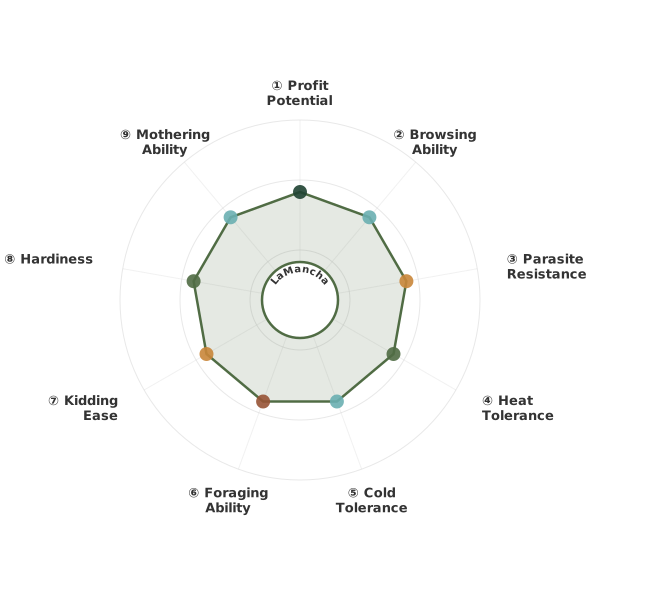
Regenerative Advantages

  • Mothering Ability:
  • Hardiness:
  • Milk Production:

Value Streams

  • Dairy production
  • Nutrient cycling and soil building
  • Brush clearing and fire risk reduction
  • Invasive species control

Experience Level

Intermediate

Consult local experts for handling requirements

1

Climate Suitability Assessment

Will this breed thrive in your climate?

IDEALLY SUITED

Köppen Zone: Cfa (Humid Subtropical), Csa (Hot-Summer Mediterranean), Csb (Warm-Summer Mediterranean), Cwa (Monsoon-Influenced Humid Subtropical)
US Zone: 6a, 7a, 8a, 9a

Humid subtropical climates with hot, humid summers and mild winters are excellent for LaMancha goats. They thrive in these conditions with good pasture management.

ADEQUATE

Köppen Zone: Aw (Tropical Savanna), BSh (Hot Semi-Arid (Steppe)), BSk (Cold Semi-Arid (Steppe)), BWk (Cold Desert), Cfb (Oceanic (Maritime Temperate)), Cwb (Subtropical Highland), Dfa (Hot-Summer Continental), Dfb (Warm-Summer Continental)
US Zone: 5a, 5b, 10a, 11a

Tropical savanna climates offer a distinct dry season which can be beneficial. LaMancha goats can adapt, but will require shade and water management during the hot, wet season and careful grazing during the dry season.

NOT RECOMMENDED

Köppen Zone: Af (Tropical Rainforest), Am (Tropical Monsoon), ET (Tundra), BWh (Hot Desert), Dfc (Subarctic), Dwa (Monsoon-Influenced Hot-Summer Continental)
US Zone: 2a, 3a, 3b, 4a, 12a

The constant high heat and humidity of tropical rainforest climates are not ideal for LaMancha goats. Heat stress and increased parasite load would be significant challenges, requiring intensive management.

Note: This breed's performance varies significantly by climate zone. Above are suitability ratings for major climate types where this breed can be raised successfully. If your climate isn't listed, this breed may not be a good fit. Breeds can technically survive in other climates with intensive management, but we don't recommend this for most regenerative operations due to questionable economics and high resource requirements.

2

Is This Breed Right for Your Operation?

Climate fit, terrain suitability, and scale considerations

Terrain & Environment

Can this breed handle my landscape? Performance on different terrain types and farm scales.

Attribute Suitability
Flat Terrain Adequate
Rolling Terrain Adequate
Small Scale Suitability Adequate

Forage & Feeding Adaptations

What can I feed them and how efficiently? Grazing ability, feed conversion, and seasonal adaptation.

Attribute Suitability
Foraging Ability Adequate
Browsing Ability Adequate
Fescue Tolerance Adequate
Dry Season Grazing Adequate

Foraging Ability: Thriving on diverse/marginal vegetation broadly (woody plants, forbs, weeds, rough forage, scrubland) without supplementation. Focus: self-sufficiency on poor-quality or varied vegetation beyond quality grass.

Browsing Ability: Specialized consumption of woody vegetation specifically (shrubs, trees, branches). Actively seeks woody plants, not just opportunistic. A specialized subset of foraging ability.

Fescue Tolerance: Resistance to endophyte-infected tall fescue toxicity (critical for Southern US pastures). Exceptional = minimal impact, Typical = manageable symptoms, Limited = poor performance.

Dry Season Grazing: Ability to utilize dormant or low-quality forage during dry periods. Important for year-round grazing systems.

Scale Considerations

Small-Scale Suitability: Adequate

3

Understanding LaMancha Goats Characteristics

Physical traits, temperament, and what makes this breed unique

The LaMancha goat is a distinct dairy breed with a unique physical characteristic: either absent or very small external ears. Originating in the United States from Spanish goats brought to California in the early 20th century, this breed has been selectively developed for dairy production and a manageable temperament. Their lack of prominent ears is not merely an aesthetic feature; it offers practical advantages by reducing the risk of frostbite in colder climates and minimizing snagging on fences or brush, contributing to their overall hardiness. This breed is known for its steady milk production and a robust, dairy-type conformation that supports efficient feed conversion. The LaMancha's adaptability allows them to thrive in a variety of environments and management systems, making them a compelling choice for producers seeking a resilient and docile dairy animal.

Physical Characteristics:Ear Type: Two recognized forms: "gopher" ears, characterized by a complete absence of external ear cartilage and only a small opening, or "switch" ears, featuring a very short, firm ear appendage approximately 1-2 inches long with no cartilage. This is the breed's most defining physical trait.
Body Conformation: LaManchas are medium-sized goats, typically weighing 130-160 pounds for does and 160-200 pounds for bucks. They possess a well-muscled, dairy-type physique with a long, level topline and good depth of body, indicating a capacity for feed intake and milk production.
Temperament: Renowned for their exceptionally docile, quiet, and friendly disposition, making them easy to handle, train, and integrate into farm operations.

Behavioral and Biological Traits:Foraging Ability: While primarily a dairy breed, LaManchas exhibit moderate browse tolerance, capable of deriving 25-35% of their diet from woody plants. This trait allows them to utilize a wider range of vegetation in pasture systems.
Water Consumption: Their daily water needs are moderate, generally ranging from 2.5 to 3.5 gallons per day, which is an important consideration for water resource management.
Fescue Tolerance: LaManchas demonstrate good tolerance for fescue, a common pasture grass, which simplifies grazing management in many regions.
Adaptability: This breed is hardy and adaptable, showing good tolerance for both cold and heat, as well as effective drought resistance, allowing them to perform well across diverse climates and seasonal challenges.

The LaMancha's unique ear structure, coupled with their calm demeanor and robust constitution, positions them as a practical and resilient option for dairy farmers. Their inherent hardiness and adaptability reduce management complexities and enhance their suitability for a wide range of environmental conditions.

4

Management, Care & Feeding

Operational guidance for raising this breed successfully

Integrating LaMancha goats into a regenerative farming system requires careful planning that considers their physical characteristics, economic potential, and environmental contributions. The breed's adaptability simplifies many management aspects, but establishing a successful operation hinges on understanding their specific needs and market opportunities. A phased approach, focusing on securing appropriate infrastructure, developing market connections, and implementing sound grazing and health management practices, will lead to the most sustainable outcomes. Their unique traits, particularly their ear structure and docile temperament, make them amenable to various farm settings, from small-scale homesteads to larger dairy operations.

Establishing Infrastructure and Management:Housing and Fencing: While hardy, providing basic shelter from extreme weather is recommended. They require secure fencing, with standard woven wire or electric fencing typically sufficient, though their ability to navigate varied terrain means considering the durability of fences in pasture areas.
Water Access: Consistent access to clean, fresh water is paramount. Their moderate consumption (2.5-3.5 gallons/day) means ensuring water sources are readily available, especially in larger pastures or during hot weather.
Milking Facilities: For dairy production, a clean and functional milking parlor or stanchion is necessary. The LaMancha's docile nature generally makes them easy to train to these facilities.
Breeding Stock Acquisition: Sourcing high-quality breeding stock from reputable breeders is crucial for establishing a productive herd. Consider genetics that align with your specific milk production goals and market demands.

Economic Implementation and Market Development:Market Research and Connection: Before acquiring goats, thoroughly research local and regional markets for goat milk, cheese, or other dairy products. Establishing relationships with potential buyers, such as specialty dairies, cheese makers, or direct consumers, is vital.
Timeline for Returns: Be aware that establishing a profitable dairy operation typically takes 2-3 years. This period involves herd development, consistent milk production, and building customer relationships.
Cost Management: Key cost factors include feed (especially during non-pasture seasons or for high-producing does), veterinary care, labor, and infrastructure maintenance. Efficient pasture management and utilizing their browse tolerance can help mitigate feed costs.
Secondary Revenue Streams: While milk is the primary product, consider the potential for selling surplus breeding stock or, in some contexts, meat, though this is secondary for this dairy-focused breed.

Grazing and Health Management:Rotational Grazing: Implementing rotational grazing strategies will maximize forage utilization, improve pasture health, and control parasite loads. LaManchas' ability to graze varied terrain and utilize fescue makes them adaptable to diverse pasture systems.
Browse Integration: Incorporating areas with woody vegetation into their grazing rotation can leverage their 25-35% browse tolerance, aiding in brush control and reducing reliance on supplemental feed.
Health Monitoring: Regular health checks, including hoof trimming, deworming protocols, and vaccination schedules, are essential for maintaining herd health. Their hardiness generally means fewer disease-related issues compared to some other breeds, but proactive management is still key.
Fescue Management: Their tolerance for fescue means they can be integrated into pastures containing this grass without significant issues, simplifying pasture planning.

Successfully integrating LaMancha goats involves a holistic approach that balances their physical and biological needs with economic realities and environmental goals. Their calm disposition, hardiness, and adaptability make them a rewarding addition to a regenerative farm, provided that market access and sound management practices are prioritized.

5

Complete Trait Reference

Comprehensive trait ratings and explanations

Climate & Environmental Adaptation

How does this breed handle environmental challenges? Weather resilience, natural resistance, and adaptation.

Attribute Suitability
Hardiness Ideally Suited
Heat Tolerance Adequate
Cold Tolerance Adequate
Drought Tolerance Adequate
Parasite Resistance Adequate

Terrain & Land Suitability

Can this breed handle my landscape? Performance on different terrain types and farm scales.

Attribute Suitability
Flat Terrain Adequate
Rolling Terrain Adequate
Small Scale Suitability Adequate

Forage & Feeding Characteristics

What can I feed them and how efficiently? Grazing ability, feed conversion, and seasonal adaptation.

Attribute Suitability
Foraging Ability Adequate
Browsing Ability Adequate
Fescue Tolerance Adequate
Dry Season Grazing Adequate

Foraging Ability: Thriving on diverse/marginal vegetation broadly (woody plants, forbs, weeds, rough forage, scrubland) without supplementation. Focus: self-sufficiency on poor-quality or varied vegetation beyond quality grass.

Browsing Ability: Specialized consumption of woody vegetation specifically (shrubs, trees, branches). Actively seeks woody plants, not just opportunistic. A specialized subset of foraging ability.

Fescue Tolerance: Resistance to endophyte-infected tall fescue toxicity (critical for Southern US pastures). Exceptional = minimal impact, Typical = manageable symptoms, Limited = poor performance.

Dry Season Grazing: Ability to utilize dormant or low-quality forage during dry periods. Important for year-round grazing systems.

Handling, Temperament & Reproduction

How easy are they to work with? Temperament, handling ease, and reproductive efficiency.

Attribute Suitability
Mothering Ability Ideally Suited
Kidding Ease Adequate

Production Characteristics

What do they produce and how well? Meat, milk, eggs, fiber, and other products.

Attribute Suitability
Milk Production Ideally Suited
Meat Quality Not Recommended
6

Production Capabilities & Market Economics

Business case evaluation and production metrics

Dairy Production Economics

Category Value
Milk/Doe/Year 1800-2800 lbs
Lactation Period (Months) 280-305
Age First Kidding (Months) 12-15
Price Premium +10%
Annual Input Cost 450-800

Price Premium: Premium above conventional goat milk prices. Grass-fed goat dairy typically sells for premium prices through direct sales or specialty markets. Premium only applies when farm qualifies through certification (organic, grass-fed, raw milk license where legal) or direct sales channels. Without certification or qualifying market access, premium falls to $0.

View Full Document (Printable single-page version)