Mangalitsa Pigs
Also known as: wooly pigs, mangalica pigs, curly hair pigs, hungarian pigs
Mangalitsa pigs excel at thriving on diverse forage and require minimal intervention, simplifying management for farmers seeking hardy, lard-type pork production. Originating from Hungary, these curly-haired pigs are renowned for their exceptional foraging ability and pasture adaptability, making them ideal candidates for rotational grazing and woodland pork operations. Their robust nature means they can efficiently convert a wide range of plant matter into high-quality lard and meat. Furthermore, Mangalitsas demonstrate good mothering instincts and strong grazing capabilities, further reducing labor inputs and enhancing their suitability for farmers prioritizing self-sufficient livestock.
Regenerative Quick Profile
Best Suited For
Climates: Humid subtropical to cool continental and oceanic climates
Scale: Best for medium to large operations (50+ animals)
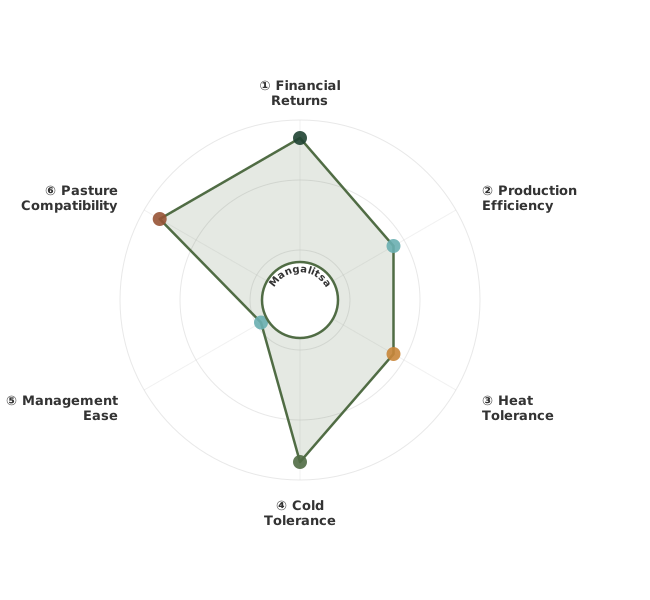
How These Traits Are Calculated
Trait dimensions are ordered clockwise starting from the top of the chart (12 o'clock position):
1. Financial Returns
Monthly income per pig from market weight and timeline
WHAT: Evaluates profit potential combining market weight, time to finish, feed efficiency, and input costs. Heritage breeds reaching 250-300 lbs in 8-12 months with premium pricing generate strong returns despite slower growth than commercial pigs.
WHY: Pig profitability depends on growth rate, feed efficiency, and market access. Fast-finishing breeds (5-6 months) on grain excel in conventional markets, while pasture-raised heritage breeds (8-12 months) target premium markets for higher per-pound returns that offset longer timelines.
HOW: Calculated from production data (finish weight, months to market) combined with feed efficiency and premium potential. Exceptional (≥2.6): efficient growth + strong premium access or commodity profitability. Typical (1.8-2.5): moderate timelines and costs. Limited (<1.8): slow growth or high costs eroding margins.
2. Production Efficiency
Feed conversion and resource utilization
WHAT: Measures how effectively pigs convert feed and resources into market weight, combining feed-to-gain ratios, foraging ability, and growth timeline. Efficient breeds reach target weight on fewer total inputs.
WHY: Feed represents 60-75% of production costs. Breeds converting 3.5:1 (feed:gain) versus 5:1 save $75-150 per pig, making the difference between profitable and marginal operations. Efficient foragers further reduce purchased feed costs.
HOW: Weighted formula: feed conversion ratio (50%), growth rate for inputs consumed (30%), foraging contribution (20%). Exceptional (≥2.6): ≤3.5:1 conversion + good growth. Typical (1.8-2.5): 3.5-4.5:1 conversion. Limited (<1.8): >4.5:1 or very slow growth.
3. Heat Tolerance
Performance in hot weather above 85°F (29°C)
WHAT: Evaluates adaptation to sustained heat above 85°F (29°C), measuring coat characteristics, wallowing behavior, and documented performance in southern climates where summer heat is prolonged.
WHY: Heat stress reduces feed intake and growth 20-40%, increases mortality, and can halt reproduction. Heat-adapted breeds maintain growth where others require expensive cooling systems (misters, shade structures) or accept reduced summer gains.
HOW: Rated from database trait 'heat_tolerance' based on breed characteristics. Exceptional (≥2.6): proven success in 95°F+ (35°C+), efficient cooling behaviors. Typical (1.8-2.5): moderate tolerance with wallows and shade. Limited (<1.8): struggles above 85°F, requires active cooling.
4. Cold Tolerance
Performance in cold weather below 20°F (-7°C)
WHAT: Evaluates adaptation to sustained cold below 20°F (-7°C), measuring hair coat thickness, fat insulation, and documented winter performance. Important for outdoor year-round systems in northern climates.
WHY: Cold-sensitive pigs require heated barns adding $50-150 monthly to winter costs, while cold-hardy breeds thrive outdoors with basic shelter. In climates with 4-6 month winters, hardy breeds save $300-900 annually in heating and infrastructure.
HOW: Rated from database trait 'cold_tolerance' based on documented characteristics. Exceptional (≥2.6): thick winter coat, substantial fat layer, thrives outdoors in <0°F (-18°C). Typical (1.8-2.5): moderate tolerance, windbreak sufficient. Limited (<1.8): requires heated shelter below 30°F (-1°C).
5. Management Ease
Handling temperament and daily care complexity
WHAT: Measures handling simplicity combining temperament docility, fence respect, health needs, and mothering ability. Calm breeds with good mothers and fence respect require minimal daily intervention.
WHY: Difficult pigs double or triple daily labor through frequent escapes, aggressive behavior requiring protective equipment, and high piglet mortality needing interventions. Easy breeds enable one-person management where hard breeds require two people for safety.
HOW: Weighted assessment: temperament (40%), fence respect (30%), mothering ability (20%), health needs (10%). Exceptional (≥2.6): calm and responsive, respects barriers, excellent mothers. Typical (1.8-2.5): manageable with experience. Limited (<1.8): escape-prone, aggressive, or high mortality requiring intensive farrowing management.
6. Grazing Suitability
Effectiveness on pasture-based systems versus confinement
WHAT: Evaluates adaptation to pasture-based production measuring foraging ability, grazing behavior, rooting gentleness, and growth rates on pasture versus grain confinement. Rates how well breeds utilize forage as significant feed component.
WHY: Pasture-adapted breeds reduce feed costs 30-50% through foraging while providing land management services (rooting clears brush, breaks pest cycles). Confinement-bred pigs grow slowly on pasture, negating cost savings, or damage land through aggressive rooting.
HOW: Weighted formula: foraging ability (40%), documented pasture performance (30%), rooting behavior (20%), adaptability (10%). Exceptional (≥2.6): excellent foragers + good growth on pasture + controlled rooting. Typical (1.8-2.5): moderate pasture performance. Limited (<1.8): confinement-bred, minimal foraging, or destructive rooting.
Regenerative Advantages
- Cold Tolerance: Mangalitsas possess an exceptionally dense, woolly coat, providing superior insulation that allows them to thrive in frigid conditions.
- Drought Tolerance: Their dense wool and ability to thrive on dry pasture demonstrate exceptional drought tolerance and efficient utilization of sparse vegetation.
- Grazing Ability: Mangalitsa pigs demonstrate exceptional grazing ability on quality grass-based pasture. Their heritage genetics allow them to efficiently utilize diverse grasslands, including native prairies and polycultures, converting plant matter into high-quality fat and muscle with minimal supplementation. They thrive in rotational grazing systems and maintain excellent condition on pasture alone, representing a gold standard for grass-finished pork production in well-managed environments.
- Foraging Ability: These pigs exhibit exceptional foraging ability, thriving on a wide spectrum of marginal and diverse vegetation. Their robust constitution and instinctual drive allow them to efficiently convert roots, acorns, browse, and roughage into valuable lard and meat. Mangalitsas excel in challenging, unimproved environments like woodlands and scrubland, requiring very little external input and demonstrating remarkable self-sufficiency, characteristic of breeds selected for centuries of hardy outdoor life.
- Hardiness: This ancient European breed boasts exceptional resilience, thriving in varied climates and extensive foraging with minimal care.
Value Streams
- Meat production
- Nutrient cycling and soil building
- Soil tillage and aeration
- Woodland management
Experience Level
Some livestock experience recommended (requires confident handling, better for larger operations)
3
Understanding Mangalitsa Pigs Characteristics
Physical traits, temperament, and what makes this breed unique
Understanding Mangalitsa Pigs Characteristics
Physical traits, temperament, and what makes this breed unique
The Mangalitsa pig, often called the 'woolly pig' or 'lard pig,' is a unique heritage breed that stands out dramatically from modern commercial swine. Its most striking feature is its thick, curly coat, which can range in color from black to blonde, and provides exceptional insulation against cold weather. This woolly exterior is a stark contrast to the typically bare skin of most pig breeds, allowing Mangalitsas to thrive outdoors year-round with minimal shelter. Historically, these pigs were developed in the mid-19th century in Hungary from older, hardy breeds and were prized for their high-quality lard and flavorful meat, making them a staple for peasant farmers.
Compared to modern breeds selected for rapid growth and lean meat, Mangalitsas are slower-maturing and naturally fattier, yielding a rich, marbled meat and abundant, flavorful lard. Their genetic heritage emphasizes foraging ability and resilience over sheer size and speed. This makes them inherently suited to less intensive management systems. Their distinctive appearance, coupled with their historical significance as a breed that sustained rural populations, makes them a fascinating choice for farmers looking to preserve agricultural heritage and explore unique market niches.
Sources behind this view
 Videos & Podcasts
-
Mangalitsa pigs offer superior meat quality and foraging ability but have significant drawbacks: slow growth (15-20 months to market), smaller litters, and higher farrowing costs compared to standard

-
The decision to sell Mangalita pork was driven by its superior flavor and quality over quantity. These pigs are slow-growing (18 months to market) and have small litters (4-8 piglets), requiring six y

-
Raising Mangalitsa pigs proved challenging due to slow growth and marketability issues, especially compared to Berkshire-based genetics. The speaker advises against lard breeds for commercial operatio

-
Dennis McDonald of Galt, Missouri, raises Mangalitsa pigs on pasture, supplementing their diet with 2 lbs of grain daily. They are hardy, require minimal intervention, and produce high-quality, fatty
 Community
-
Mangalitsa pigs are highlighted for their cold-weather hardiness (USDA Zone 3), excellent foraging, and protective instincts, being a lard breed that tills soil effectively. Hampshire crosses grow fas
Read more (opens in new window) permies.com -
Mangalitsa pigs are an extreme lard-type breed known for producing high-quality, marbled meat and healthier, more unsaturated fat due to higher oleic acid content.
Read more (opens in new window) permies.com -
Laura Tidrick (Mossycup Farms, Clear Lake, IA) crossbreeds Mangalitsas with Large Blacks, Tamworths, Herefords, and Berkshires to improve lean meat yield and litter size for pasture-based systems, cre
Read more (opens in new window) practicalfarmers.org
4
Management, Care & Feeding
Operational guidance for raising this breed successfully
Management, Care & Feeding
Operational guidance for raising this breed successfully
Managing Mangalitsa pigs effectively in a regenerative system centers on leveraging their natural instincts and hardiness. Providing ample space for grazing and rooting is crucial. While they require less shelter than other breeds, access to a dry, draft-free area for farrowing and extreme weather protection is still beneficial. Rotational grazing is highly recommended to manage their rooting behavior, prevent overgrazing, and distribute manure evenly across pastures, thereby enhancing soil fertility and parasite control. Electric fencing is often sufficient for containment, given their less migratory nature compared to some other breeds.
Feeding should focus on a high-quality forage base supplemented with grains and protein sources, tailored to their slower growth rate. They convert pasture and forages efficiently, but supplementation is needed to ensure optimal health and finishing. Avoid over-supplementing with high-energy feeds, which can lead to excessive fat deposition beyond desirable levels for some markets. Monitor body condition, especially during winter and farrowing, and adjust rations accordingly. Access to clean water at all times is non-negotiable.
Health management for Mangalitsas emphasizes preventative care and observation. Their outdoor lifestyle and genetic hardiness generally lead to fewer health problems than confinement-raised pigs. Regular observation for signs of parasites, lameness, or respiratory issues is important, especially when introducing them to new pastures or integrating them with other livestock. Maintaining good pasture hygiene through rotation helps minimize parasite loads. Vaccinations and deworming protocols should be discussed with a veterinarian familiar with heritage breeds and pasture-based systems to ensure the long-term health and productivity of the herd.
Sources behind this view
Videos & Podcasts
-
Mangalitsa pigs offer superior meat quality and foraging ability but have significant drawbacks: slow growth (15-20 months to market), smaller litters, and higher farrowing costs compared to standard
-
Raising Mangalitsa pigs proved challenging due to slow growth and marketability issues, especially compared to Berkshire-based genetics. The speaker advises against lard breeds for commercial operatio
-
Dennis McDonald of Galt, Missouri, raises Mangalitsa pigs on pasture, supplementing their diet with 2 lbs of grain daily. They are hardy, require minimal intervention, and produce high-quality, fatty
-
Dennis McDonald raises Mangalitsa pigs on pasture using strip grazing and humane hog rings to prevent pasture damage, moving them weekly to control grazing and mimic cow-like foraging behavior.
Community
-
Shares experiences with Mangalitsa, Hampshire, and American Guinea Hogs using rotational pasturing and mixed feed. Seeks advice on humane piglet castration and permaculture-friendly iron deficiency tr
Read more (opens in new window) permies.com -
Empirical data on Mangalitsa pig growth rates: sows reached ~450 lbs at 2 years old on forage and fermented grains, while Hampshire crosses grew much faster, highlighting Mangalitsas' slow-growing, ac
Read more (opens in new window) permies.com
6
Production Capabilities & Market Economics
Business case evaluation and production metrics
Production Capabilities & Market Economics
Business case evaluation and production metrics
Meat Production Economics
| Category | Value |
|---|---|
| Finish Weight | 250-350\n113-159 lbs 250-350\n113-159 kg |
| Months to Finish | 8-12 |
| Lard Production | High, 40%+ lard |
| Price Premium | +50% to +100% |
| Annual Input Cost/Head | $250-400 |
Finish Weight: Market weight for heritage breed pigs on pasture. Heritage breeds grow slower and finish lighter than commercial breeds but produce superior meat quality and more lard.
Months to Finish: Time from weaning to finish weight on pasture with supplemental feed. Heritage breeds take 8-12 months vs. 5-6 months for confinement pigs.
Lard Production: Heritage breeds excel at lard production - a valuable byproduct often sold at premium prices ($8-15/lb rendered). Lard-type breeds (Mulefoot, Guinea Hog, Mangalitsa) can be 40%+ fat.
Price Premium: Premium above conventional pork prices. Heritage pork from pastured systems typically sells for $6-12/lb vs. $3-5/lb conventional. Premium requires direct marketing, farmers markets, or specialty channels. Commodity sales receive $0 premium.
Annual Input Cost/Head: Feed, minerals, health care, and pasture maintenance per pig per year. Excludes infrastructure, land, and labor. Pastured pigs reduce feed costs through foraging (20-30% of diet).
Sources behind this view
Videos & Podcasts
-
Beginners should raise standard meat pig breeds (Duroc, Berkshire, Yorkshire) instead of lard breeds (Mangalitsa, Kune Kune). Meat breeds are cheaper, grow faster (5-7 months vs. 1-2 years), yield mor

-
Detailed cost analysis shows raising a 240lb pig costs ~$300, with retail sales potentially yielding ~$850 profit per animal. Farmer's market prices range from $6/lb for spare ribs to $13/lb for bonel